
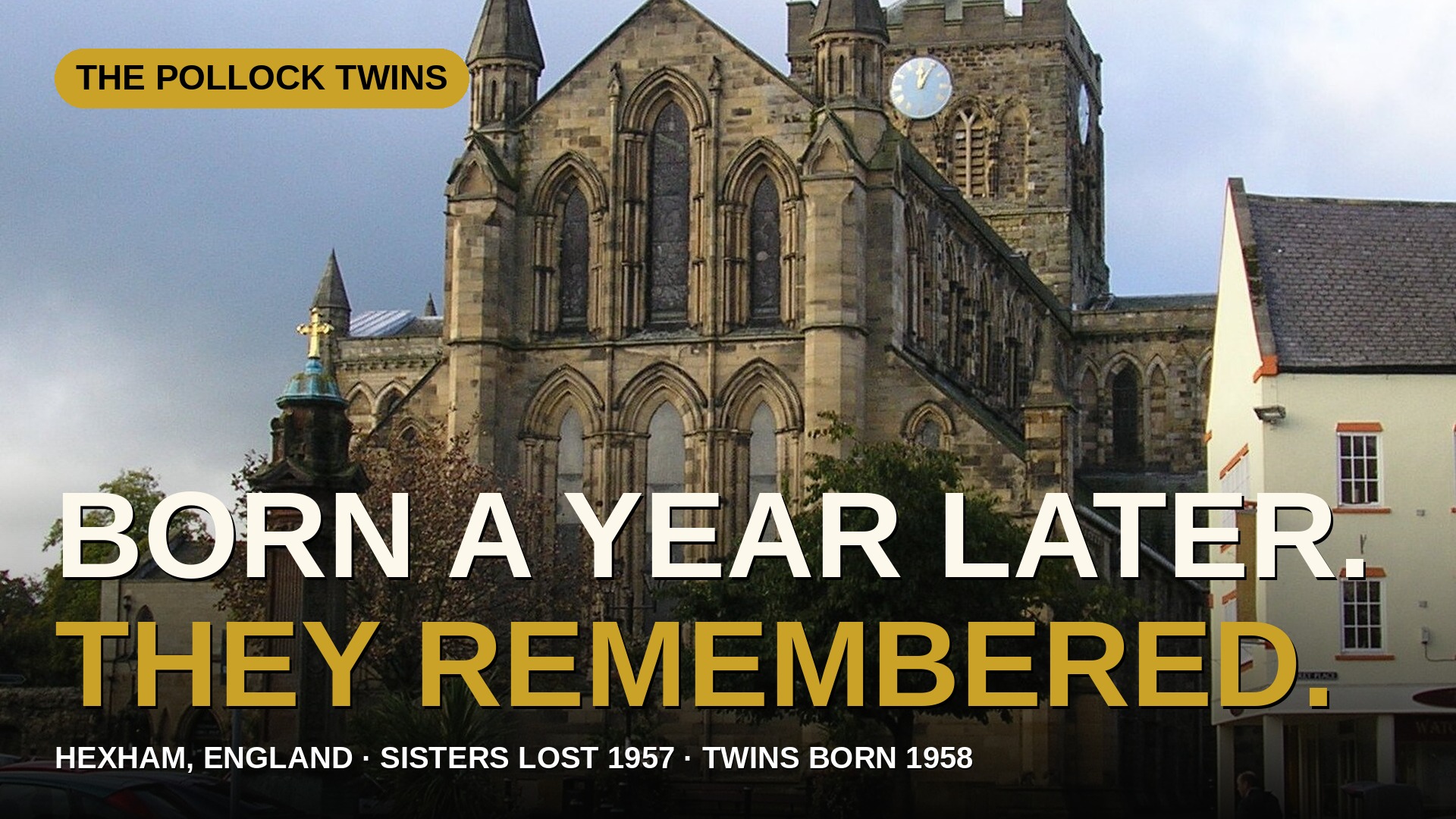
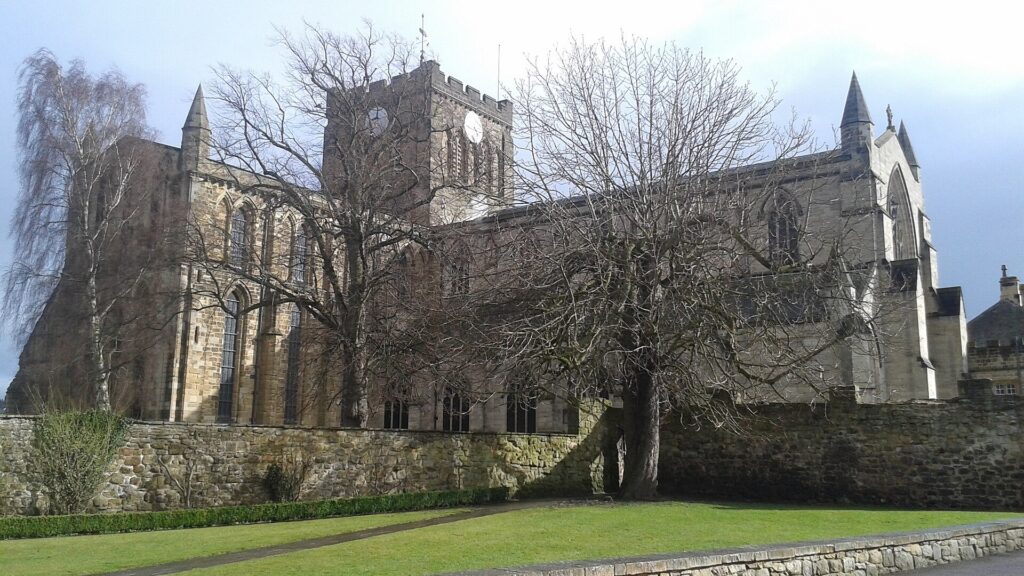
On 5 May 1957, Joanna Pollock, eleven, and her sister Jacqueline, six, walked to Sunday school in Hexham, Northumberland, with a young friend. A car mounted the pavement and killed all three children. There was a wall beside them. They had nowhere to go.
The driver was not a drunk who lost control. She was a local woman who, by the accounts that survive, drove at the children deliberately. The Pollock family, remarkably, forgave her. Grief did the rest of the damage on its own.
Their father, John Pollock, had believed in reincarnation since boyhood. He became certain his daughters would return to the family. When his wife Florence became pregnant, he insisted she was carrying twins. Her doctor heard one heartbeat and expected one baby.
On 4 October 1958, seventeen months after the accident, Florence gave birth to twin girls: Gillian and Jennifer. Then the small, strange details began, and a psychiatrist from the University of Virginia spent decades writing them down.
This is not a ghost story. It is a case file, built by a serious researcher from a family’s claims. The question it leaves is harder than whether you believe in reincarnation. It is whether the file can bear the weight put on it.
The Evidence
Start with the body. Jacqueline had fallen onto a bucket at age three, cutting her forehead above her right eye. It left a scar, slightly sunken, that showed more in cold weather. She also had a dark, roundish birthmark on the left side of her waist.
Jennifer, the younger twin by minutes, was born with a mark on her forehead in the same place, sunken in the same way, and said to show more in cold weather too. She also had a similar dark mark on her left waist. Her twin, Gillian, had neither.
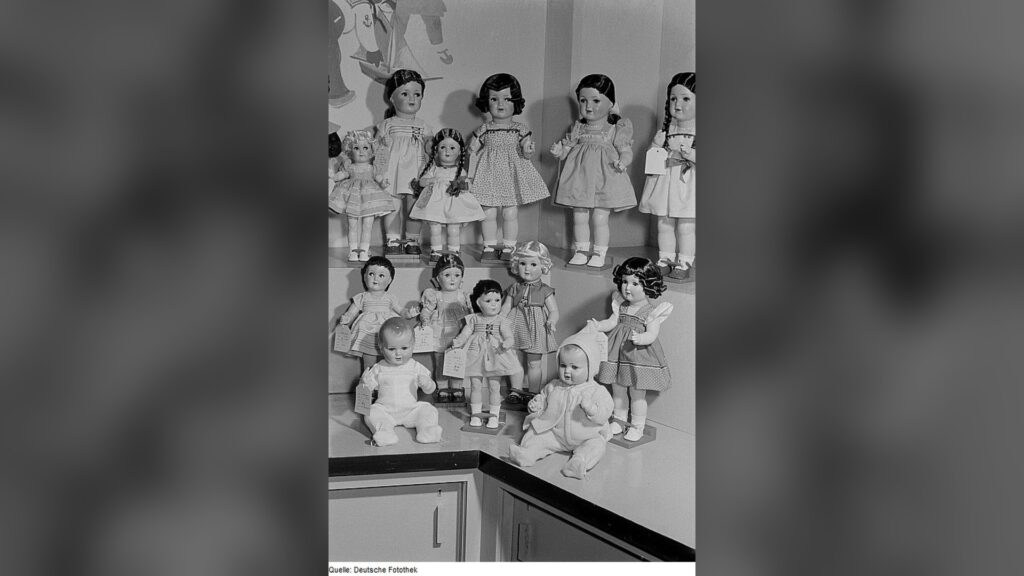
Then came the toys. The dead sisters’ things had been packed away in a box. When the twins were small and the box was brought down, Gillian claimed Joanna’s doll and Jennifer claimed Jacqueline’s. Neither reached for the wrong one.
The twins also used the dolls’ names, Mary and Susan, names their sisters had given them. They said the dolls had been presents from Santa Claus, which, for the originals, was true. The family said the twins had never been told any of this.
Places produced the same effect. The family had moved away from Hexham when the twins were babies. On a visit back, at about age four, the girls reportedly recognised streets, pointed out the school their sisters had attended, and asked for a playground they had never been taken to.
Behaviour matched in smaller ways. Gillian was slender and walked with her feet turned out, like Joanna. Jennifer was stockier, like Jacqueline, and clutched her pencil in her fist the way Jacqueline had, instead of holding it properly as Gillian did.
There were darker moments. The twins reportedly spoke about the accident, and panicked at cars, crying that a car was coming to get them. Gillian pointed at Jennifer’s forehead mark and said it came from falling on a bucket, something that happened to Jacqueline, not Jennifer.
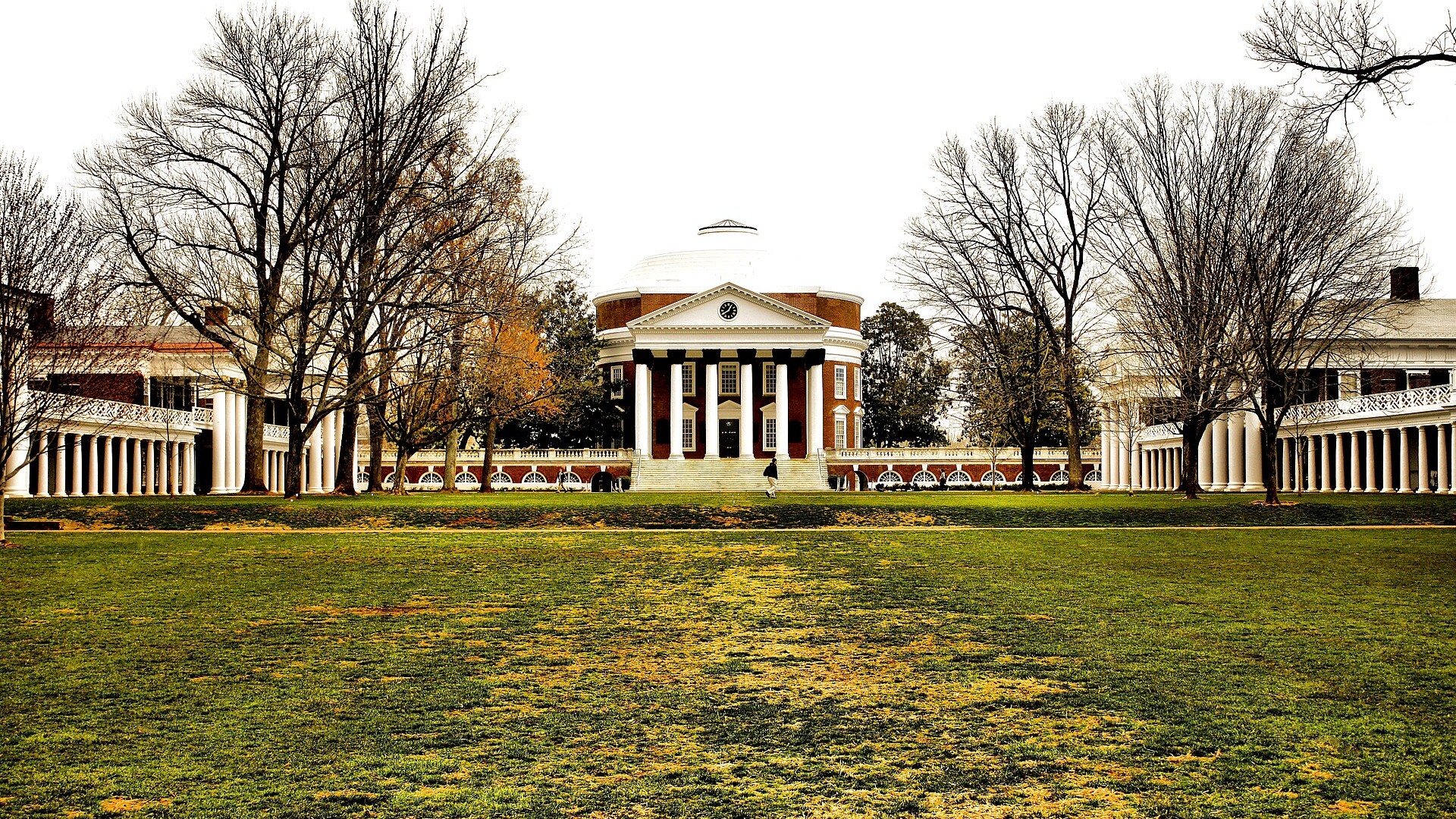
Ian Stevenson, a psychiatrist at the University of Virginia who studied children claiming past-life memories, learned of the case in 1963 and investigated it for years. The work of the University of Virginia’s Division of Perceptual Studies, which Stevenson founded, still houses this research today.
The Skeptical Case
Now the other side, and it starts with a fact Stevenson himself admitted. Every statement and recognition in this case came through the parents. John and Florence were the only informants. There were no independent witnesses to the key moments.
John was not a neutral witness. He believed in reincarnation from childhood, predicted the twins before they were born, and expected his daughters to return. A father listening for echoes will hear them, and may shape a story without ever meaning to lie.
The twins also grew up in a house where Joanna and Jacqueline were remembered, talked about and grieved openly. Children absorb family stories the way they absorb language. A “memory” can be a story a child has heard so early she cannot recall hearing it.
The birthmarks need care too. The twins were almost certainly identical, confirmed by blood tests in 1978, so shared marks are less surprising than they first look. Jennifer’s forehead mark was a birthmark resembling a scar. Resemblance is not identity.
Timing matters as well. Stevenson first met the family in 1963, six years after the accident, and recorded the claims as the parents reported them. Nothing was written down at the moment a four-year-old pointed at a school. Memory had years to tidy the story.
None of this proves the parents invented anything, and critics such as Ian Wilson stopped well short of calling it fraud. The skeptical case is narrower: a case resting on one family’s recollections cannot carry a claim as large as reincarnation.
The Verdict
Weigh it fairly and the Pollock case remains what Stevenson judged it: one of the strongest of its kind. The details are specific, they were recorded over decades, and the family gained nothing obvious from telling the story.
Strongest of its kind is still a careful phrase. The case’s strength and its weakness are the same thing: everything flows from two grieving parents, one of whom believed the conclusion before the twins were born.
Cases like this are why researchers keep returning to children who seem to know impossible things, a territory we explored in our look at Project Stargate, where the claims were tested and still left argument behind.
By about age five to seven, the twins’ reported memories faded, as they do in nearly all such cases. As adults they remembered nothing of it. Whatever happened in that house in Hexham left no one behind who can still testify to it.
Verdict: Unresolved. The Pollock Twins are among the most thoroughly documented reincarnation claims ever recorded, and the details resist easy dismissal. But documentation is not proof, and a case carried entirely by parental testimony cannot settle the question it raises.
Frequently Asked Questions
Who were the Pollock twins?
Gillian and Jennifer Pollock, identical twin girls born in Hexham, England, on 4 October 1958. Their parents and researcher Ian Stevenson reported that they showed memories, behaviours and birthmarks matching their dead sisters, Joanna and Jacqueline.
What happened to Joanna and Jacqueline Pollock?
On 5 May 1957, Joanna, eleven, and Jacqueline, six, were killed with a young friend when a car mounted the pavement as they walked to Sunday school in Hexham. The driver was a local woman who, by surviving accounts, acted deliberately.
What did Ian Stevenson conclude?
Stevenson, a University of Virginia psychiatrist, investigated from 1963 and judged the case strong. He also accepted that the father’s belief may have coloured the reports, and said he was willing to discount much of the twins’ statements because of it.
Did the twins have matching birthmarks?
Jennifer had a forehead birthmark where Jacqueline had carried a scar from a fall onto a bucket, and a waist mark like Jacqueline’s birthmark. Gillian had neither. Critics note the twins were identical, which makes shared marks less surprising.
Do the Pollock twins prove reincarnation?
No. The case is unusually well documented, but every key claim rests on the parents’ reports, recorded years later. It remains one of the most discussed cases in Stevenson’s research, cited by believers as evidence and by skeptics as a lesson in how stories form.
Join the Conversation
Which detail stays with you: the birthmarks, the dolls picked out of a packed-away box, or a four-year-old recognising a school she had never attended? Tell us where you land, and what evidence would actually settle it for you.
Read Next
Project Stargate: The CIA’s Psychic Spies
The Sodder Children: The Disappearance That Never Closed
