
You can picture the book cover clearly. A friendly bear family, smiling on the front, and the name written right there: the Berenstein Bears.
Except that is not what the cover says. It never did.
Welcome to the Mandela Effect, the strange pattern where large groups of people share the same false memory, in the same detail, and swear it was real. One wrong memory is easy to shrug off. Thousands of people making the exact same mistake is harder to ignore.
Some say it proves we slipped into a parallel universe. Psychologists say it shows something almost as unsettling: memory does not record the past like a camera. It rebuilds it, every time, and it can rebuild it wrong.
Here are 10 examples that catch out even confident readers. Check yourself against each one before you read the answer.
1. The Berenstain Bears: The Classic Mandela Effect Mix-Up
Ask people who grew up in the 1980s and 1990s to spell the name, and a huge number will write “Berenstein,” with an “e.” It feels right. It looks right.
The books, created by Stan and Jan Berenstain, have always been spelled with an “a”: Berenstain. That spelling is on every cover, every spine and every copyright page.
So why does “stein” feel more familiar? Because it is a far more common ending in surnames. Your brain stored the gist, a bear family with a name ending in a familiar sound, and quietly swapped in the spelling it expected.
Verdict: Debunked as a mystery, real as a memory error. No parallel universe changed the covers. Our brains filed an unusual spelling under a usual one.
2. “Luke, I Am Your Father” Was Never Said
It may be the most quoted film line in history. Darth Vader, towering over Luke Skywalker, booming: “Luke, I am your father.”
Watch the scene in The Empire Strikes Back (1980) and you will not hear it. Luke accuses Vader of killing his father. Vader replies: “No, I am your father.”
The word “Luke” was added later, in retellings, impressions and parodies, because it makes the line work out of context. Without the name, a stranger would not know who was speaking to whom.
Millions of us then remembered the clearer version as the original. The copy replaced the source, and the copy was catchier.
3. The Monopoly Man Never Wore a Monocle
Picture Rich Uncle Pennybags, the Monopoly mascot. Top hat, moustache, tails, and surely a monocle over one eye?
He has never worn one. Not on the box, not on the board, not in any official artwork. His eyes have always been bare.
The likely culprit is a neighbour from the snack aisle. Mr Peanut, the Planters mascot, really does wear a monocle, along with a top hat and cane. Two cheerful mascots from the same era blur together, and the brain lends one man’s accessory to the other.
Researchers at the University of Chicago found this is not random. When people were asked to draw famous characters from memory, they added the same wrong details, including this monocle, again and again.
4. Curious George Never Had a Tail
Curious George is a monkey. Monkeys have tails. So George must have a long, curling tail swinging behind him in every picture book.
He does not. George has never been drawn with a tail.
This one gives away how memory actually works. We rarely store a perfect picture. We store a category, “monkey,” plus a few standout details, a yellow hat nearby, a lot of trouble.
When we try to picture George later, the brain rebuilds him from the category. The category includes a tail, so the rebuilt George gets one. The error feels like a memory because the rebuilding happens without us noticing.
5. The Fruit of the Loom Cornucopia That Never Existed

Think of the Fruit of the Loom logo. Grapes, apples and leaves, spilling out of a brown, horn-shaped basket. That basket is called a cornucopia.
The company says the logo has never included one. Old versions of the logo show fruit and leaves, sometimes on a plate or a plain background, but no cornucopia at any point.
This example unsettles people more than most, because the memory can be so visual. Some remember seeing the basket on clothing labels as children, in detail.
Yet a label is something we glance at, not study. A pile of fruit strongly suggests a basket to the brain, and suggestion, repeated online for years, can harden into a picture we believe we saw.
6. Pikachu’s Tail Was Never Tipped With Black
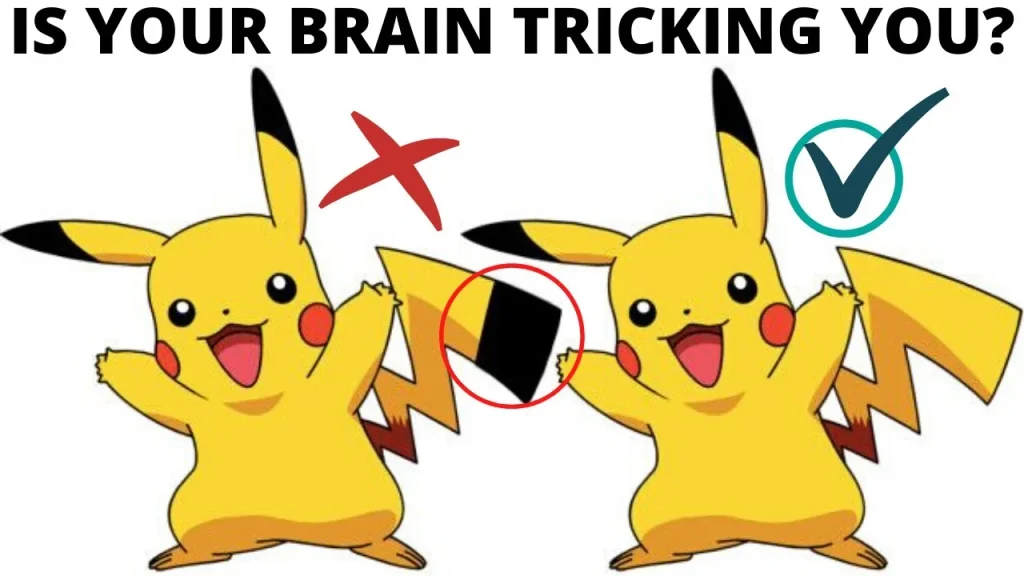
Quick test. Pikachu, the yellow Pokémon, has black tips on his ears. What colour is the end of his lightning-bolt tail?
If you said black, you are in a very large group, and you are wrong. Pikachu’s tail is yellow, with a brown patch where it joins his body. The tip has never been black.
The University of Chicago visual memory study found the same pattern here. People did not invent random colours. They consistently added black to the tail, matching the ears.
That consistency is the key point. Shared errors do not need a shared alternate reality. They only need shared brains, working the same way, filling the same gap with the same obvious answer.
7. The Sinbad Genie Movie That Was Never Made
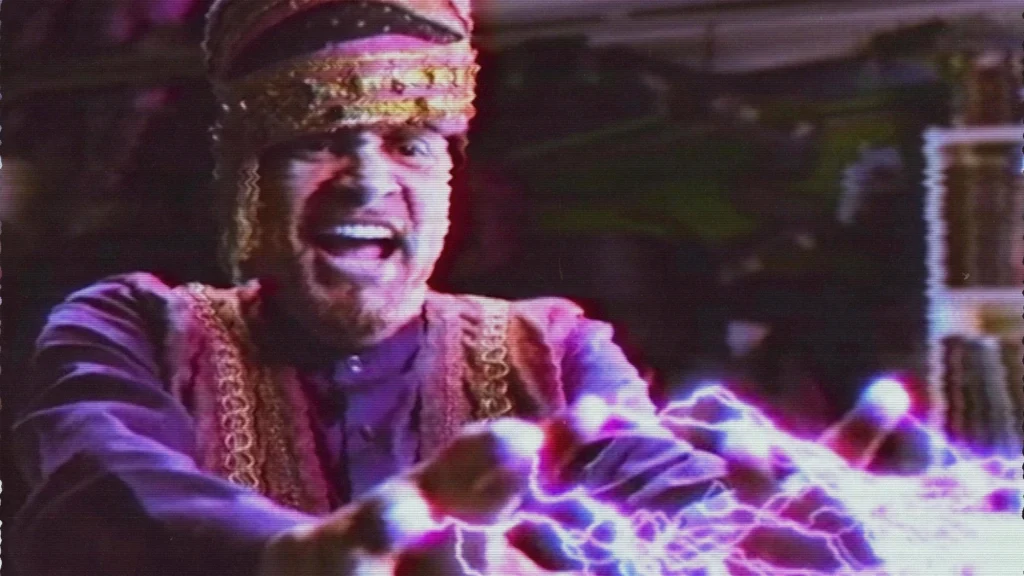
Some false memories are a wrong detail. This one is an entire film.
Many people who grew up in the 1990s remember a family movie called Shazaam, starring comedian Sinbad as a bumbling genie. Some describe the poster. Some remember renting it.
No such film exists. There is no production record, no cast listing, no copy. Sinbad himself has repeatedly said he never played a genie in a film.
The real film is Kazaam (1996), starring basketball player Shaquille O’Neal as a genie. Add Sinbad hosting television in costume in the same era, plus a similar title, and the brain stitches the pieces into a movie night that never happened.
If this pattern of mixing real pieces into a false whole sounds familiar, it may be because our minds do similar things with the past in general, something we explore in why childhood feels like a different world.
8. Nelson Mandela Did Not Die in Prison
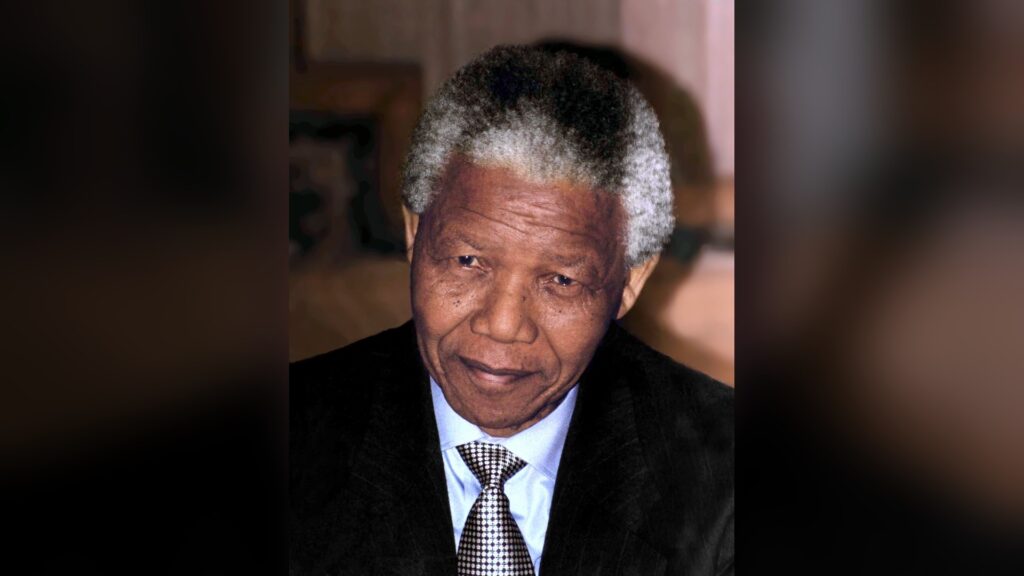
This is the example that named the whole Mandela Effect, and it is more serious than logos and cartoon tails.
Paranormal researcher Fiona Broome coined the term around 2009 to 2010, after finding that she, and many others, clearly “remembered” Nelson Mandela dying in a South African prison in the 1980s. Some recalled news footage of his funeral.
Mandela did not die in prison. He was released in 1990 after 27 years, helped end apartheid, and served as president of South Africa from 1994 to 1999. He died in 2013, at home, at the age of 95.
How could a death be misremembered so completely? Mandela’s imprisonment was heavily reported, other anti-apartheid figures did die in custody, and for years he was absent from public view. The brain joined those real pieces into one false ending.
9. It Is Looney Tunes, Not Looney Toons
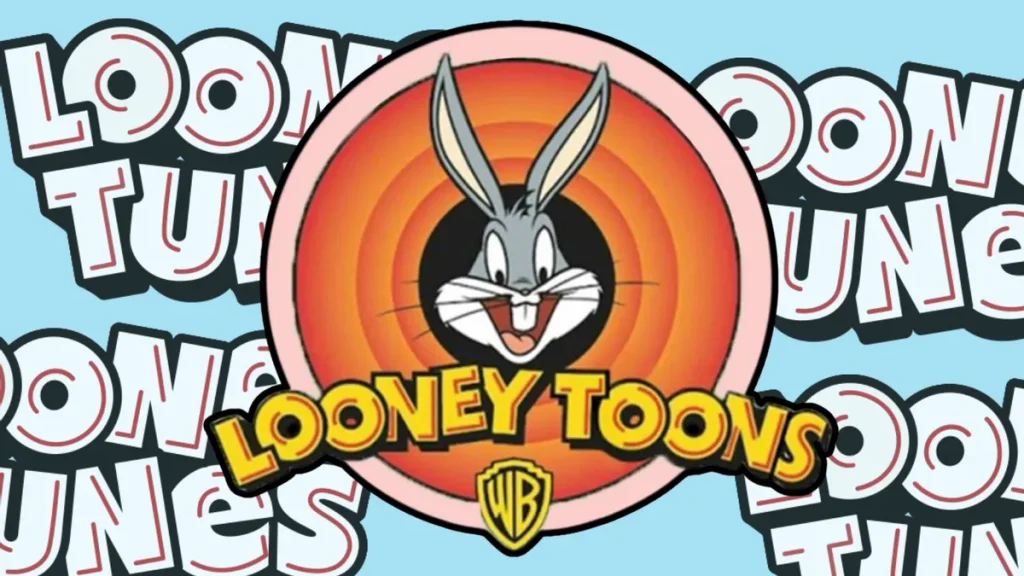
Bugs Bunny, Daffy Duck and Porky Pig star in cartoons, so the name must be “Looney Toons.” The spelling even looks more fun.
The Warner Bros. series has always been Looney Tunes, with a “u.” The name was a play on Walt Disney’s Silly Symphonies, and “Tunes” pointed to the music that drove the early shorts. Its sister series was called Merrie Melodies for the same reason.
Here, logic betrays us. “Toon” is short for cartoon, so the brain corrects the real name into the spelling that makes more sense.
Memory often prefers the sensible version to the true one. That is worth remembering next time a detail feels too obvious to check.
10. “Mirror, Mirror” Is Not in the Film
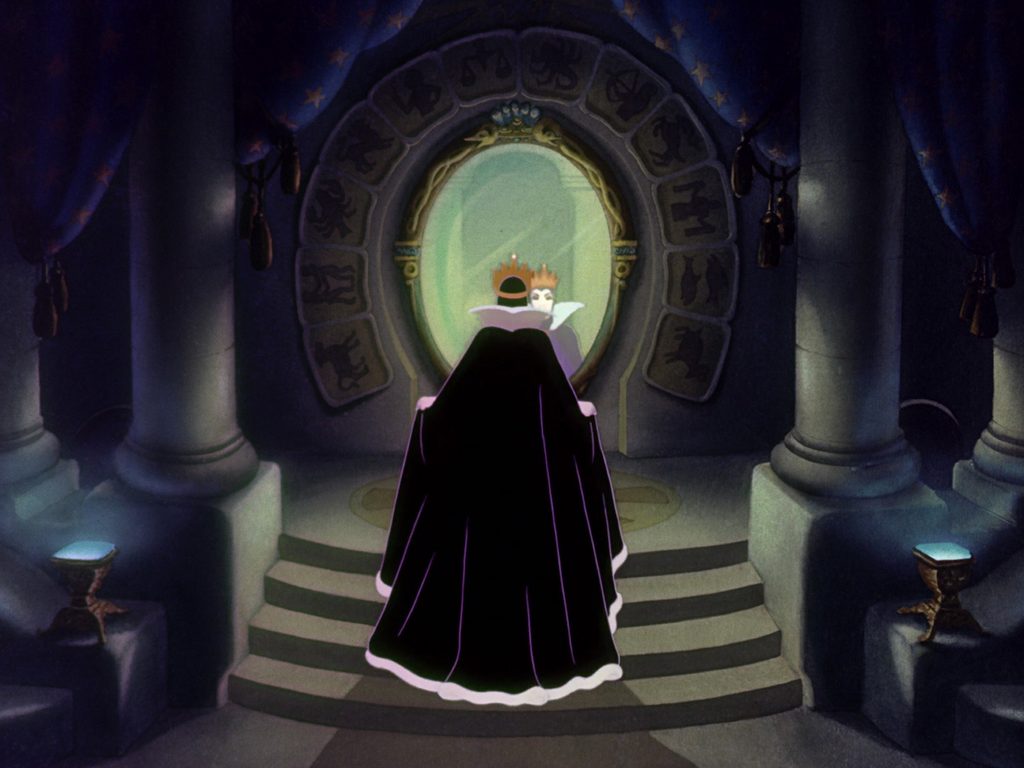
Every day, the Queen in Disney’s Snow White and the Seven Dwarfs (1937) stands before her mirror and asks who is the fairest of them all. And she begins: “Mirror, mirror, on the wall.”
Except she does not. In the film, she says: “Magic mirror on the wall.”
The “Mirror, mirror” wording comes from the older Brothers Grimm fairy tale, in translation, and from countless retellings since. Disney changed the line, but the older version was repeated so often that it overwrote the film in our heads.
It is a neat final example because both versions exist. One is from the book, one is from the film, and memory merged two real sources into one wrong certainty.
Why Does the Mandela Effect Happen?
The honest answer is that psychologists can explain a lot of this, without any parallel worlds. Four ideas do most of the work, and all four are plain, well-tested features of how memory runs.
Confabulation: the brain fills gaps
Confabulation means the brain fills a gap in memory with something plausible, without meaning to lie. It does not leave a blank. It serves up a complete picture and labels it “remembered.”
That is why these errors feel so certain. The finished picture arrives with the feeling of a real memory attached, even when a piece of it was invented a second earlier.
False memory: details can be planted
Decades of laboratory research show that memory can be changed after the event. The words used in a question, a photograph seen later, or a story told by someone else can all edit what a person later reports.
Online, this editing runs at industrial scale. A confident post saying “the logo definitely had a cornucopia” is exactly the kind of suggestion that can reshape what thousands of readers next “remember.”
Our own minds stay busy in similar ways when the world goes quiet, as we covered in why your mind races at night.
Memory conformity: we borrow each other’s pasts
People adjust their memories toward what others report, especially when they are unsure. Psychologists call this memory conformity, and it is easy to see in any comment thread about a childhood cartoon.
One person’s wrong detail gives another person permission to trust the same detail. Shared does not always mean true. Sometimes it only means shared.
Schema theory: we remember the pattern, not the picture
A schema is a mental template, your brain’s summary of how a thing usually looks or works. Monkeys have tails. Rich mascots wear monocles. Fruit sits in a basket.
Schemas make memory fast and useful, but they smooth away odd details and replace them with typical ones.
The Berenstain spelling is unusual, so the schema swapped it. Curious George breaks the monkey pattern, so the schema fixed him.
Put together, these four ideas explain why strangers make the same mistakes. They run the same mental software, on the same logos, films and book covers, for the same number of years.
Curious about your own patterns of thinking? Our Big Five personality quiz is a fun two-minute way to look at the traits behind them.
Parallel Universes or Just Bad Memory?
The parallel universe idea is the exciting verdict, so let us be fair to it. It claims that shared false memories are leftovers from a slightly different timeline, one where the covers, logos and film lines really were as we remember.
The problem is evidence. There is no physical evidence for a timeline slip, and no way to test the claim. Every example on this list, meanwhile, has a documented real version, an old cover, a film scene, a company record, that anyone can check today.
Against that, the psychology is testable, and it has been tested. Researchers can create false memories in a lab, spread them between people, and predict which wrong details a group will invent. The Mandela Effect fits those results closely.
Our verdict: Debunked as proof of parallel universes. The Mandela Effect is real, the memories are genuinely shared, and the cause sits inside our own heads. Memory is a rebuild, not a recording, and rebuilds can share the same flaw.
That answer is less flashy. It is also stranger in its own way, because it means the glitch was never in the universe. It was in the witness.
Frequently Asked Questions
What is the Mandela Effect?
It is when a large group of people shares the same false memory of an event or detail, such as a logo, a film line or a spelling, that never existed that way.
Who coined the term Mandela Effect?
Paranormal researcher Fiona Broome coined it around 2009 to 2010, after finding many people shared her false memory of Nelson Mandela dying in prison in the 1980s.
What is the most famous Mandela Effect example?
The Berenstain Bears spelling is the best known. Many people remember “Berenstein,” but the name has always been spelled with an “a.”
Did Sinbad star in a genie movie called Shazaam?
No. No such film exists. People are mixing up Kazaam (1996), starring Shaquille O’Neal, with Sinbad’s television appearances from the same era.
Does the Mandela Effect prove parallel universes?
No. Psychology explains the pattern through confabulation, false memory, memory conformity and schemas, all of which have been demonstrated in research.
Join the Conversation
So, which one caught you? The bears, the monocle, the genie movie that never existed, or one you are still not fully convinced about?
Do you believe the Mandela Effect is a glitch in the matrix, or just bad memory doing what bad memory does? Let us know in the comments below, and tell us which example fooled you first.
Read Next
- Why Childhood Feels Like a Different World
- Why Your Mind Becomes So Active at Night
- 10 Things Science Still Can’t Explain
- The Rugrats Purgatory Theory: Angelica’s Imagination
