
The 2027 Asteroid Hoax, Explained
The video was terrifyingly specific. NASA, it claimed, had calculated a 96 percent chance that an asteroid would wipe out life on Earth in 2027.
Better still, there was proof. The video showed a real NASA document, with the alarming percentage printed in official-looking type.
The clip gathered around 4.2 million views on TikTok before it was taken down. Screenshots from it are still circulating now.
Here is the part nobody cropped into the video. The document is genuine, the asteroid is fictional, and the word “EXERCISE” is printed across the top of every page.
This is the story of how a fire drill became a prophecy — and what NASA’s real asteroid watch actually says about 2027.
Key Facts
- The 96% figure comes from a mock press release written for a 2017 planetary defence training exercise. Its header reads “EXERCISE” and “NOT A REAL-WORLD EVENT”.
- The asteroid in the document, 2017 PDC, was invented for that exercise. “PDC” stands for Planetary Defense Conference.
- A TikTok video recycling the document drew about 4.2 million views before removal, according to IFLScience.
- NASA’s real monitoring system, Sentry, is run by the Center for Near-Earth Object Studies (CNEOS) and is fully public.
- Sentry lists no known object with a significant impact probability in 2027.
- The highest real impact odds NASA has ever published for a sizable asteroid were 3.1%, for 2024 YR4 in February 2025. They fell to near zero within a week.
- Radar observations in March 2021 ruled out any impact by Apophis, once the most feared asteroid known, for at least the next 100 years.
The Claim
What the video said
The claim, in its most shared form, is brutally simple. NASA has predicted a 96 percent chance of an asteroid impact in 2027, and the impact will wipe out life on Earth.
Some versions name a precise date: 21 July 2027. Others talk of a “leaked” document, as if the agency were hiding the end of the world inside a PDF.
That framing contains its own refutation. The supposedly leaked document was published openly, by NASA itself, on a public website anyone can read.
The screenshots look official because they are official. They show a real page from NASA’s Jet Propulsion Laboratory, naming the International Asteroid Warning Network.
Why it spread
The hoax is engineered, whether its sharers know it or not. Every element is chosen to short-circuit doubt:
- A precise percentage — 96% — that sounds measured rather than guessed
- A near, specific date that makes the threat feel scheduled
- A trusted institution’s name and document design doing the persuading
- A screenshot, offered as evidence you can “see for yourself” in seconds
Fact-checkers have a name for this pattern: authority-ventriloquism. A false claim is placed in a trusted institution’s mouth, so the institution’s credibility does the spreading.
IFLScience’s breakdown of the viral video traced the latest wave to a single TikTok video.
That video, documented by the fact-checking platform BiasBreak before its removal, reached roughly 4.2 million views. It was far from the first of its kind.
Some versions hide the trick better than others. Instead of showing the document itself, they show a screenshot of a Google search results page quoting it.
That extra layer matters. A search page looks like independent confirmation, when it is really the same exercise document, reflected back at the viewer.
Versions of the claim have circulated for years. They reliably resurface as 2027 gets closer, because a deadline is the one thing a hoax like this cannot survive passing.
The Facts
The document is a training exercise
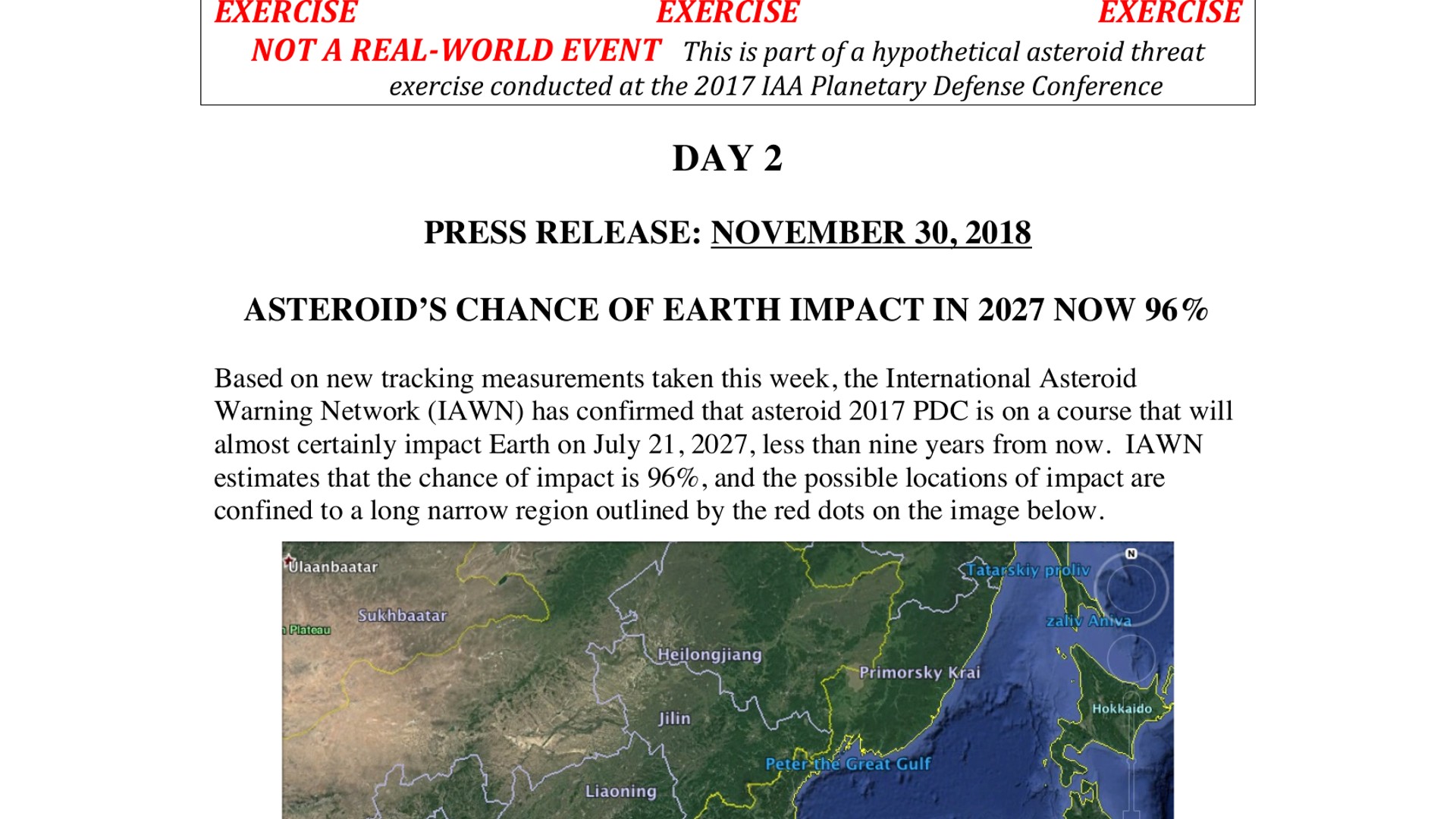
Open NASA’s own exercise press release and the first line gives the game away: “EXERCISE EXERCISE EXERCISE”.
Beneath it, in capitals, sits the sentence the videos never show: “NOT A REAL-WORLD EVENT. This is part of a hypothetical asteroid threat exercise.”
The release was written for the 2017 IAA Planetary Defense Conference, where scientists and emergency planners rehearse a fictional asteroid emergency, day by simulated day.
In the scenario, an invented asteroid named 2017 PDC is “discovered” in March 2017. Its fictional impact odds climb as the game unfolds: 1 percent, then 26 percent.
The escalation was engineered step by step. Two weeks after its fictional discovery, the asteroid’s odds stood at just 1 in 10,000 — realistic, unremarkable, easy to ignore.
The exercise’s game master was Paul Chodas, then the manager of CNEOS itself — the very NASA centre that runs the real Sentry watchlist.
In other words, the document was written by the people who monitor real asteroids, deliberately designing the scare they would one day have to debunk.
The famous figure arrives on Day 2 of the exercise, in a mock press release dated 30 November 2018: “Asteroid’s chance of Earth impact in 2027 now 96%”.
Inside the story, the impact date was 21 July 2027, and the possible impact zone ran across the Pacific side of the world, from Japan to Korea and China.
Even inside the fiction, the asteroid measured only 200 to 280 metres across. That could devastate a region. It could not wipe out life on Earth.
So the viral videos did not just remove the exercise label. They inflated the fictional asteroid’s fictional danger, too.
The editing required is almost elegant. Crop one banner from the top of a page, and a rehearsal reads exactly like a suppressed warning.
Read further into the exercise documents and the rehearsal becomes obvious. Inside the story, space agencies plan flyby missions and kinetic-impactor deflections.
The UN’s Space Mission Planning Advisory Group appears, advising governments. Press releases are issued on a schedule, each one raising the fictional stakes.
It is a script, written to be stressful on purpose. The organisers wanted decision-makers to practise the worst week of their careers before it could ever happen for real.
And 2017 was not the only performance. A second exercise, in 2019, invented another asteroid — 2019 PDC — with a fictional impact date of 29 April 2027.
In that script, the simulated response ended with an impact near New York. Two different games, two different asteroids, and the same year chosen for both.
That coincidence is part of why “2027” now feels loaded online. The year was picked twice as a convenient, near-future date for rehearsals, then quoted back as destiny.
What NASA actually says about 2027
NASA’s real watchlist is not secret, classified or leaked. It is a website. The Sentry system at CNEOS tracks every known near-Earth asteroid automatically.
Sentry publishes each object’s impact probabilities for the next hundred years, and anyone can check the table at any time.
For 2027, the answer is dull, and dull is good: no known asteroid has a significant chance of hitting Earth that year.
NASA’s stated position goes further. The agency has ruled out impacts from any known large asteroid for at least the next 100 years.
Real warnings also look nothing like a leak. When an object’s odds cross set thresholds, the International Asteroid Warning Network issues public notifications, openly, with the data attached.
Astronomers also translate risk for the public using the Torino Scale, a 0-to-10 rating that combines impact probability with the damage an object could do.
A rating of 0 means no hazard. Nothing real has ever climbed the scale the way the hoax claims — the highest rating ever assigned was 4, to Apophis, back in 2004.
The real scares, for comparison
If you want to know what a genuine asteroid scare looks like, watch 2024 YR4. The ATLAS survey telescope in Chile discovered it on 27 December 2024.
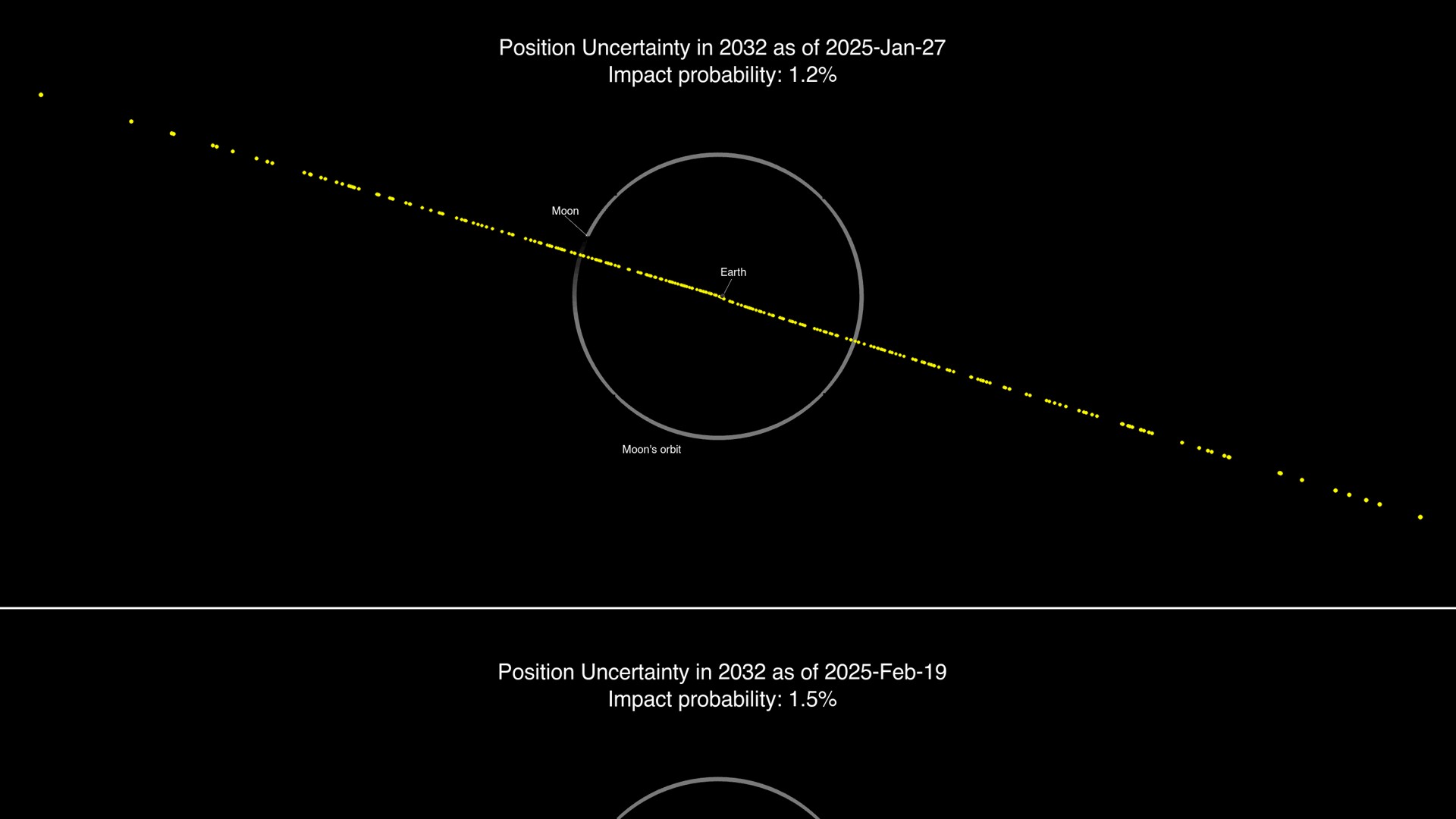
It is a real rock, roughly 53 to 67 metres wide. For a few weeks in early 2025, its calculated odds of hitting Earth on 22 December 2032 genuinely rose:
- 29 January 2025 — ESA puts the impact probability at 1.2%
- 7 February 2025 — NASA’s estimate rises to 2.3%
- 18 February 2025 — the estimate peaks at 3.1%, the highest ever recorded for an object of this size
- 20 February 2025 — new observations cut the odds sharply, to 0.28%
- 24 February 2025 — NASA announces 2024 YR4 poses no significant threat to Earth in 2032 or beyond
That is how real risk behaves in public. The scary number was published, debated on front pages, and then dissolved by better data — all in the open.
Its rating on the Torino impact scale reached 3, the highest since Apophis. Within days it fell back to 0. Even a small residual chance of a Moon impact was later measured away.
Apophis tells the same story at a larger scale. Discovered in 2004, it briefly carried a 2.7 percent chance of hitting Earth in 2029, and the highest Torino rating ever given.
On 13 April 2029, Apophis will pass about 31,000 kilometres from Earth’s surface — closer than geostationary satellites, and visible to the naked eye.
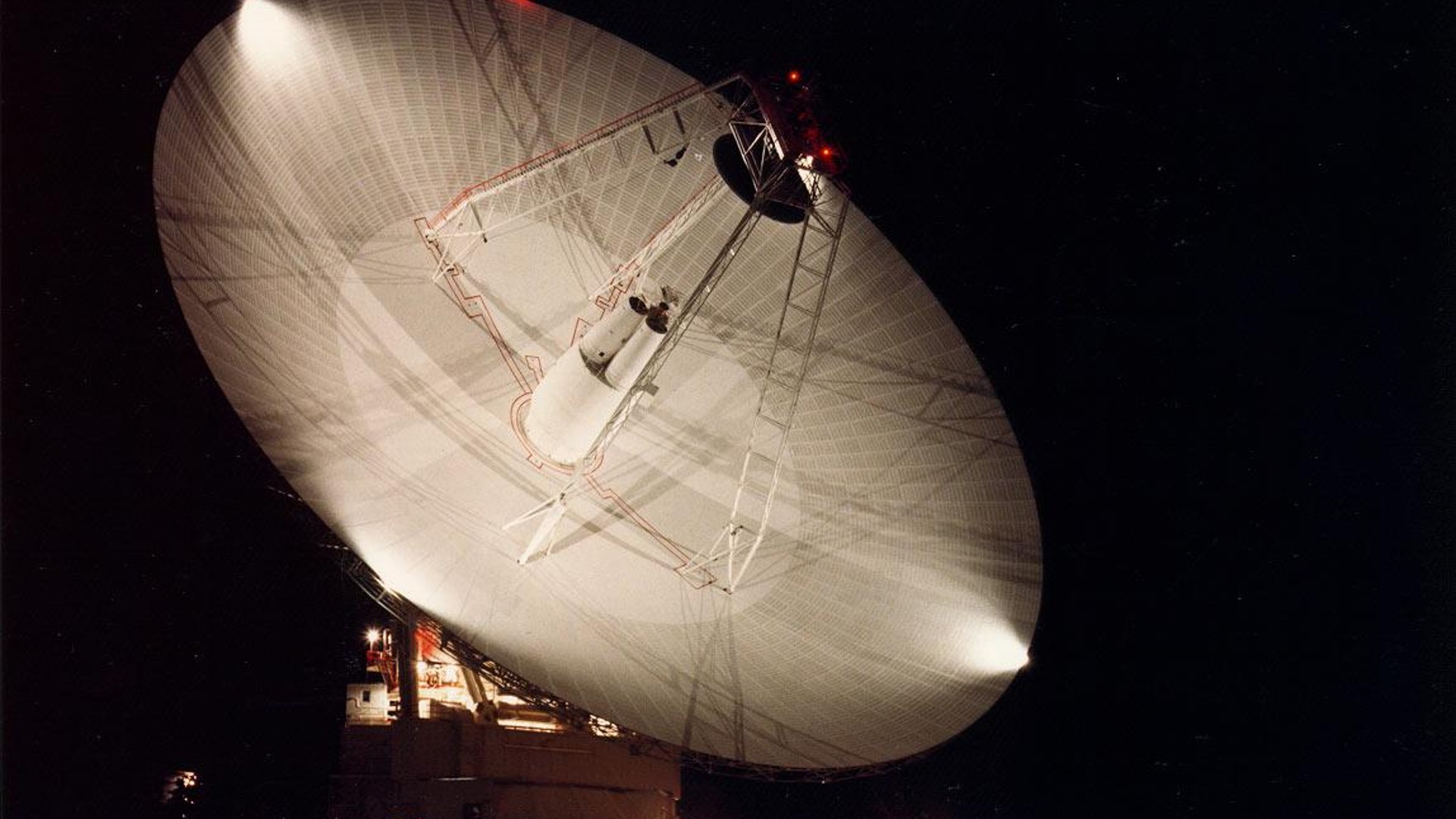
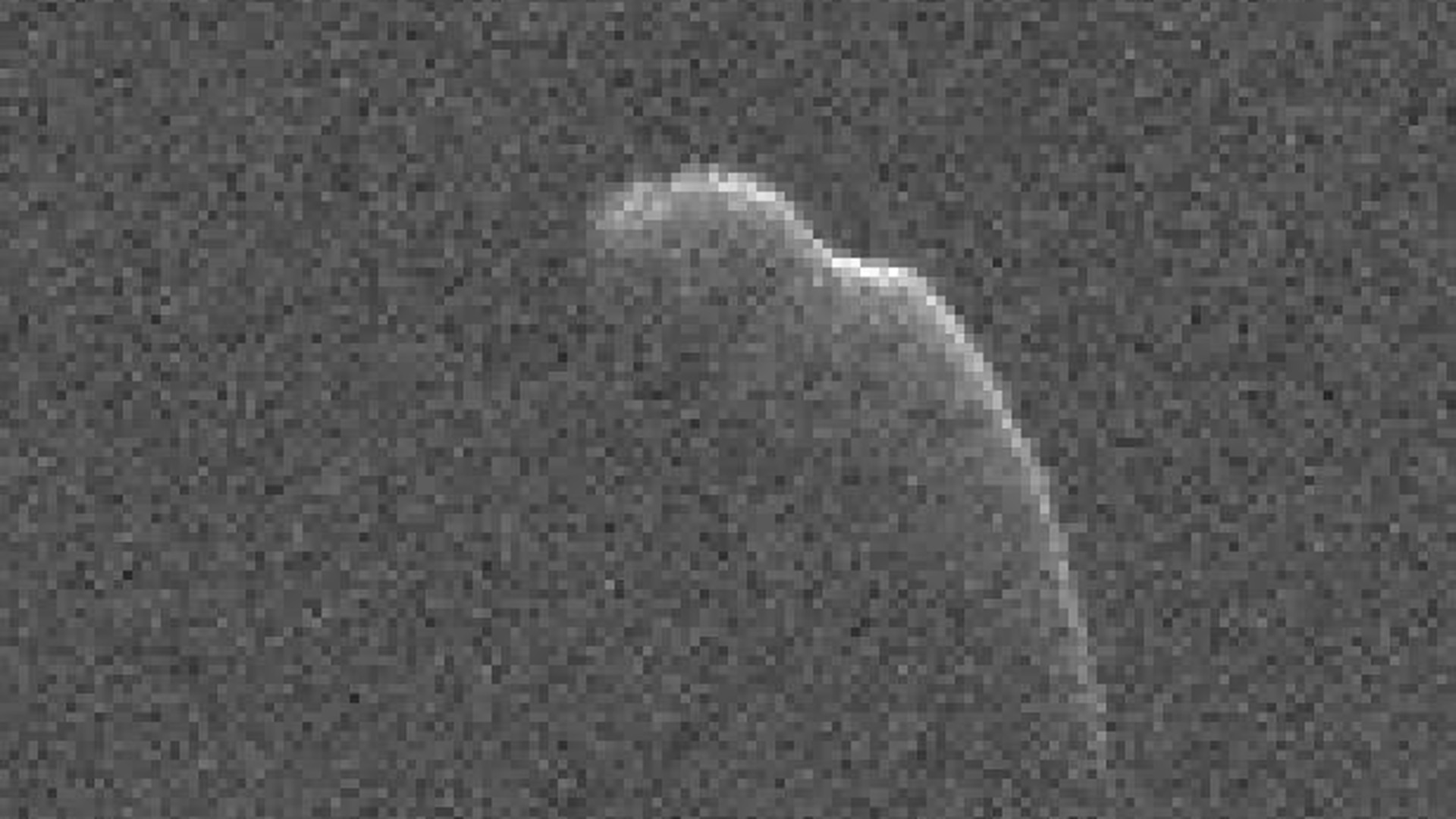
It will miss. Radar observations from Goldstone and Green Bank in March 2021 pinned its orbit so precisely that scientists ruled out any impact for at least a century.
Notice the pattern across every real case. Probabilities start small, wobble as data improves, and collapse toward zero. None has ever stood anywhere near 96 percent.
The Verdict
Debunked. NASA never predicted a 96 percent chance of an asteroid wiping out life in 2027. The number was written by exercise organisers, about an asteroid that does not exist.
Every persuasive element of the hoax is borrowed: a real agency, a real document, a real warning network’s name, wrapped around a scenario its authors labelled as fiction on every page.
The genuinely interesting story is the real system the hoax parasitises. Telescopes find rocks like 2024 YR4, publish the frightening numbers openly, then measure them away.
2027 will come and go without an impact, exactly as the real data says it will. The video, in some fresh upload, will probably survive it.
Join the Conversation
Did the 96 percent video reach your feed — and did the word “EXERCISE” appear anywhere in the version you saw? Tell us in the comments which version reached you.
Did NASA predict a 96% chance of an asteroid hitting Earth in 2027?
No. The 96% figure comes from a 2017 training exercise about a fictional asteroid called 2017 PDC.
Is asteroid 2017 PDC real?
No. It was invented for a Planetary Defense Conference exercise. Its documents are stamped “EXERCISE” and “NOT A REAL-WORLD EVENT”.
Is any known asteroid going to hit Earth in 2027?
No. NASA’s Sentry monitoring system lists no object with a significant impact probability in 2027.
What is 2024 YR4?
A real asteroid discovered in December 2024. Its 2032 impact odds peaked at 3.1% in February 2025, then fell to near zero as observations improved.
Will Apophis hit Earth in 2029?
No. It passes about 31,000 km away on 13 April 2029. Radar data from 2021 ruled out any Apophis impact for at least 100 years.
Read Next
- 10 Time Travelers Warned About 2027: The Pattern
- Era 666 Ends May 19, 2027: The Prophecy Explained
- The Pergamon Altar and the 2027 Prophecy
