
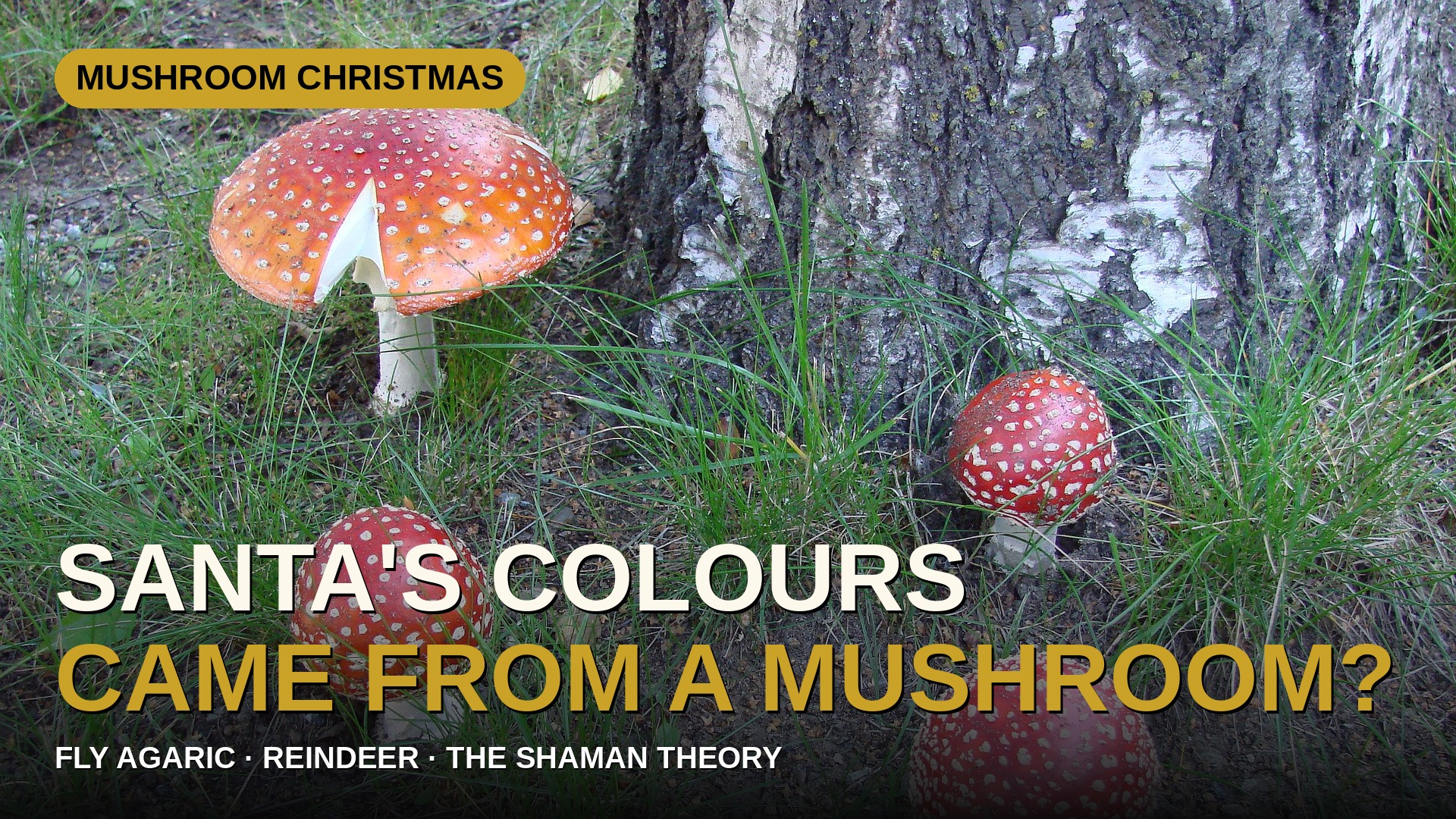
The Magic Mushroom Christmas Theory
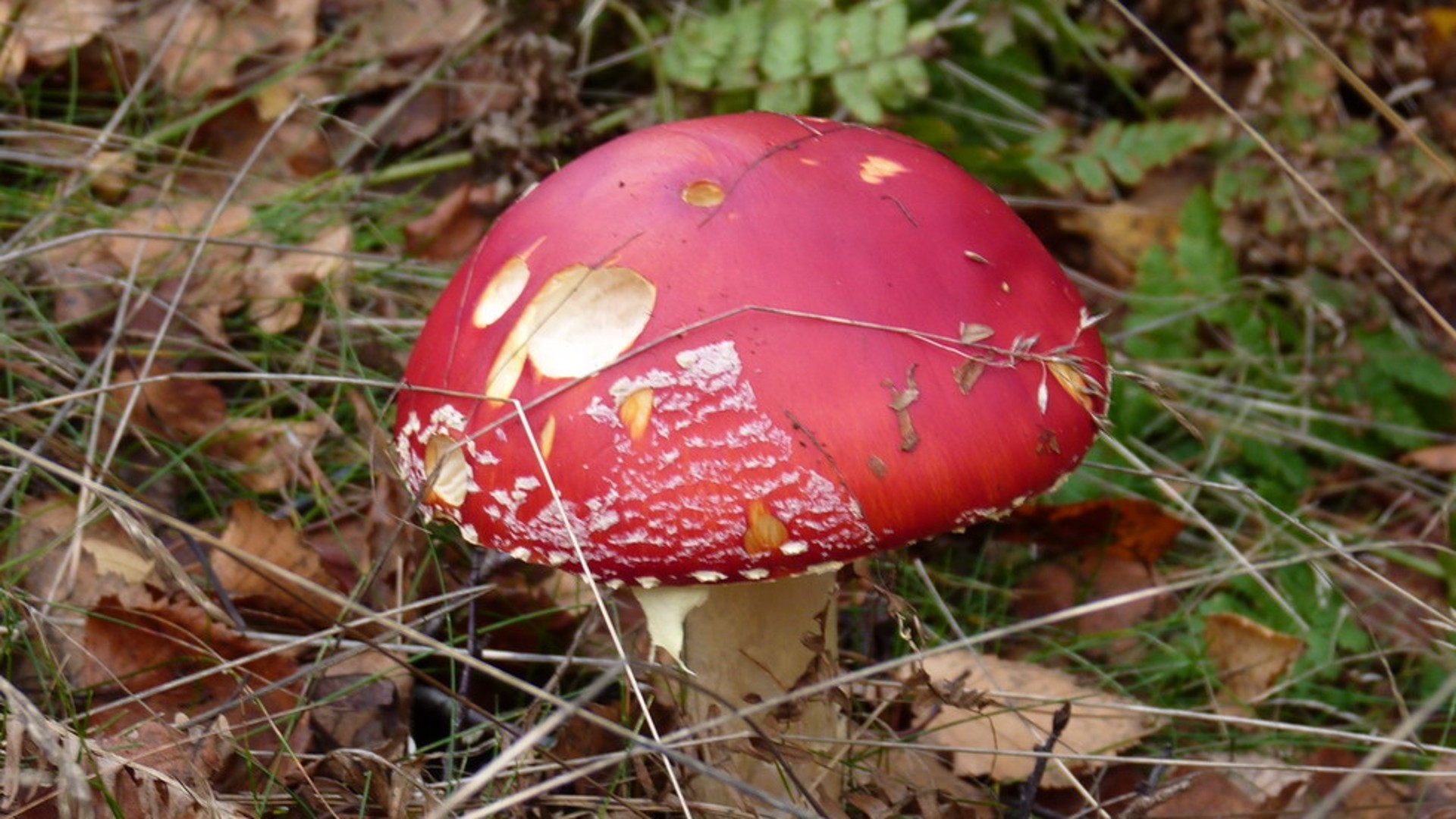
Here is the most colourful explanation of Christmas you will hear this year: Santa Claus is a Siberian shaman, his suit is a mushroom, and his reindeer really did fly — inside his head.
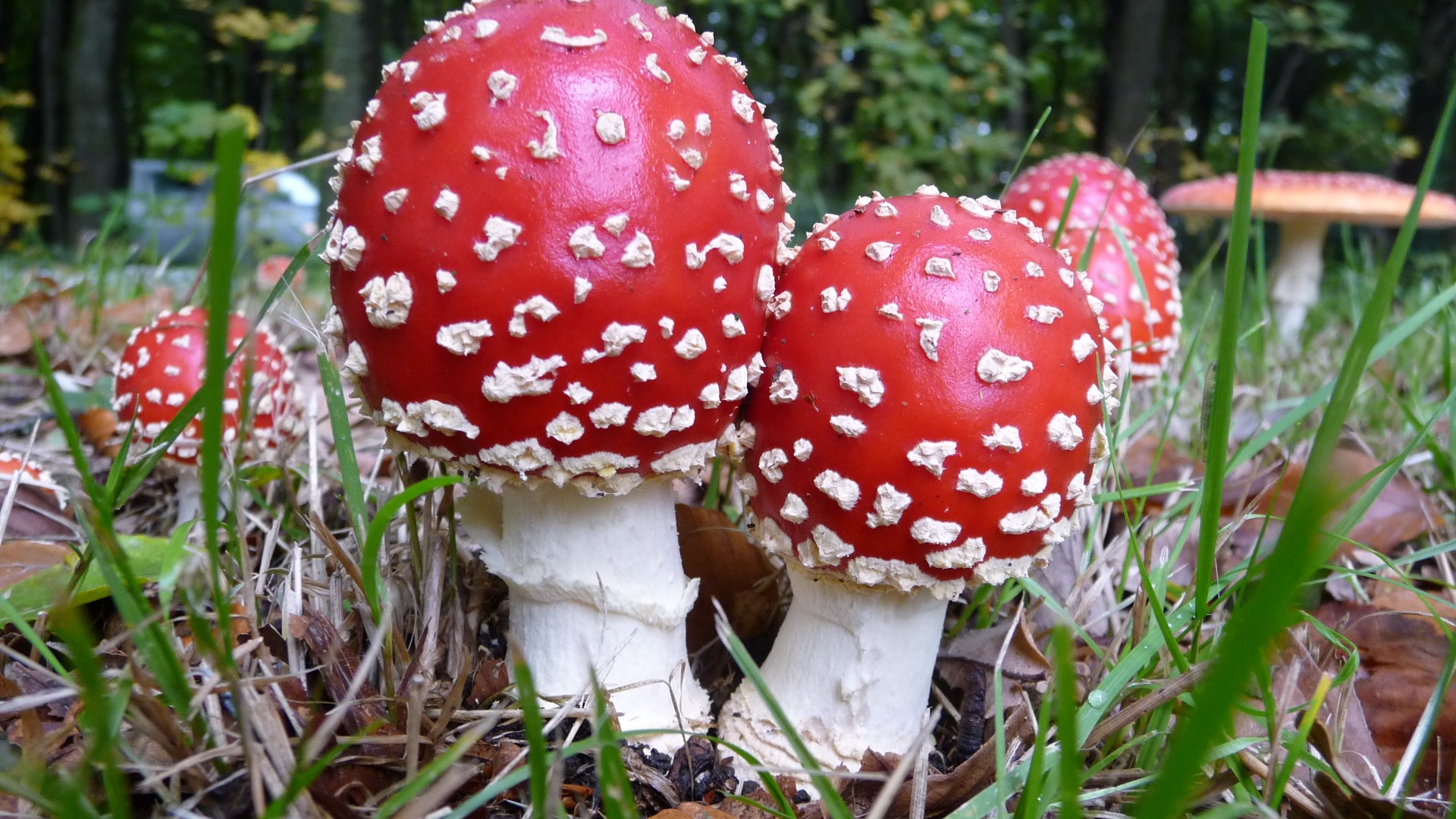
The mushroom is real. Amanita muscaria, the fly agaric, is the red-capped, white-spotted toadstool from every storybook, and Siberian peoples genuinely used it for centuries.
Reindeer genuinely eat it. Shamans genuinely carried sacks, wore red, and climbed through the smoke holes of snowed-in homes. Every ingredient in this theory exists.
What has never been found is the recipe: a single document connecting any of it to Santa. The theory is a bridge built from both ends that never meets in the middle.
There is a reason the theory feels visual before it feels historical: the fly agaric is the mushroom we all drew as children — the storybook toadstool, the garden ornament, the emoji.
So let us walk it honestly — what the theory claims, what the ethnography actually shows, and what Santa’s documented paper trail says instead.
Key Facts
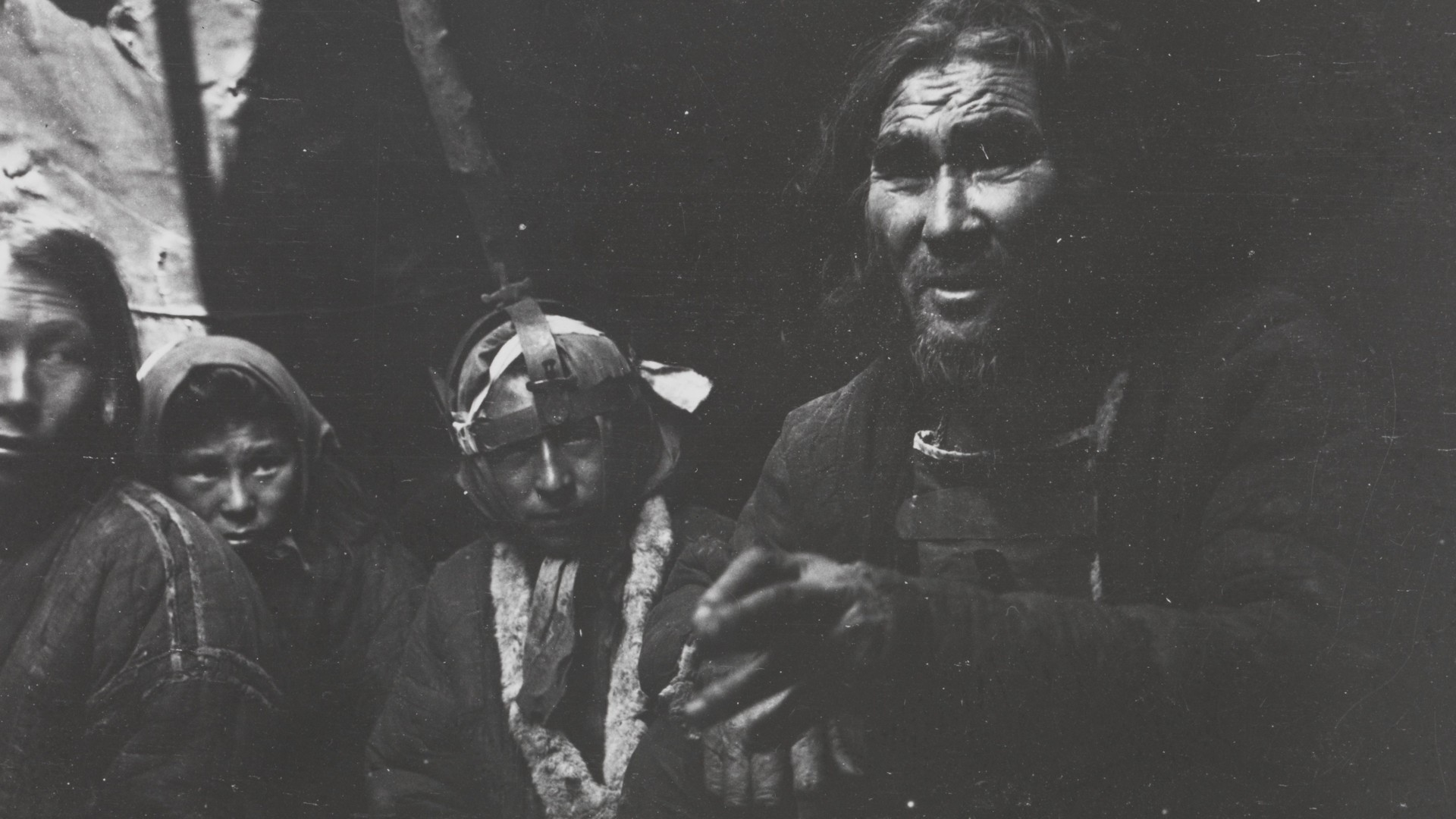
- Amanita muscaria use in Siberia is documented from the 1700s: a Swedish officer’s account, published in English in 1736, describes Koryak people drinking it as a tea — and drinking users’ urine to extend the effect.
- Reindeer seek out fly agaric and eat it, showing signs of intoxication. That much is observed animal behaviour, not legend.
- Flying reindeer enter the record in one place: an anonymous poem in New York’s Troy Sentinel on December 23, 1823, complete with eight named reindeer, a miniature sleigh and a chimney descent.
- Santa wore red long before Coca-Cola: a red-suited Santa appears on an American magazine cover in 1902, and White Rock drinks ads used one in 1923. Haddon Sundblom’s famous Coke Santas began in 1931.
- The mushroom theory of religion descends from R. Gordon Wasson’s Soma (1968) and John Allegro’s The Sacred Mushroom and the Cross (1970), which scholars repudiated on publication.
- No medieval or early modern source — not one sermon, saga or Sinterklaas account — mentions mushrooms in connection with Christmas gift-bringers.
The Theory

The theory, in its fullest form, is a point-by-point translation of Christmas into mushroom. Take it piece by piece.
The Suit
Start with the colours. The fly agaric cap is scarlet with white flecks; Santa’s suit is scarlet with white fur. Promoters say Siberian shamans dressed in red and white to honour the mushroom.
Some versions go further: the coat, the white trim, even the boots and belt are read as the mushroom’s cap, flecks, stem and ring. Nothing about the outfit is left unexplained.
The Reindeer
Reindeer are the theory’s strongest card, because the base fact is true. Across Siberia, reindeer actively seek out fly agaric, eat it and stagger about, visibly intoxicated.
Harvard mycologist Donald Pfister has suggested the next step: herders who ate the mushroom themselves may have hallucinated that their grazing reindeer were flying.
In some versions, the reindeer are also the filter: people drank the urine of mushroom users — a recycling Strahlenberg really did record — because the active compound survives the body while much of the poison does not.
In the theory, reindeer are also the shaman’s spirit animals and guides. A man who flies in trance, led by reindeer, becomes — centuries later — a man whose reindeer fly in fact.
The Chimney, the Sack and the Stockings
Anthropologist John Rush of Sierra College tells the delivery story this way: shamans collected fly agaric, dried it, and handed it out as gifts around the winter solstice.
Deep snow blocked the doors, so the shaman entered through the smoke hole in the roof. A visitor arriving by chimney, carrying a sack of gifts, needs no translation.
Drying gets its own verse of the theory. Fresh fly agaric is more toxic, so caps were hung to dry — on pine branches, promoters say, like ornaments, or in stockings by the fire.
The Tree and the Presents
James Arthur, in Mushrooms and Mankind, asked why people carry a pine tree indoors at the solstice and pile red-and-white packages beneath it.
His answer: that is exactly where the mushroom is found. Fly agaric grows in partnership with pine and birch roots, fruiting at the base of the trunk — nature’s gift, already wrapped in red and white.
Put the whole translation together and it looks like this:
- Red suit with white trim → the fly agaric’s cap and flecks
- Flying reindeer → mushroom-eating reindeer, and trance flight
- Chimney entry → the smoke hole of a snowed-in Siberian home
- The sack of gifts → the shaman’s bag of dried mushrooms
- Presents under the pine → mushrooms fruiting at the pine’s base
- Ornaments and stockings → mushrooms hung up to dry
The Family Tree of the Idea
The theory has ancestors, and they are books. In 1968, banker-turned-ethnomycologist R. Gordon Wasson argued the Vedic sacred drink soma was fly agaric — the mushroom at the root of religion.
In 1970, Dead Sea Scrolls scholar John Allegro went further: Christianity itself, he claimed, was a coded mushroom cult, its scriptures hiding the sacrament in wordplay.
Allegro even claimed visual proof: a 13th-century fresco in France’s Plaincourault Chapel, where the tree of Eden, he said, is painted as a fly agaric. Art historians read the same image as a stylised tree.
Fifteen British philologists wrote to The Times calling Allegro’s book “an essay in fantasy rather than philology”. He resigned his Manchester post; his publisher apologised.
The Santa version came later, assembled by writers like Arthur and spread through talks, documentaries and podcasts. Each generation added a detail the last one had only implied.
The Historical Record
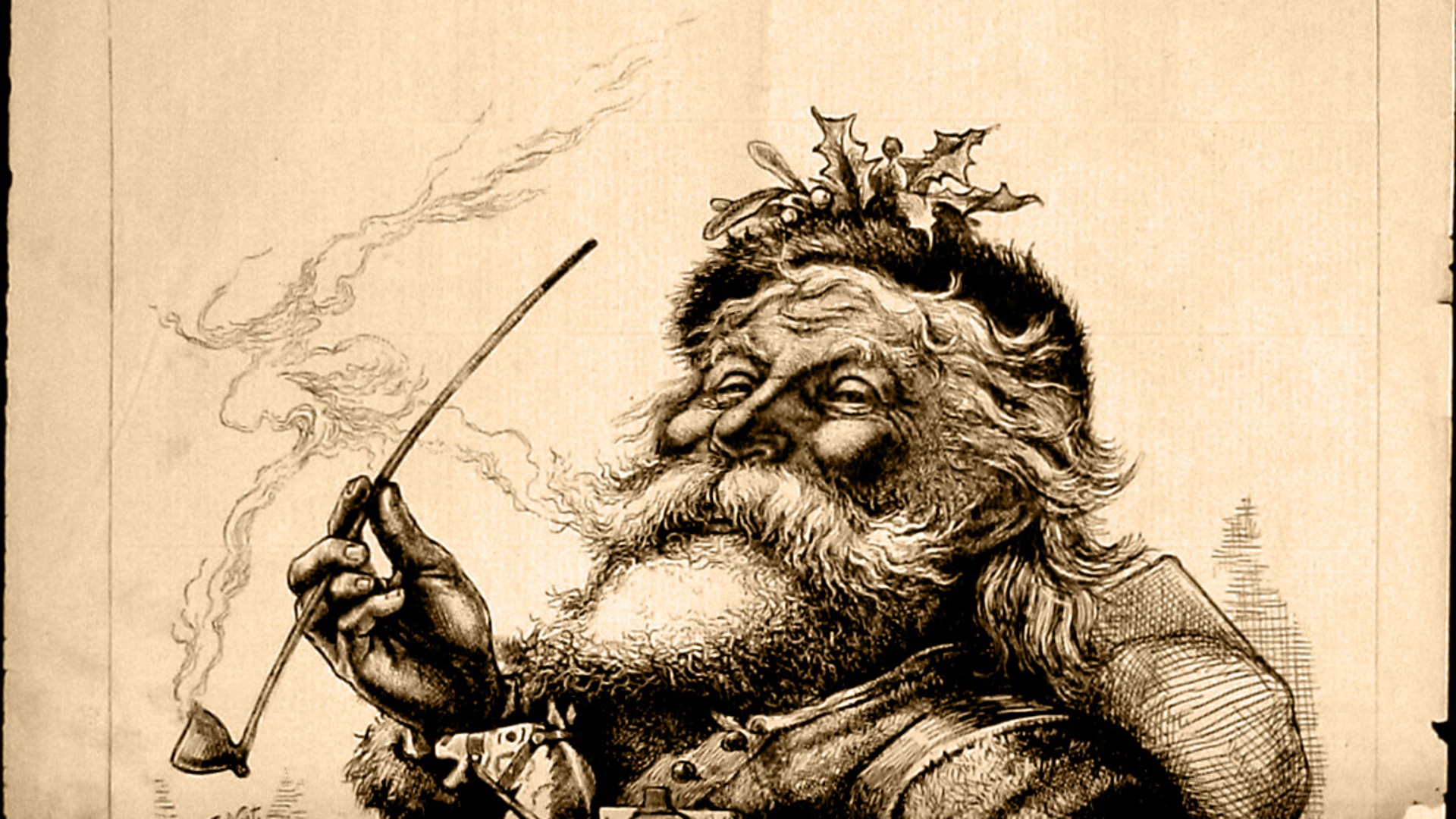
Against that story sits a paper trail. Santa is one of the most documented fictional figures on earth, and his file never mentions a mushroom.
A Bishop, Not a Shaman
The trail starts with Nicholas, a 4th-century bishop of Myra, in what is now Turkey. His feast day is December 6, and legend made him a secret gift-giver.
In the famous tale, Nicholas drops gold through a poor man’s window on three nights — dowries for three daughters. Secret gifts, delivered at night, while the house sleeps.
Dutch settlers carried his feast to New Amsterdam as Sinterklaas, and English-speaking Americans reshaped the name into Santa Claus, as Britannica’s St. Nicholas entry lays out.
One Poem Builds the Sleigh
Flying reindeer do not drift out of prehistory. They debut in a single text: “A Visit from St. Nicholas”, printed anonymously in the Troy Sentinel on December 23, 1823.
In 56 lines the poem supplies the whole kit: a miniature sleigh, eight tiny reindeer with names, flight “like the down of a thistle”, a chimney descent and stockings filled in silence.
Authorship is credited to Clement Clarke Moore, who claimed it in 1837; Henry Livingston Jr.’s family argued it was his. Either way, the reindeer have a publication date, not a cult.
Even the ninth reindeer has paperwork: Rudolph was added in 1939, more than a century after the poem. The mythology kept being written — in print, on deadlines, by named people.
Paint Fixes the Suit
Cartoonist Thomas Nast drew Santa for Harper’s Weekly from 1863, giving him the beard, belly, sack and North Pole address across some thirty Christmas images.
Nast worked in black and white, but colour print followed: a Puck magazine cover put Santa in a red coat with white fur in 1902. White Rock used a red-suited Santa in ads in 1923.
Coca-Cola’s Haddon Sundblom began painting his Santas in 1931 and standardised the jolly look for three decades. Coke’s own history page concedes Santa wore red before Sundblom.
Sundblom kept painting them until 1964, modelling the face first on Lou Prentiss, a retired salesman and friend. The most “ancient” thing about the modern Santa may be a 20th-century salesman’s face.
The Gap in the Middle
None of this denies the Siberian record. Koryak and Chukchi mushroom use is real ethnography, written down by outsiders from the 1700s onward.
But Siberia’s mushroom peoples and New York’s gift-bringer never meet in any document. There is no route — no text, trade good or traveller’s tale — carrying the custom between them.
Sámi scholar Tim Frandy adds a local problem: evidence that Sámi shamans used fly agaric ritually is scant. Their trance tools were more often drums, song, alcohol or pain.
Frandy also notes that the Sámi midwinter figures we actually know about — beings like the Stállu — were frightening enforcers, not gift-bringers. The local record points away from Santa, not toward him.
It is the same move Allegro made in The Sacred Mushroom and the Cross: resemblance first, documents later — except the documents never arrive.
The Verdict
UNRESOLVED — as a claim about history, the magic mushroom Christmas theory cannot be confirmed, and after fifty years of looking, that itself is a finding.
Be fair to its ingredients. The mushroom is real, the Siberian use is documented, the reindeer behaviour is observed, and red-and-white really is a striking match.
But a theory of origins needs a chain, and every link here is missing. Santa’s traits each have dated, documented, mushroom-free sources: a bishop, a poem, a cartoonist, an ad agency.
What is confirmed is the narrative’s durability. It survives because it offers Christmas a secret, wilder childhood — and because its pieces are just true enough to carry the whole.
That durability is not evidence, but it is data. It tells us a decorated tree and a red suit feel far older than 1823 — and when the real dates feel too recent, people reach for a mushroom.
Until a document surfaces linking a mushroom rite to a gift-bringer, the honest label stands: a beautiful theory, filed under folklore about folklore.
Join the Conversation
Be honest: does the mushroom version change how the tree and the suit look to you now — even a little? Or does the paper trail settle it?
Tell us in the comments which detail you find hardest to explain away: the chimney, the reindeer, or the colours. We read every one.
Did Santa Claus really come from Siberian shamans?
There is no documented evidence for it. Santa’s traits trace through St Nicholas, Dutch Sinterklaas, an 1823 poem and 19th-century illustrators — none of them mentions mushrooms.
Do reindeer really eat magic mushrooms?
Yes. Reindeer seek out Amanita muscaria and show signs of intoxication, and Siberian peoples used the mushroom ritually — both documented from the 1700s onward.
Did Coca-Cola invent Santa’s red suit?
No. Red-suited Santas appear in print by 1902 and in White Rock ads in 1923. Coca-Cola’s artist Haddon Sundblom standardised the look from 1931; he did not create it.
Where did flying reindeer come from?
The poem “A Visit from St. Nicholas,” published in New York’s Troy Sentinel on December 23, 1823. It gave Santa eight named flying reindeer, a miniature sleigh and a chimney descent.
Who first linked mushrooms to the origins of religion?
R. Gordon Wasson argued in 1968 that the Vedic drink soma was Amanita muscaria. John Allegro extended the idea to Christianity in 1970; scholars repudiated his book on publication.
Read Next
- The Statue of Liberty Santa: Who Was Flying Over NY?
- The Nimrod Christmas Tree Theory, Debunked
- Tesco’s ‘Evergreen Trees’: A War on Christmas?
