
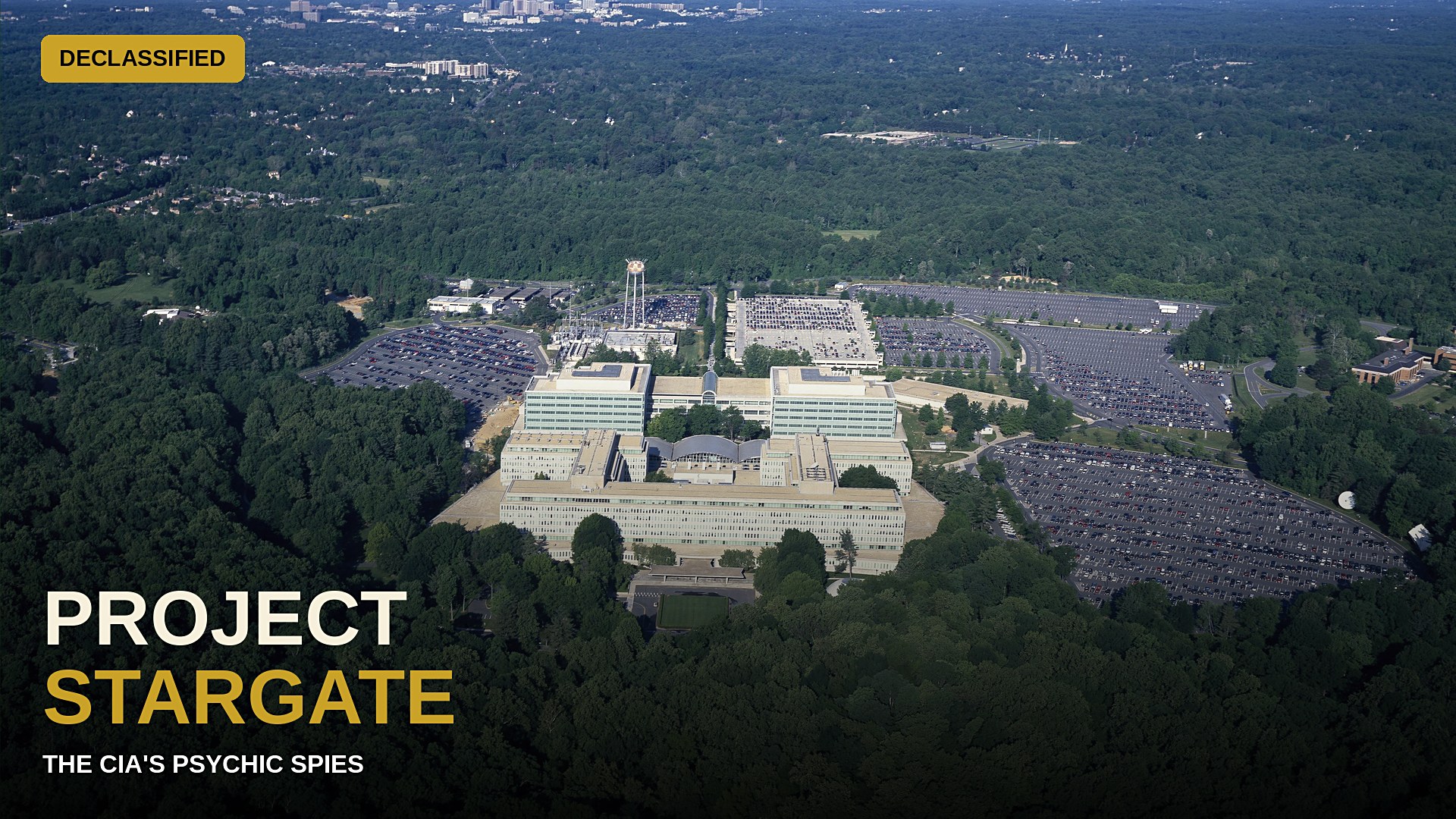
In September 1995, former president Jimmy Carter stood in front of students at Emory University and told them a story he had kept quiet for years. During his presidency, a Soviet spy plane had crashed somewhere in Africa, and America’s spy satellites could not find it.
So the CIA asked a psychic. She went into a trance, Carter said, and gave some latitude and longitude figures. “We focused our satellite cameras on that point — and the plane was there.”
The program behind that story was Project Stargate: the US government’s real, documented, two-decade experiment in psychic spying.
It cost around $20 million, employed soldiers who claimed they could see across oceans with their minds, and left behind thousands of declassified files. The program was real. Whether it ever worked is a very different question.
Why America Built Project Stargate
Project Stargate was born from a fear: that the other side was already doing it. Around 1970, US intelligence reported that the Soviet Union was pouring money — by one estimate, 60 million rubles a year — into “psychotronic” research, hunting for ways to weaponise the mind.
Washington’s response was not to laugh. It was to write cheques. In the early 1970s the CIA funded a first effort codenamed SCANATE — “scan by coordinate” — and in 1972 the work landed at the Stanford Research Institute (SRI) in Menlo Park, California, a respectable research contractor with plenty of government clients.
The proposition was called remote viewing: the claim that a person, given nothing but a set of map coordinates, could describe a distant place they had never seen — a missile site, a submarine pen, a hostage’s room. If even a fraction of it worked, it would be the cheapest spy satellite ever built. That “if” kept the money flowing for 23 years.
The SRI Years: Swann, Price and the First Famous Sessions
At SRI, two laser physicists, Harold Puthoff and Russell Targ, ran the experiments. Their star subjects were not soldiers but civilians who claimed the gift.
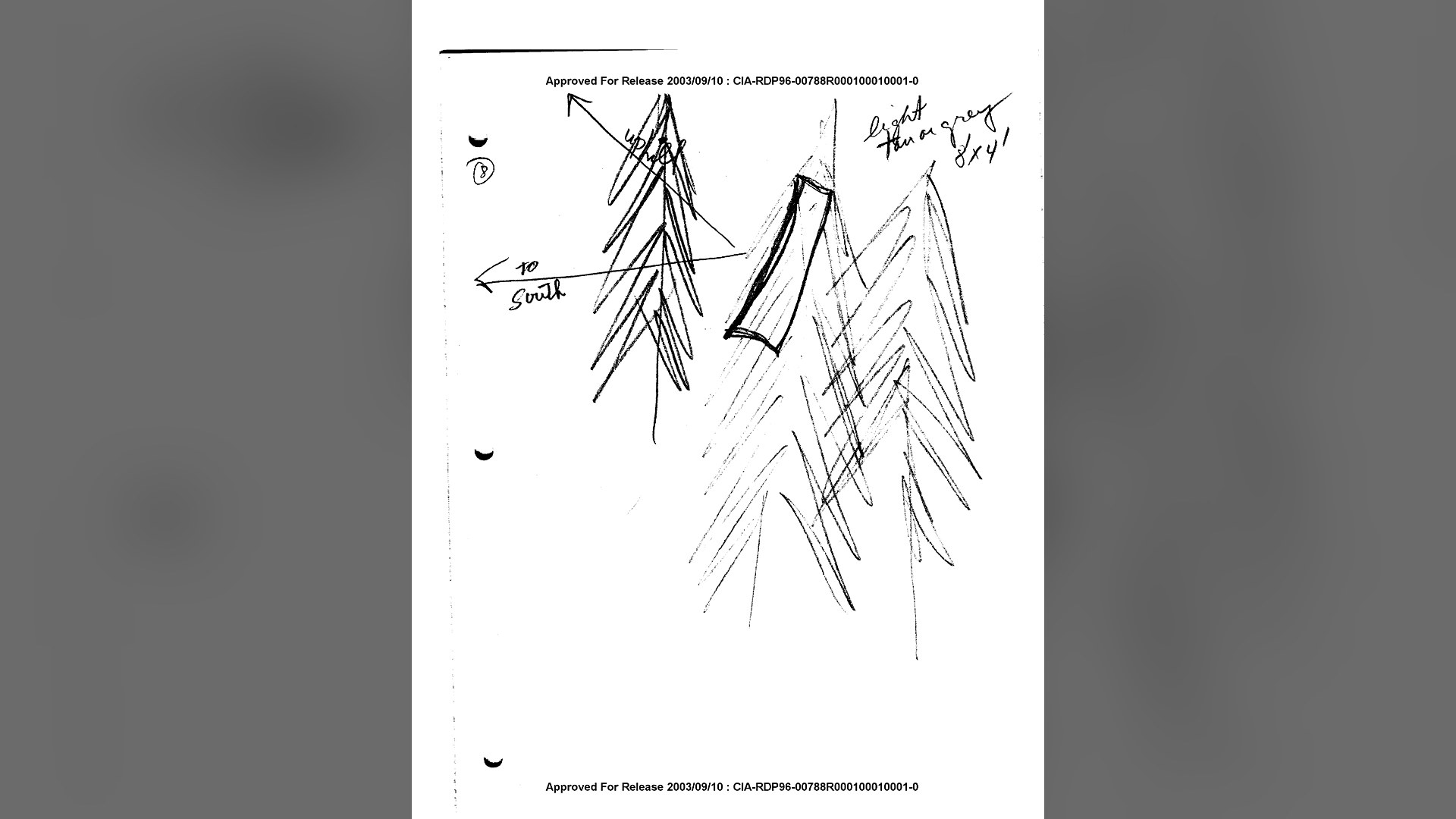
The most important was Ingo Swann, a New York artist who argued that raw psychic impressions were too chaotic to test, and helped turn them into a method: give the viewer only coordinates, let them sketch and describe in stages, and keep their guessing, analytical mind out of the way. That protocol became the backbone of military remote viewing. In 1973 the lab even tested celebrity spoon-bender Uri Geller, whose sessions the CIA later declassified.
In 1974, Targ and Puthoff published their results in Nature, one of the world’s most demanding science journals — a credibility coup the field has dined out on ever since. Critics, including psychologist Ray Hyman, inspected the work and reported loose controls and subtle cues that could have leaked answers to the subjects.
Pat Price and the Soviet Facility
The case that made believers was Pat Price, a former California police commissioner. In 1974, given only the coordinates of a Soviet weapons facility at Semipalatinsk, in what is now Kazakhstan, Price described the site in unsettling detail — including a huge gantry crane and spherical structures — that supporters say matched later satellite reconnaissance.
It is still quoted as proof. It deserves its fine print: Price had served in naval intelligence and moved in intelligence circles, and Semipalatinsk was a known Soviet test site discussed in open publications.
Whether he saw it psychically, or knew more than he let on, cannot now be settled. Price died of a heart attack in Las Vegas in 1975, taking any answers with him.
Fort Meade: Grill Flame, Center Lane and Sun Streak
The research was only half the story. The Army wanted operators of its own.
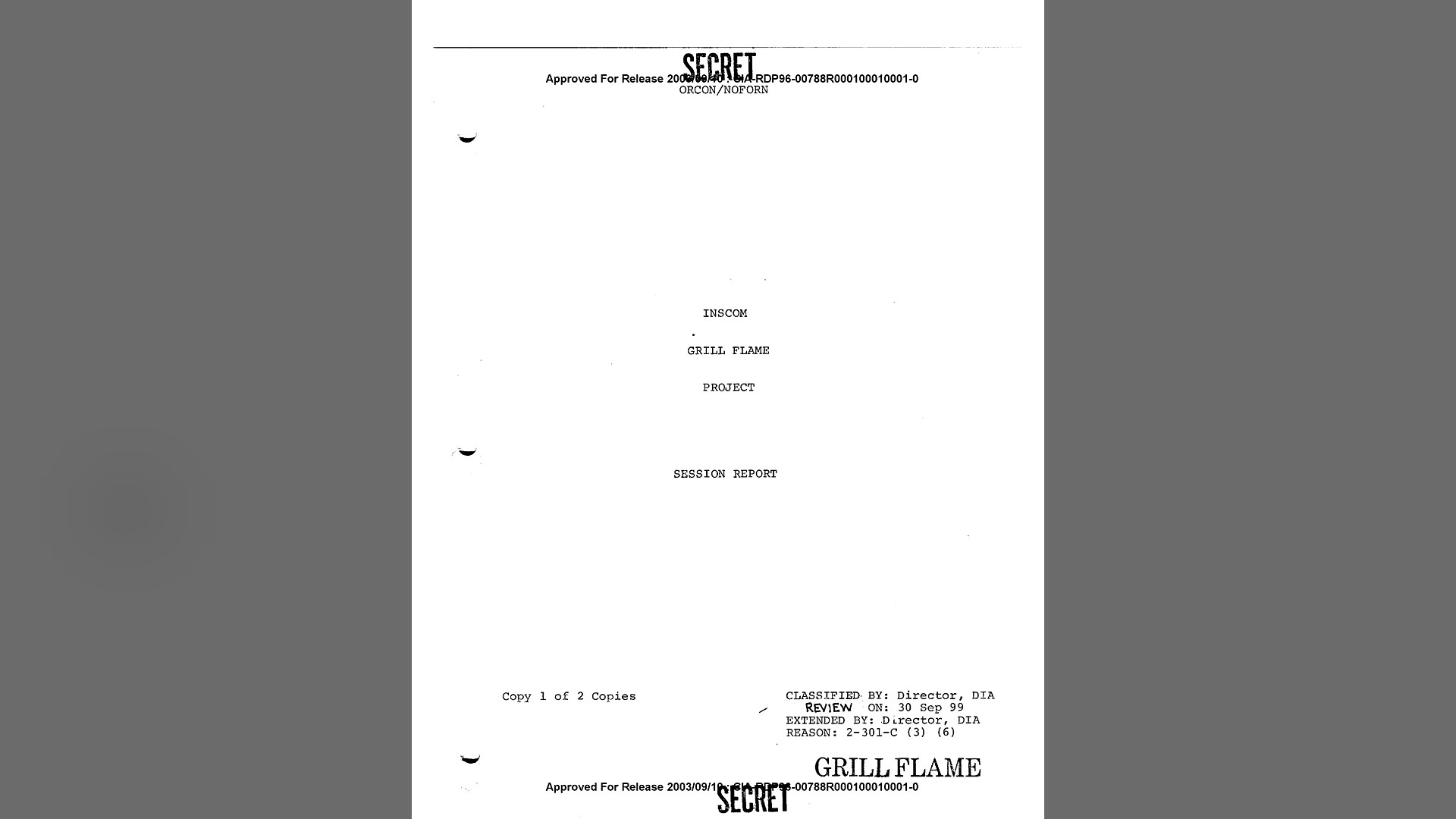
In 1977 the Army began building a unit — first Gondola Wish, then, from 1978, Grill Flame — based in two unremarkable buildings, 2560 and 2561, at Fort Meade, Maryland.
Its viewers were soldiers and a few civilians, selected for supposed natural ability and overseen for years by Lt. Frederick “Skip” Atwater. In 1983 the unit became Center Lane, and Swann’s staged method was turned into a training program meant to teach ordinary soldiers to view.
The secret did not hold. In April 1984, syndicated columnist Jack Anderson told the country the Army was training psychics.
The same year, a National Research Council review commissioned by the Army came back unfavourable. When Army funding ended in late 1985, the unit did not die — it moved to the Defense Intelligence Agency and became Sun Streak.
In 1991 everything — the DIA unit and the research contracts, by then run by SAIC under physicist Edwin May — was consolidated under one name: Star Gate.
The unit stayed small, around 15 to 20 people, but it was handed real targets: Soviet installations, missing aircraft, hostages.
The Famous Hits — and Their Fine Print
Ask a believer for proof and you will hear the same handful of stories. They are worth hearing — carefully.
The Viewer Who Got a Medal
Joseph McMoneagle, an Army chief warrant officer, was the unit’s first operational viewer — “Viewer 001” — and its most prolific, running hundreds of missions by his own account.
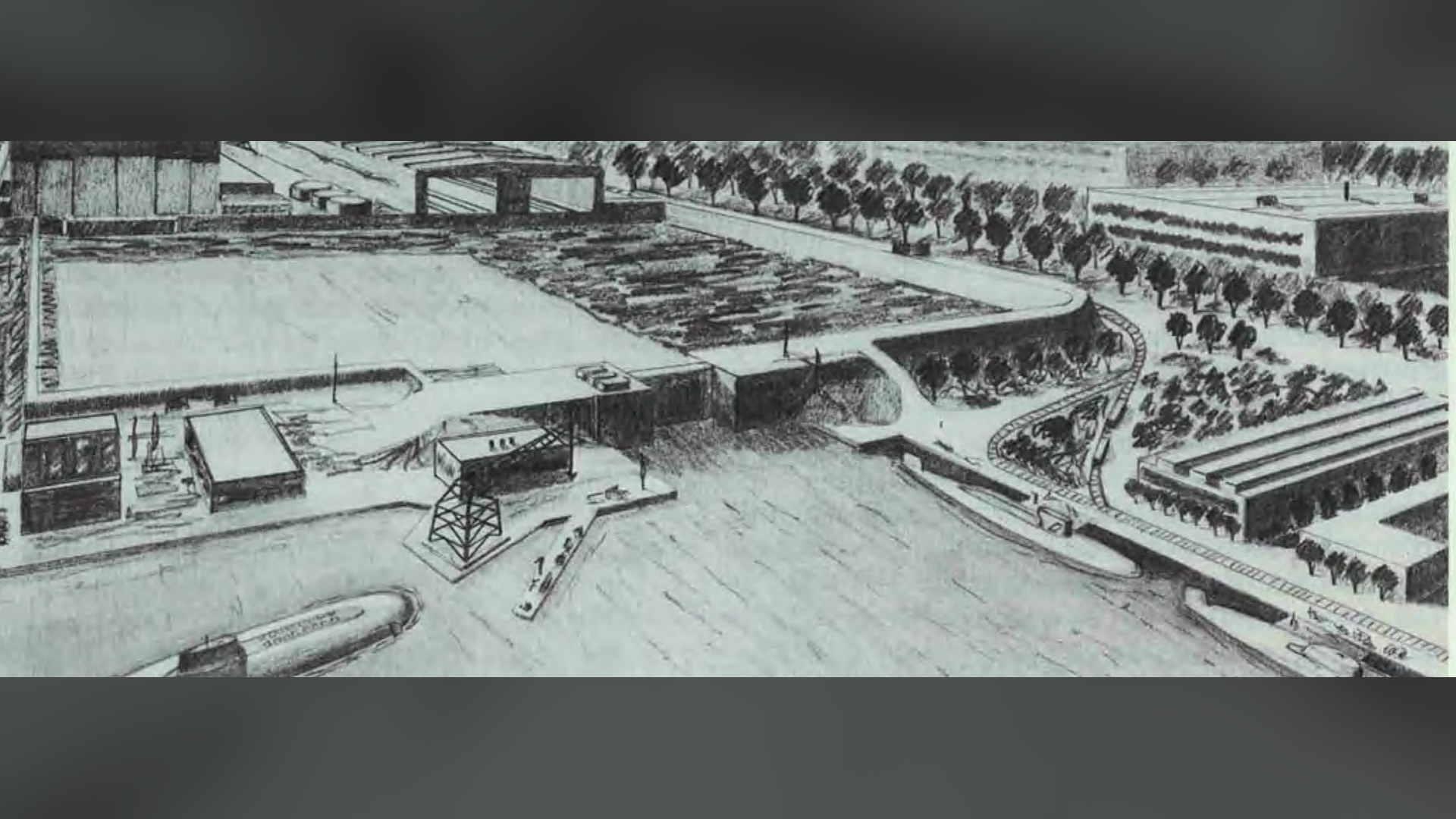
In 1979, he says, he described an enormous new Soviet submarine under construction inside a building at Severodvinsk, with a double hull and rows of missile tubes, months before the West confirmed the giant Typhoon class existed.
In 1984 he received the Legion of Merit, with a citation crediting him with intelligence on some 150 targets.
Armies do not hand out that medal for nothing — though the citation honours his service, not the existence of psychic powers.
The President and the Plane
Then there is Carter’s story. The aircraft was a Soviet Tu-22 spy plane that came down in Zaire; satellites swept the jungle and found nothing.
Program accounts name the viewer as Rosemary Smith, an Air Force viewer who marked the spot on a map of Africa, and the wreck was found close to her coordinates.
Carter himself, retelling it in 1995, added the honest footnote: he processed it “with skepticism,” and could not rule out “a gross coincidence.”
The General in Padua
In December 1981, the Red Brigades kidnapped US General James Dozier in Italy. Viewers were tasked, and McMoneagle later said he had described Dozier held in an apartment in Padua, with details of the building. Dozier was indeed held in Padua — and freed after 42 days by Italian commandos acting on conventional police work. The viewers’ information did not lead them there.
That gap — between a session that sounds right afterwards and intelligence a commander can actually act on — is the whole Stargate story in miniature.
The Hostages Nobody Found
The pattern repeated through the program’s operational years. During the Iran hostage crisis of 1979–81, viewers were tasked again and again on the American hostages — where they were held, how they were guarded, how their health was holding up.
Believers still cite details from those sessions as hits. The record shows something plainer: the hostages came home through diplomacy, after 444 days, and no rescue or negotiation was ever steered by a viewing session.
Tasked often, used never — that was the operational reality, whatever the transcripts seemed to say afterwards.
Why the Hits Don’t Prove Project Stargate Worked

Here is the problem nobody could engineer away: judging. A remote viewing session produces pages of sketches and impressions — a few specific, most vague.
Afterwards, someone has to decide how well that output “matches” the target. Humans are pattern-finding machines, and given a rambling transcript and a real location, we are superb at finding the matches and forgetting the misses.
Psychologists call it subjective validation. Hyman’s verdict on the Stargate data was blunt: the overwhelming mass of it was “vague, general, and way off target,” and the few apparent hits were about what you would expect from “reasonable guessing and subjective validation” alone.
Then there is the arithmetic. Across two decades the program ran thousands of sessions against hundreds of targets.
Pure chance guarantees a scattering of eerie near-matches — and those are precisely the sessions that get written into books, while the failures stayed in filing cabinets. The famous hits are real documents. What they are not is a controlled demonstration.
And when intelligence professionals were asked the only question that mattered — did any of this ever guide an actual operation? — the answer, recorded in the program’s own final evaluation, was no.
1995: The Review That Killed Project Stargate
In 1995, Congress moved the program from the DIA to the CIA, and the CIA did something it rarely does: it asked outsiders whether the thing worked.
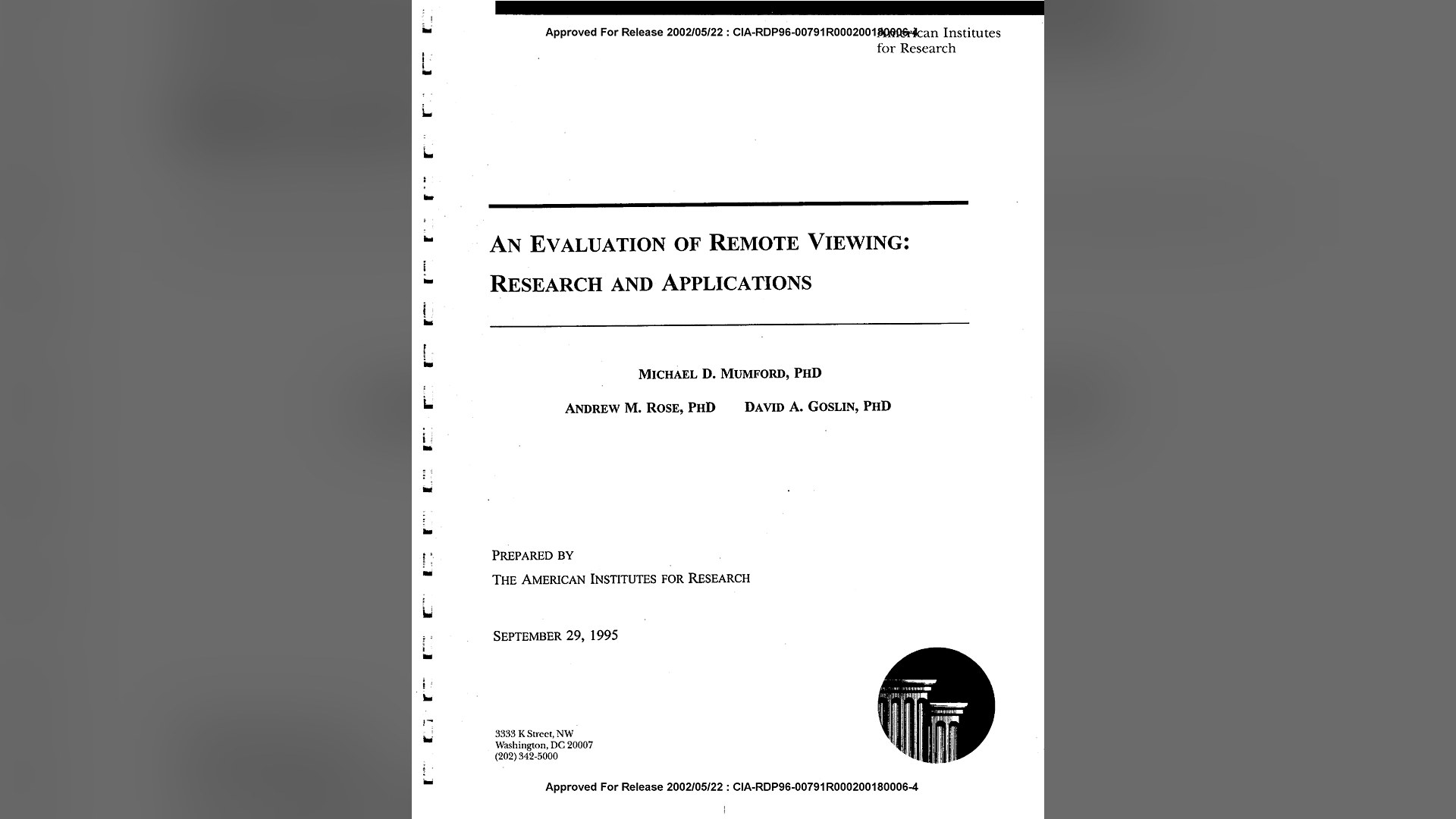
The American Institutes for Research delivered its evaluation on 29 September 1995, and it is a genuinely strange document, because its two star reviewers disagreed.
Statistician Jessica Utts examined the laboratory data and concluded the results were statistically significant — the best viewers scored perhaps 5 to 15 percent above chance, too consistently, she argued, to be luck.
Psychologist Ray Hyman examined the same record and concluded the claim was premature: the effects had never been independently replicated, the methods had holes, and a statistical wobble in a lab is not evidence of a psychic mechanism.
The program’s defenders have never accepted that as the last word. Edwin May, who had run the research contract, argued that the program was killed by embarrassment rather than evidence — that Utts had found a real effect, and that both reviewers had actually recommended more research under tighter controls.
He is right about the recommendation. What he skips is the verdict that mattered to the customer: in 23 years, no intelligence consumer had ever acted on a remote viewing report.
On the operational question, there was no split. The review found that remote viewing had produced no intelligence that was ever used to guide an operation.
The CIA terminated the program and declassified it. In November 1995, ABC’s Nightline put the psychic spies on national television, and a story the government had kept quiet for 23 years became a punchline — at that point, three full-time viewers were still working at Fort Meade on a budget of about $500,000 a year.
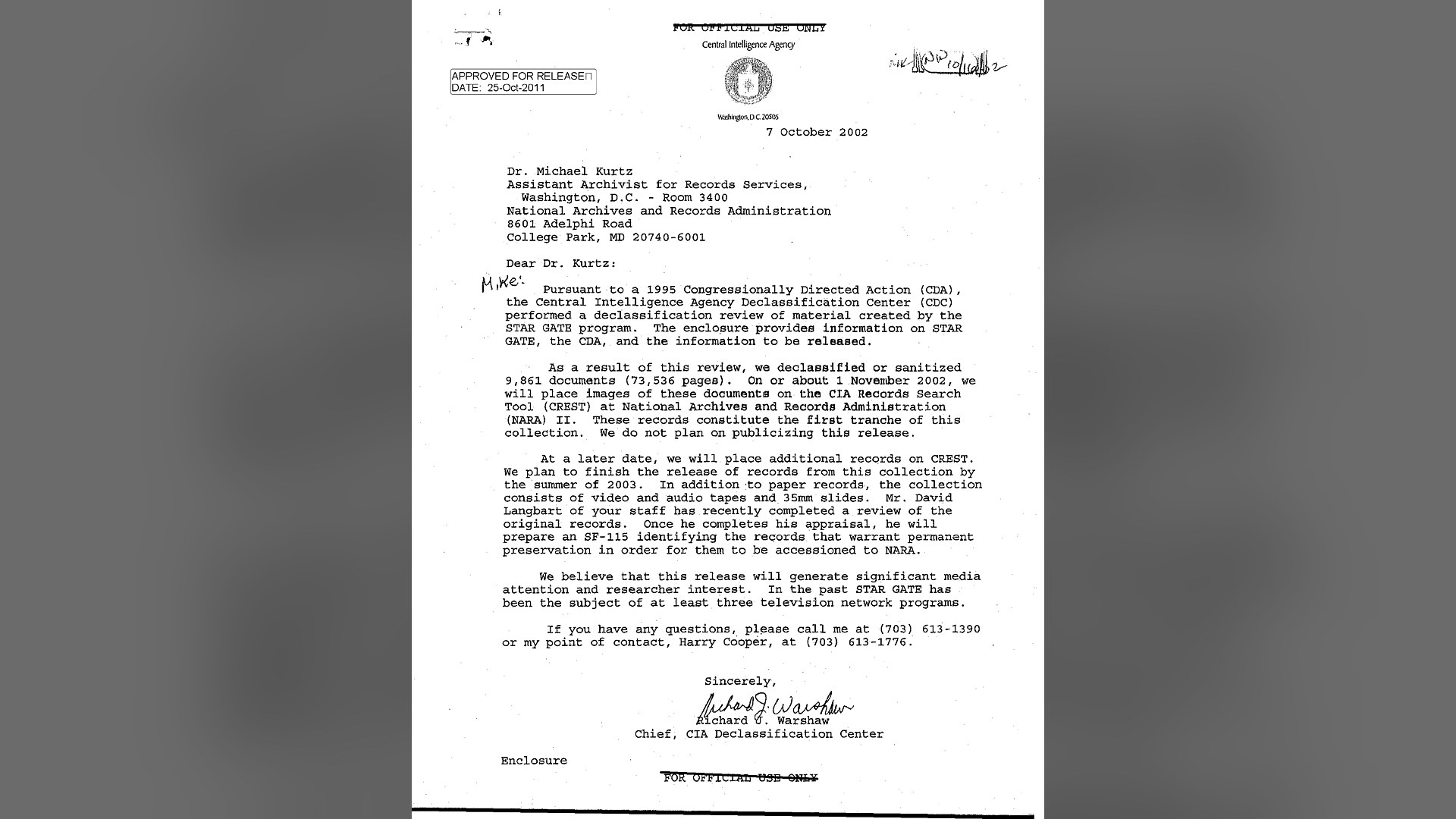
The paper trail survived. In January 2017, the CIA put its CREST archive online — some 13 million pages — including roughly 12,000 Stargate documents: session transcripts, sketches, evaluations and memos, free for anyone to read.
It remains a useful contrast with later claims of secret Pentagon programs, from the Project Blue Beam theory, for which no documents have ever surfaced, to the documented funding behind Skinwalker Ranch. Few conspiracy stories end with the government publishing the receipts. This one did.
The Verdict on Project Stargate
Verdict: Program Confirmed. Psychic spying: Unresolved — and unproven.
Strip away the legend and two facts stand. First: Project Stargate absolutely happened. The codenames, the contracts, the Fort Meade unit, the $20 million, the declassified files — all real, all documented by the government itself. Anyone who calls the program a myth has not read the archive.
Second: after 23 years and thousands of sessions, the program’s own final evaluation could not point to a single case where psychic intelligence guided a real operation, and its most careful statistical defender claimed only a modest effect above chance that no independent lab has replicated.
That is not proof of psychic spying. It is proof of how far a government will go, in a cold war, on the chance that the other side might be onto something.
No successor program has ever been officially acknowledged, and no government has produced a replicated demonstration since.
The file stays open in exactly one sense: the statistics argument Utts and Hyman started in 1995 has never been fully settled — because nobody has run the definitive experiment both sides would accept.
Frequently Asked Questions
Was Project Stargate real?
Yes. It was a real US government program that ran from the 1970s to 1995 through the CIA, Army and DIA, under codenames including Grill Flame, Center Lane, Sun Streak and Star Gate. Its documents are declassified.
Did remote viewing ever work?
It was never proven to. The 1995 AIR evaluation found statistically significant results in some laboratory experiments, but no case where remote viewing provided intelligence used in an actual operation.
How much did Project Stargate cost?
About $20 million over roughly 23 years, spread across the CIA, Army and DIA — a small unit of around 15 to 20 people at Fort Meade, plus research contracts at SRI and later SAIC.
Who was Joseph McMoneagle?
The Army’s “Viewer 001” and its most prolific operational remote viewer. He received the Legion of Merit in 1984, with a citation crediting intelligence on some 150 targets.
Can I read the Stargate files myself?
Yes. Around 12,000 Stargate documents sit in the CIA’s online CREST reading room, put on the web in January 2017 as part of an archive of some 13 million pages.
Read Next
- The “Project Blue Beam” Theory: Is a Fake Alien Invasion Being Planned? — the famous “secret sky program” that, unlike Stargate, has never produced a single document.
- Skinwalker Ranch: The Utah Property That Terrified the Pentagon — decades later, the Pentagon again paid to investigate the impossible, this time on a ranch in Utah.
Join the Conversation
So where do you land on Project Stargate? A genuine phenomenon the evaluators were too cautious to endorse — or twenty years of wishful thinking on government letterhead?
And be honest: if you ran intelligence during the Cold War and heard the Soviets were trying it, would you have signed the cheque? Tell us in the comments below.
