
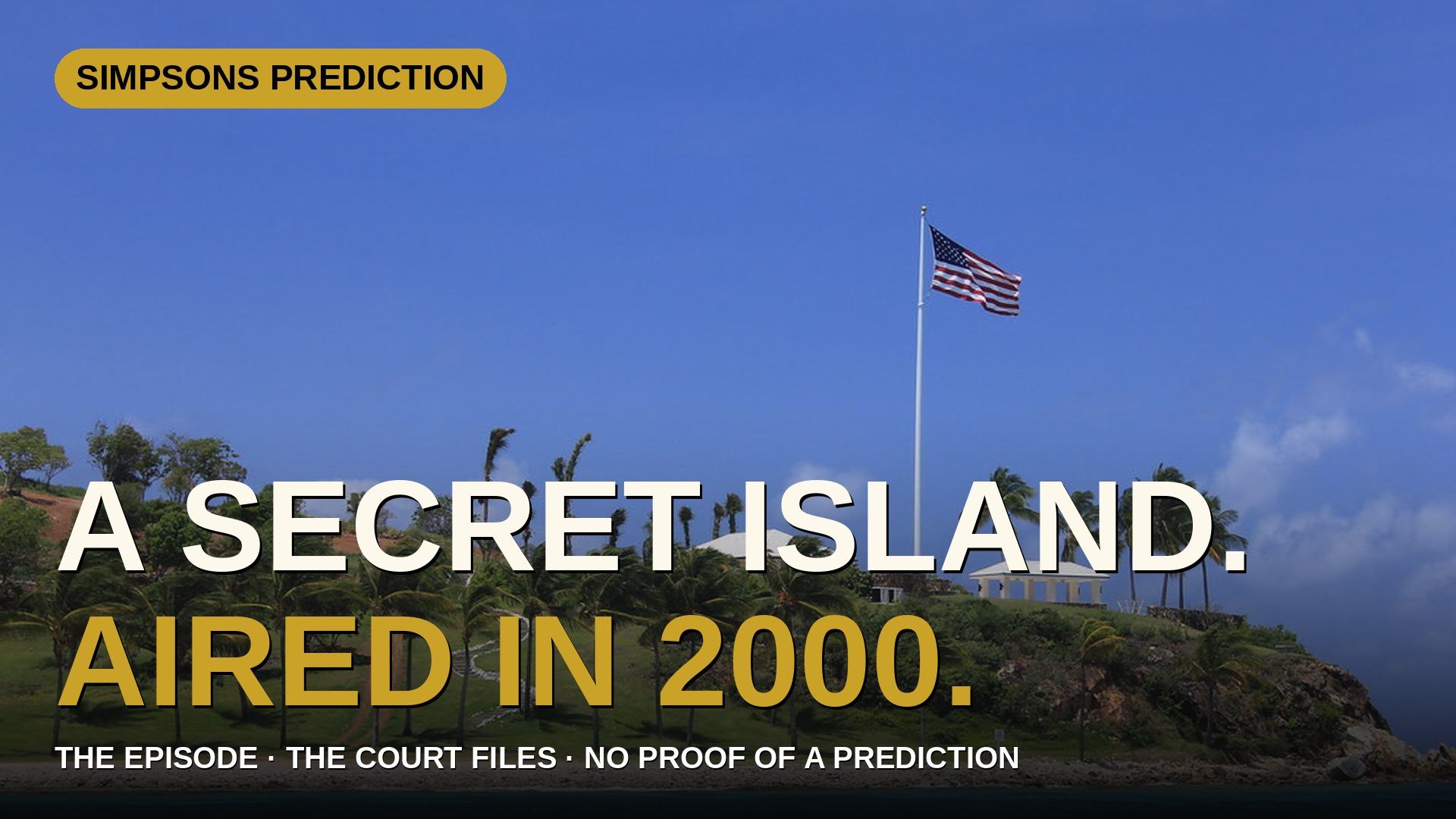
In February 2026, as the US Justice Department published its final, vast release of Epstein files, a 26-year-old cartoon clip started moving again.
The clip is from The Simpsons. Homer Simpson, exposed as a gossip blogger, is drugged, kidnapped and woken up on a strange island he cannot leave.
And on his website sits the line the internet cannot stop quoting: ‘Attention: Some crazy creeps on an island somewhere are secretly running the world.’
Within days, the clip was being shared as proof of something much darker: that the show’s makers knew about Jeffrey Epstein’s private island decades early.
The claim got extra fuel from the files themselves, because the name of the show’s creator, Matt Groening, genuinely appears in Epstein documents. Twice, in two different sets of paperwork.
The posts rarely mention what the island in the episode actually is, where its story came from, or what the document naming Groening actually says. Those details turn out to matter.
Here is what the episode actually contains, what the documents actually say, and where the two stop having anything to do with each other.
Key Facts
- The episode, ‘The Computer Wore Menace Shoes’, aired on Fox on 3 December 2000.
- Its island is an open parody of The Prisoner, the 1967 British series, restaged scene by scene.
- Epstein bought Little Saint James in April 1998, for $7.95 million, through L.S.J. LLC.
- Groening is named in a 2019 court unsealing, in an allegation about a foot massage on a jet.
- No document alleges further misconduct by Groening, or links the episode to Epstein’s island.
The Episode
From gossip blogger to prisoner
‘The Computer Wore Menace Shoes‘ is episode 6 of season 12, production code CABF02. It first aired on Fox on 3 December 2000, was written by John Swartzwelder and directed by Mark Kirkland.
Even the title is borrowed. It riffs on the 1969 Disney film The Computer Wore Tennis Shoes, which has nothing else to do with the plot.
Homer buys a computer, starts an anonymous gossip site as ‘Mr. X’, and wins a Pulitzer Prize for his scoops. The moment he reveals his identity to collect it, his sources dry up completely.
So he invents stories instead. One of them, that flu shots are a mind-control plot, turns out to be true, and that single lucky guess is what gets him taken.
The trap is pure cartoon. A truck trailer disguised as the Kwik-E-Mart, complete with a cardboard cut-out of Apu at the register, is used to grab him.
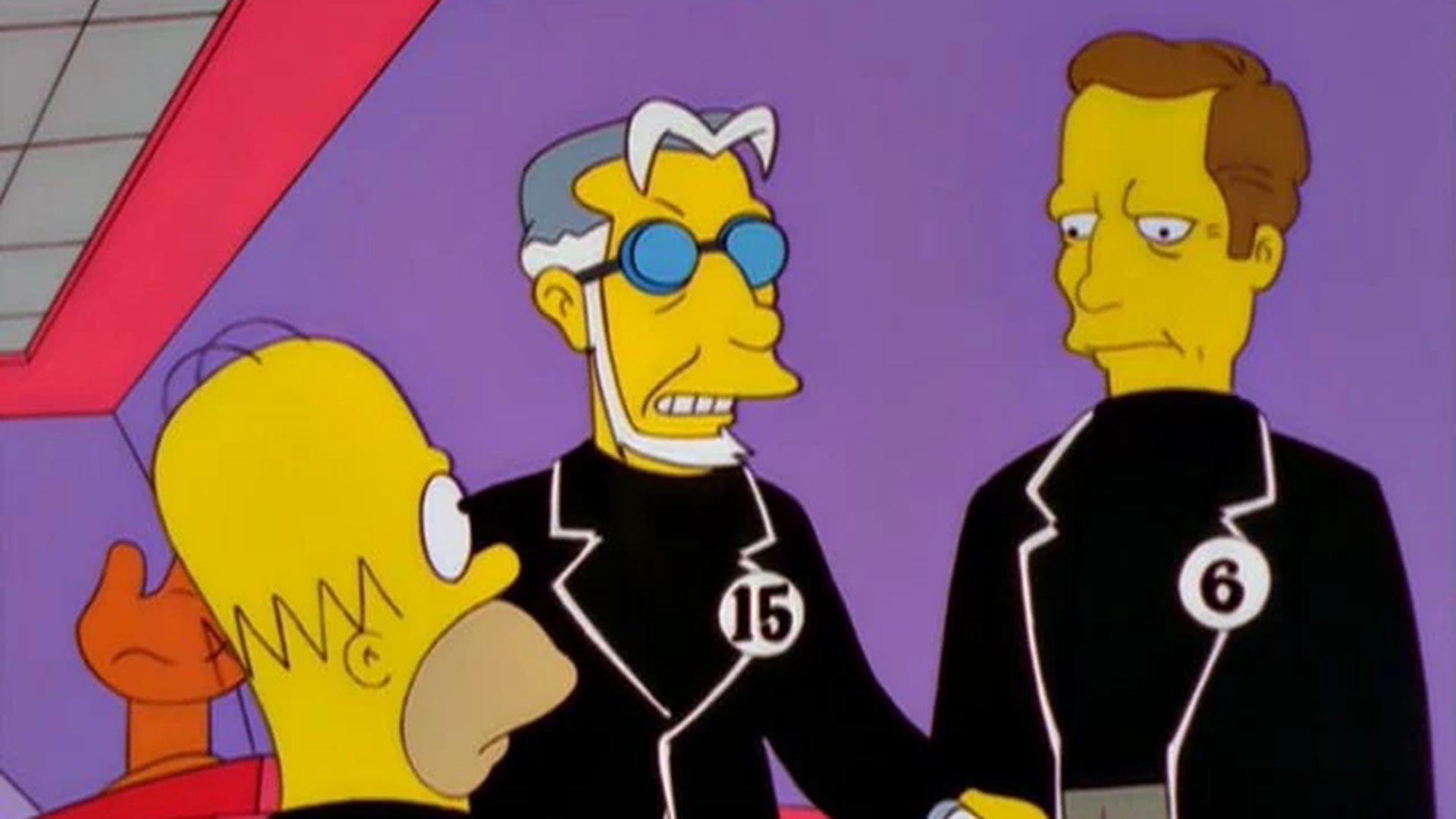
He wakes on ‘the Island’, a lush estate of numbered prisoners in Victorian dress. ‘This is… the Island,’ he is told. ‘Oh, no one leaves the island.’
The island does not hold celebrities or financiers. It holds people who know too much, and it is run by a man called Number 2, who answers to nobody on screen.
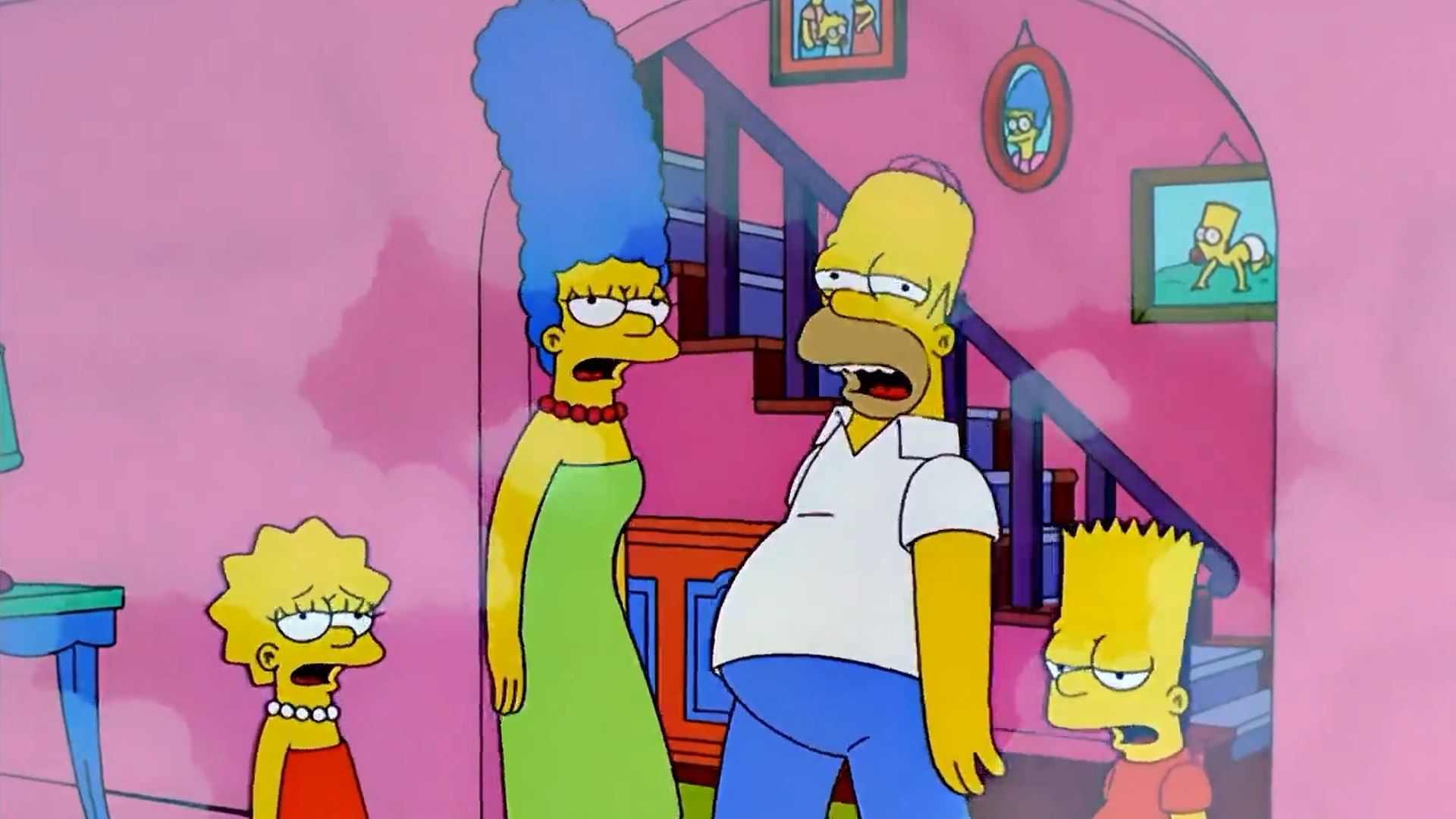
While Homer is held there, a double replaces him at home: identical to look at, except for a thick German accent nobody in the family questions.
The famous line is not a prophecy scene. It is the headline Homer types for his site near the end, a joke summary of his own adventure: creeps on an island, secretly running the world.
Homer escapes, reaches his computer and tries to send what he knows to the police. Number 2 simply takes over the machine, and the double drags him back.
The episode closes with the whole family gassed and returned to the island, and Bart’s sign-off: ‘See you on the island.’ It is a parody of conspiracy culture, written as one.
The Prisoner, scene by scene
The third act is an open parody of The Prisoner, the 1967 British series about an ex-agent held in a mysterious village. It ran for just 17 episodes, from September 1967 to February 1968.
Patrick McGoohan, that show’s star and co-creator, guest-voices his old role, Number Six. Reports on the episode note it was the only time he ever returned to the part.
The borrowing is not vague. It is a checklist, lifted piece by piece from the original series:
- Prisoners stripped of names and given numbers instead, exactly as in The Prisoner.
- A ruler called Number 2, the same title as the Village’s rotating administrator.
- Rover, the white balloon that hunts escapees, restaged as the island’s guard.
- Number Six himself, on screen, played by the original actor, Patrick McGoohan.
- A coastal village that looks idyllic and functions as a prison, filmed in the original at Portmeirion, Wales.
The jokes only work if you spot the source. Number Six tells Homer he was imprisoned for inventing the bottomless peanut bag, a parody of the original’s deadly serious secrets.
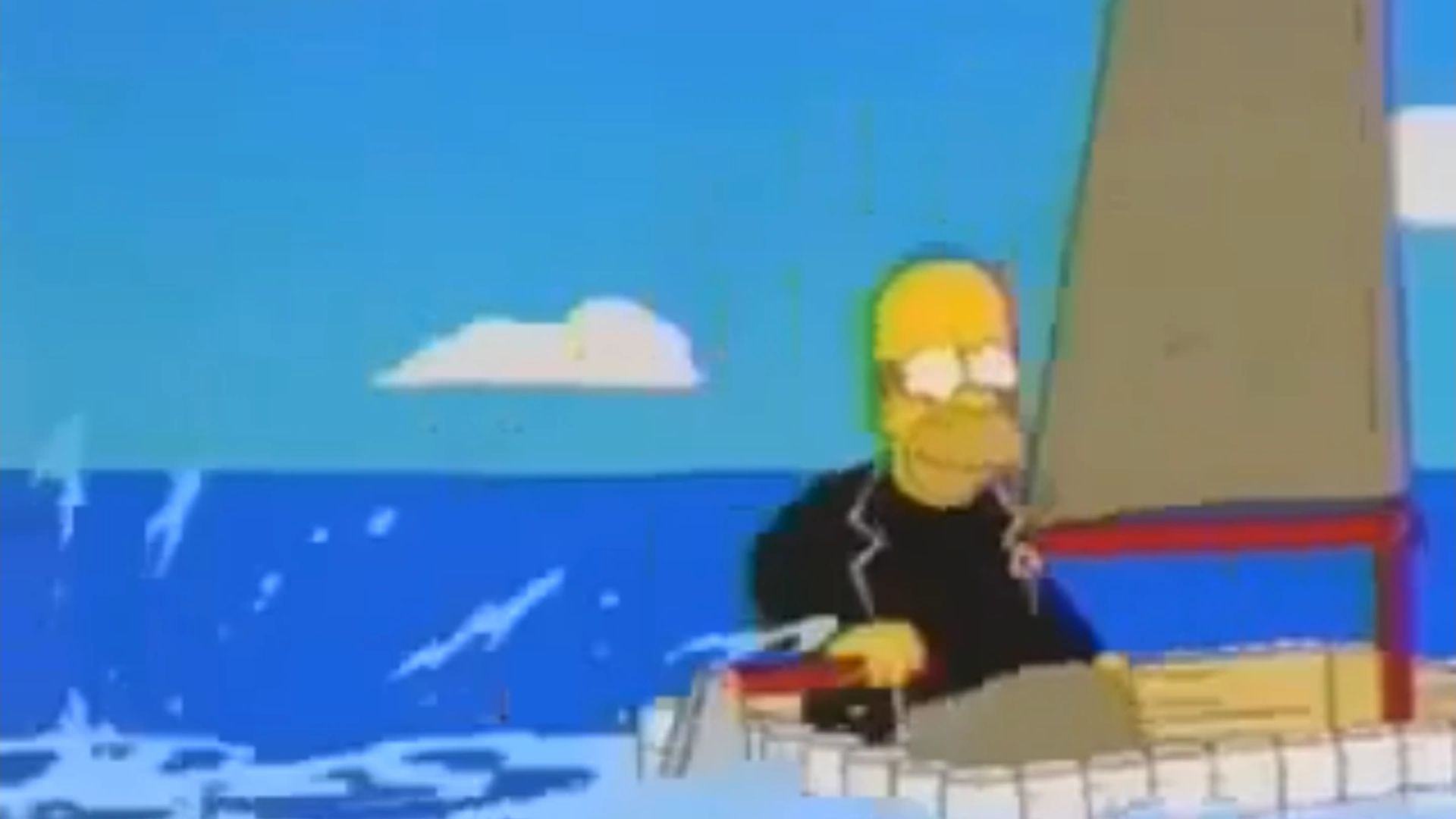
He also shows Homer a makeshift boat he spent 33 years building. Homer promptly steals it, which tells you exactly how reverent this homage is.
When Rover rises from the water to stop the escape, Homer pops it with a plastic fork. ‘Huh. That was easy,’ he says, as Number 2 demands: ‘Why did you think a big balloon would stop people?’
A homage with a named source, a guest star from that source, and gags that depend on recognising it does not need a second, secret source.
The Court Documents

What the 2019 unsealing actually contained
Now the paperwork, because this part is real and needs to be stated exactly. On 9 August 2019, the US Court of Appeals for the Second Circuit unsealed roughly 2,000 pages from Giuffre v. Maxwell.
That was Virginia Giuffre’s defamation suit against Ghislaine Maxwell, settled in 2017. The unsealed material was summary-judgment paperwork, released after a legal fight to make it public.
Inside it were excerpts of an unpublished memoir manuscript Giuffre had written, ‘The Billionaire’s Playboy Club.’ The Groening passage sits in that manuscript, and its contents are specific:
- A short flight on Epstein’s private jet, from Carmel, California to Los Angeles.
- Groening was a passenger on that flight, catching a ride, per Giuffre’s account.
- She writes that Epstein insisted she give Groening a foot massage during the flight.
- She says she cleaned his feet with a warm washcloth first, before the massage.
- She says Groening thanked her with quick sketches of Homer and Bart.
- She says she was 16 at the time, and she had told a version of the story to the Daily Mail in 2011.
That is the whole of the allegation concerning Groening in those documents: a foot massage, arranged by Epstein, on one short flight.
Just as important is what the documents do not say, because the viral posts rarely slow down for this part:
- They do not allege that Groening committed any sexual misconduct.
- They do not say he visited Epstein’s island, Little Saint James.
- They do not connect him to the running of Epstein’s crimes in any way.
- No charge has ever been brought against him in connection with Epstein.
The timing added to the shock. The pages were unsealed on 9 August 2019. Epstein was found dead in his Manhattan jail cell the next day, 10 August, while awaiting a federal sex-trafficking trial.
The 2026 files and the Yunus email
Groening’s name surfaced again in the Justice Department’s Epstein files release of 30 January 2026, which ran to more than 3 million pages under the Epstein Files Transparency Act.
The department said the release also included roughly 2,000 videos and 180,000 images, and presented it as the final major release under the Act, passed and signed in November 2025.
There, the mention is a passing social email: acquaintances recall introducing ‘our very good friend cartoonist Matt Groening’ to Nobel Peace laureate Muhammad Yunus, who went on to voice himself in a 2010 episode.
The detail checks out as ordinary show business. Yunus, the Grameen Bank microcredit founder, played himself in ‘Loan-a Lisa’, the episode about Lisa funding small loans, aired on 3 October 2010.
The email chain is about setting up that introduction. It contains no allegation of wrongdoing, no island, and no connection to Epstein’s crimes at all.
A name in a document is a mention, not a finding. The 2026 release named hundreds of people, most of them in exactly this kind of passing, social context.
The Timeline Problem
The prediction reading needs the episode to be about Epstein’s island. So lay the two timelines side by side and watch where they touch, and where they never do:
- 1967–68: The Prisoner airs in Britain, complete with numbered prisoners and a Number 2.
- April 1998: Epstein buys Little Saint James for $7.95 million, through L.S.J. LLC.
- 3 December 2000: ‘The Computer Wore Menace Shoes’ airs on Fox, as a Prisoner parody.
- March 2005: Palm Beach police open the first investigation, after a complaint about a 14-year-old girl.
- June 2008: Epstein pleads guilty to two Florida state counts and gets 18 months, under a secret federal non-prosecution deal.
- He serves about 13 months, much of it on work release, and is released in July 2009.
- November 2018: the Miami Herald’s ‘Perversion of Justice’ series revives the case in public.
- 6 July 2019: Epstein is arrested in New York on federal sex-trafficking charges.
- 9 August 2019: the Second Circuit unsealing puts Groening’s name in the manuscript excerpts.
- 30 January 2026: the Justice Department’s final major files release names him again, in the Yunus email.
Why the dates still do not connect
The dates alone do not forbid the theory: Epstein bought Little Saint James in April 1998, for $7.95 million, two years before the episode aired.
But nothing else fits. Epstein was not a public scandal in 2000. The Florida police investigation that first exposed his crimes did not begin until 2005.
Between the purchase and the investigation sit seven years in which Epstein was a rich, private man with an island, one of thousands of rich men with islands.
The 2008 plea shows how buried the story stayed even after police acted: a secret deal, two state counts, and a sentence served largely on work release.
The episode’s island, meanwhile, has a documented source that predates Epstein’s purchase by three decades: The Prisoner, first broadcast in 1967, complete with numbered prisoners and a Number 2 in charge.
Swartzwelder’s script lifts that show’s machinery piece by piece, down to casting its star. A homage with a named source does not need a second, secret source.
There is also the base rate. The show has produced hundreds of episodes and hundreds of thousands of gags since 1989. Some were bound to land near later headlines by chance alone.
That is the engine behind every ‘Simpsons predicted it’ story, this one included: a huge catalogue, searched backwards, with only the matches kept. The misses are never counted.
Predictions also only ever travel in one direction. Nobody in 2000 read that headline as news about a real island, because there was no public scandal for it to point at.
It is the same backwards-matching pattern behind the celebrity clone conspiracy theories the internet swears it can see in old photographs.
The Verdict
So what survives checking? A 2000 episode really does contain an island, numbered prisoners and a line about creeps secretly running the world. All of that is on screen and verifiable.
A real court document really does place the show’s creator on Epstein’s jet, in an allegation about a foot massage when the accuser was 16. That is on paper and verifiable too.
What does not exist, anywhere, is a link between the two: no evidence the episode drew on inside knowledge, no document connecting its island to Little Saint James, and no statement from anyone involved suggesting one.
The gap between ‘named in the files’ and ‘implicated by the files’ is where this theory lives, and it is a gap the documents themselves do not close.
Two true facts, placed side by side, can still add up to a false story. This is the cleanest recent example of exactly that happening in public.
None of this makes the clip less strange to watch in 2026. A joke about powerful creeps on an island lands differently after the files. But a chill is a feeling, not evidence, and feelings are not documents.
Verdict: Unresolved as prediction; a real case study in how fiction plus a real document merge into a conspiracy narrative. The coincidence is real. The connection is not documented
Did The Simpsons predict Epstein’s island?
No evidence supports that. The 2000 episode is a parody of The Prisoner, and its island line is a joke about conspiracy culture.
What did the court documents say about Matt Groening?
Giuffre’s manuscript says Epstein had her give Groening a foot massage on his jet when she was 16. No further misconduct was alleged.
When did the episode air?
‘The Computer Wore Menace Shoes’ (season 12, episode 6) first aired on Fox on 3 December 2000.
Why did Groening’s name appear in the 2026 files?
In a passing social email about introducing him to Nobel laureate Muhammad Yunus. The mention contains no allegation of wrongdoing.
Did Epstein own his island when the episode aired?
Yes. He bought Little Saint James in 1998 for $7.95 million, but his crimes were not public knowledge in 2000.
Join the Conversation
Two true facts, one false story: does the clip still give you pause, or does the Prisoner connection close the case for you? And where do you draw the line between a name in a file and a person implicated? Tell us in the comments.
Read Next
- 10 Crazy Scooby-Doo Conspiracy Theories That Will Ruin Your Childhood
- The Dead Internet Theory: Is Most of the Web Actually Bots?
- Disney’s Darkest Theories: WALL-E, Snow White, Frozen
