
For twenty-three years, Scrappy-Doo was the puppy who would fight anything. Then, in 2002, Scooby-Doo’s first live-action film unmasked its villain, and the puppy was the monster.
The reveal landed like a betrayal. Scrappy, Scooby’s tiny nephew, had secretly run the whole plot: kidnapping, disguise, an army of demons and a plan to absorb his own uncle’s soul.
Fans who had grown up with the character refused the verdict. Two rescue theories followed. One says an ancient artifact corrupted a loyal pup. The other says the gang framed him.
Both theories exist because the film left a wound. The gang did not just defeat Scrappy. They had abandoned him years earlier, and the film treats that abandonment as a joke.
There is history behind the anger. Scrappy was not some late cash-in character. He carried the franchise on television for a decade, and a generation of younger viewers met Scooby through him first.
So was Scrappy-Doo corrupted, framed, or simply rewritten by people who never liked him? Start with what the film actually shows, because the theories depend on getting it wrong.
Key Facts
- Scrappy debuted on 22 September 1979, created to stop ABC cancelling Scooby-Doo over falling ratings.
- The 2002 film was directed by Raja Gosnell and written by James Gunn. It opened on 14 June 2002.
- In the film, Scrappy hides inside a robot Emile Mondavarious. The real owner is locked in a dungeon.
- His Darkopolypse Ritual needs one pure soul, Scooby’s, and would let demons rule for 10,000 years.
- Gunn later admitted younger viewers were upset, and that he had not understood Scrappy’s popularity with them.
The Film’s Version
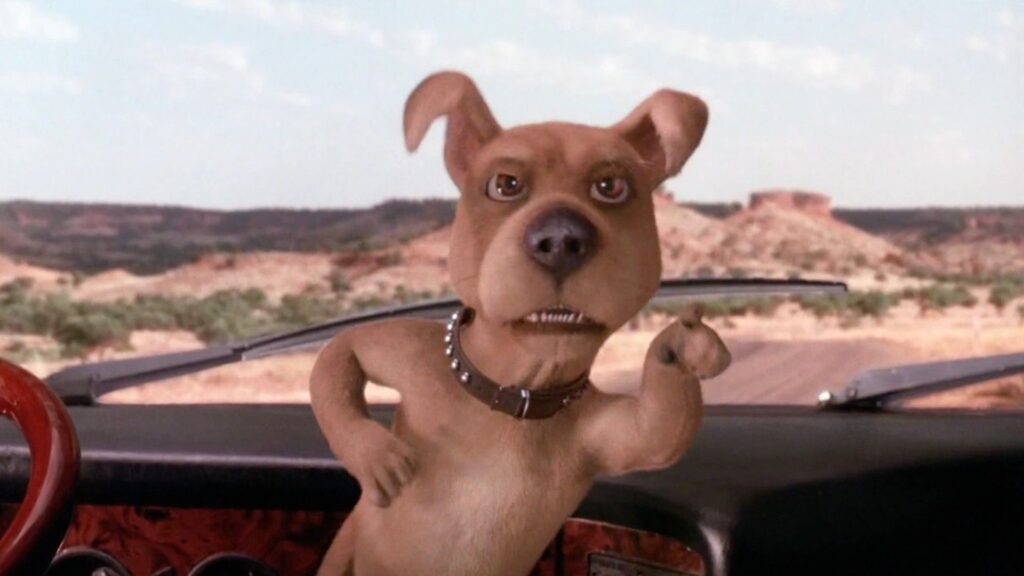
Scooby-Doo, released in 2002, was directed by Raja Gosnell and written by James Gunn. Mystery Inc. reunites at Spooky Island, a horror-themed resort where guests leave strangely changed.
How the island plot actually works
- The gang splits after the Luna Ghost case, then each member is invited to Spooky Island separately, two years later.
- Students arrive wild and leave eerily polite. Demons are taking their bodies at night.
- Daphne finds the Daemon Ritus, a pyramid artifact, in the island’s abandoned castle ride.
- Shaggy finds a vat of protoplasm underground: a glowing pool holding the stolen souls.
- He frees Fred, Daphne and Velma by pulling their souls back to their own bodies.
- Sunlight kills the demons, a fact the gang saves for the rooftop climax.
The culprit is the resort’s owner, Emile Mondavarious, except it is not him. The real Mondavarious is locked in a dungeon. The man running the island is a robot suit, and Scrappy is inside it.
His weapon is the Daemon Ritus, a pyramid-shaped artifact that lets its holder absorb souls. Scrappy has been feeding it the souls of tourists, building power for a ritual called the Darkopolypse.
To complete it, he needs one purely good soul. He chooses Scooby’s. The ritual would let demons rule the world for ten thousand years, with Scrappy Rex, a hulking monster, at their head.
The mechanics matter. The Ritus sits in a socket above the protoplasm pool at the ritual’s peak. Once Scooby’s soul is drawn out, the demons gain permanent bodies and the sun can no longer stop them.
Shaggy breaks it by refusing the script. He pulls Scooby’s soul back, kicks the Ritus loose, and the reflected sunlight destroys the demons. Scrappy Rex shrinks back into a puppy in a robot’s wreckage.
Velma gives his full name as he is led away: Scrappy Cornelius Doo. It is played as a final joke. The puppy who wanted to lead the gang ends the film arrested under his Sunday name.
The desert flashback
The film gives him a motive in one flashback. Years earlier, riding in the Mystery Machine, Scrappy kept demanding to lead the gang, and finally urinated on Daphne. The gang dumped him in the desert.
He stood at the roadside, calling after them, as the van drove off. Everything in the film follows from that moment: the disguise, the island, the ritual, the revenge.
The full plot is laid out at Scooby-Doo (film). Note what is absent from it. Nothing possesses Scrappy. Nothing forces his hand. He plans all of it, for years.
The Corruption Theory
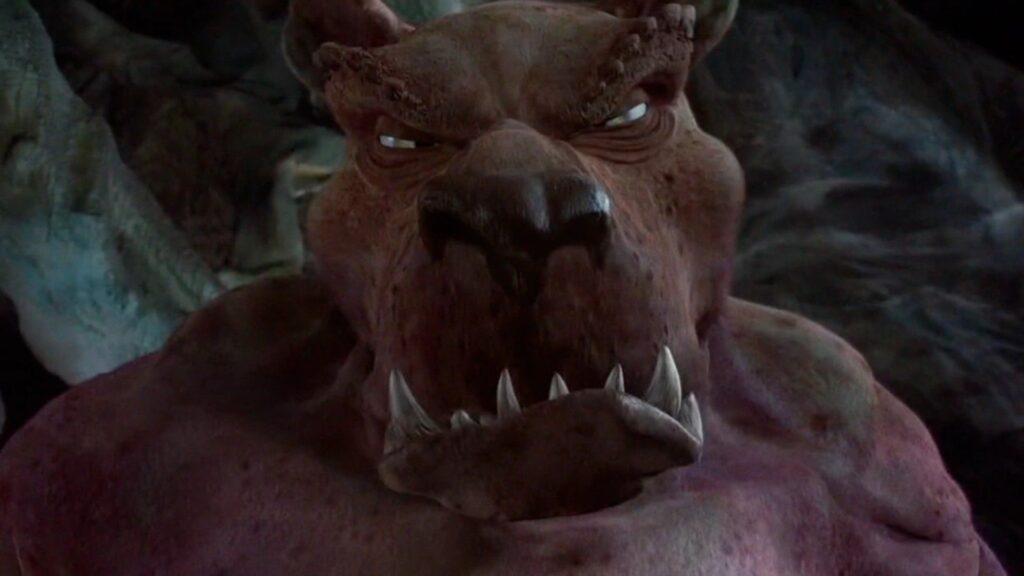
The first fan theory softens that picture. It says Scrappy was not born a villain. He was a rejected puppy whose hurt curdled, and the Daemon Ritus did the rest, twisting him into a monster.
On this reading, the artifact is the real antagonist. It offers a nobody unlimited power, feeds on souls, and rewards its holder by turning him into Scrappy Rex, a creature nothing like a puppy.
The puppy who saved the show in 1979
The theory leans on real franchise history. Scrappy debuted in 1979, in Scooby-Doo and Scrappy-Doo, created because ABC was ready to cancel the show over falling ratings. He saved it.
- By 1978, ratings had sunk so far that ABC weighed Scooby-Doo against an unnamed Ruby-Spears pilot.
- Writer Mark Evanier helped shape Scrappy, modelling his bravado partly on Looney Tunes’ Henery Hawk.
- Lennie Weinrib voiced him first, in 1979. Don Messick, Scooby’s own voice, took over from 1980.
- The rescue worked. In 1980 the show was restructured around Scooby, Scrappy and Shaggy in short segments.
- Scrappy stayed central until 1988, through series, specials and three made-for-TV films.
His early character was loyalty at full volume. He idolised Scooby, charged monsters ten times his size, and had to be carried away from fights. Evil was never part of the design.
His catchphrases were a child’s battle cry: “Puppy power!” and “Lemme at ’em!” He believed his uncle was the bravest dog alive, and said so in nearly every episode, to Scooby’s embarrassment.
So the corruption reading asks a fair question. How does that puppy become a soul-stealing tyrant? Fans answer: slowly, alone, with an artifact whispering that power will make the gang sorry.
What Gunn’s script does instead
It is a better story than the film tells. It is not, however, the film’s story. In the film, Scrappy seeks the Ritus deliberately, uses it for years, and gloats about the plan before it fails.
Gunn’s script even plays his fall for laughs. Velma tells a stranger at a bar that Scrappy was not really a puppy at all. He had a glandular condition. The film wants him ridiculous, not tragic.
The villain was not settled early, either. In a March 2000 draft, Scrappy only appeared as an offhand mention, heavily implied to have been put to sleep. Concept art for a monstrous Scrappy followed in 2001.
Other villains were considered first, including Old Man Smithers from the Luna Ghost prologue. The DVD commentary admits the team struggled to choose a villain they felt comfortable using at all.
Gunn was blunt about his own taste before release: “There is a Scrappy because he exists in the cartoon, so we have to acknowledge him.” Later comments made clear he shared the older fandom’s dislike.
We covered the wider pattern of rewriting this franchise in 10 Crazy Scooby-Doo Conspiracy Theories That Will Ruin Your Childhood. Scrappy’s rewrite is the boldest of them.
The Framing Theory
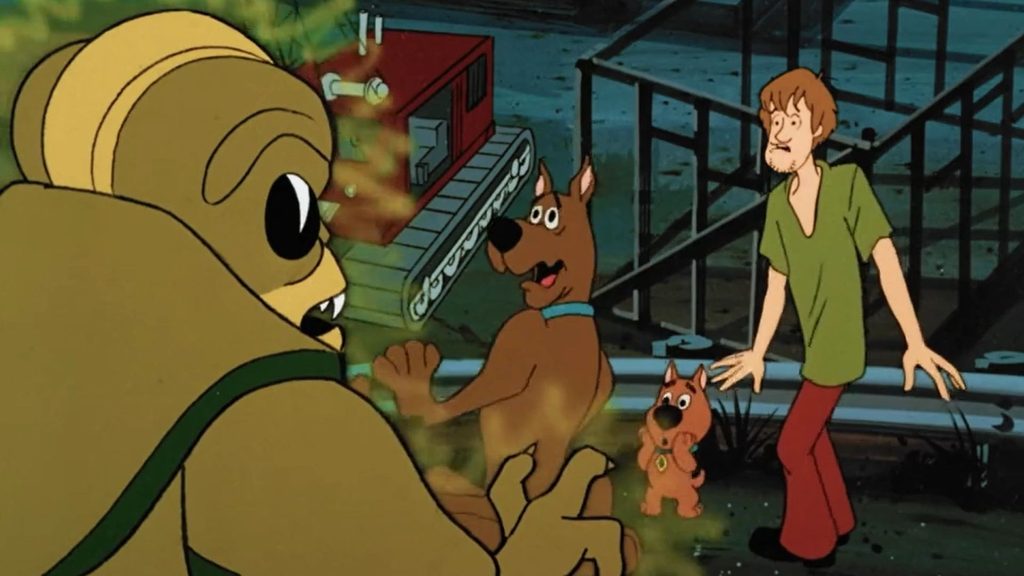
The second theory goes further. It says the gang framed Scrappy, and the film we see is their version of events, told by the people who dumped a puppy in the desert and needed a reason.
Its evidence is the gang’s own behaviour. They abandon a junior member without a hearing, never mention him for years, and reunite only when a case forces them back together.
How later series treated him: a timeline
- 1988: Scrappy’s regular run ends with Scooby-Doo and the Reluctant Werewolf. Then silence.
- 2002: the live-action film returns him as the villain, his first major role in 14 years.
- 2008: in The Goblin King, a monster van flattens a carnival stand full of Scrappy dolls.
- 2011: Mystery Incorporated puts his statue in a museum of defeated villains in Crystal Cove.
- 2024: Velma brings him back as an engineered, super-strong figure, still played as an in-joke.
The franchise later turned that discomfort into a running gag. In Scooby-Doo! Mystery Incorporated, Fred and Daphne find Scrappy’s statue in a museum of defeated villains.
The episode is “The Siren’s Song.” Daphne stares at the statue, half-remembering, and Fred stops her cold: they all promised never to speak of him again. Not ever. The laugh needs the cruelty to work.
Even the DVD extras joined in. A bonus feature has Fred mention a sixth gang member, to everyone’s horror. Shaggy protests that they were not supposed to talk about Scrappy. Fred meant the Mystery Machine.
Fans fold in one more reading here. The original 1969 series, they note, is full of abandoned mines, bankrupt parks and villains running property scams, a cartoon built on economic collapse.
That last part has a factual core. Many classic Scooby-Doo villains really were committing real-estate or insurance fraud in a mask. The theory over-reads a formula, but the formula is real.
None of it makes Scrappy innocent on screen. The framing theory works as criticism of the gang, not as an account of the film, and Warner Bros. has never endorsed either rescue theory.
The Verdict
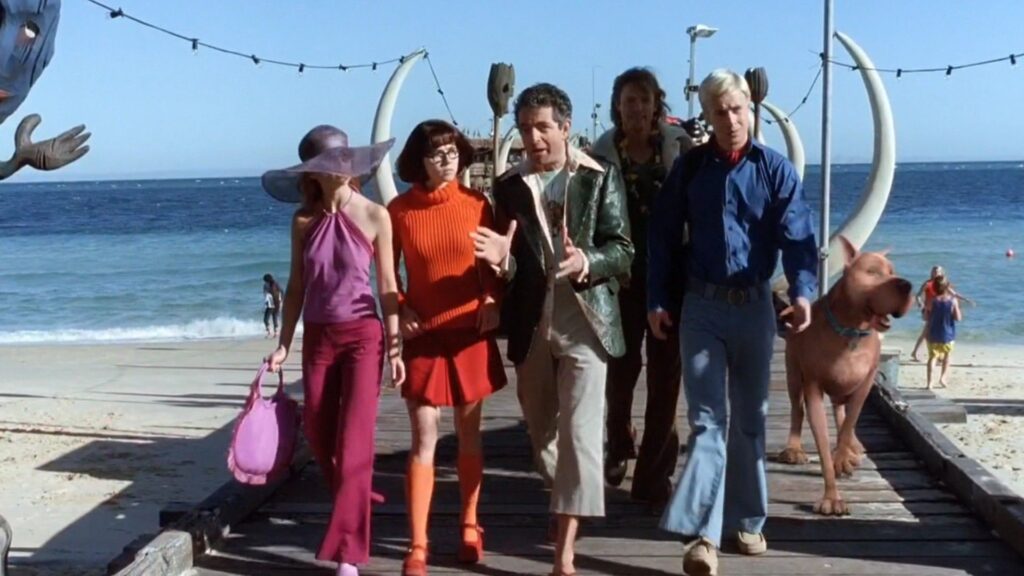
Film canon is not in doubt. In the 2002 film, Scrappy-Doo is the villain: deliberate, patient and cruel, undone because his ego made him invite the whole gang to watch him win.
The corruption theory adds a mechanism the film never shows. The framing theory adds a cover-up the film never hints at. Both live in the same gap: the years between the desert and the island.
The scorecard
- Corruption: no scene shows the Ritus changing Scrappy. He seeks it, knowingly, for revenge.
- Framing: no scene suggests the gang invented him. The film shows his plan from inside it.
- Supported: the franchise did sideline, mock and statue him for decades after 1988.
- Supported: Gunn admitted he misjudged how much younger viewers loved the character.
What the record does support is stranger than either theory. The franchise created Scrappy to save itself in 1979, profited from him for a decade, then spent decades mocking him as a taboo.
Gunn later admitted younger viewers were genuinely upset by the villain twist, and that he had not understood how popular Scrappy still was with them. The backlash was real, and it was earned.
His exact words still sting a little: “I still think it was funny that Scrappy was the villain, but there are kids out there who were really upset.” That is an apology with the joke still attached.
The in-jokes tell their own story. A franchise confident in its villain does not need a museum statue and a vow of silence. Those gags only work if everyone involved knows the treatment looks harsh.
And the desert flashback cuts both ways. The film needs you to laugh at a puppy being abandoned so the revenge plot can start. Twenty years of fan theories are viewers refusing to laugh on cue.
Verdict: Unresolved. Canon makes him a villain and fan theories make him a victim. Both readings survive because the film explains his revenge, but never once asks what the gang owed him.
Is Scrappy-Doo really the villain in the 2002 film?
Yes. Disguised as Emile Mondavarious, he uses the Daemon Ritus to absorb souls and nearly completes a ritual that would let demons rule for ten thousand years.
Why did the gang abandon Scrappy?
In the film’s flashback, he kept demanding to lead Mystery Inc. and urinated on Daphne. The gang left him beside a desert road and drove away.
Did the Daemon Ritus corrupt Scrappy?
The film never says so. Scrappy seeks the artifact deliberately and plans his revenge for years. The corruption idea is a fan theory, not film canon.
When was Scrappy-Doo created, and why?
In 1979, by Hanna-Barbera, to rescue falling ratings that had ABC threatening cancellation. His arrival worked, and the show was restructured around him.
Has Warner Bros. endorsed the framing theory?
No. Neither the framing theory nor the corruption theory has ever been endorsed by Warner Bros. Later series mostly joke about Scrappy as a forbidden topic.
Join the Conversation
A puppy dumped in the desert, an artifact that eats souls, and a gang that swore never to say his name. Corrupted, framed, or guilty as filmed? Tell us where you land below.
Read Next
- 10 Crazy Scooby-Doo Conspiracy Theories That Will Ruin Your Childhood
- The Dark Truth Behind Viral Disney Conspiracy Theories
- Ed, Edd n Eddy: The Purgatory Theory Explained
