
Three of Disney’s best-loved films carry a second, darker story that the studio never put on screen.
In the first, the smiling passengers of a space cruise ship are quietly eating their own dead. In the second, a handsome prince is not a rescuer at all. He is Death, collecting a girl who never woke up.
In the third, a hit film about two sisters was supposedly named to bury a rumour about the company’s founder. The rumour says Walt Disney’s body is frozen, waiting to be revived.
None of these readings comes from Disney. All three live in the same place: the gaps. Disney films rarely explain their machinery, their magic or their titles, and fans move into the silence.
Each theory has been repeated for years in videos, forums and listicles, usually with total confidence. What they rarely get is a check against the films themselves, or against the documented record.
That record is unusually good here: the Grimms’ 1812 text, a documented cremation, production interviews, and a producer answering the title claim directly.
We fact-checked the wider catalogue when we fact-checked the wider Disney theory catalogue here. This time, we test just these three, one by one.
Key Facts
- WALL-E opened in 2008. Earth was abandoned about 700 years earlier, and the Axiom’s food is never explained on screen.
- The Grimms published Snow White in 1812. She wakes when a jolt dislodges the apple. There is no kiss in their text.
- Walt Disney died on 15 December 1966 and was cremated two days later. His ashes rest at Forest Lawn, Glendale.
- Producer Peter Del Vecho explained the Frozen title in 2013. He said it meant ice, snow and a frozen heart.
- Disney and Pixar have never confirmed any of the three theories. The Frozen title claim was publicly denied.
WALL-E
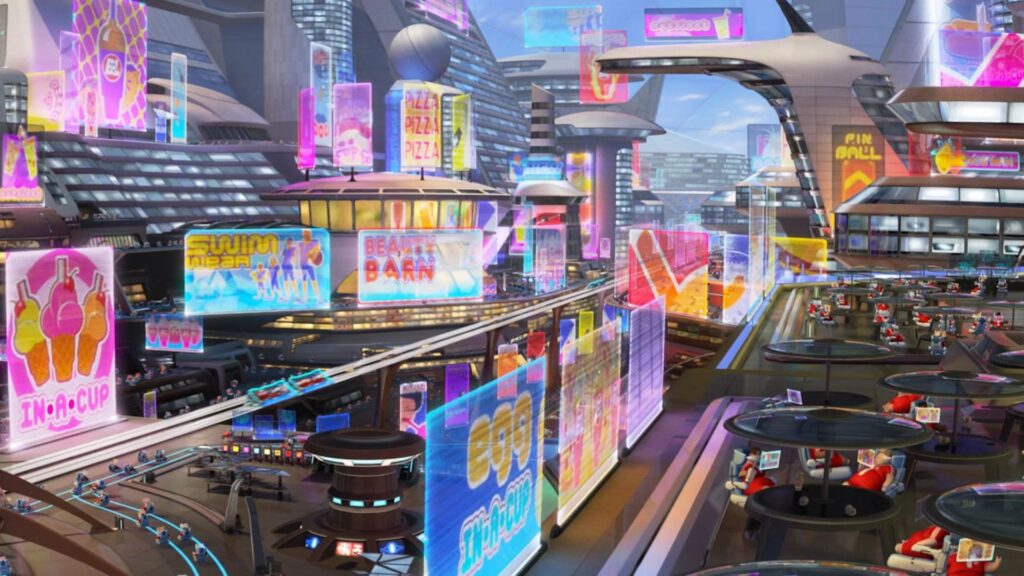
WALL-E, Pixar’s 2008 film directed by Andrew Stanton, puts humanity aboard the Axiom, a luxury starliner run by the Buy N Large corporation. Earth was abandoned about 700 years earlier.
The passengers do nothing. Robots cook, clean, steer and serve. The humans ride hover chairs, watch screens, and drink every meal through a straw from a large cup.
What the film shows, and what it hides
The food is never explained. Cups arrive labelled by flavour, one passenger is urged to try the blue cup, and nobody ever sees a kitchen, a farm or an ingredient.
Look closer at the ship, and the silence gets louder. The film shows a pool deck, a shopping level and endless robot staff. It never shows where waste goes, or where anyone who dies is taken.
The fan case, point by point
- No farms, livestock or crops are ever shown aboard the Axiom in 700 years of cruising.
- No body disposal is shown either, though passengers must die across seven centuries.
- Every meal arrives as an identical flavoured liquid, with no visible ingredients.
- The ship is a closed system. Fans ask what else could feed it forever but itself.
- Buy N Large controls everything else, so fans assume it would hide the answer.
The theory fills that silence with the worst answer available. A ship that never shows farms, livestock or body disposal, fans argue, has one endless food source: its own dead passengers.
On that reading, every cheerful cup is processed remains, recycled by the ship’s systems. The passengers are unwitting cannibals, kept too distracted to ask what lunch used to be.
Fans push the maths further. A closed ship, they argue, cannot lose mass for 700 years and keep serving meals. Recycling everything, including people, becomes a logistics claim, not just a horror claim.
What Stanton actually said he was doing
Now check what the film actually shows. The Axiom is a closed, automated system run by thousands of service robots. Nothing on screen hints at corpse recycling, in dialogue, design or a single background gag.
Stanton has explained the design choices he did make. In interviews he says the passengers’ screens came from the first iPhone, whose addictive pull reminded him of his old smoking habit.
That memory became the Axiom. People sit side by side, each sealed inside a private screen, using the device to pass time rather than to talk. The horror he named was boredom, not cannibalism.
Stanton has also traced the trash-covered Earth to ordinary life in 2005 and 2006. Amazon boxes kept arriving at his door, two to a dozen at a time, and he started asking where it all went.
His stated subject was consumption and distraction, not hidden horror. The liquid meals are part of that satire: food reduced to one more product sipped without thought.
So the cannibal reading rests on one true observation, that the film never explains the food, and one invented leap. WALL-E itself offers no support for it.
Snow White
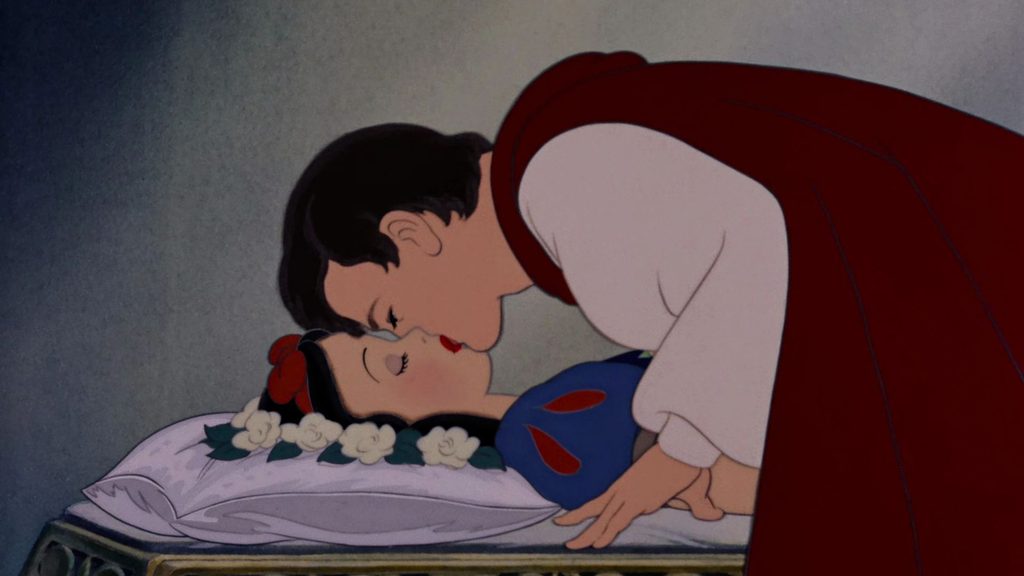
The second theory is older and stranger. It reads Snow White and the Seven Dwarfs, Disney’s 1937 feature, as a death story wearing a wedding dress.
On this reading, Snow White really dies when she bites the poisoned apple. The glass coffin is a coffin. And the Prince who arrives at the end is Death himself, come to collect her.
The fan case for the Prince as Death
- The Prince appears from nowhere, sings once, vanishes, then returns at the coffin.
- He takes Snow White away to a castle that appears to float in golden clouds.
- The dwarfs keep her in glass, unchanging, as if she were already a relic.
- The kiss comes from a stranger she barely knows, which fans read as a ritual.
- The film never shows her life after the castle. The story simply stops.
The kiss, fans say, is not a cure. It is a transfer. He carries her out of the forest, out of the world of the living, and the bright ending is the afterlife she is being taken to.
The symbolism can look tempting. The Prince appears from nowhere, twice, and takes her away to a castle that sits in the clouds in the final shot.
The Grimms’ 1812 text says the opposite
But the source story argues against it. Disney adapted the Grimms’ tale, published in 1812, and in that text Snow White is not dead at all. She is in a death-like sleep caused by the apple.
The Grimms give her a blunt, unromantic rescue. Carried in her coffin, she is jolted when a servant stumbles, the piece of poisoned apple flies from her throat, and she wakes up.
Read that scene slowly, because it settles the mechanics. The Prince’s servants trip over a stump. The coffin lurches. The lodged apple piece shoots out, and Snow White sits up alive and hungry for the plot to continue.
There is no kiss in the Grimms’ version. The kiss is Disney’s own change, added to make the ending romantic. A studio inventing a love scene is poor evidence it was secretly staging a funeral.
Disney softened almost everything it touched. The Queen falls from a cliff instead of dancing to death. The apple-jolt became a kiss. Each change made the tale gentler and more romantic, not darker.
No Disney source, production note or animator account supports the Prince-as-Death reading. It is a modern fan interpretation laid over a film that plays its ending completely straight.
Frozen
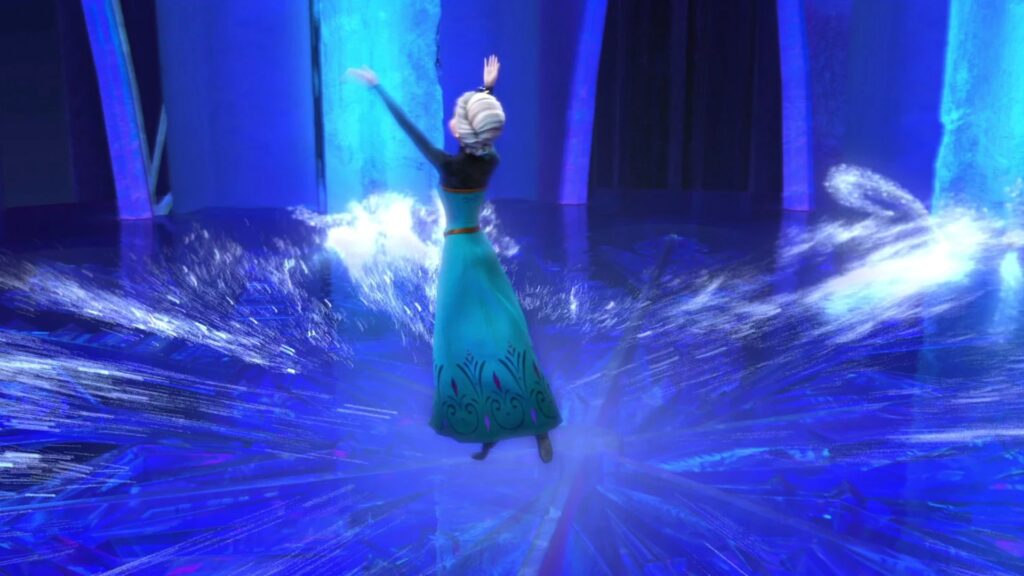
The third theory is not about what happens in a film. It is about why the film has its name. Frozen, released in 2013, adapts Hans Christian Andersen’s story The Snow Queen.
The claim runs like this. For decades, people searching online for “Disney frozen” were looking for the rumour that Walt Disney’s body was cryogenically preserved after his death.
So, the theory says, the company titled a blockbuster Frozen on purpose. Search results filled with Elsa and Anna, and the embarrassing rumour slid quietly down the page.
The frozen Walt rumour, in order
- Early 1967: a National Spotlite reporter claims he saw Disney in a cryogenic cylinder at the hospital.
- 1969: the French magazine Ici Paris gives the rumour its first mainstream print outing.
- 1972: Bob Nelson tells the Los Angeles Times that Disney wanted freezing, then denies it happened.
- Later: Diane Disney Miller writes that there is no truth her father wished to be frozen.
- 2013: Frozen opens, and searches for the phrase fill with Elsa and Anna instead.
Start with the rumour itself, because it is false. Walt Disney died on 15 December 1966. He was cremated two days later, and his ashes rest in the family mausoleum at Forest Lawn in Glendale.
The 1967 tabloid version is the wildest. Its reporter claimed he disguised himself as an orderly, slipped into a hospital storage room, and found Disney suspended in a metal cylinder. No evidence ever followed.
The frozen story grew in print years later. A French magazine aired it in 1969, and in 1972 Bob Nelson, president of the Cryonics Society of California, told the Los Angeles Times Disney had wanted it.
Nelson’s own words debunk it
Nelson’s own words debunk it. He said Disney never put the wish in writing, the family refused, and he had personally seen the ashes. Readers remembered the wish and forgot the refusal.
His full sentence is worth hearing whole: “They had him cremated. I personally have seen his ashes. They’re in Forest Lawn.” He added that his group froze its first man two weeks later. Disney was not that man.
Disney’s daughter Diane answered in writing. She said she doubted her father had ever heard of cryonics, and that cremation was his wish. The family held a simple private service, exactly as he wanted.
The title, explained by its producer
The SEO theory then fails on its own terms. Producer Peter Del Vecho explained in 2013 that Frozen was chosen because it described the film: ice and snow, and a frozen heart that has to thaw.
His words were precise: “Frozen plays on the level of ice and snow but also the frozen relationship, the frozen heart that has to be thawed.” He said the title arose independently of Tangled’s naming.
The dates help too. Disney announced the Frozen title on 22 December 2011, following Tangled’s success, with a release date of 27 November 2013. One-word, past-tense titles were simply the house style of that moment.
Search results did change after 2013, because a global hit outranks an old rumour. That is a side effect of success, not evidence of a plan.
The record is set out on the Walt Disney reference pages and in the family’s own statements. The man was cremated. There was nothing to hide.
The Verdict
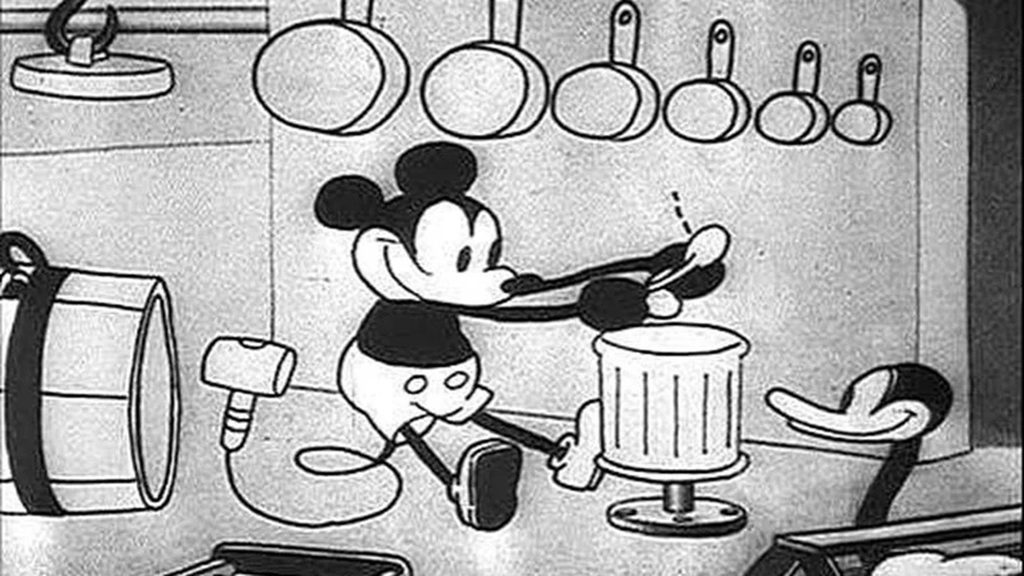
Three theories, three different mechanics. One fills a gap in a film’s world. One re-reads a fairy tale’s symbols. One treats a film title as a corporate cover-up.
How each theory scores
- WALL-E: true gap, invented answer. No line, gag or design detail supports corpse recycling.
- Snow White: the 1812 source wakes her with a jolt. Disney added the kiss for romance.
- Frozen: the founder was cremated, and the producer explained the title on the record.
- All three: no creator, animator or executive has ever confirmed a hidden message.
Tested against the record, none survives as a hidden message. WALL-E never hints at corpse recycling. Snow White’s source tale wakes its heroine with a jolt, not a death. Walt Disney was cremated.
Yet none of the three can be closed completely, because authorial intent is the one thing fans cannot subpoena. Disney has never confirmed any of them, and silence is not quite the same as a denial.
Notice what each theory needs to survive. The WALL-E reading needs a supply chain the film never shows. The Snow White reading needs a kiss Disney invented for romance to secretly mean death.
The Frozen reading needs the most of all: a cremated founder, a title explained by its own producer, and a search shift that any hit film would cause anyway. It still trends every winter.
That is why they persist. Each film is just ambiguous enough, an unexplained meal, a dreamlike prince, a one-word title, to hold the darker reading without ever endorsing it.
Verdict: Unresolved as claims about what Disney intended. As claims about what the films show, all three fail. They are fan readings, durable because the gaps they live in are real.
Does WALL-E ever say the passengers eat the dead?
No. The film never explains the food supply or hints at corpse recycling. The idea is a fan invention built on that silence.
Is the Prince in Snow White really Death?
There is no evidence for it. The Grimms’ 1812 source has Snow White revived when the apple piece is dislodged from her throat.
Was Walt Disney cryogenically frozen?
No. He died on 15 December 1966 and was cremated two days later. His ashes are at Forest Lawn Memorial Park in Glendale, California.
Was Frozen named to bury the frozen Walt rumour?
No evidence supports that. Producer Peter Del Vecho said the title described the film itself. The search shift after 2013 is a side effect, not a proven plan.
Has Disney ever confirmed any of these theories?
No. Disney and Pixar have never confirmed any of the three. The Frozen title theory has been publicly denied by the film’s producer.
Join the Conversation
An unexplained meal, a prince who arrives like a ghost, a title that buried a rumour by accident. Which of the three readings do you find hardest to shake, and what other Disney gap do fans fill near you? Tell us below.
Read Next
- The Dark Truth Behind Viral Disney Conspiracy Theories
- 10 Crazy Scooby-Doo Conspiracy Theories That Will Ruin Your Childhood
- Did The Simpsons Predict Epstein Island?
- Scrappy-Doo: Was He Corrupted, or Was He Framed?
