
It was raining, the way it rains in the Brazilian summer — hard enough to turn a dirt lot to mud. Three young women took a shortcut home across a vacant plot in the Jardim Andere district of Varginha, a coffee town in the hills of Minas Gerais. It was about half past three on Saturday, 20 January 1996.
Something was crouching at the foot of a low wall.
By their account, it was small — four to five feet tall if it had stood up — with dark brown skin that looked oily, stretched tight over a thin body. The head was far too big, with three rounded bumps on top.
The eyes were red and enormous. There were three long fingers on each hand, no hair, and a smell the girls’ mother later described as overpowering when she went back to look at the spot.
They ran home screaming. One of them told their mother she had seen the devil.
That sentence is where the Varginha UFO incident begins. Within days, the story was no longer about three frightened girls and a figure by a wall. It was about fire crews, Army trucks, hospitals, a dead police officer and a town that would spend the next thirty years arguing about what came down in the rain.
Brazil’s military investigated and reached a flat conclusion: no creature, no capture, nothing but a sick local man and a rumour that fed on itself. The women have never accepted that. Not once, in three decades of interviews, films and anniversaries, have they changed their story.
So which is it — Brazil’s Roswell, or a case study in how a legend is built?

The Week the Story Filled With Soldiers
The sighting did not stay small. Local researchers Ubirajara Rodrigues and Vitório Pacaccini began collecting accounts from people who said the girls’ creature was not the only one — and that the authorities already knew.
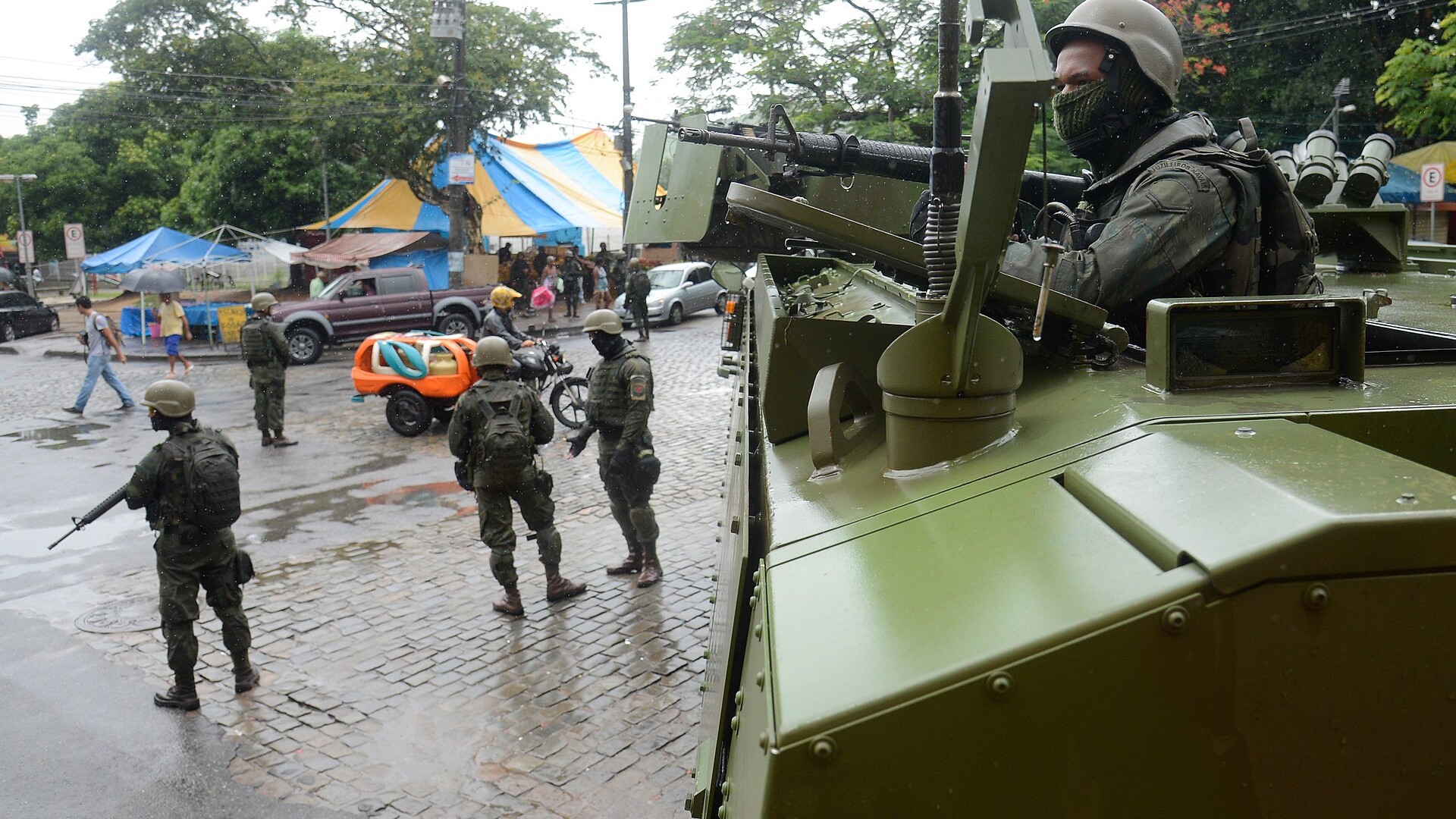
According to testimony the researchers gathered, much of it from military and fire-service sources who would not give their names, firefighters had captured a strange creature that same morning, 20 January, in a wooded area of the city, and handed it to the Army.
A second creature, they claimed, was caught that night near the town zoo.
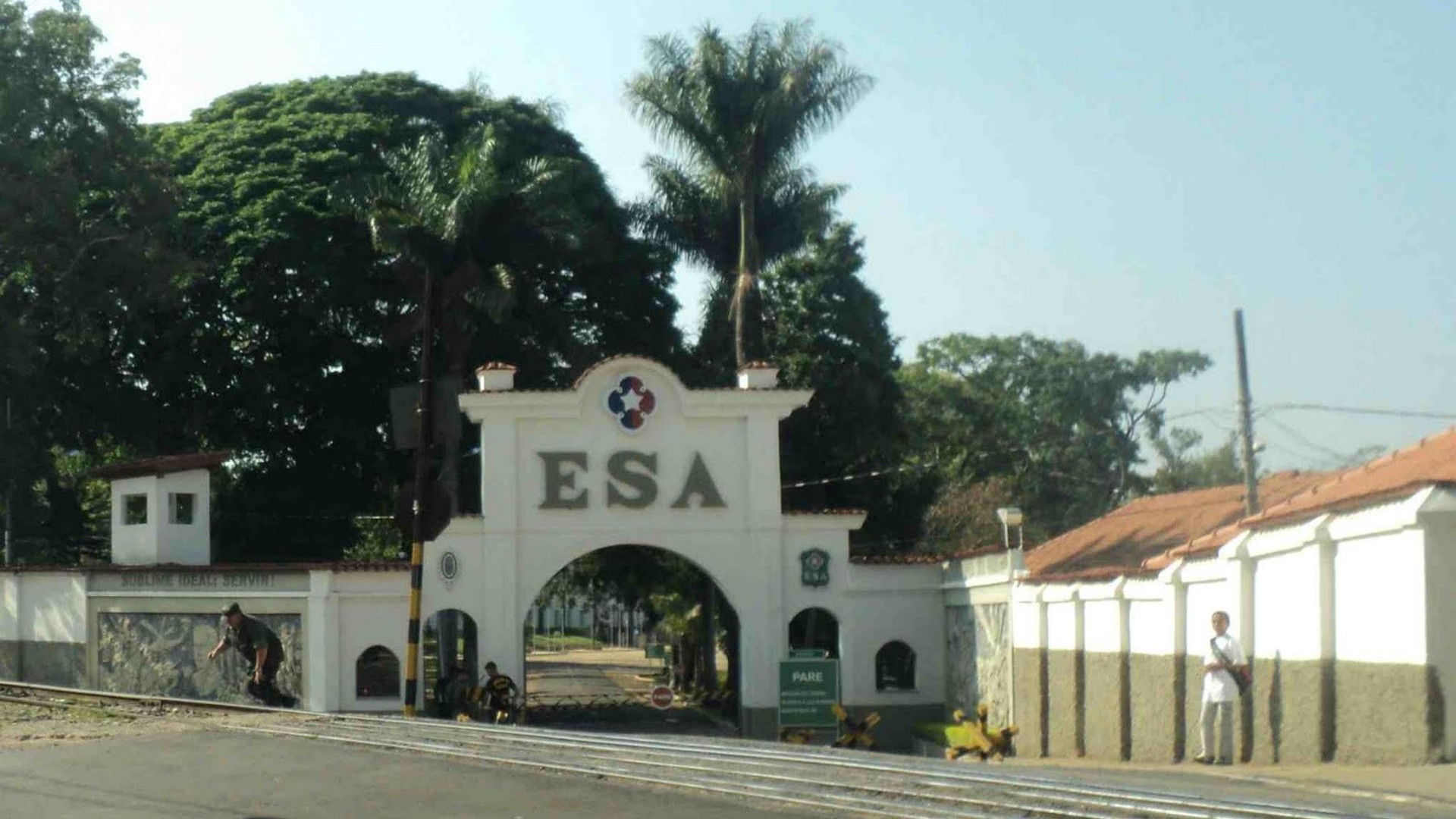
The stories kept layering. The creatures were said to have been taken first to Varginha’s Regional Hospital, then to the Army sergeants’ school at Três Corações, and finally, in a military convoy on 22 or 23 January, to the State University of Campinas for examination.
Some versions added an American cargo plane. Others added a warning from NORAD, days earlier, about an object coming down over South America — a detail no released document has ever confirmed.
The day itself had been strange before the girls ever crossed that lot, at least in the telling. A local farmer, Eurico de Freitas, reported seeing a silent, submarine-shaped craft drifting low over his land that morning, apparently in trouble.
Other residents described objects in the sky in the days around the 20th. None of it was photographed. All of it arrived afterwards, once the town knew what story it was telling.
The hospital chapters came later still, and they are the hardest to pin down: a wing allegedly cordoned off, staff allegedly warned to say nothing, a creature that allegedly died during the night of 22 January before the Army took it away.
Hospital workers denied it at the time. The claims survive as recollections collected by researchers, some of them decades after the fact.
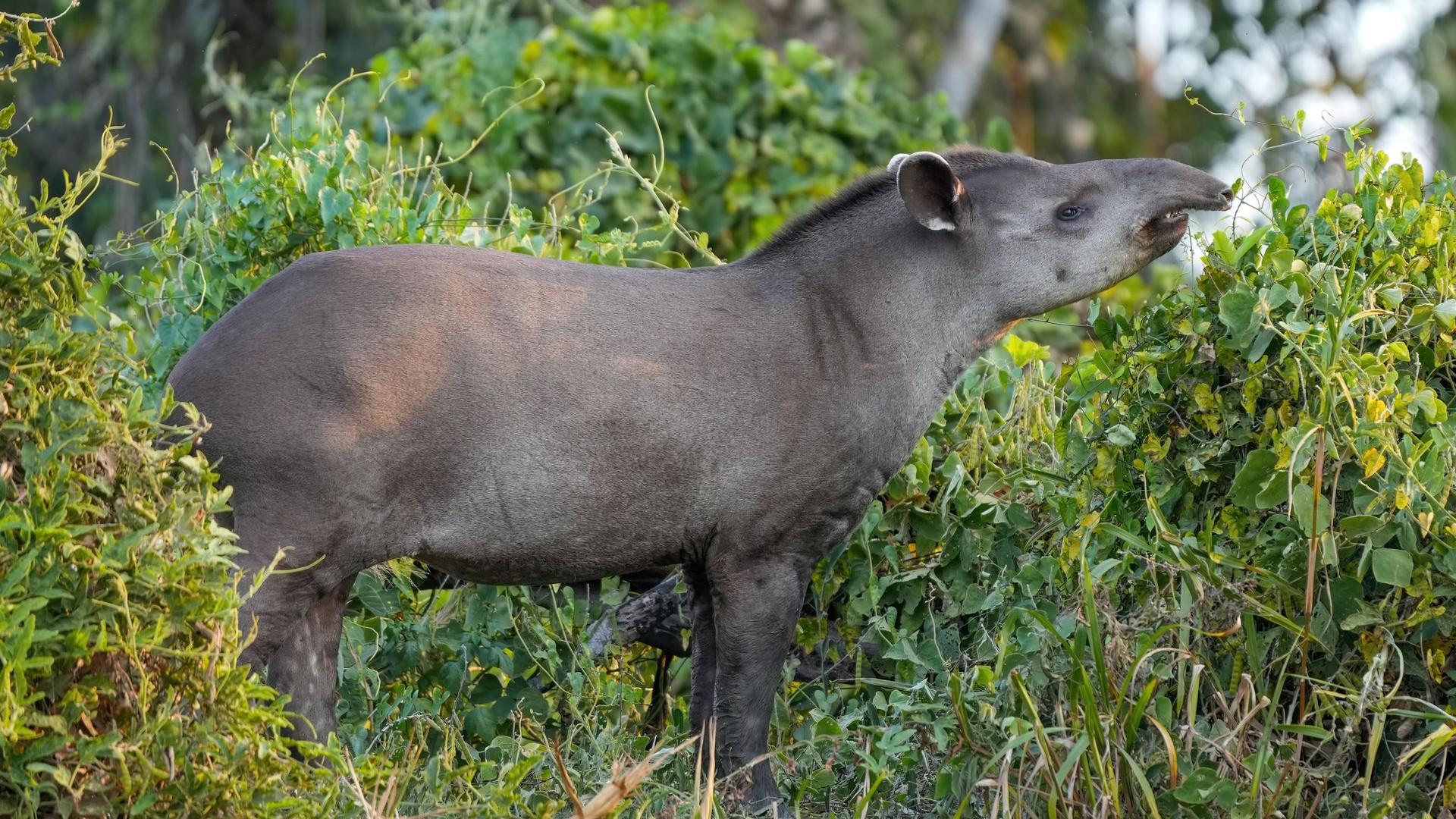
Then there were the animals. At Varginha’s municipal zoo, a tapir, an ocelot and two grey brocket deer died in the period after the sighting, and no convincing public explanation was given. In a town already buzzing, unexplained animal deaths did not read as coincidence. They read as contamination.
And then there was Marco Eli Chereze.
Chereze was a 23-year-old military policeman serving in an intelligence role. Ufologists claim he was one of the men who seized a creature that night, grabbing it with his bare hands.
On 15 February 1996, less than a month later, he was dead. His family say a healthy young man went into a decline nobody could explain, and they have linked his death to that night ever since.
None of these claims — the captures, the convoy, the hospital, the zoo — has ever been backed by a photograph, a document or a named participant willing to stand behind it in public.
That is worth stating plainly, because everything that follows depends on it. What Varginha has is testimony, much of it anonymous, gathered by researchers who believed the story before they started asking questions.
But it also has a dead 23-year-old, three consistent witnesses, and an Army that felt it had to investigate itself. Towns do not invent that kind of weight out of nothing.
The Army’s Answer: A Dirty Man in the Rain
The Brazilian Army opened a military police inquiry, known as IPM 18/97, into the rumours surrounding its own vehicles and personnel. The file ran to roughly 600 pages. A military court archived the case on 4 July 1997.
Its conclusion was blunt: there had been no operation, no capture and no creature. Every serviceman named in the rumours denied taking part in one, and the inquiry found the vehicle movements could be accounted for — trucks, it said, were going for routine maintenance, with paperwork to match.
The fire department’s commander said his crews had spent the morning of the sighting doing something considerably less dramatic: cutting down a tree.
It is also worth knowing what formally triggered the inquiry. The Army did not open a file on an alien. It opened a file on the ufologists — the case under investigation was the researchers’ own book about the incident, and the story they had built from anonymous sources.
That does not make its findings wrong. But it does mean the document believers now cite as the official investigation was written, from the first page, as a rebuttal.
And the figure by the wall? The inquiry’s answer, signed by Lieutenant Colonel Lúcio Carlos Pereira, was that the women had most likely seen a local man known around town as “Mudinho” — a man with a mental disability who was often seen crouching in the streets.
On a stormy afternoon, wet, muddy and hunched against a wall, the inquiry suggested, he could have looked like something not human to three girls who came on him suddenly.

Chereze’s death got an official explanation too. According to the Army, he had undergone routine surgery — reports describe an operation connected to a cyst — and died of septic shock, a generalised infection, with no contact with any creature involved.
Sceptics built the rest of the frame around those answers: a media frenzy in a country with a lively UFO culture, researchers amplifying anonymous claims, each retelling adding a creature or a convoy. Mass suggestion, in short, with a rainy afternoon as its spark.
The inquiry file itself stayed out of public view for years. Brazilian magazine ISTOÉ reported on the Army documents in 2021, and in January 2026 the full inquiry was made available online by the military court — an odd postscript for a case the Army considers closed.
Here is the problem the official version has never quite solved. It is the same problem that runs through our STENDEC flight mystery investigation: an explanation can be reasonable and still not fit the witnesses it is meant to explain.
The women knew their town. Mudinho was a familiar figure in it. And the inquiry never placed him in that lot, at that hour, in that storm.
The Women Who Never Changed Their Story

Everything in this case rests on three people, so it is worth being precise about who they are. Liliane Silva was 16. Her sister Valquíria Fátima Silva was 14. Their friend Kátia Andrade Xavier was 22. They were not UFO enthusiasts. They were girls walking home.
Their description was detailed and it was specific: the size, the oily brown skin, the three bumps on the head, the red eyes, the three fingers, the smell.
They gave it within hours, and they have given essentially the same description ever since — to Brazilian television, to researchers, to James Fox’s 2022 documentary Moment of Contact, and through the case’s thirtieth anniversary in 2026.
Consistency is not proof. Memory researchers will tell you that a story retold for thirty years hardens into its final shape, and that witnesses can be honestly wrong.
But consistency does rule out the easiest dismissal, which is that the women invented a tale and later let it slip. They never let it slip. Offered the Army’s answer — you saw Mudinho — they have rejected it every time, flatly and on camera.
Their mother added one of the case’s most repeated claims: that men later came to the family home and offered money for the girls to change their story on television. The family says they refused. Like most of Varginha’s supporting cast, that episode rests on the family’s word alone.
The case keeps drawing new witnesses, too. In recent years a Varginha neurosurgeon, Dr Ítalo Venturelli, has said publicly that in January 1996 a colleague showed him a small, strange being at the Regional Hospital.
It is a striking claim from a named professional — and it is uncorroborated, offered three decades late, with no photograph or record behind it. It should be filed exactly where it belongs: as testimony, not evidence.
Researchers like Rony Vernet have spent years prising official files loose through freedom-of-information requests, and the 2026 release of the Army inquiry gave the case fresh life.
But new paper has a way of cutting both ways. The file that believers hoped would crack the case open is the same file that says, in so many words: nothing happened.
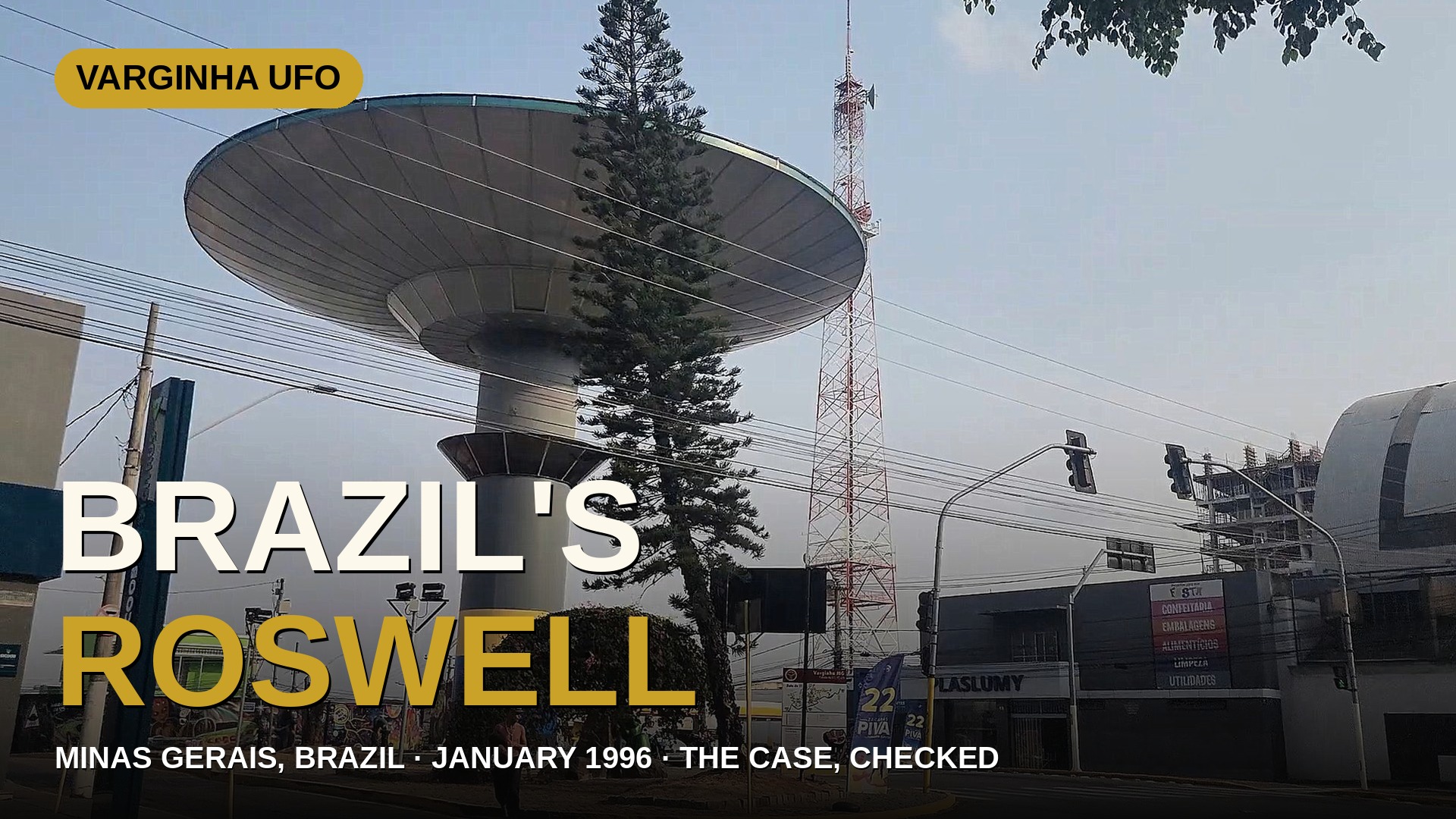
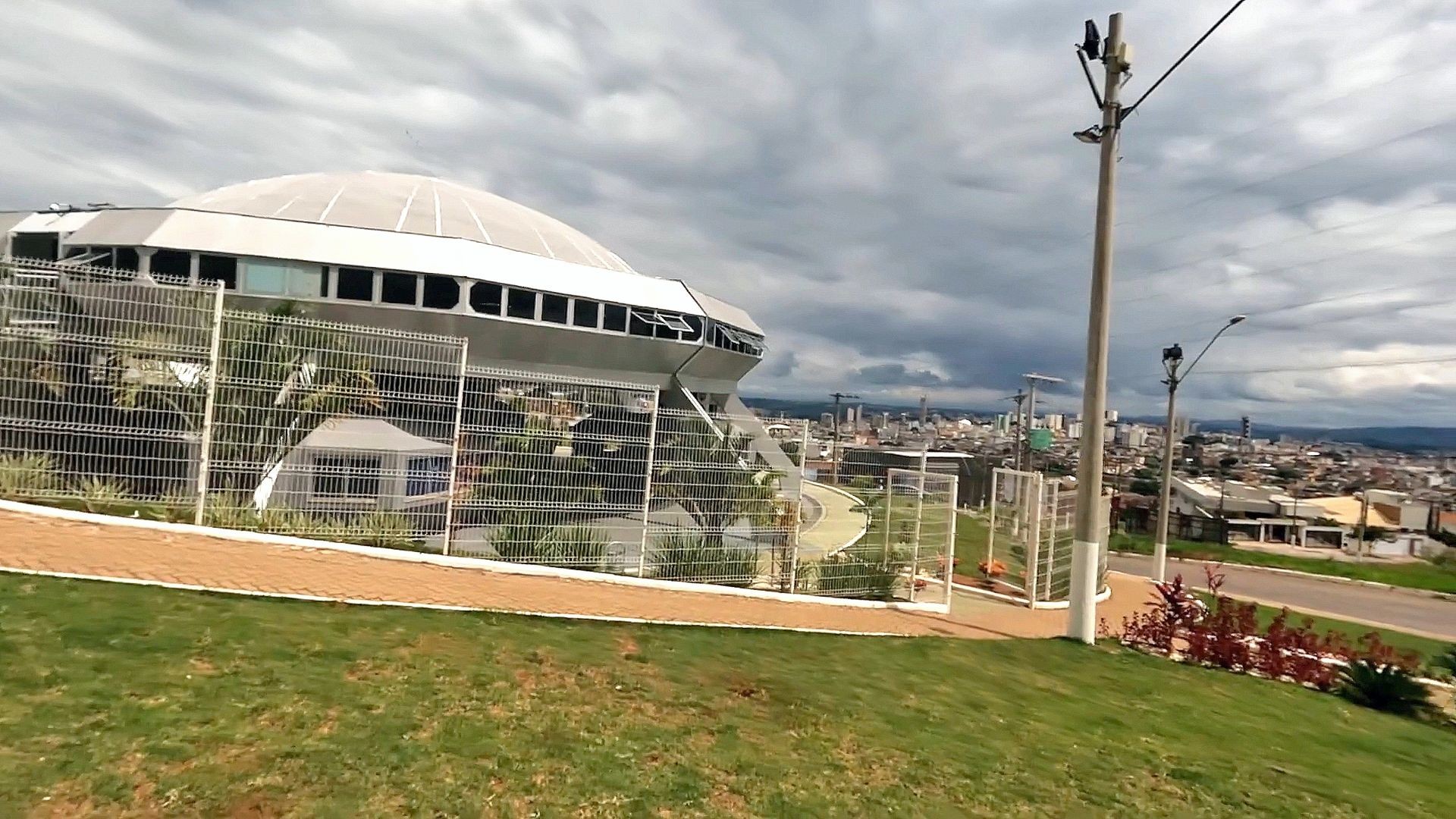
Varginha itself, meanwhile, made its peace with the legend long ago. The town’s water tower is built in the shape of a flying saucer.
The “ET de Varginha” is a mascot, a brand and a tourist draw. A town can cash in on a mystery and still contain three women who believe every word of what they said in 1996 — and those two facts tell you nothing about each other.

The Verdict
Strip Varginha down to what can actually be shown, and the case is two piles of paper and testimony that never touch.
On one side: a 600-page Army inquiry, signed conclusions, maintenance records, a named alternative explanation for the sighting and a medical explanation for a young officer’s death.
On the other: three witnesses who have never wavered, a grieving family, dozens of anonymous accounts of captures and convoys, and a zoo’s worth of dead animals that nobody explained at the time.
What is missing from both piles is the only thing that would settle it: a body, a photograph, a sample, a document from January 1996 that says a creature existed. Thirty years on, there is none.
It is the same shape as the puzzle in our Hessdalen lights coverage — a phenomenon people keep reporting, in a place that keeps producing reports, with the physical proof always one step out of reach.
The official explanation is plausible in outline and thin in detail. The believers’ version is rich in detail and thin in proof. Neither side has earned the right to close this file.
Verdict: Unresolved. Three witnesses saw something by a wall in Varginha on 20 January 1996 and have described it the same way for thirty years. The Army says it was a disabled local man in the rain, and that nothing else happened. No physical evidence of a creature has ever been produced, and no evidence has ever explained the witnesses away.
Frequently Asked Questions
What did the women see?
By their account, a small creature crouching by a wall in a vacant lot: dark brown, oily-looking skin, an oversized head with three bumps, huge red eyes, three fingers on each hand and a powerful smell. They said it looked weak or frightened, and they ran.
Did the military capture aliens?
There is no verified evidence that it did. Ufologists collected anonymous testimony claiming firefighters and soldiers captured one or two creatures and moved them through a hospital to Campinas. The Army’s inquiry found no operation took place, and no photograph, body or document has ever surfaced.
Why is it called Brazil’s Roswell?
Because the shape of the story matches Roswell’s: an alleged non-human being, a rapid military response, an official explanation many witnesses reject, and decades of argument over missing evidence. The label stuck in Brazilian and international media within a few years of 1996.
What happened to Marco Eli Chereze?
Chereze, a 23-year-old military policeman, died on 15 February 1996. His family and UFO researchers claim he handled a creature and was fatally infected. The Army inquiry attributed his death to septic shock following routine surgery, and denied any contact with a creature.
Has anything new come out in recent years?
Yes, though nothing conclusive. James Fox’s film Moment of Contact (2022) took the case worldwide, a hospital neurosurgeon has since claimed he saw a being in 1996, and in January 2026 the military court published the Army’s full 1997 inquiry — which maintains that nothing happened.
Join the Conversation
Thirty years on, who do you believe — the three women who never changed their story, or the Army file that says it was a man in the rain? Tell us in the comments.
Read Next
STENDEC: The Flight Mystery Behind Aviation’s Strangest Last Word
The Hessdalen Lights: Norway’s Valley of Unexplained Lights
