
The Stamp That Said “Bogus”
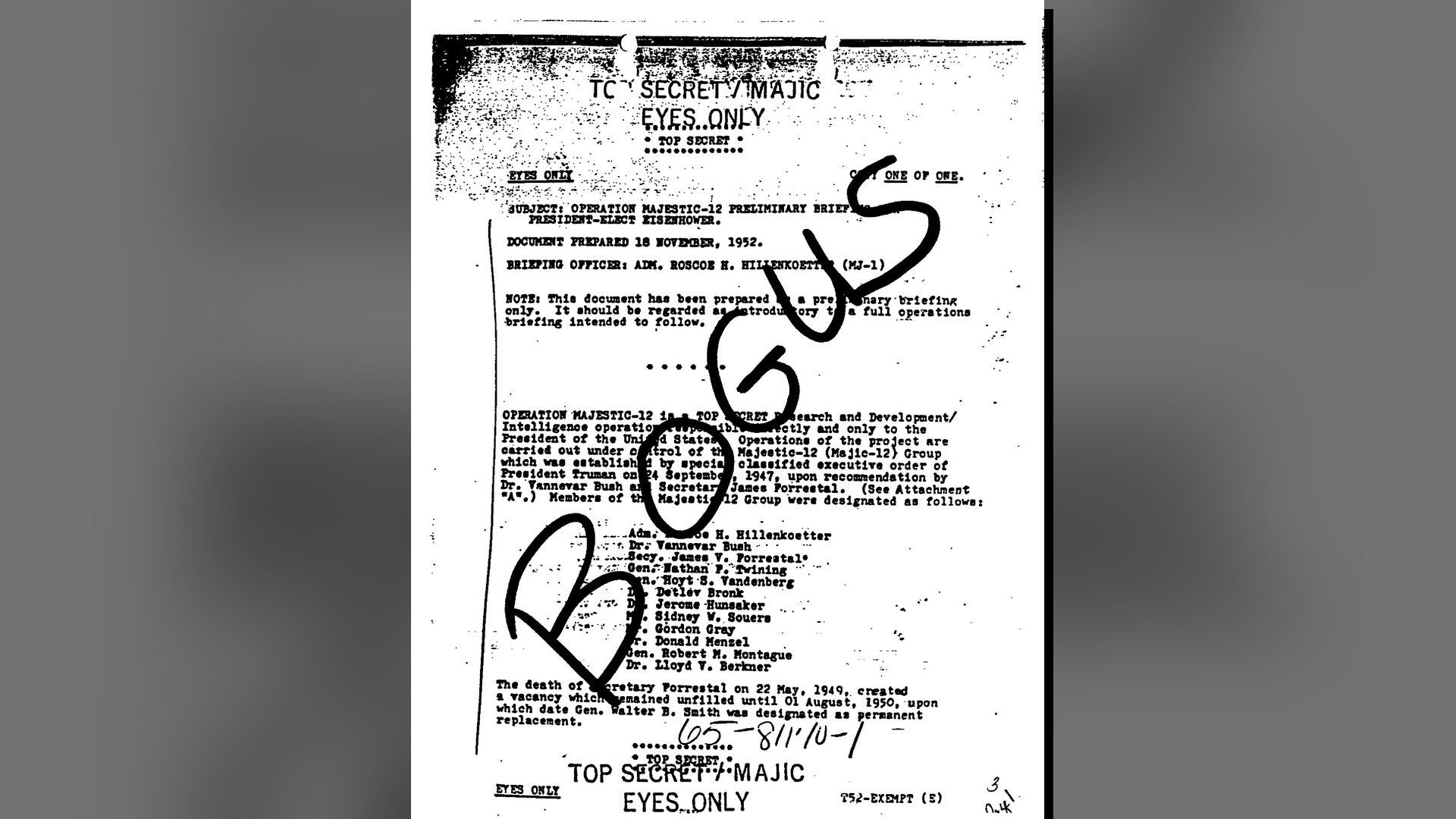
In 1988, the FBI took the most famous UFO documents in the world, wrote one word across them in capital letters — BOGUS — and closed the file.
The papers claimed that in 1947 President Harry Truman had created a secret committee of twelve of the most powerful men in America, codenamed Majestic-12, to study crashed alien craft and the bodies recovered from them. The Bureau’s verdict was total: completely bogus, no such committee, end of story.
For nearly forty years, that stamp was the story. Then, in February 2026, an anonymous researcher writing under the name “MJ12 Logic” published a forensic claim that reopened it.
Buried in the corners of some Majestic papers, he said, are administrative stamps and filing numbers that match genuine CIA records — including a stamp reading “834021-” that also appears on a 345-page CIA file that was not declassified until 22 June 2022.
His argument is simple and unsettling. A hoaxer working in the 1980s could invent a secret committee. But how could he stamp his forgeries with filing codes from CIA records that would not be public for another four decades?
It is the strongest new argument MJ-12 believers have produced in years. It is also, on inspection, narrower than it sounds. Here is what the documents say, what the stamp actually proves, and what it does not.
What the Documents Claim
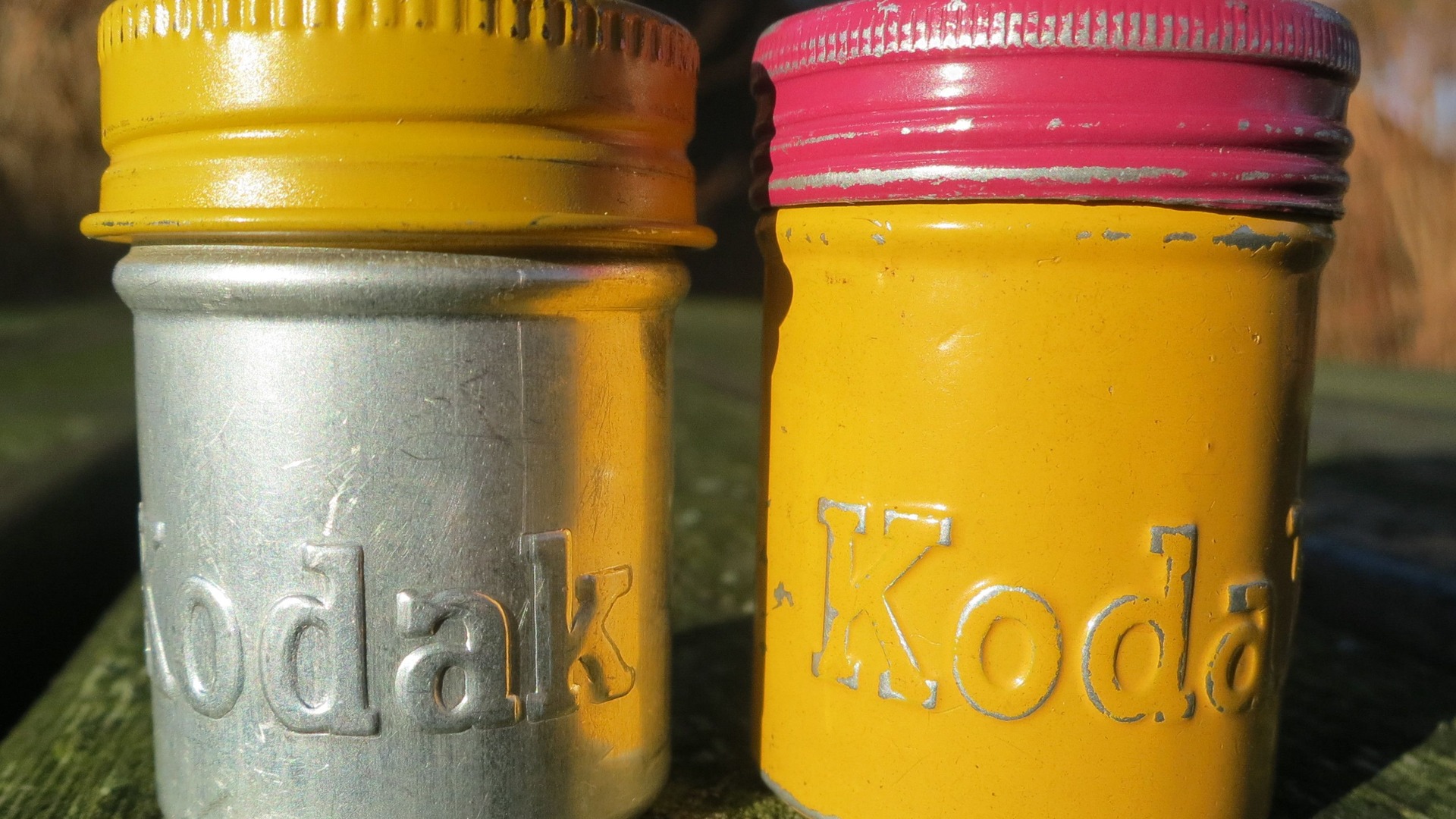
The Majestic-12 papers arrived like a spy story. In December 1984, Los Angeles television producer Jaime Shandera received an anonymous package containing an undeveloped roll of 35mm film.
Developed, it held photographs of an eight-page briefing document dated 18 November 1952, supposedly prepared to bring President-elect Dwight D. Eisenhower up to speed on a secret he was about to inherit.
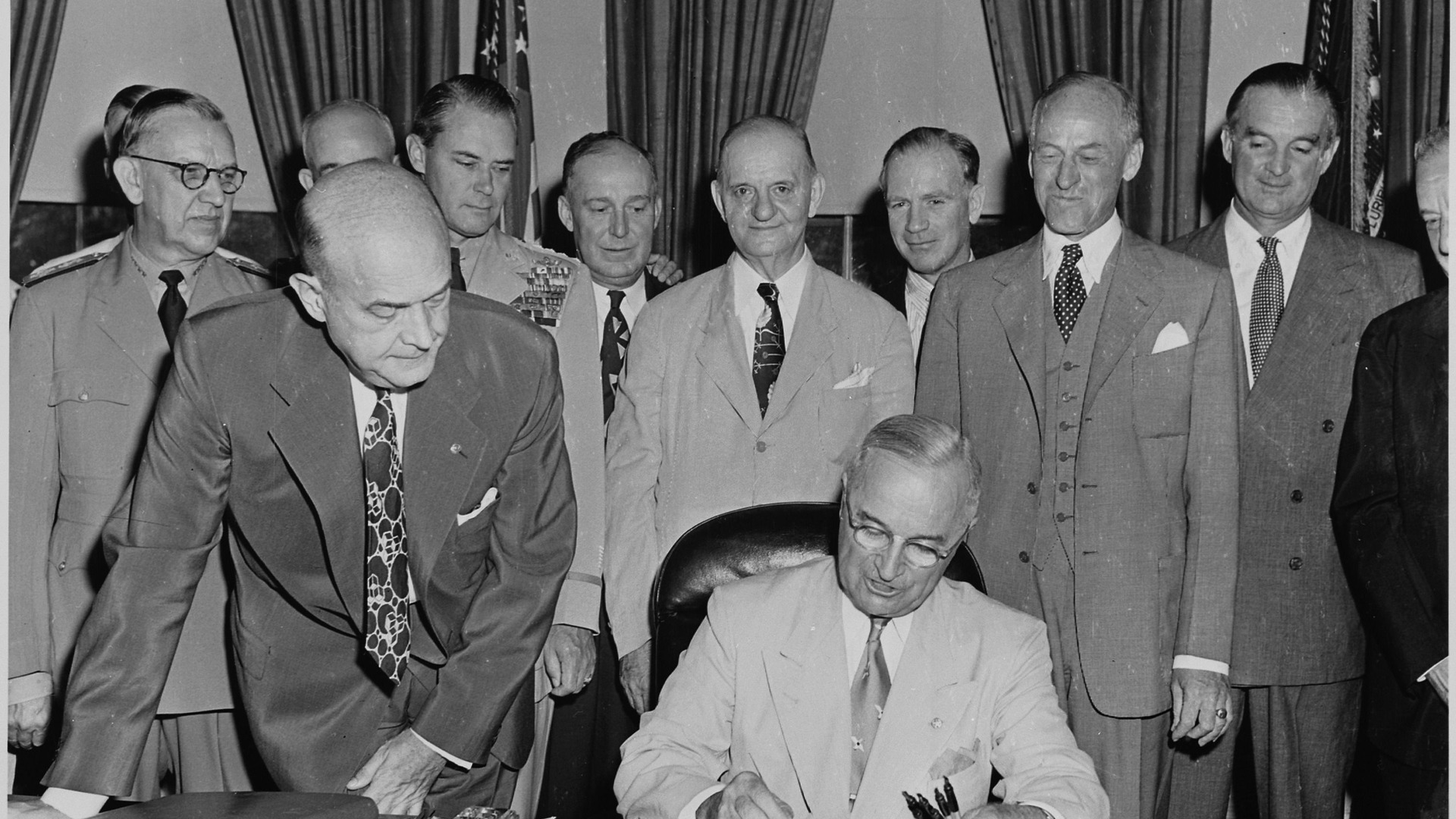
The briefing, attributed to Admiral Roscoe Hillenkoetter, the first director of the CIA, claimed that on 24 September 1947 Truman had signed a memorandum creating “Majestic-12” — a group of twelve scientists, generals and intelligence chiefs charged with investigating crashed flying discs.
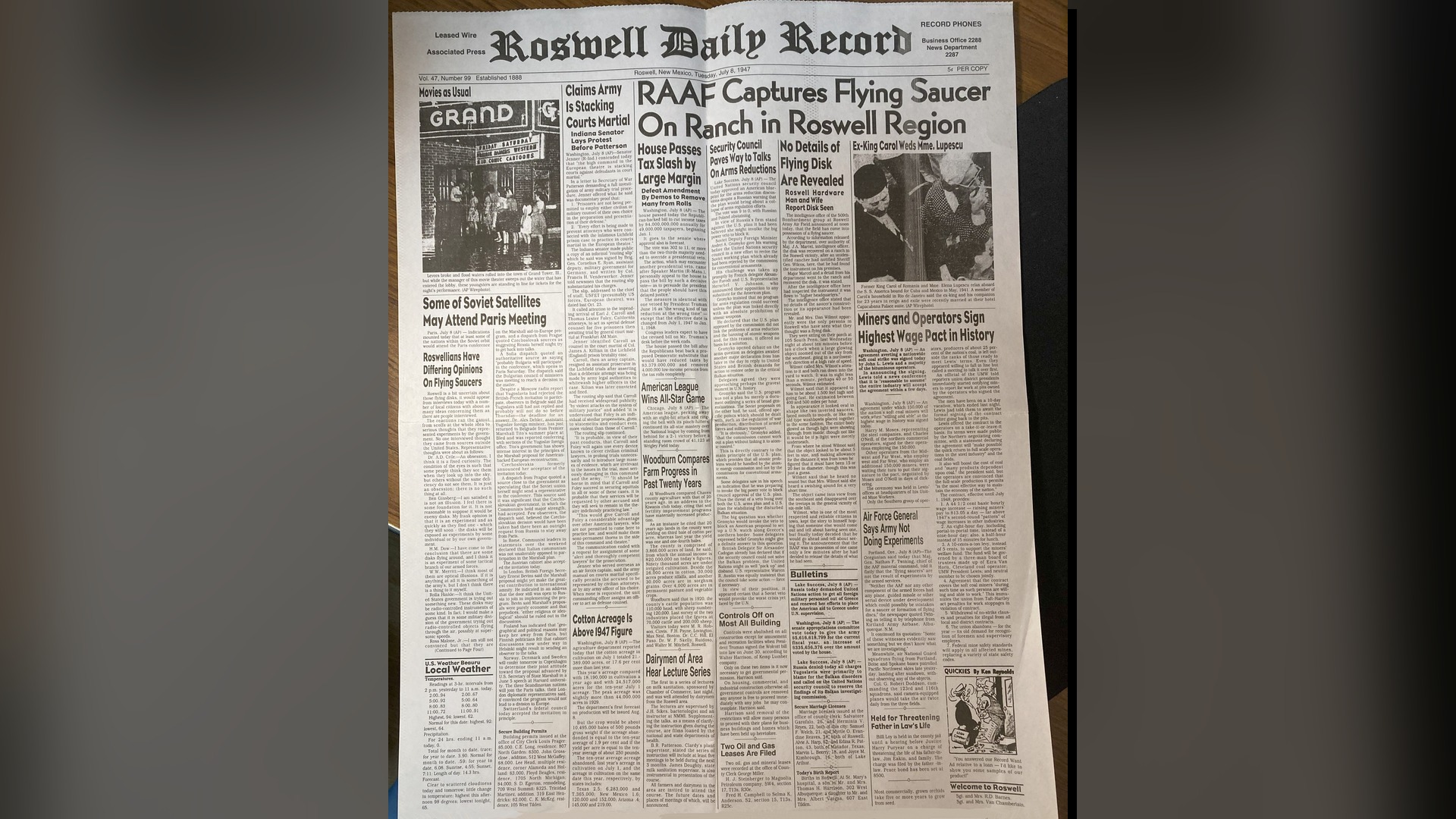
It described the recovery of a crashed craft near Roswell, New Mexico, in July 1947, the retrieval of four small humanoid bodies, and a second crash near the Texas–Mexico border in 1950.
It said the material was being studied in total secrecy, hidden even from most of the government.
The twelve men named were all real, and all plausible: Hillenkoetter himself; science chief Vannevar Bush; Secretary of Defense James Forrestal; Air Force generals Nathan Twining and Hoyt Vandenberg; weapons expert Detlev Bronk; rocket pioneer Jerome Hunsaker; intelligence officials Sidney Souers and Gordon Gray; astronomer Donald Menzel; General Robert Montague; and oceanographer Lloyd Berkner.
Whoever assembled the list knew exactly which names would look right.
The Truman memorandum itself — a single page dated 24 September 1947, directing Forrestal to set up the group — surfaced alongside the briefing.
A third document followed in 1985, when researchers reported finding a 1954 memo from Eisenhower aide Robert Cutler to General Twining in the National Archives, referring in passing to an “MJ-12 SSP” meeting at the White House.
Moore, Shandera and nuclear physicist Stanton Friedman released the core papers publicly in May 1987, and later caches — most of them channelled through a source named Timothy Cooper in the 1990s — added hundreds more pages: annual reports, manuals, memos.
Researcher Ryan S. Wood, who runs the Majestic Documents archive, holds more than 3,500 pages of material and has spent decades testing them.
The later material went further. The Cooper cache included what purported to be a 1947 “Special Operations Manual” for recovery teams handling extraterrestrial material, annual reports to the President, and memos bearing the signatures of some of the most famous names in American science and intelligence.
If genuine, they described a standing bureaucracy of concealment that ran for decades. Wood and his son Robert have commissioned private forensic work on this wider archive — ink, paper and typewriter analysis — and report results they consider consistent with period origins.
Those tests were privately arranged rather than independently replicated, a distinction that matters when the same archive is examined by sceptics, as the next sections show.
Presented as claims, it is a complete secret history of the UFO era. The question was never what the papers said. It was whether any of it was paper from 1947 — or paper from 1984.
The Forensic Puzzle: Stamp “834021-“
The new claim, published on Substack on 27 February 2026 by the pseudonymous MJ12 Logic, is not about signatures or stories. It is about bureaucracy.
Government files carry the fingerprints of the systems that filed them: registry numbers, routing codes, report stamps. Those systems were internal, obscure, and — this is the heart of the argument — largely undocumented in public until the files themselves were declassified.
MJ12 Logic reported that several Majestic documents carry a stamp in the lower right corner reading “834021-” followed by a page number.
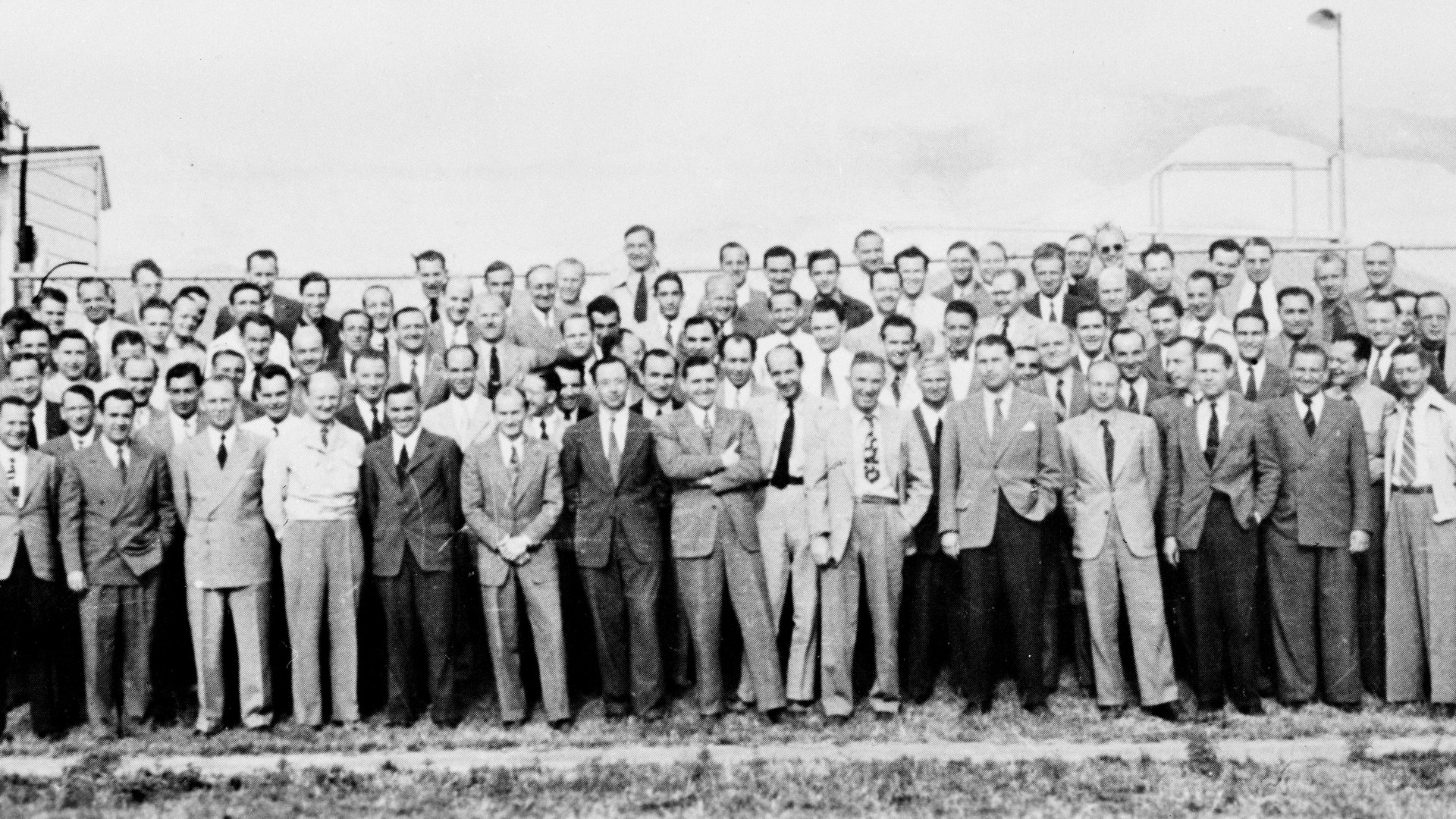
Searching the CIA’s FOIA reading room, he found that the same identifier appears on a 345-page CIA intelligence file — record material connected to the Joint Intelligence Objectives Agency era and Operation Paperclip, the programme that brought German scientists to America — which the CIA declassified only on 22 June 2022.
The Majestic papers, by contrast, had been circulating since the 1980s and 1990s.

That is also why the claim travelled so fast when it appeared. The UFO community has been promised “final proof” many times since 1987, usually in the form of a new witness or a new document.
A matching registry number is different in kind: it is boring, checkable, and either in the CIA’s own reading room or it is not. Anyone with an internet connection can repeat the search MJ12 Logic described, which makes the claim falsifiable in a way most MJ-12 evidence never is.
He reported three further matches: a routing number, “A-1762.1,” which a CIA search returns on exactly one document, a file declassified in 2003; an Executive Registry number, “ER-1-2735,” appearing on both that CIA file and the Majestic annual report; and a report designation, “CIA SI 28-55,” tied to a digest of worldwide UFO intelligence material.
His conclusion was blunt: it is, he wrote, “virtually impossible to logically reconcile this supporting evidence with the idea that ‘Majestic-12’ was just some paperwork invented during the 1980s.”
The claim deserves to be taken seriously — and stated precisely. As of the reporting through March 2026, the identifier analysis has not been independently replicated or reviewed by professional document examiners.
The matches were reported by an anonymous researcher and amplified within the UFO community, including by author Whitley Strieber, but no forensic laboratory has confirmed them.
Two further caveats come from the believers’ own side. Most of the documents bearing the “834021-” stamp come from the Timothy Cooper cache that surfaced in the 1990s — not from the original 1984 film that produced the Eisenhower briefing and the Truman memo.
And majesticdocuments.com, the pro-authenticity archive itself, concedes that the 345-page CIA file sharing the number has only a tenuous connection to any Majestic programme: the stamp matches, but the file’s subject matter is not about UFOs at all.
A shared filing number proves two documents passed through compatible paperwork systems. It does not, by itself, prove either document’s contents are true — any more than a real declassified programme like Project Stargate proves every claim later attached to it.
The Counterarguments

Against the stamp stands forty years of forensic damage, and it is severe.
The FBI’s 1988 position followed an Air Force Office of Special Investigations referral: no agency claimed the papers, AFOSI concluded no such committee had ever existed, and the Bureau closed its file on 30 November 1988 calling the documents “completely bogus.”
That is the “BOGUS” stamp preserved in the FBI Vault to this day.
The most damaging single finding belongs to investigator Philip J. Klass. Klass compared the “Harry S. Truman” signature on the 1947 memorandum with a genuine Truman letter to Vannevar Bush dated 1 October 1947, held at the Library of Congress.
The signatures were not similar. They were identical — including a tiny accidental skid mark where Truman’s pen had slipped while forming the letter “H.” No human being signs their name twice with the same accident in the same place.
A questioned-document examiner who reviewed the comparison concluded the MJ-12 signature was a photocopy, lifted from the genuine letter and pasted onto the memo — with traces of correction fluid where the forger had adjusted the underlying text.
The same examiner found the memorandum had been typed on a Smith-Corona typewriter model that was not introduced until 1963 — sixteen years after its supposed date.
Klass catalogued further problems: date formats on the papers that shift inconsistently between styles, and a Cutler–Twining memo written on onion-skin carbon paper of a kind not used for such correspondence, bearing none of the registration marks an authentic National Archives document should carry.
Cutler, researchers later established, was out of the country on the date his memo was supposedly written.
There is also an authorship result the believers rarely quote. In 2007, computational linguist Dr Carole Chaski ran authorship-attribution analysis on seventeen signed Majestic documents. Sixteen failed to match their claimed authors. One passed.
None of this is answered by the “834021-” stamp, and the stamp itself has mundane possible explanations: registry numbers are exactly the kind of detail a skilled fabricator copies from genuinely released files, later documents can be built on real templates, and a stamp shared with a file about something else entirely authenticates the filing system — not the flying saucers.
The history of the era is full of real secret programmes whose paperwork later attracted invented additions, as our look at insane Cold War secrets shows: the genuine files are strange enough without help.
The Verdict
Weigh both sides honestly.
For authenticity: the documents name real people in real roles, the Cutler memo surfaced inside the National Archives rather than an anonymous envelope, Ryan Wood’s archive keeps growing, and the “834021-” matches are, at minimum, a genuine archival curiosity that nobody has yet explained away line by line.
Against authenticity: a presidential signature demonstrably photocopied from another letter, a typewriter that did not exist in 1947, a memo dated when its author was abroad, an authorship study that failed sixteen of seventeen documents, and an FBI file closed as “completely bogus.”
The stamp argument, even taken at full strength, applies mainly to the later Cooper-cache papers — not to the core 1947 documents carrying the photocopied signature.
Supporters add one more consideration.
Stanton Friedman, the papers’ most persistent defender until his death, spent years cross-checking the documents’ incidental details — postings, promotions, travel, who was demonstrably where on a given date — and argued that too many of them matched the genuine record for a casual fabrication.
Believers also note that the Cutler memo was found in an official archive box by researchers working openly, which is an odd delivery method for a hoax.
None of that answers the signature evidence; it simply explains why intelligent people kept arguing.
That asymmetry is where the case really sits. The new forensic claim does not rescue the Truman memo. It raises a fresh question about a different set of papers, and that question is currently supported by one anonymous researcher’s unreplicated analysis.
Verdict: Unresolved. The core Majestic-12 documents still carry forensic evidence of forgery that no stamp can erase, and the FBI’s “bogus” finding has never been withdrawn. But the matching CIA filing identifiers are a real, checkable puzzle that deserves independent examination — because if even one Majestic paper genuinely passed through the system those numbers describe, the story is not over.
Frequently Asked Questions
Are the MJ-12 documents real?
The FBI says no: it closed its investigation in 1988 calling them “completely bogus,” and investigators such as Philip Klass produced strong evidence of forgery, including a Truman signature photocopied from a genuine 1947 letter. A 2026 analysis by the pseudonymous researcher “MJ12 Logic” claims the papers share CIA filing numbers with files declassified only in 2022, but that analysis has not been independently verified.
What is Operation Paperclip?
Operation Paperclip was the US programme, run after the Second World War, that recruited more than a thousand German scientists and engineers — including men who had worked on Nazi weapons programmes — and brought them to America to work on rockets and aerospace research. It is a documented historical programme, and its CIA paperwork is where the “834021-” stamp match was reportedly found.
Why does the stamp matter?
Because of timing. If Majestic-12 papers circulating since the 1980s carry administrative codes that only became public when the CIA declassified the matching files in June 2022, a 1980s hoaxer should not have been able to invent them. Critics answer that a shared stamp proves, at most, contact with a real filing system — not that the documents’ claims about crashed saucers are true.
Who were the twelve members of Majestic-12?
The documents name Admiral Roscoe Hillenkoetter, Vannevar Bush, James Forrestal, Generals Nathan Twining and Hoyt Vandenberg, Detlev Bronk, Jerome Hunsaker, Sidney Souers, Gordon Gray, astronomer Donald Menzel, General Robert Montague and Lloyd Berkner. All were real senior figures of the era — which believers read as authenticity and sceptics read as a well-researched cast list.
Where did the documents come from?
The core papers arrived anonymously: an undeveloped roll of film sent to producer Jaime Shandera in December 1984 contained the 1952 Eisenhower briefing, and researchers released the material publicly in 1987. A further memo was reportedly found in the National Archives in 1985, and a much larger cache surfaced in the 1990s through a source named Timothy Cooper — the origin of most of the papers bearing the “834021-” stamp.
Join the Conversation
A photocopied presidential signature on one side, CIA filing numbers from files nobody could read until 2022 on the other — forgery, disinformation, or the real thing? What do you think the Majestic-12 papers actually are?
Read Next
Project Stargate: The CIA’s Psychic Spies
