
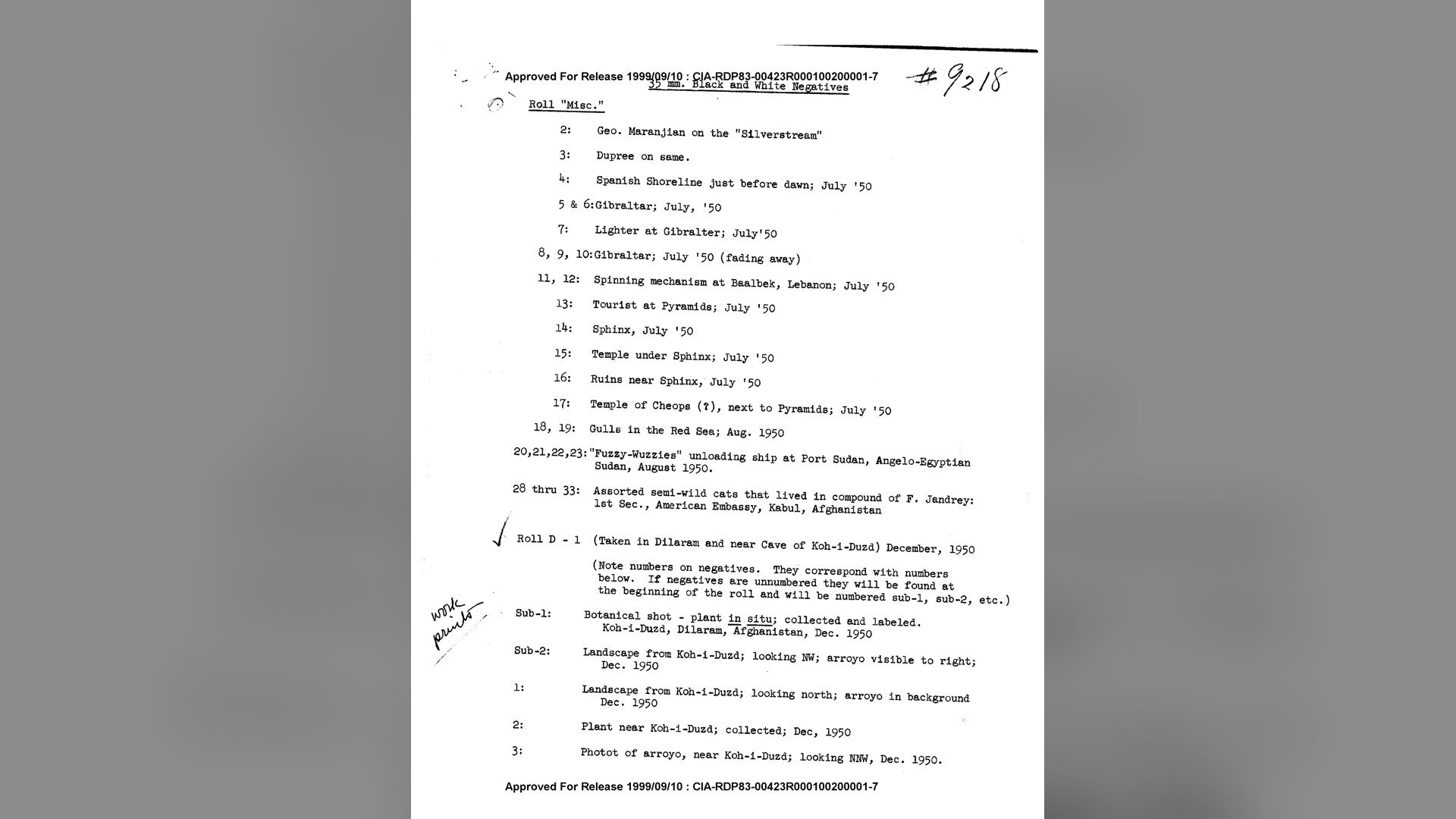
It is not a spy report. It is not a memo about aliens, Atlantis or anything the CIA was hunting.
It is a filing form — a “Presentation Form for Graphic Material,” dated 20 November 1952, cataloguing eleven rolls of black-and-white photographic negatives shot by a traveller through the Middle East and Afghanistan in 1950.
Tourist at the pyramids. Bazaars. Ruins. The kind of list that puts archivists to sleep.
And then, in the middle of it, one entry stops you cold: “Temple under Sphinx; July ’50.”
Five words, if you count the date. That is the entire document trail behind one of the most durable legends in alternative archaeology — the claim that somewhere beneath the Great Sphinx of Giza sits a Hall of Records, a sealed library left by a lost civilisation, holding the true history of humanity.
The form is real. You can read it in the CIA’s own reading room, reference CIA-RDP83-00423R000100200001-7, released to the public in 1999. What it means is another matter entirely.
Because long before any CIA clerk typed that caption, a sleeping prophet in Virginia had already described exactly what the temple under the Sphinx was supposed to contain — and exactly where it would be found.
What the Document Actually Says
Start with what the paper is, because the legend depends on blurring it. The Presentation Form for Graphic Material is an administrative inventory.
In 1950 a traveller returned from the Middle East and Afghanistan with eleven rolls of 35mm film, and in November 1952 the material was catalogued: roll by roll, frame by frame, with short descriptive captions.
Most of the captions are exactly as dull as you would hope. “Tourist at Pyramids.” “Ruins near Sphinx.” And then entry after entry until you reach the one that launched a thousand videos: “Temple under Sphinx; July ’50.”
That is all of it. There is no accompanying report, no analysis, no classification marking that suggests anyone in 1952 thought the frame was sensitive.
Crucially, the photographs themselves were not released with the form — only the captions survive in the file, so nobody outside the archive has ever seen what that particular frame actually shows.
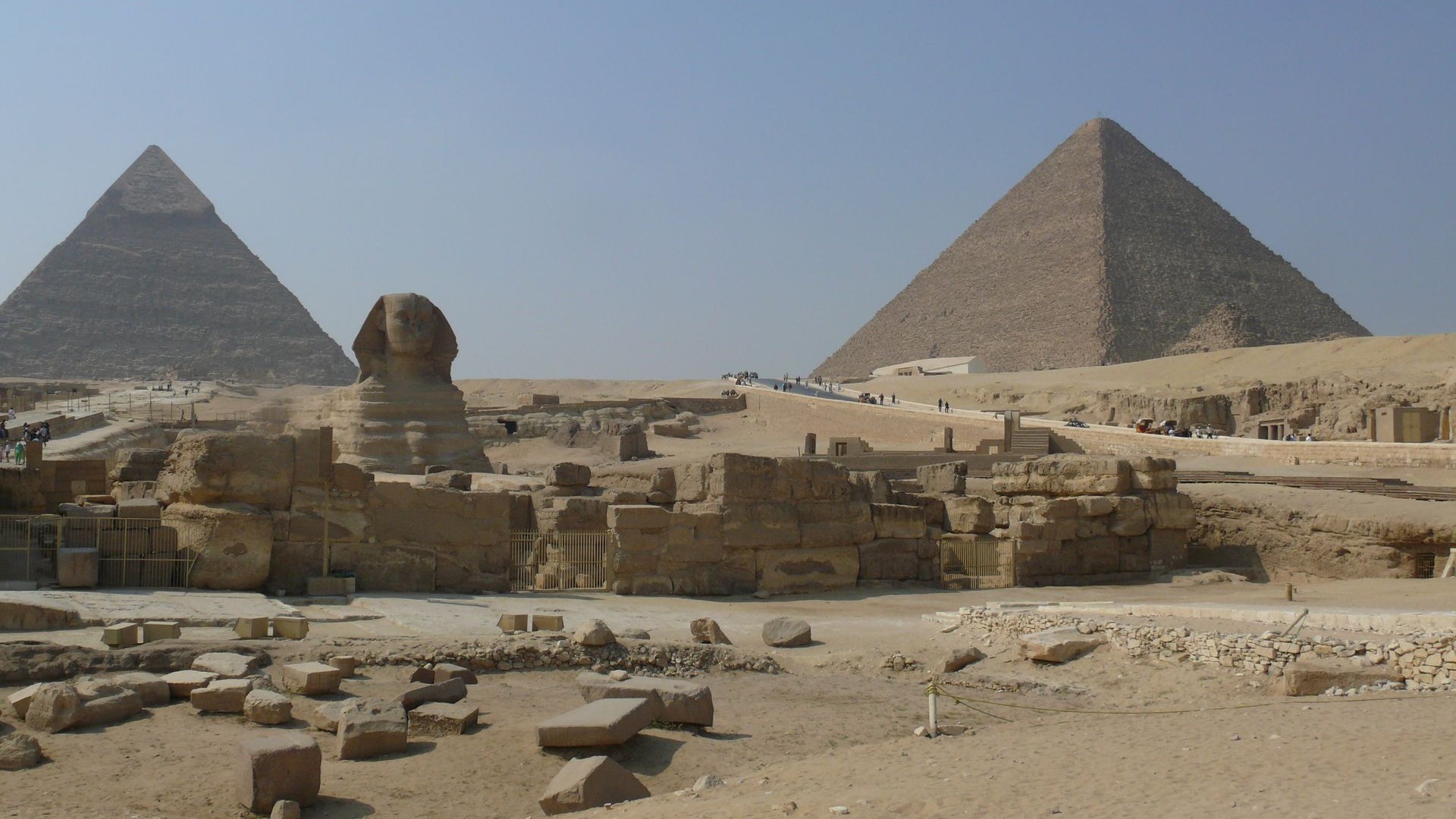
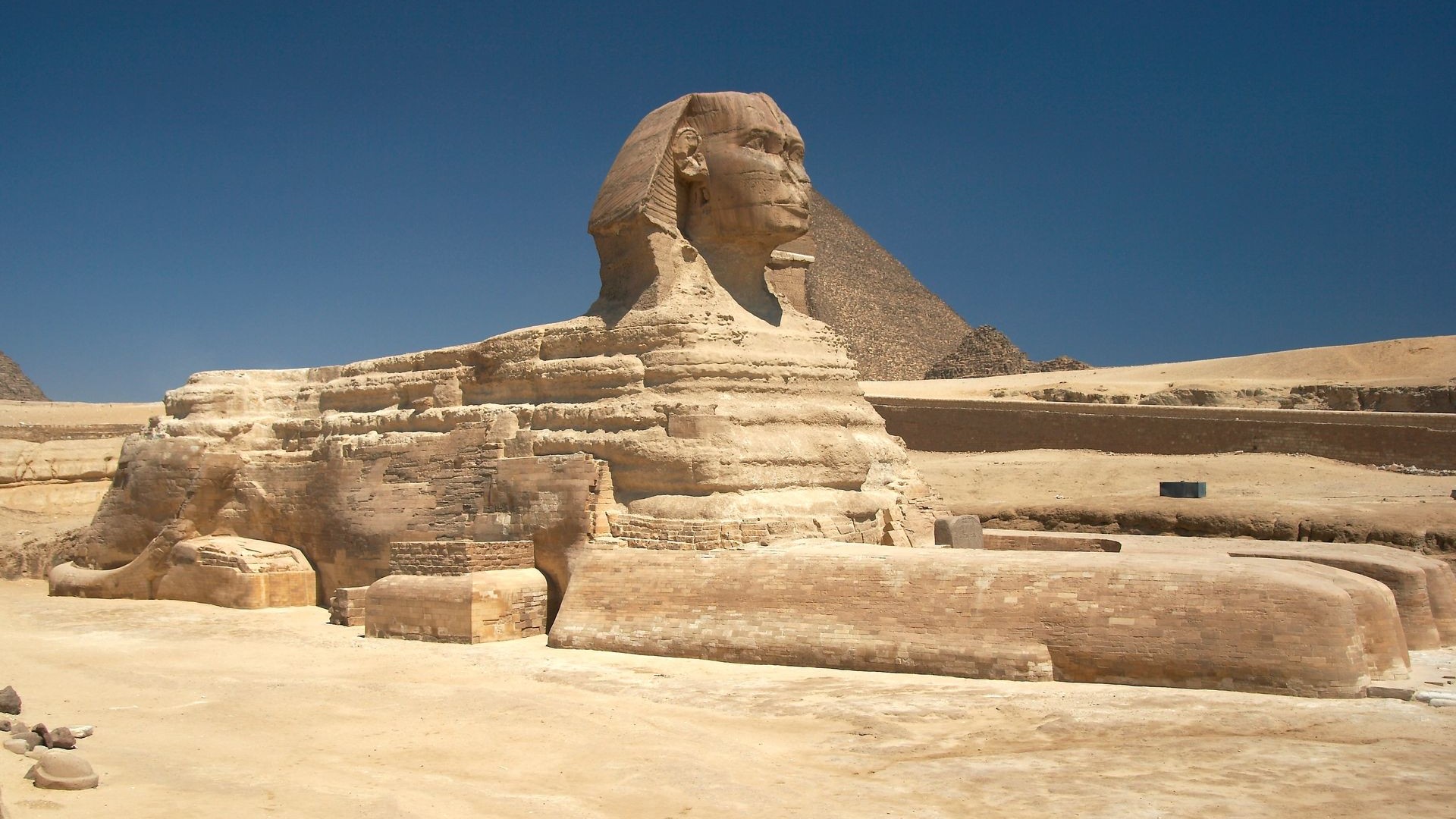
Now consider the boring explanation, because it is a strong one. There is a real temple at the Sphinx, and every archaeologist knows it: the Sphinx Temple, a massive Old Kingdom structure built around 2500 BC, probably under Khafre, sitting directly in front of the statue.
It also sits lower than the plateau around it, down in the excavated enclosure — underneath the Sphinx’s gaze, and quite literally below the level of the monument. For most of history it was buried in sand; it was fully cleared only during Émile Baraize’s excavations between 1925 and 1936.
To a traveller photographing it in July 1950, newly exposed and sunk in its pit in front of the great statue, “temple under Sphinx” is not a coded phrase. It is a description.
Believers push back on one point: the same inventory uses plain captions elsewhere, including “Ruins near Sphinx,” so why would this frame get different wording?
It is a fair question. It is also the only question the document actually raises — and a caption writer varying his words across eleven rolls of film is a long way from a hidden chamber.
There is a second point believers rarely mention. The form runs to ten pages and covers far more than Egypt — cave sites, bazaars and geological subjects across Afghanistan and the Middle East, the record of an ordinary photographic expedition.
The Sphinx entry is one line among hundreds. If this was the paper trail of a suppressed discovery, it is a strange place to leave it: unclassified in tone, filed without comment, and handed to the public in 1999 without anyone in the archive appearing to notice the line at all.
The Sleeping Prophet and the Library of Atlantis

The Hall of Records was not born in a CIA archive. It was born in trance.
Edgar Cayce, the Kentucky-born clairvoyant known as the “Sleeping Prophet,” gave thousands of readings between 1901 and 1944, many of them about Atlantis.
In readings from 1933 onward, he described a chamber — a Hall of Records — that Atlantean survivors had sealed near the Sphinx before their civilisation fell. Inside, he said, were the records of humanity’s true history: the story of Atlantis, its science, and the catastrophes that destroyed it.
Cayce was specific about geography. The hall, he said, lay between the Sphinx and the river, with its entrance near the Sphinx’s right forepaw. He also attached a deadline of sorts, suggesting the chamber would be opened in the years before 1998. It was not.
His followers did not give up. Cayce’s organisation, the Association for Research and Enlightenment, helped fund a series of scientific searches at Giza from the 1970s onward — and those searches produced the strangest subplot in the whole story.
A young American named Mark Lehner arrived in Egypt in the early 1970s inspired by Cayce’s readings, determined to help find the Hall. He stayed, learned the site stone by stone, and became the world’s leading scholarly authority on the Sphinx — and a firm sceptic of the library he came to find.
The instruments, meanwhile, kept finding things — just never a library. In 1978, a team led by physicist Lambert Dolphin of SRI International surveyed around the Sphinx with seismic sounding and electrical resistivity, funded in part by Cayce’s foundation.
They drilled five boreholes into the strongest anomalies. Every one came back as natural cracks in the rock.
A Japanese team from Waseda University ran electromagnetic surveys in 1987 and reported a tunnel-like reading under the Sphinx and cavities near its paws.
In 1991, geologist Robert Schoch, geophysicist Thomas Dobecki and writer John Anthony West ran seismic surveys and reported an anomaly in the bedrock beneath the front of the Sphinx that they suggested could be a cavity. It has never been drilled.
In 1996, a Florida State University team working for the Schor Expedition reported “rooms and tunnels” in front of the Sphinx — claims mainstream archaeology has never accepted.
The mainstream reading of all of this is consistent: the Giza plateau is limestone, and limestone is riddled with natural fissures, joints and hollows.
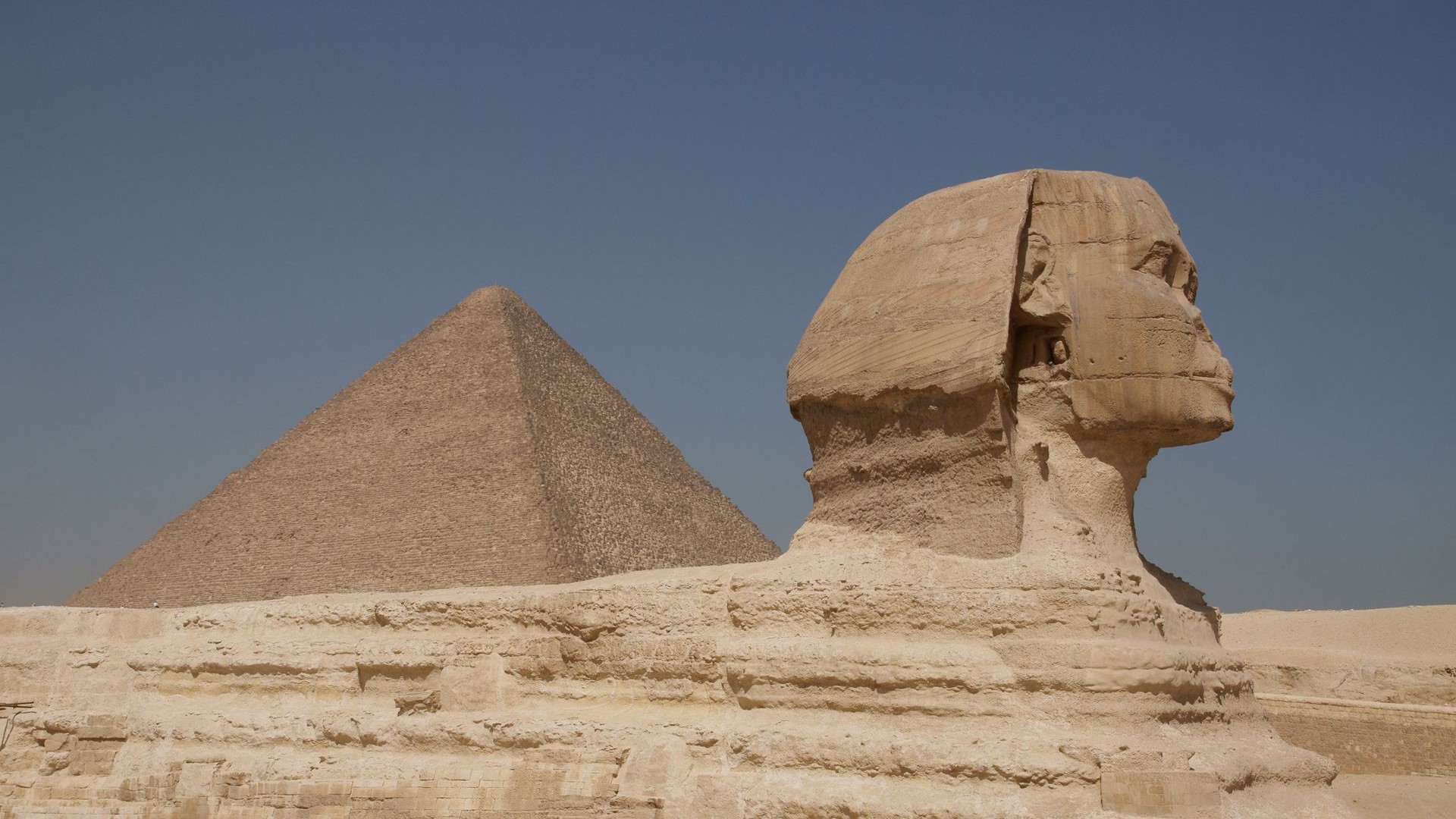
The Sphinx itself is cut through by a major natural fissure, and its known tunnels — a short passage at the rump that drops to the water table, a borehole behind the head from the 1830s — have all been entered, measured and published.
An anomaly on a seismic readout is a change in the rock. It is not, by itself, a room.
Those known tunnels deserve a moment, because they show what a real opening in the Sphinx looks like when it is found: it gets surveyed, photographed and argued over in print, not hidden.
The rump passage was uncovered during the great clearance of the statue in 1926 and reopened in 1980; it descends to groundwater and stops. The hole behind the head was bored in the 1830s by treasure-hunting engineers and cleared again in 1978, producing sand, cement and fragments of the statue’s own headdress.
Hawass and Lehner’s late-1970s work went through these openings personally. Whatever else is down there, the Sphinx’s documented holes are small, wet and empty — which is precisely why believers focus on the one anomaly nobody has drilled.
The Man Who Won’t Let Anyone Dig
If the Hall of Records has an engine, it is not Cayce, and it is not the CIA form. It is a refusal.
For decades, excavation and drilling permits at Giza ran through one gatekeeper: Dr Zahi Hawass, Egypt’s most senior antiquities official and the public face of Egyptian archaeology.
Hawass has never hidden his position. “The Sphinx has been thoroughly excavated,” he has said. “My friend and colleague Mark Lehner and I investigated it ourselves in 1979. Nothing like a Hall of Records has been found in or near the Sphinx.”
And yet Hawass has also confirmed, openly, that researchers have asked for permission to dig or drill beneath the Sphinx — and that permission has been refused.
The un-drilled 1991 anomaly in front of the statue remains un-drilled. The Schor Expedition’s work at the plateau in the late 1990s ended amid official displeasure, and no comparable independent team has been handed the keys since.
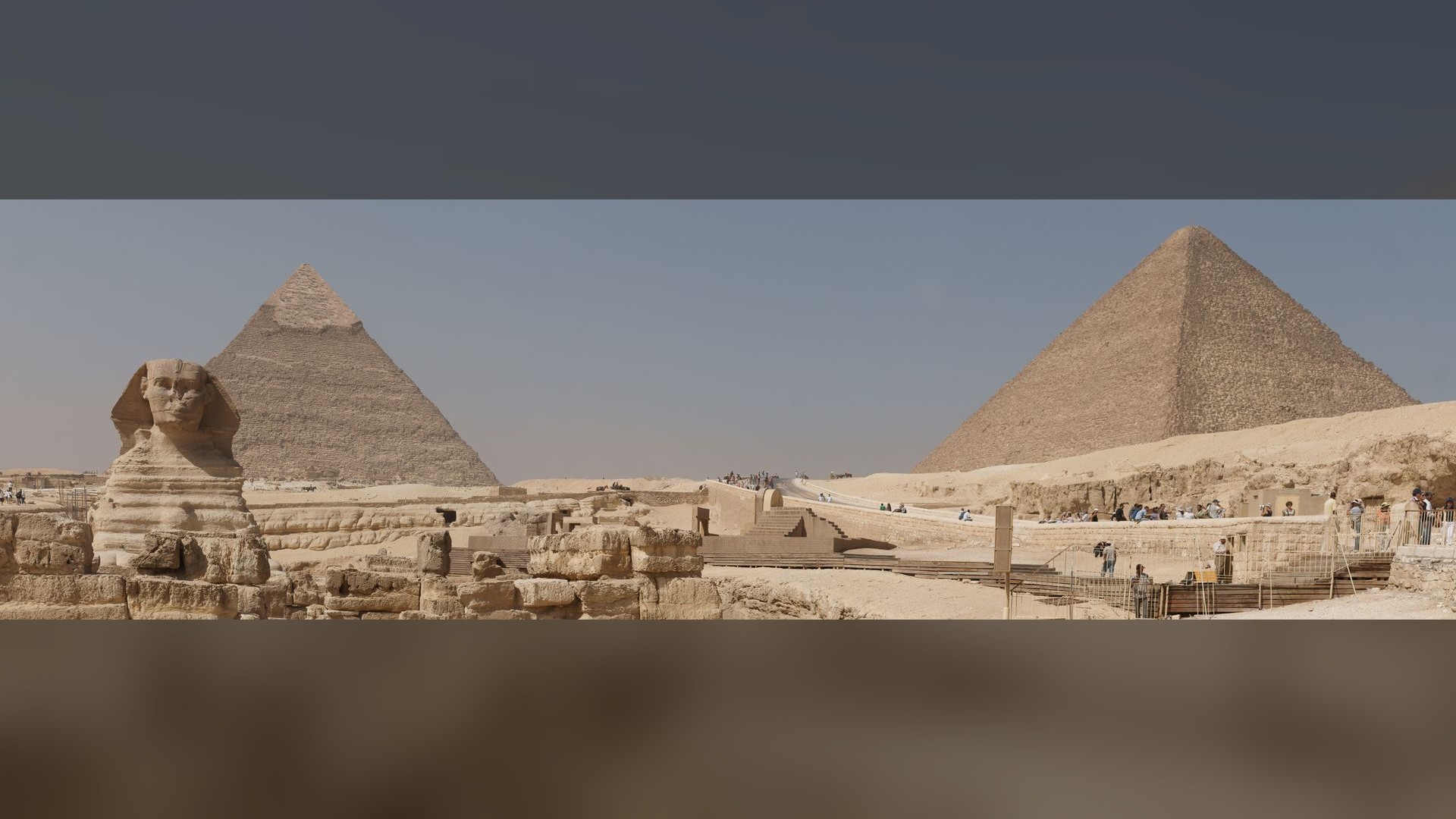
From the Egyptian side, the reasoning is mundane: the Sphinx is a fragile, eroding monument, the bedrock is known to be fissured, and officials are not obliged to let every foreign team with a theory drill holes in a national treasure chasing a psychic’s prediction.
There is also a fair point buried in the frustration — the searches that were permitted, in 1978, drilled their best anomalies and found natural rock.
But see it from the other side of the fence. Every refusal converts an absence of evidence into something that feels like evidence of concealment.
The pattern is the same one that keeps stories like our phantom islands investigation alive: the place on the map that nobody is allowed to go and check becomes more powerful than any place that has been checked and found empty.
There is a deadline problem, too, and it cuts against the believers. Cayce’s readings pointed to the Hall being opened in the years before 1998.
That date came and went with no chamber, no announcement and no records — a failed prediction by any plain reading. Believers tend to step around it, redating the prophecy or treating the deadline as symbolic.
Sceptics treat it as the cleanest test the legend has ever faced, and the legend failed it. Both reactions tell you why the fight has moved to the seismic anomaly: it is the last piece of the story that has not yet been tested at all.
Hawass is, in that sense, the legend’s unwilling co-author. His denials are categorical, his gate is closed, and a closed gate is the one thing a conspiracy theory can feed on forever.
The Verdict
Lay the pieces out in a row and the Hall of Records looks like this.
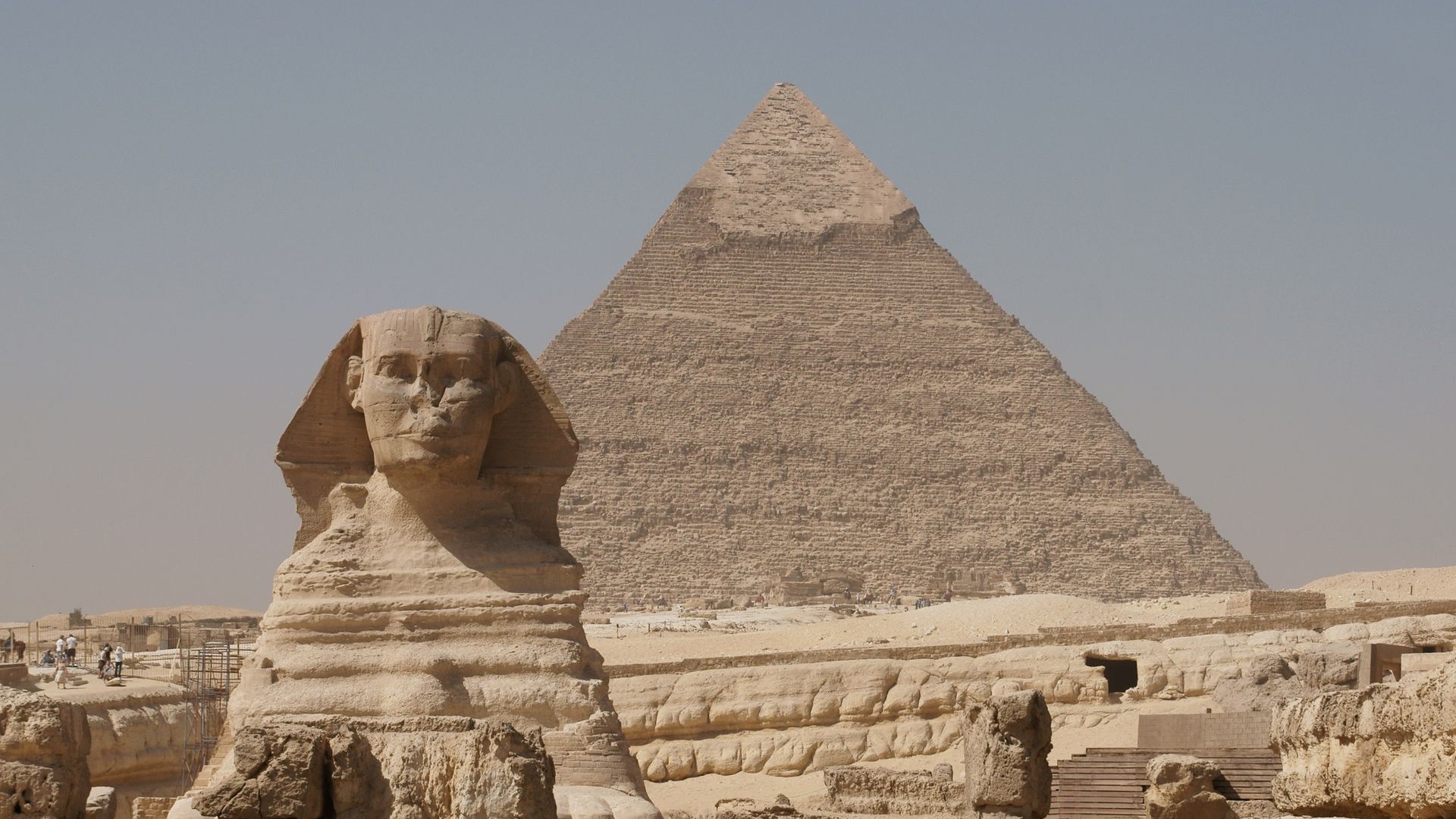
A real CIA form contains a real five-word caption, “Temple under Sphinx,” attached to a photograph nobody has released — a caption that most plausibly describes the very real Sphinx Temple sitting in its pit in front of the statue.
A real psychic really did predict a chamber of Atlantean records near the right forepaw, and attached a timeline that quietly expired in 1998. Real instruments have really detected cavities and anomalies in the limestone around the Sphinx, every drilled one of which has turned out to be natural rock.
And a real refusal stands over all of it, keeping the one or two untested anomalies untested, in the way that government paper trails so often do — our Cold War secrets files are full of gaps exactly this shape, where the missing page matters more than the surviving ones.
None of that is a Hall of Records. But none of it is nothing, either. The legend survives because it is built from real documents, real readings and real holes in the ground, joined together by hope.
Verdict: Unresolved. There is no verified evidence that a Hall of Records exists beneath the Sphinx, and the famous CIA caption almost certainly refers to the known Sphinx Temple. But the surveys did find unexplained anomalies, the key one has never been drilled, and until it is, the gap between “no evidence” and “no investigation” stays exactly where the legend lives.
Frequently Asked Questions
Is there a Hall of Records beneath the Sphinx?
There is no verified evidence of one. The idea comes from Edgar Cayce’s 1930s readings about an Atlantean archive near the Sphinx’s right paw. Decades of surveys have found natural fissures and cavities in the limestone, but no chamber, no artefacts and no records.
Why did the CIA document mention a temple under the Sphinx?
Most likely because the photographer photographed the Sphinx Temple — the real Old Kingdom temple that sits in a pit directly in front of, and below, the Sphinx. The 1952 form is a caption inventory for a traveller’s film rolls, and the photograph itself was never released.
Why won’t Egyptologists dig under the Sphinx?
Officials such as Zahi Hawass say the monument has been thoroughly investigated, that the bedrock is naturally fissured, and that drilling into a fragile national treasure on the strength of a psychic’s prediction is not justified. Critics reply that refusing to test the remaining anomalies keeps the question artificially open.
What did the surveys actually find?
Real anomalies, natural explanations. A 1978 SRI survey drilled five boreholes and found only natural cracks. A 1991 seismic survey reported a possible cavity in front of the Sphinx that has never been drilled, and a 1996 survey claimed “rooms and tunnels” that mainstream archaeology does not accept. Limestone plateaus are full of voids; a void is not a room.
Who was Edgar Cayce?
Cayce (1877–1945) was an American clairvoyant known as the “Sleeping Prophet,” who gave thousands of trance readings, many about Atlantis. His 1930s readings described the Hall of Records and predicted it would be opened before 1998. Ironically, his most famous follower at Giza, Mark Lehner, became the Sphinx’s leading scholarly authority — and stopped believing in the Hall.
Join the Conversation
If one drill hole in front of the Sphinx could settle this forever, should Egypt let scientists drill it — or is some ground better left untested? Tell us what you think in the comments.
Read Next
Phantom Islands: The Lands That Appeared on Maps but Never Existed
Insane Cold War Secrets That Sound Made Up but Aren’t
Also read The 83-Ton Pharaoh: How Egypt Moved the Colossus of Ramses II
