

A photograph from the future, buried inside an ancient tomb.
That is the claim racing around the internet right now — and if you have seen the black-and-white slideshow, you already know how it goes. A scientist vanishes. A tomb opens. And inside it, impossibly, sits a photograph dated 1987 — taken decades before the tomb was ever opened, showing a man who would not disappear for another sixty-four years.
It is the perfect mystery. It has a curse-worthy tomb, a secret government project, a warning written from the future, and a final photograph dated 2045 that has not happened yet.
It is also the kind of story that deserves one simple question before it gets shared one more time:
Did any of it actually happen?
We went looking for the tomb, the scientist, the project and the photographs. What we found is more interesting than the slideshow — because the truth leaves fingerprints everywhere, and this story leaves none.
Here is the full story, and exactly where it falls apart.
And the story has worked. It has been watched millions of times, retold in language after language, and stretched into videos, podcasts — even a book. In the comments, people swear it must be true, because the photographs look old, the dates are specific, and the story feels too detailed to have been invented. That feeling is exactly the trap. Detail is cheap now. A convincing face costs nothing. A haunted laboratory costs nothing. What once needed a film studio now takes an afternoon and a phone.
1. The Story Everyone Is Sharing
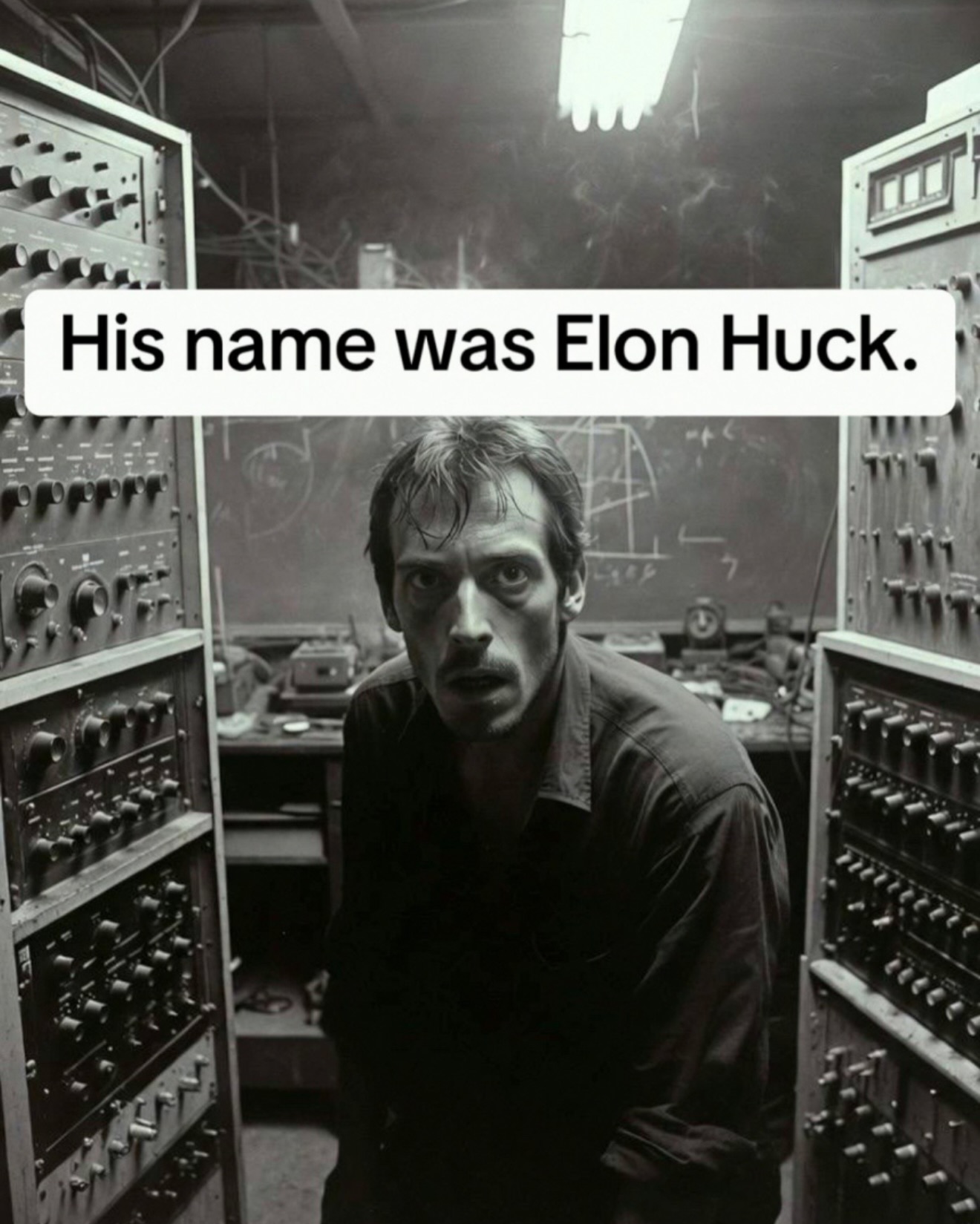
His name was Elon Huck.
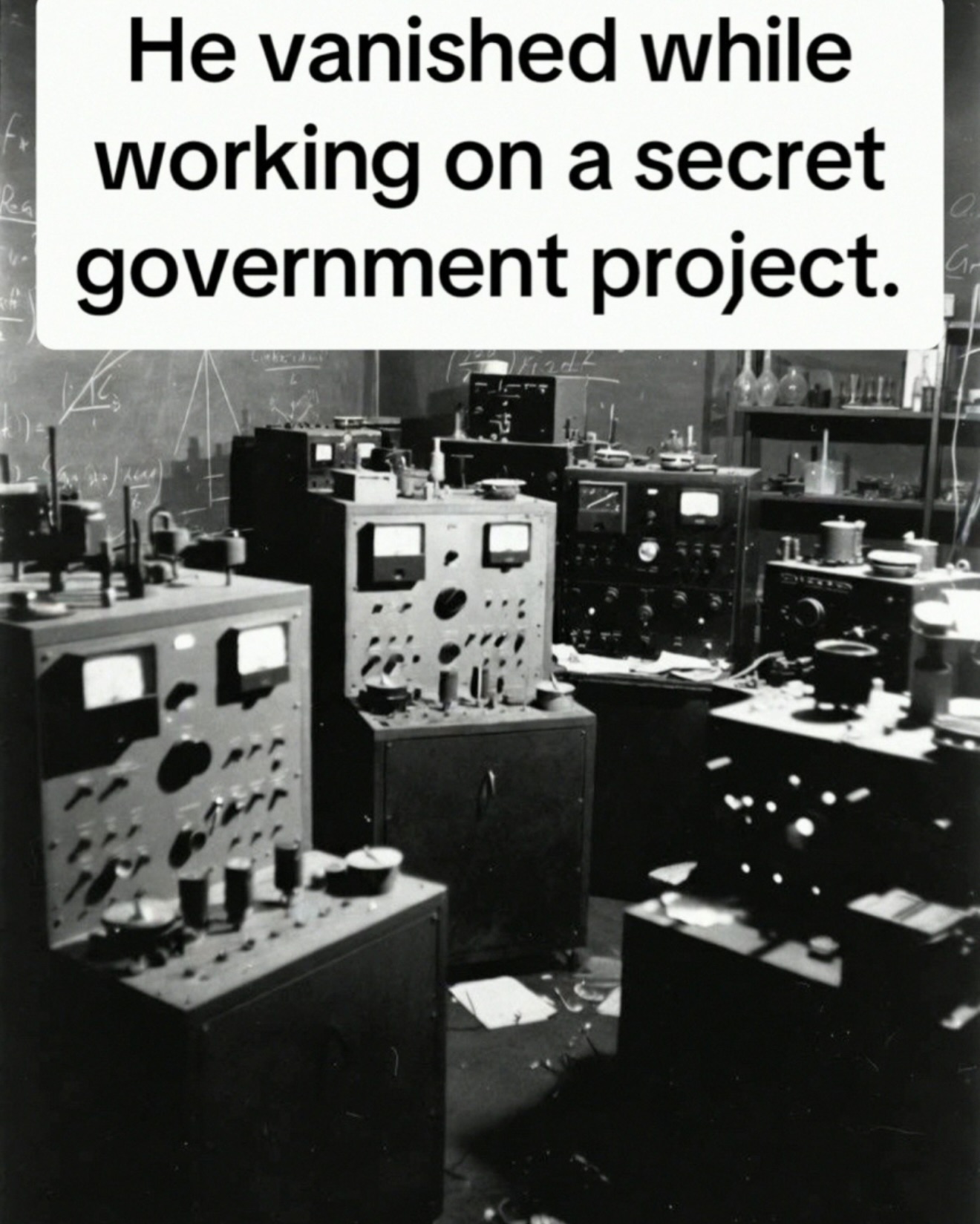
He was a scientist, the slideshow says, working on something so secret that when he vanished, there was almost nothing left behind — just his old laboratory and a set of notes headed “Project Kronos.” Those notes, we are told, “explained everything.”
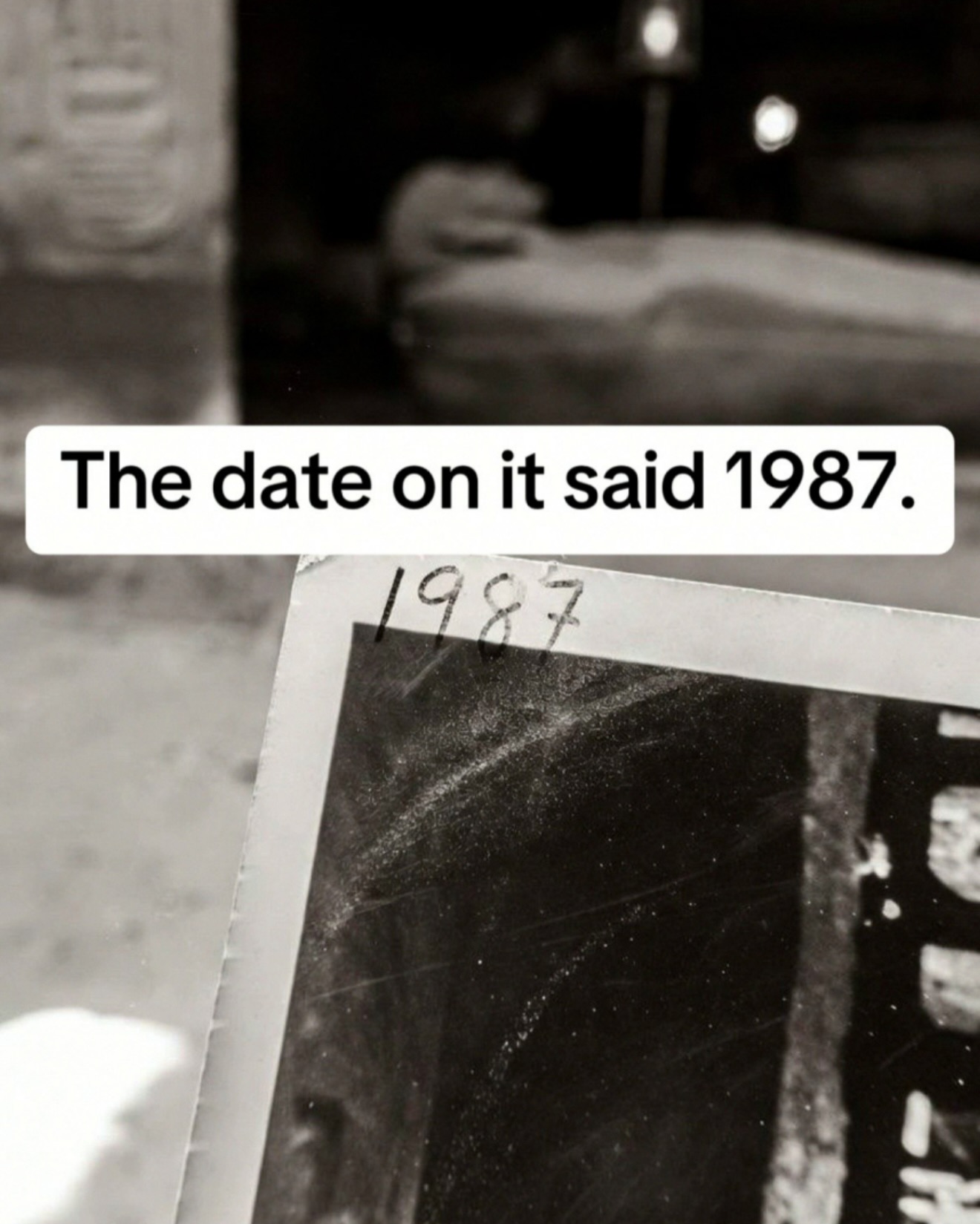
Then the story jumps back to 1923. Archaeologists open a tomb that has been buried for exactly one hundred years. Deep inside, they find a photograph. The man in it is wearing modern clothes. And the date written on it says 1987.
Years later, a second photograph appears, dated 2025. On the back, someone has written a warning:
“I tried to stop it. But the loop is inevitable.”
Then comes the finale. In 2023, the tomb is reopened — and inside it sits a camera. On that camera is a photograph dated 2045, showing the archaeologists themselves, standing in the tomb, a moment that for them has not happened yet. In the final slide, an elderly Elon Huck stands in the doorway of an Egyptian tomb, between pillars covered in hieroglyphs, as if he has been waiting there the whole time.
The slideshow ends with a promise: this is “the only proof that time travel exists.”
It is a brilliant little story. A man thrown backwards through time, leaving photographs of himself scattered across a century like breadcrumbs. No wonder millions of people have watched it, saved it and sent it to their friends.
But read it once more, slowly, and something strange happens. The closer you look, the less there is to hold on to.
2. Four Claims, Four Problems
Strip away the music and the atmosphere, and the slideshow makes four claims. Every single one can be checked. And every single one fails.
Claim one: a photograph dated 1987 was found inside a tomb opened in 1923. There is no record of this happening — anywhere, ever. Not in a museum catalogue, not in a newspaper archive, not in any excavation report. The famous tomb that really was opened in 1923 left behind one of the most complete records in archaeology, and no such photograph appears in it. More on that in a moment.
Claim two: a scientist named Elon Huck vanished while working on a secret project. A man cannot vanish from a job, a city and a life without leaving a trace. Yet there is no record of Elon Huck being born, being employed, going missing or being searched for — under that name or any similar one. No university, no agency, no family, no obituary. Nothing.
Claim three: the project was a time-travel programme called Project Kronos. No government project by that name has ever surfaced — no budget, no file, no whistleblower, no declassified page. Real secret programmes eventually leak paper. This one has only ever leaked slideshows.
Claim four: the tomb was reopened in 2023 and held a camera with a photo dated 2045. No tomb was “reopened” in 2023 with a camera inside it. The real tomb in this story was emptied a century ago and has been walked through by millions of visitors since.
Independent fact-checkers have tested these claims and rated every one of them false. But you do not need a fact-checker. You just need to ask the question the slideshow never answers:
Which tomb?
No version of this story — not one — names the tomb, the archaeologist, the museum or even the town in Egypt where it supposedly happened. Every authority is anonymous. “Archaeologists found…” “Experts were puzzled…” A real discovery of a photograph from the future would have names, dates and front pages within a week. This one has a caption box.
3. What Really Happened in 1923
Here is the part the slideshow does not tell you: 1923 is real. It is the most famous year in the history of archaeology — and the story borrows its power from a tomb that genuinely was opened that year.
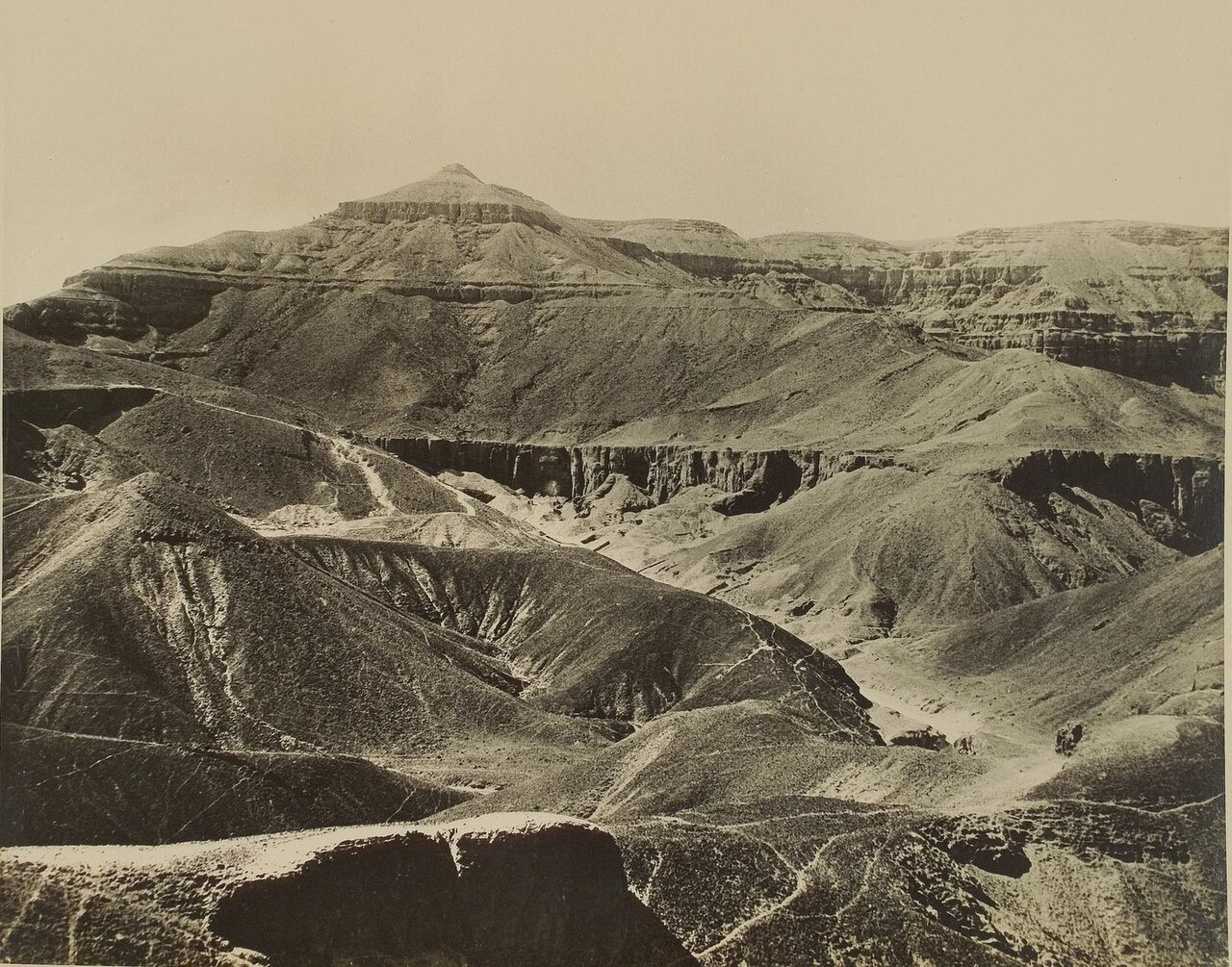
On 4 November 1922, a workman on Howard Carter’s team uncovered a single stone step in the Valley of the Kings. It led to a staircase, a sealed doorway, and — on 26 November — a chamber stuffed with golden furniture, chariots and statues. Carter held a candle through a hole in the doorway and, asked if he could see anything, answered with the most famous words in archaeology: “Yes — wonderful things.”
On 16 February 1923, the sealed burial chamber was opened in front of officials. Inside stood the shrines and sarcophagus of a boy king who had been dead for more than three thousand years: Tutankhamun.
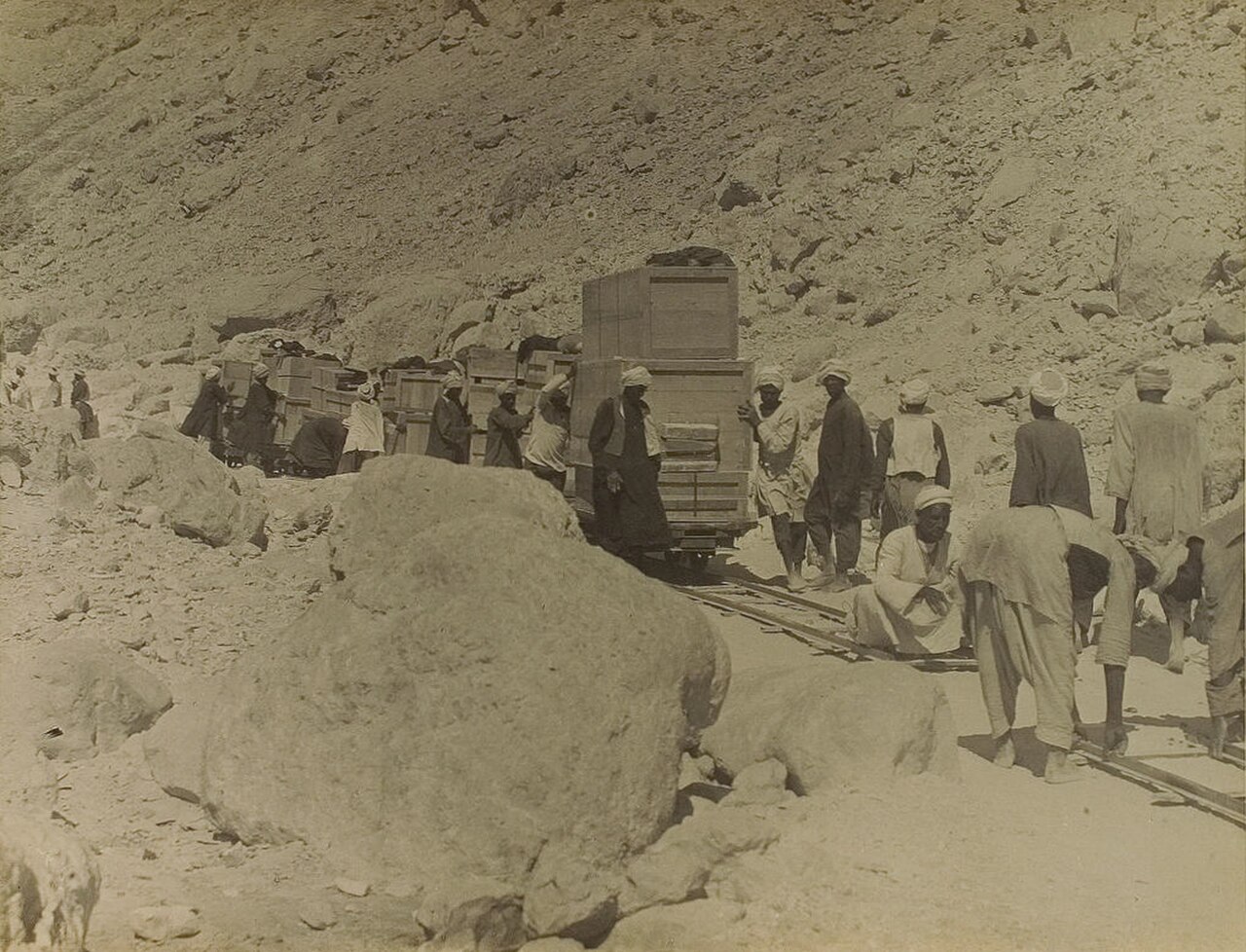
Now consider how that excavation was run. Carter’s team numbered and catalogued 5,398 objects. The expedition’s photographer, Harry Burton, took around 1,850 photographs. Every item got an object card. Every chamber was drawn, measured and published. The full record still sits at the Griffith Institute in Oxford, free for anyone to read.
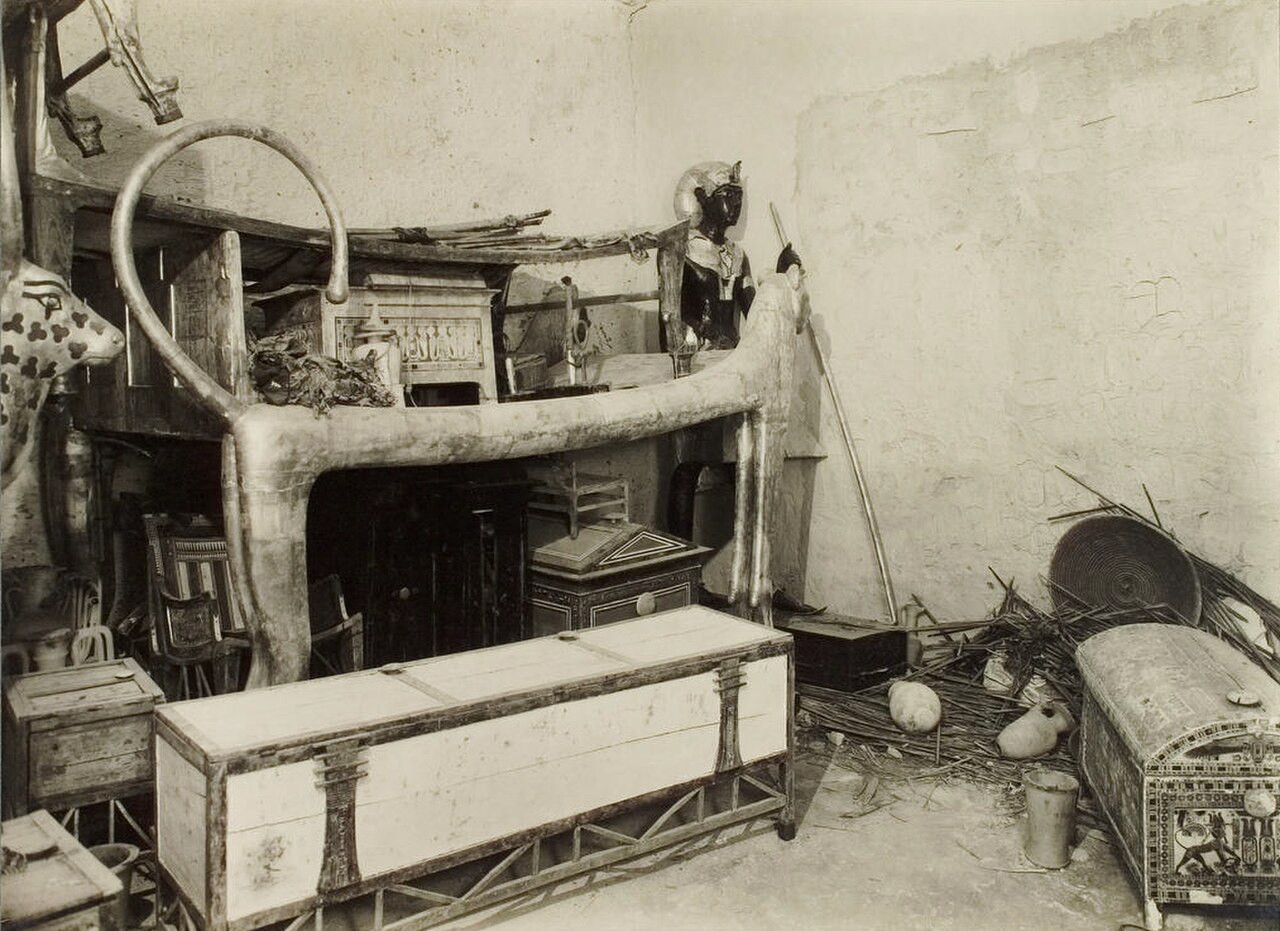
That is what a real discovery looks like. It leaves a paper trail a mile wide.
So ask the obvious question. If those archaeologists had pulled a photograph dated 1987 out of that tomb — a photograph of a man in modern clothes, from sixty-four years in the future — would it have been quietly forgotten? It would have been the single biggest news story on Earth, bigger than the tomb itself. It would have an object number, a Burton photograph, a museum case and a century of books arguing about it.
It has none of those things. Because it was never there.
The slideshow’s timeline collapses, too. It says the tomb was “buried for 100 years” — a neat number chosen only so that 1923 plus 100 lands on 2023. Tutankhamun’s tomb was sealed for roughly three thousand years, emptied over a decade of work finishing in 1932, and it has been open to visitors ever since. There was nothing left to “reopen” in 2023, and no camera waiting inside.
4. The Scientist Who Never Existed
Elon Huck is the heart of the story — and he is the easiest part to test.
A research scientist who vanishes from a government project leaves behind a crater of paperwork: an employer, colleagues, a missing-person report, a family asking questions, a name in a newspaper. Huck leaves behind nothing at all. No birth record. No university. No employer. No disappearance reported in 1987 or any other year. The name does not appear in a single archive, newspaper or scientific record from before this story appeared online.
And notice when that was. This supposedly century-old mystery has no telling older than February 2025, when it appeared — complete, fully formed, in a social-media slideshow. A hundred-year-old secret does not normally begin last year, on the internet, in a format designed to be swiped.
Even the details would not sit still. In some versions the project is “Kronos,” in others “Chronos,” in one it becomes “Project Aurora.” The photograph in the tomb is dated 1987 in one telling, 1925 in another, 1897 in a third. A second photo supposedly “surfaced in 1980” — seven years before Huck even vanishes — yet is dated 2025. Real events have fixed facts. Copied scripts drift.
5. Project Kronos: A Name That Gives It Away
The name sounds perfect, doesn’t it? Kronos — the Greek Titan of time. A secret time-travel project could not be called anything else.
That is exactly the problem. It is a name chosen by a storyteller, not a government. And when you go looking for it, every real “Kronos” turns out to be something gloriously ordinary: a company that made time clocks for factories, a small nuclear reactor design, and a short science-fiction film from 2013 about space travel. Fiction, a reactor, and a clock company. No laboratory, no missing scientist, no time machine.
A real classified programme can hide its purpose. It cannot hide its existence forever — budgets, buildings and people always surface eventually. Project Kronos has surfaced only in videos asking you to follow for part two.
6. Look at the Photographs Again — Slowly
The images are the story’s whole case. So look at them the way an archivist would.
Start with the famous lab notes — the ones that supposedly “explained everything.” Zoom in. The handwriting is gibberish: rows of shapes that look like writing until you try to read a single word. That is the signature of an AI image generator, which can imitate the look of handwriting without producing language. The one legible line — a sample number and a pH reading — is set dressing.
Look at the hands in the slides: fingers bend and merge. Look at the word “loop” in one version, spelled with three o’s. Look at the camera that supposedly survived a century in the tomb — it changes shape between slides. Ask who took the photograph of a man who is himself holding the camera. Watch how Huck ages decades between one photo and the next, in a story where the dates refuse to line up.
Then notice the simplest tell of all: the slideshow repeats itself. The same slides appear twice, because the template tells the story, then tells it again, then ends on an advertisement for the account that posted it. A genuine archival photograph has a photographer, a negative and a catalogue number. These have a caption box and a follow button.
7. The Same Story With a Different Hero
If you still have any doubt, this is the detail that ends it.
The same story exists with a completely different man in it. In another version, the vanished scientist is called Wayne Jansen. The tomb opens in 1925 instead of 1923. The photograph is dated 1990. The second photo surfaces in 1985, dated 2030. Same laboratory. Same loop. Same warning. New name, new dates.
History does not work like that. You cannot re-cast a real event and shuffle its dates like a deck of cards. But content works exactly like that — a script that performs well gets re-skinned and posted again. Elon Huck is not a man. He is a format.
8. Why We Want to Believe It
None of this means the people sharing the story are foolish. The story is engineered to be believed. It borrows a real year, a real tomb and a real sense of wonder. It gives you a face, a warning from the future, and a loop that feels satisfying precisely because real life rarely ties itself up so neatly.
Real physics even lends it a little borrowed credibility. Travelling forwards in time is genuine science — clocks on GPS satellites really do run at a different rate and have to be corrected every day. But nothing in physics lets a person, a camera or a photograph travel backwards — and a photograph is a physical object that would need the full impossible journey. Stephen Hawking once threw a party for time travellers and sent the invitations out afterwards. Nobody came.
The honest version is less magical, but it is not less interesting. A story invented in 2025 convinced millions of people they were looking at proof of time travel — using nothing but generated images, a borrowed date and a name one letter away from the most famous man on the internet.
The Verdict
DEBUNKED — fabricated fiction.
There was no Elon Huck. There was no Project Kronos. No photograph from 1987 was found in a tomb in 1923, and no camera from 2045 was found in 2023. The real 1923 excavation — Tutankhamun’s, the most documented dig in history — records no such thing, and the story itself can be traced to a slideshow posted in February 2025.
Elon Huck did not vanish in 1987.
He was posted in 2025.
Join the Conversation
What do you think — did you believe this one when you first saw it, and which detail gave it away for you? Drop a comment below and tell us where the story first found you.
Don’t forget to share this article with a fellow truth-seeker and subscribe to Conspiracy Record for more deep dives into the stories behind the stories.
Read Next
- The 2027 Prophecy: Why 10 “Time Travelers” All Warned of the Same Year
- The Pollock Twins: Sisters Who Remembered a Life Never Lived
