
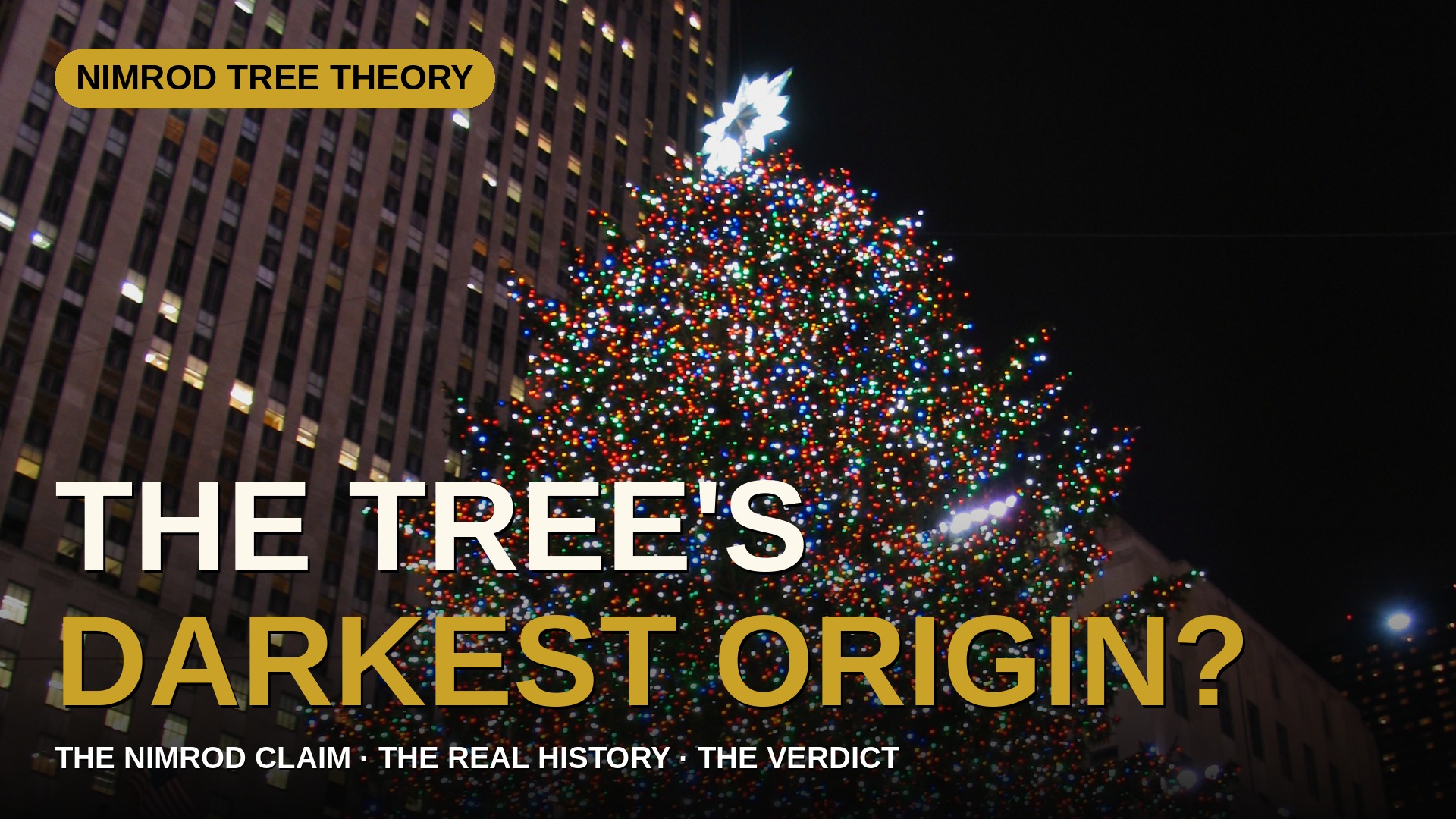
The Nimrod Christmas Tree Claim
Every December, the same warning makes the rounds: your Christmas tree is not what you think it is. According to the viral posts, it is a Babylonian altar standing in your living room.
The claim says the tree began with Nimrod, the Bible’s first king, and that its shiny baubles carry a meaning too grotesque to print in a family newspaper. We will come to that.
The claim has circulated for years in sermons and paperbacks. In 2026 it found a second life on social media, where the bauble detail does most of the heavy lifting.
It sounds ancient. It sounds like something dug out of a tomb. In fact, the whole story can be traced to one book, one author, and one year: 1853.
That matters, because a claim with a birthday can be checked. And when you check this one against the Bible, the archives and the museum record, it falls apart in your hands.
Here is what the theory says, where it really came from, and what the documented history of the Christmas tree actually looks like.
Key Facts
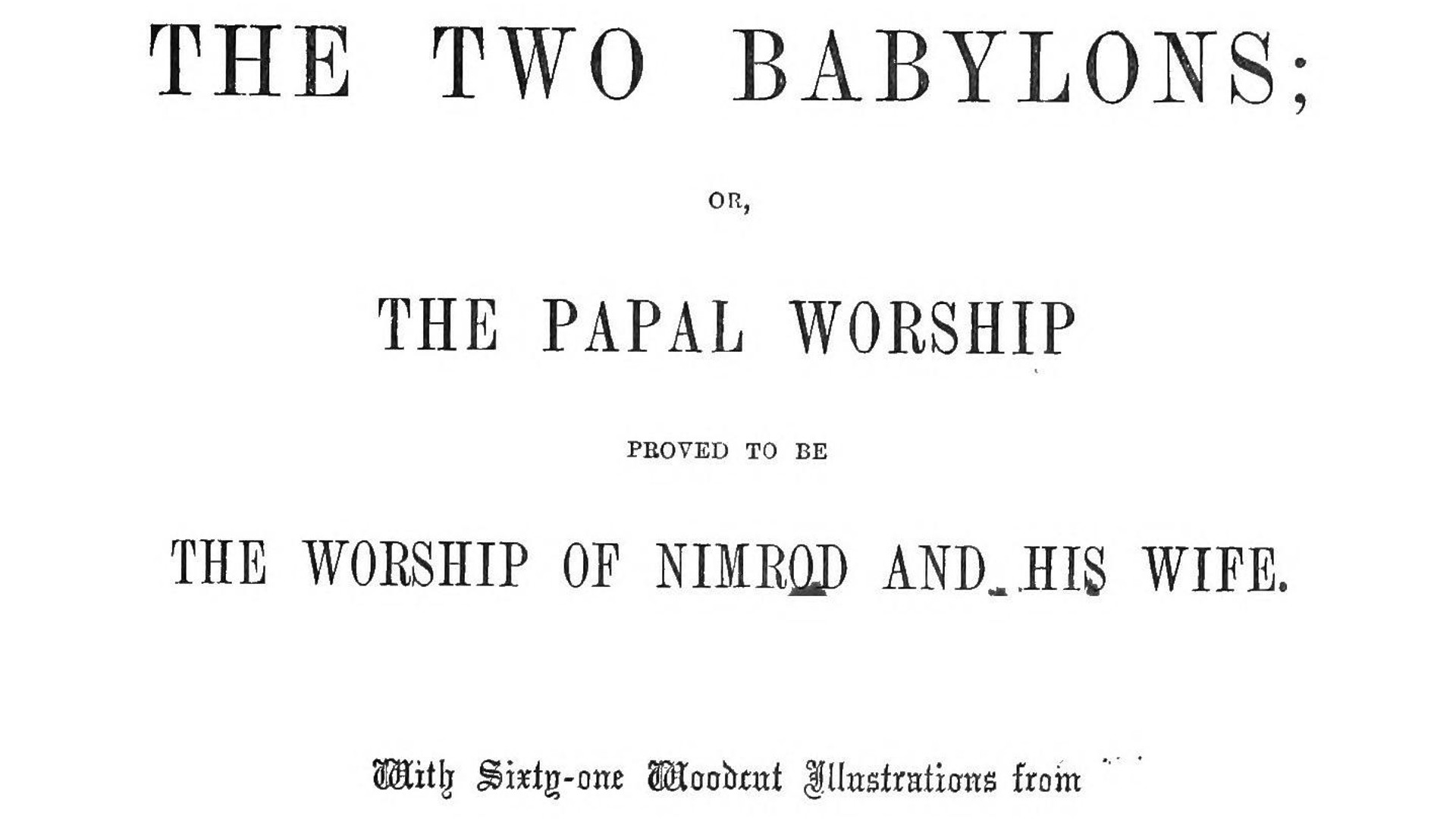
- The Nimrod–tree link appears in no ancient text. It was invented by Scottish minister Alexander Hislop in The Two Babylons, a pamphlet of 1853 expanded into a book in 1858.
- Genesis 10 gives Nimrod a handful of verses: son of Cush, a mighty hunter, founder of Babylon and Nineveh. It names no wife, no tree, no festival and no December 25.
- The first full description of a decorated indoor Christmas tree comes from Strasbourg in 1605: firs in parlours, hung with paper roses, apples, wafers, gold foil and sweets.
- Glass baubles were invented in 1847 in Lauscha, Germany, when glassblower Hans Greiner began blowing glass fruit and nuts to copy the real food hung on earlier trees.
- Ralph Woodrow, whose 1966 book Babylon Mystery Religion spread Hislop’s claims worldwide, withdrew it in 1997 after checking the sources, and published a refutation.
- The grotesque claim about what baubles “represent” appears in no historical record at all — not in Babylonian texts, not in Hislop, not in any museum archive.
The Theory
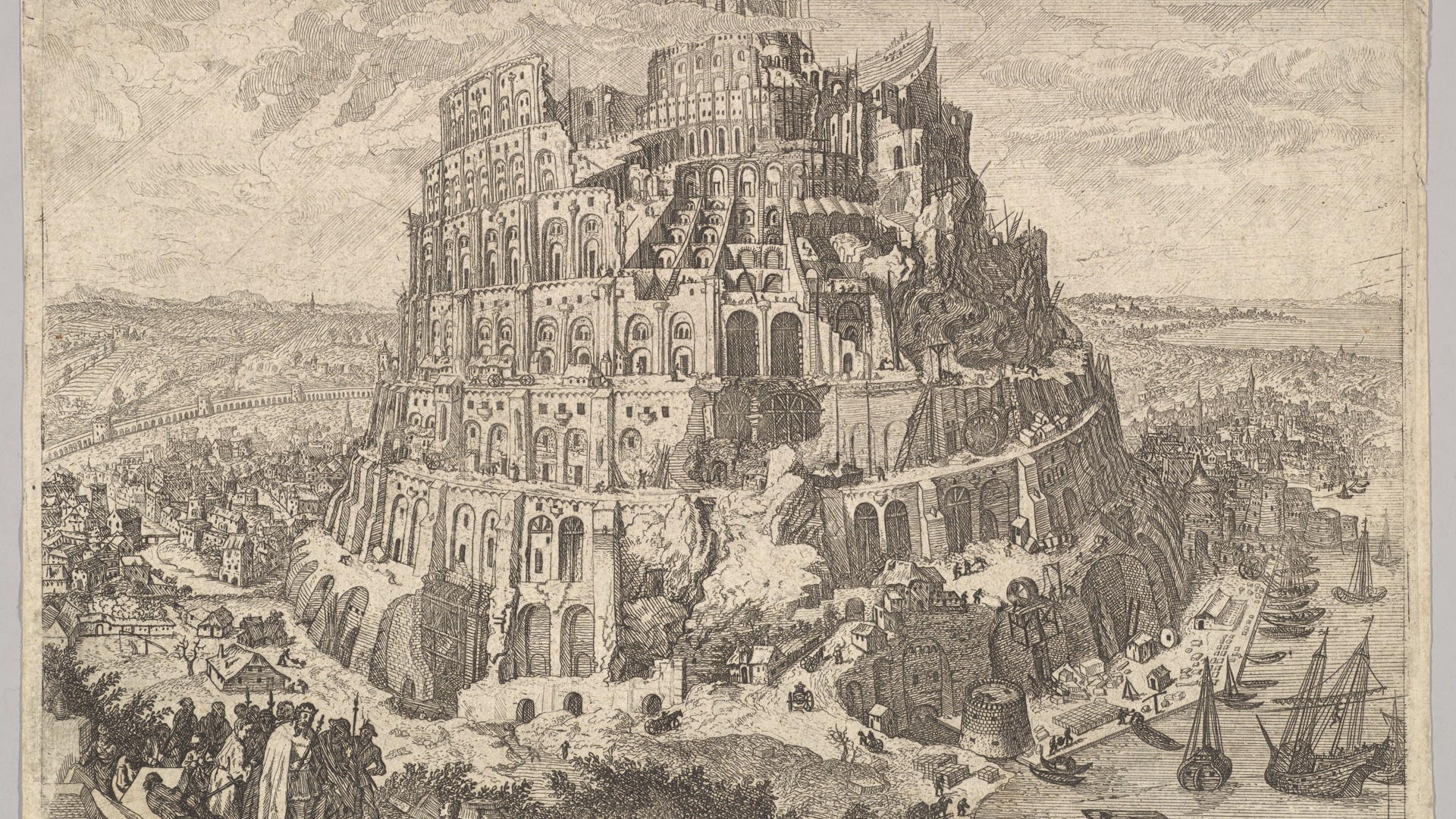
Strip away the shares and the screenshots, and the theory has three moving parts: a dead king, a magic tree, and a set of ornaments with a secret meaning.
What the Posts Claim
After Nimrod’s death, the story goes, his widow Semiramis announced that an evergreen tree had sprung overnight from a dead stump. The stump was Nimrod; the tree was Nimrod reborn.
Each year on his birthday, December 25, followers supposedly left gifts beneath the tree. The reborn Nimrod was identified with Tammuz, the Mesopotamian god of spring growth.
The viral version then adds its shock detail: the round ornaments, it claims, symbolised the testicles of children sacrificed to the god.
Handle that plainly. No Babylonian text, relief, inscription or excavation report contains any such rite or symbol. The detail is a modern invention, bolted on for horror value.
Supporters often add one Bible verse: Jeremiah 10, which mocks a tree cut from the forest, fastened with nails and decked with silver and gold.
Read in context, the passage attacks idol-making in general — the object described is a carved, plated statue. It names no festival, no December date and no Nimrod.
The Book Behind It
None of this comes from archaeology. It comes from Alexander Hislop, a Free Church of Scotland minister with one mission: proving the Catholic Church was Babylonian paganism in disguise.
His method was resemblance. If two religions shared a shape, a date or a similar-sounding word, he declared them the same religion. Scholars rejected the method in his own century.
His raw material was just as loose. The historical Semiramis was Sammu-ramat, a real Assyrian queen — wife of Shamshi-Adad V, mother of Adad-nirari III — known from actual inscriptions.
Those inscriptions never mention Nimrod. Hislop fused the queen with Greek legend and married her to a biblical king who belongs, in his own text, to a different world entirely.
His Christmas chapter states the claim in one line: the Yule log is the dead Nimrod, and “the Christmas-tree is Nimrod redivivus — the slain god come to life again.”
Notice what is missing: a source. Hislop cites no Babylonian document for the stump, the tree or the birthday, because none exists. He built the chain out of parallels, not records.
How It Spread
The claim survived because it kept being republished. Herbert W. Armstrong’s magazine The Plain Truth ran its own version in December 1957, with the tree springing from the stump overnight.
In 1966, evangelist Ralph Woodrow turned Hislop into a bestseller, Babylon Mystery Religion. For decades, it was the version most people actually read.
The chain of transmission looks like this:
- 1853 — Hislop’s pamphlet links Nimrod, Tammuz and the Christmas tree
- 1957 — Armstrong’s magazine repeats the stump-and-tree story
- 1966 — Woodrow’s book carries the claim to a mass audience
- 1997 — Woodrow withdraws his own book as unreliable
- Today — social posts recycle the claim, usually with Hislop’s name stripped off
The internet kept the shock and dropped the context. What began as an attack on Catholics now circulates as a free-floating warning about your tree.
The History

The real history needs no Babylon. It is written in guild accounts, chronicles and newspaper engravings, and it starts surprisingly late.
The Baltic Argument
Two cities claim the first public tree. Tallinn points to 1441, Riga to 1510, both involving the Brotherhood of Blackheads, a guild of unmarried merchants.
Before the parlour, there was the guildhall. Renaissance guilds in northern Germany and Livonia set up trees decorated with sweets, to be stripped bare by apprentices and children.
The guilds raised trees at midwinter festivities, danced around them and burned them. Historians caution that the sparse records may describe carnival customs, not Christmas trees.
Either way, both claims sit in the 1400s and 1500s — roughly three thousand years after any historical Nimrod could have lived.
The German Paper Trail
The household tree has a clearer ancestor: the theatre. Medieval churches marked December 24 as the feast of Adam and Eve, and paradise plays needed a Tree of Knowledge on stage.
The prop was an evergreen fir hung with apples. Bremen had a small decorated tree by 1570, with apples, nuts, dates, pretzels and paper flowers recorded in writing.
The custom grew fast enough to need managing. Strasbourg raised a tree in its cathedral in 1539, and Alsace towns were soon passing rules to limit each household to one tree.
In 1605 an unknown Strasbourg writer left the first full description: “At Christmas they set up fir trees in the parlours of Strasbourg and hang thereon roses cut out of many-colored paper, apples, wafers, gold foil, sweets, etc.”
A beloved story credits Martin Luther with first adding candles, inspired by stars shining through the branches. It is a lovely tale with no contemporary evidence behind it.
From Alsace and the German states, Lutheran households carried the custom across northern Europe. The trail is paper all the way: dates, towns, named decorations.
Food First, Then Glass
Look at the 1605 list again. The first ornaments were food: apples, nuts, wafers, gingerbread, sweets. Anything round on those trees was round because fruit is round.
Glass arrived in 1847, in Lauscha, a Thuringian glassmaking town. Hans Greiner began blowing hollow glass fruit and nuts, copying the real decorations that rotted or got eaten.
Local legend says Greiner was too poor to buy walnuts for his own tree. That part is folklore — but a surviving 1848 ledger records an order for six dozen Christmas baubles.
Chemist Justus von Liebig’s silvering process, developed in the 1850s, gave the glass its mirror shine. The bauble was an industrial product with a paper trail, not a ritual object.
The full ornament story, from Lauscha’s workshops to Woolworth’s shelves, is set out in Wikipedia’s history of the Christmas ornament.
The Tree Goes Global
Britain’s first royal tree belonged to Queen Charlotte, the German-born wife of George III, who set one up at Windsor in 1800 for local children.
Victoria knew the custom long before the famous engraving. On Christmas Eve 1832, the young princess recorded her delight at a tree hung with lights, ornaments and presents.
The custom went mass-market in December 1848, when the Illustrated London News printed Queen Victoria and Prince Albert gathered around their Windsor tree.
An American magazine, Godey’s Lady’s Book, reprinted the engraving in 1850 — quietly removing Albert’s moustache and royal star — and American readers copied the picture.
By the 1880s, F. W. Woolworth was importing Lauscha baubles by the shipload. The tree conquered the world through magazines and mail order, not mystery cults.
The Verdict

DEBUNKED. The Nimrod Christmas tree theory is a modern fabrication, and unusually for a viral claim, we can name its author, its publisher and its birthday.
Every link in its chain is broken. Genesis never connects Nimrod to a tree. No Mesopotamian source knows the stump story. The ornament claim appears in zero historical records.
The strongest witness against the theory is its own side. Ralph Woodrow spent decades as Hislop’s most successful populariser, then checked the footnotes, withdrew his book and wrote its refutation.
His verdict on the method applies to the whole theory: similarities prove nothing without an actual connection. Between Babylon and the Christmas tree, there is none.
What survives checking is smaller and stranger than the myth: yes, Christmas customs are layered and borrowed. But the borrowing is documented, recent and German — not Babylonian.
The theory also has a business model: horror spreads. A story about German guildhalls earns a shrug; a Babylonian sacrifice cult earns a share, a sermon and a second season.
The real history is better documented and, honestly, more interesting: guilds, stage props, glassblowers and one very famous magazine picture. No cult required.
Join the Conversation
When did you first hear the Nimrod claim — in a sermon, a family argument, or a post exactly like the ones described here? Did it change how you look at your own tree?
Tell us in the comments. If you have seen a version with a detail we missed, share it, and we will check it against the record.
Did the Christmas tree really come from Nimrod worship?
No. The link was invented in Alexander Hislop’s 1853 pamphlet The Two Babylons. No ancient source connects Nimrod to any tree, festival or ornament.
What does the Bible actually say about Nimrod?
Genesis 10 gives him a few verses: son of Cush, a mighty hunter, founder of Babylon and Nineveh. No wife, tree, birthday or festival is mentioned.
Where did the Christmas tree actually come from?
Early modern Germany. Baltic guilds claim trees in 1441 (Tallinn) and 1510 (Riga); the first full description of a decorated indoor tree is from Strasbourg in 1605.
When were glass baubles invented?
In 1847, in Lauscha, Germany, where glassblower Hans Greiner began blowing glass fruit and nuts to copy the real food hung on earlier trees.
Did anyone who spread the Nimrod theory change their mind?
Yes. Ralph Woodrow, whose 1966 book Babylon Mystery Religion popularised Hislop’s claims, withdrew it in 1997 after checking the sources and published a refutation.
Read Next
- 12 Days of Christmas: The Secret Catechism Hoax
- The Statue of Liberty Santa: Who Was Flying Over NY?
- 5 Viral Biblical Conspiracies Science Can’t Explain
