
The 12 Days of Christmas Secret Catechism That Never Was
Every December, the same story makes its rounds. It arrives in church bulletins, forwarded emails and cheerful social media posts, usually with a knowing tone.
The story says “The Twelve Days of Christmas” is not really a love song at all. It is a secret catechism, written to teach Catholic children their faith in secret.
The setting is dramatic: England, after the Reformation, when Catholic worship was against the law. Parents supposedly hid doctrine inside a catchy list of gifts.
It is a wonderful story. It is also, as far as any evidence shows, invented in the twentieth century, roughly two hundred years after the song first appeared in print.
Versions of the claim still describe it as centuries-old underground teaching. Some add French Revolution prisons, others add fines and executions for anyone caught singing it.
None of those additions come with a source either. Each retelling quietly upgrades the danger, because danger is what makes a code necessary in the first place.
This is the fact-check, gift by gift. The claim, the man who actually created it, and the real history of one of the strangest songs in the Christmas canon.
Key Facts
- The song was first printed in London in 1780, in a children’s book called Mirth Without Mischief, as a chant with no music attached.
- It most likely began as a Twelfth Night memory-and-forfeits party game, where players repeated the growing list and paid a penalty for mistakes.
- The catechism interpretation first appeared in 1979, in an article by Canadian hymnologist Hugh D. McKellar, who offered no historical evidence for it.
- A priest, Father Hal Stockert, expanded the idea in 1982 and posted it online in 1995, which is when it exploded through email forwards and church newsletters.
- Snopes rates the secret catechism claim false, noting that almost every “hidden” doctrine was shared by Anglicans too, so there was nothing Catholic to hide.
- The familiar melody is not ancient either. English composer Frederic Austin published the standard arrangement in 1909.
The Theory

What the Gifts Supposedly Mean
In the popular version, the “true love” giving the gifts is God. Each gift then stands for a piece of Christian teaching a child could memorise in safety.
Here is the full decoding, exactly as the claim presents it:
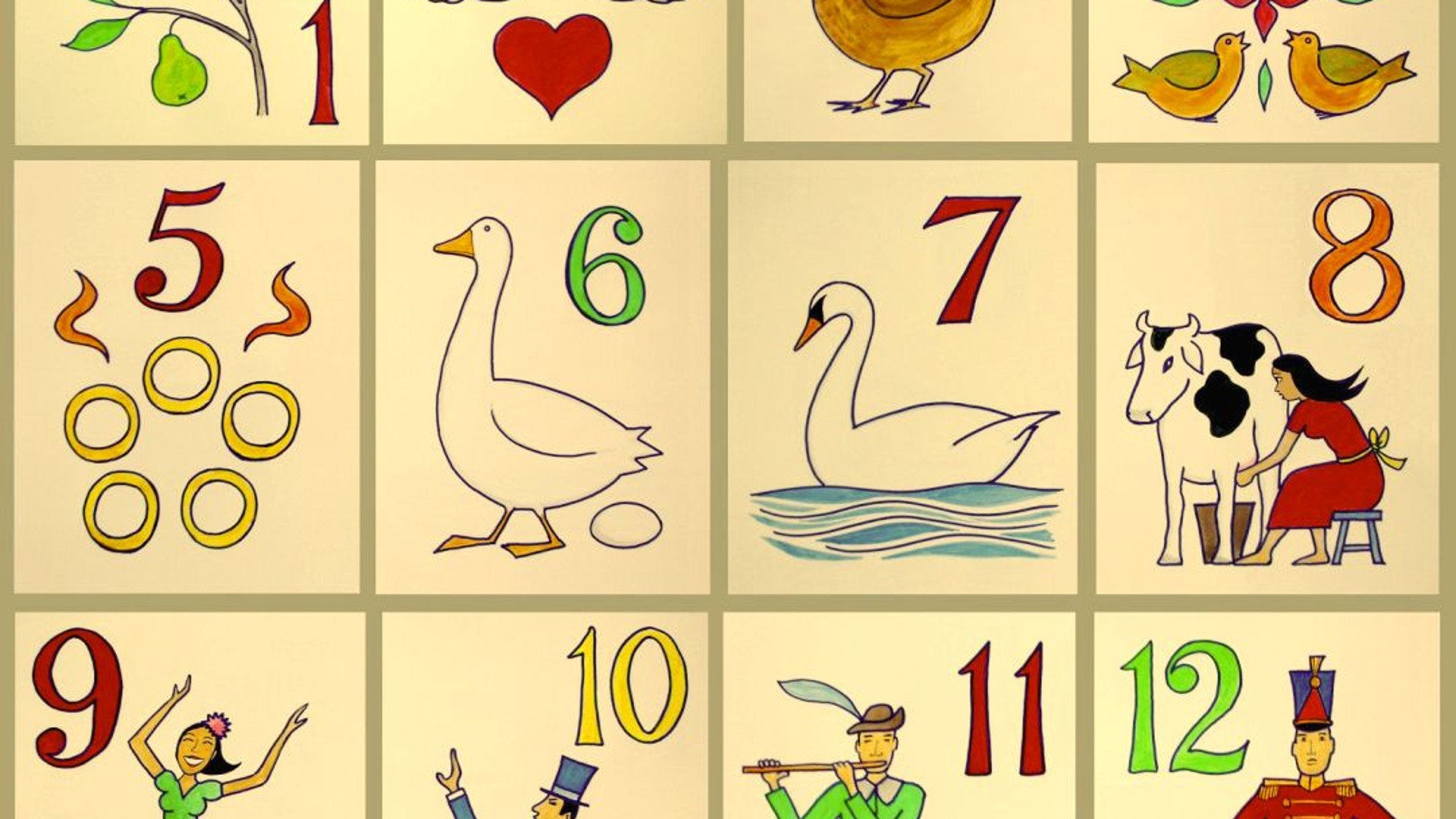
- A partridge in a pear tree — Jesus Christ, the first and central gift.
- Two turtle doves — the Old and New Testaments.
- Three French hens — faith, hope and love, the three theological virtues.
- Four calling birds — the four Gospels: Matthew, Mark, Luke and John.
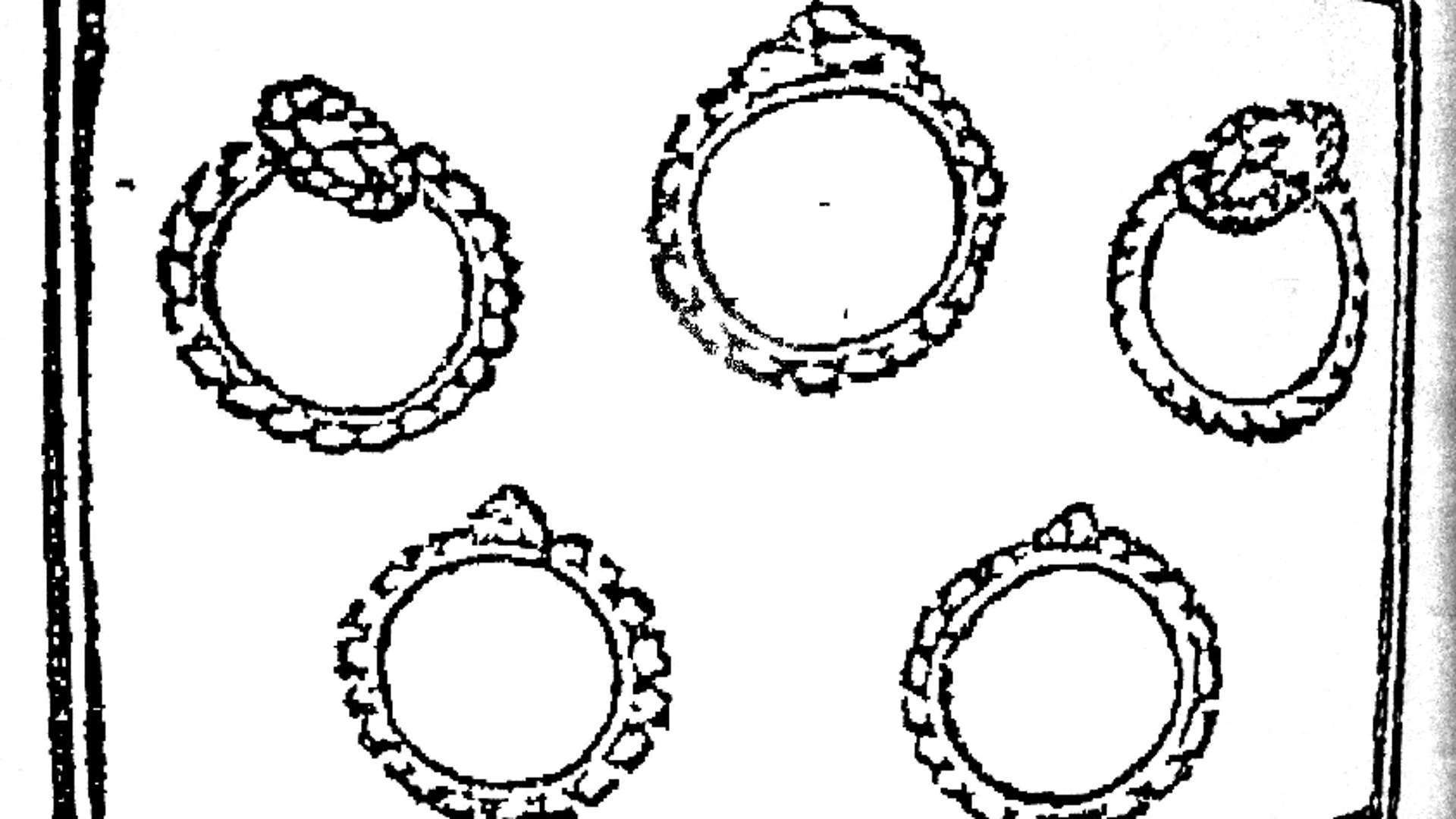
- Five golden rings — the Torah, the first five books of the Old Testament.
- Six geese a-laying — the six days of Creation.
- Seven swans a-swimming — the seven gifts of the Holy Spirit.
- Eight maids a-milking — the eight Beatitudes.
- Nine ladies dancing — the nine fruits of the Holy Spirit.
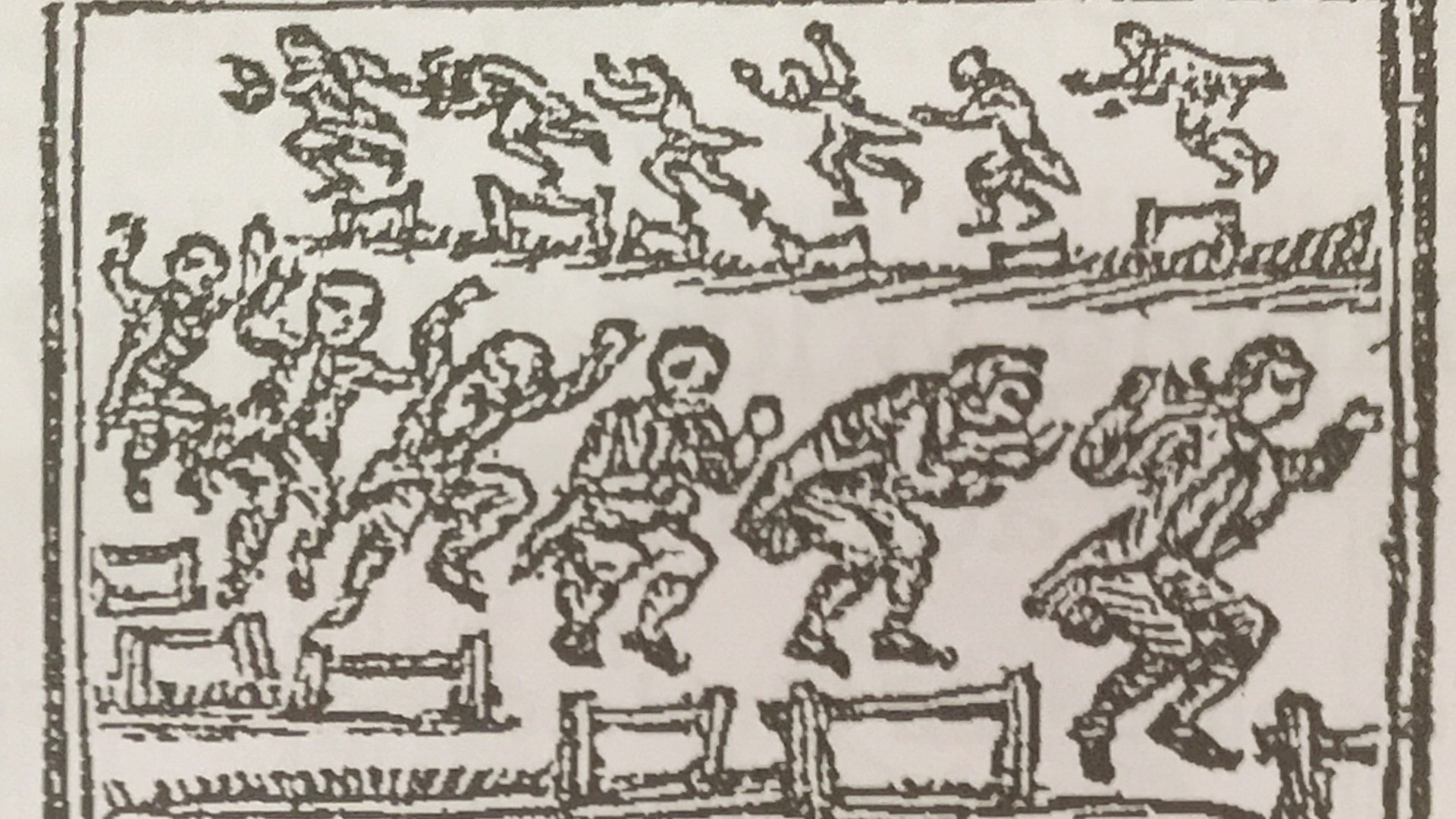
- Ten lords a-leaping — the Ten Commandments.
- Eleven pipers piping — the eleven faithful apostles, Judas excluded.
- Twelve drummers drumming — the twelve points of belief in the Apostles’ Creed.
Read as a set, it is elegant. Twelve gifts, twelve lessons, one song a child could sing in public without giving anything away.
The decoding is not even stable, which matters later. In some versions the seven swans are the seven sacraments instead of the gifts of the Holy Spirit.
Other retellings quietly swap details in and out. A genuine memorised code, passed hand to hand for centuries, would be expected to hold its shape far better than this.
Why the Story Is So Seductive
The theory flatters everyone who repeats it. The song stops being a silly list of birds and becomes a quiet act of resistance by ordinary families.
It also fits the song’s odd shape. Why would a love song count geese, swans and milkmaids at all? A hidden code explains the strangeness, and explanations feel like discoveries.
There is real history underneath the appeal. Catholicism genuinely was restricted in England for centuries, from 1558 until the relief acts of the late 1700s and 1829.
Persecution, secret worship and coded communication all really happened. The theory borrows that true backdrop and hangs an unproven song on it.
That is how the best modern myths work. Every plank is real except the one in the middle, the claim that this song was built for this purpose.
The Debunk
The Claim Is Younger Than the Song’s Tune
Follow the paper trail and the catechism story does not lead to the 1500s. It leads to 1979, and a Canadian English teacher and hymnologist named Hugh D. McKellar.
McKellar published a short article, “How to Decode the Twelve Days of Christmas,” suggesting the lyrics were a catechism song for young English Catholics.
He offered no evidence. No manuscript, no diary, no contemporary reference. It was an interpretation presented as a discovery, and later writers repeated it as fact.
Three years later, in 1982, Father Hal Stockert wrote his own version. When he posted it online in 1995, the young internet did the rest, through chain emails and bulletins.
Why the 1990s Made It Immortal
The hoax found its perfect habitat in the early web. A forwarded email carried no author, no date and no link back to McKellar’s evidence-free article.
Each new sender added authority by accident. A story received from your parish office or your aunt reads like a story checked by someone, somewhere, upstream.
Print finished the job. The decoding appeared in church bulletins, school newsletters and local papers, almost never with a source attached, because it had none.
By the time fact-checkers examined it, around 2000, the claim had a decade of repetition behind it. Repetition is easily mistaken for documentation, and here it was.
Notice what that timeline means. The “secret code” surfaced two centuries after the song, and decades after most of England’s anti-Catholic laws were history.
The Song’s Real History
The documented record is less romantic and more fun. The words first appeared in print in 1780, in Mirth Without Mischief, a London children’s book The Twelve Days of Christmas (song).
It was printed as a chant, not a song. There was no music at all. The heading presented it as a piece performed at “King Pepin’s Ball.”
Historians believe it was a memory-and-forfeits game for Twelfth Night. A leader recited a verse, everyone repeated it, the list grew, and mistakes cost a kiss or a sweet.
The details kept shifting, as party games do. The 1780 text has “colly birds,” meaning blackbirds, not “calling birds.” Early versions even swap in hares, bears and bells.
Its birthplace is disputed too. Some evidence points to Newcastle in the north of England. Other scholars argue for France, noting the red-legged partridge was barely known in England.
French cousins of the song survive, built on the same counting trick with entirely secular gifts. The French “La Perdriole” ends with one lone partridge and no doctrine at all.
Scotland had a thirteen-day version, “The Yule Days,” with gifts like a grey goose and three stalks of corn. The family resemblance is to party rhymes, not to catechisms.
What no early source mentions, anywhere, is a catechism. The song’s first two centuries of documentation are all games, broadsheets and nursery rhymes.
That silence is not a technicality. A teaching tool used by a persecuted minority for generations is exactly the kind of thing that leaves traces in letters, trial records and memoirs.
The Logical Problem
Even without the paper trail, the theory fails its own test. A secret Catholic code only makes sense if the hidden lessons were distinctively Catholic.
They were not. The Gospels, the Ten Commandments, the Beatitudes and the Apostles’ Creed were basic articles of faith for Anglicans as much as for Catholics.
As Smithsonian Magazine’s history of the carol notes, quoting the Snopes investigation, there was simply nothing in the list a Catholic child needed to hide.
A child singing about the four Gospels in 1650 endangered nobody. Protestant children learned the same list, in the open, from their own catechisms.
Catholic scholars have said the same. One Benedictine abbot called the interpretation “preposterous,” because the scheme could not have worked as described.
The verdict of the fact-checkers is blunt. Snopes found “absolutely no documentation or supporting evidence for this claim whatsoever, other than mere repetition.”
The Verdict
Debunked.
As history, the secret catechism is finished. The claim dates to 1979, not the Reformation. Its author offered no evidence, and the song’s real record shows a party game.
Every check points the same way: a 1780 children’s book, shifting folk lyrics, a tune from 1909, and a hidden meaning that appears only in the age of the photocopier and the inbox.
And yet the story will be forwarded again next December. That is the genuinely interesting part, and it is why this case belongs on this site.
The catechism hoax is a clean case study in retroactive meaning-making. People wanted the song to have a hidden layer, so a hidden layer was supplied, complete with footnotes of air.
Once a story is satisfying enough, falsification barely slows it. The correction is a paragraph. The legend is a whole secret history, and it sings better.
So enjoy the song for what it provably is: a 240-year-old memory game that outlasted everyone who ever played it. That is remarkable enough without a code.
There is a final irony worth keeping. The real song was built to test memory, and it worked so well that millions can still recite it without thinking.
The hoax succeeded by using the same machinery. A neat list, repeated every December, until repetition itself started to feel like evidence of an older truth.
Join the Conversation
Did you grow up hearing the catechism version as fact? Or did you learn the song as a party game, the way it started?
Tell us in the comments where you first heard the secret-code story. The trail of this hoax runs through real inboxes, and we would love to map it.
Was “The 12 Days of Christmas” really a secret Catholic catechism?
No. There is no historical evidence for the claim. Snopes rates it false, and the interpretation only appeared in 1979.
Who invented the secret catechism theory?
Canadian hymnologist Hugh D. McKellar proposed it in a 1979 article, offering no evidence. Father Hal Stockert expanded it in 1982 and posted it online in 1995.
When was “The 12 Days of Christmas” first published?
In 1780, in the London children’s book Mirth Without Mischief, as a chant with no music. The familiar tune dates to Frederic Austin’s 1909 arrangement.
What was the song originally for?
Most likely a Twelfth Night memory-and-forfeits game. Players repeated the growing list of gifts, and anyone who made a mistake paid a forfeit such as a kiss or a sweet.
Why do people still believe the catechism story?
It is satisfying and flattering, it spread through 1990s chain emails and church bulletins without sources, and repetition made it feel documented. The debunking is a paragraph; the legend is a secret history.
Read Next
- The Nimrod Christmas Tree Theory, Debunked
- Tesco’s ‘Evergreen Trees’: A War on Christmas?
- 5 Viral Biblical Conspiracies Science Can’t Explain
