
The Tesco Christmas Tree Rebrand That Never Happened
A single cardboard box did all of this. In November 2025, a photo of Tesco packaging began racing across Facebook and X.
Within days, millions of people believed Britain’s biggest supermarket had quietly abolished Christmas.
The box held an artificial tree. Its product name read “Tesco 6.5ft luxury evergreen tree”, and for many readers, one missing word was all the proof they needed.
The posts did not claim a product had an odd name. They claimed Tesco was “no longer celebrating Christmas”, and that the word itself was being deliberately erased.
Here is the strange part. Almost everything in the claim collapses the moment you walk into a Tesco store.
So why did it travel so far? And why does this exact story come back, on schedule, every single year?
Key Facts
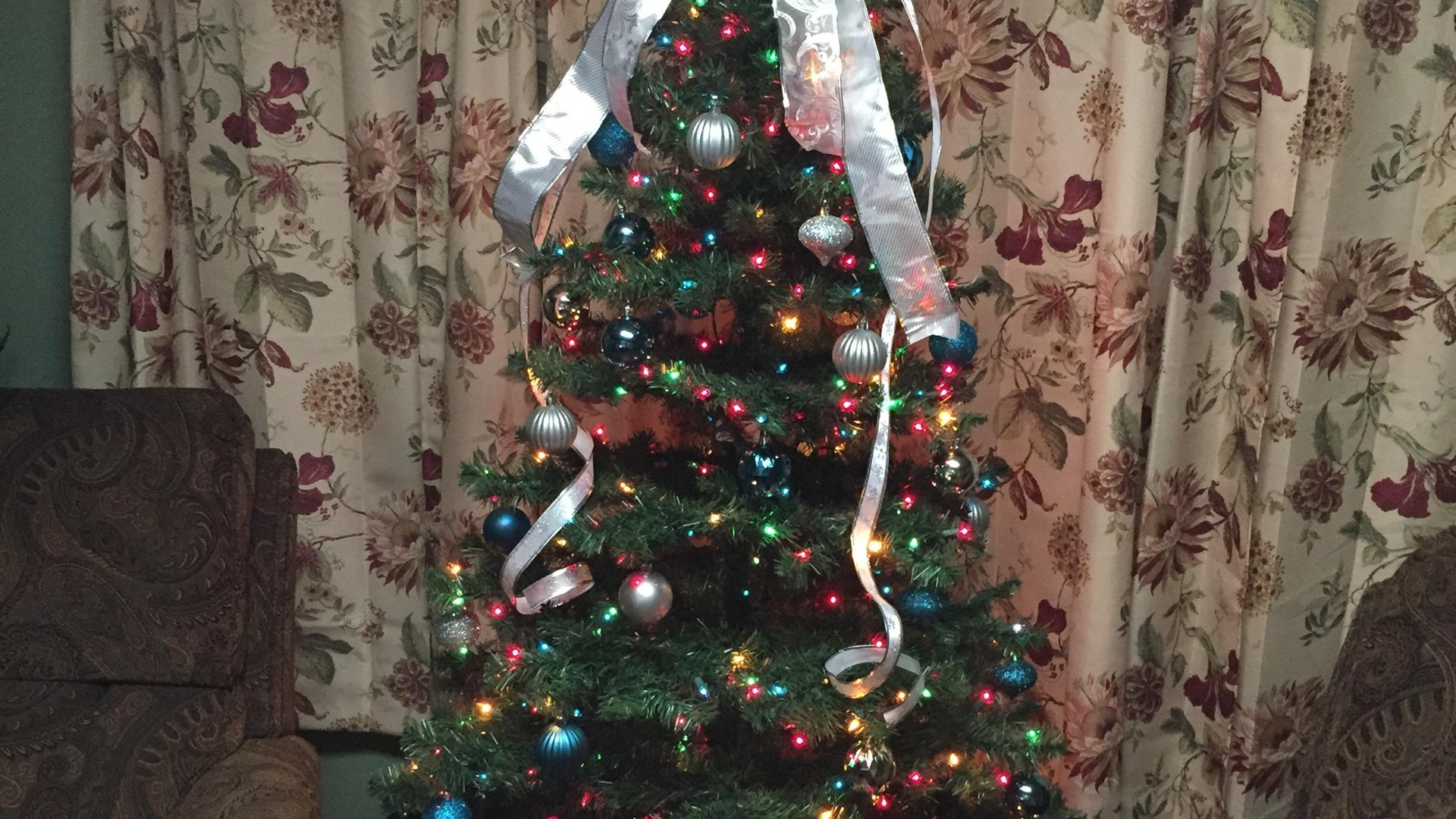
- The viral photo shows a real product: an artificial “Tesco 6.5ft luxury evergreen tree”, one style name inside a large Christmas range.
- A Facebook post dated 17 November 2025 declared Tesco was “no longer celebrating Christmas”. An identical post on X passed 2.2 million views.
- Full Fact and Reuters Fact Check both examined the claim in November 2025. Both rated it misleading.
- Tesco told fact-checkers “evergreen” simply describes which type of Christmas tree is inside the box.
- The same packaging is marked elsewhere as part of Tesco’s Christmas category.
- Tesco’s website lists dozens of products explicitly sold as Christmas trees, and the chain ran a full Christmas advertising campaign in 2025.
- The pattern is nearly thirty years old: Birmingham’s “Winterval” season of 1997–98 never renamed Christmas either.
The Facts
One product name, not a policy
Start with the box itself, because the box is real. Tesco does sell an artificial tree whose product name uses “evergreen” instead of “Christmas”.
The viral photos are genuine. What they never show is the rest of the range sitting on the same shelves.
“Evergreen” is a style descriptor, in the same family as “alpine” and “Nordic pine”. It tells a shopper what the tree looks like before the box is opened.
It is also, plainly, accurate. An evergreen is a tree that keeps its foliage all year, which is exactly the look a plastic Christmas tree is copying.
Tesco made the point directly to Full Fact: the name helps customers “distinguish between the many Christmas trees in the range”.
Read that sentence again. In Tesco’s own explanation, the evergreen tree is one of its Christmas trees. The word was never missing from the range at all.
What Tesco actually sells
If Tesco had truly dropped Christmas, the evidence would be everywhere. Instead, the opposite is remarkably easy to find.
- Dozens of artificial trees and decorations sold and described as Christmas products on Tesco’s website
- A national Christmas television advert for 2025
- A campaign encouraging shoppers to give Christmas presents to under-privileged children
- An in-store display where an “alpine” tree sat on a pallet box printed with the words “Merry Christmas”
Even the Daily Telegraph, which criticised the “evergreen” wording in print, listed items from the chain’s Christmas range in the very same article.
The criticism and the Christmas stock ran side by side. Nobody involved seems to have noticed the contradiction.
The “alpine” tree deserves a mention too, because some viral posts used it as a second exhibit — another Christmas tree supposedly stripped of its name.
Tesco shared a photograph of that display with Full Fact. The alpine tree was being sold from a pallet box printed, in large letters, with “Merry Christmas”.
As second exhibits go, it rather undermined the case.
What the fact-checkers found
Start with the original post itself, because its wording matters. The Facebook version, dated 17 November 2025, was not a question. It was a verdict.
“Wow!! Tesco ARE NO LONGER CELEBRATING CHRISTMAS. Their #Christmastrees are now called Evergreen trees!?! What a disgrace. Appeasing a certain minority.”
An identical post appeared on X and passed 2.2 million views. A photograph of one box, a conclusion about an entire company, and a motive, all in four lines.
Reuters Fact Check gave the claim a one-word verdict: misleading.
One product’s name, Reuters said, is not evidence that a retailer has stopped celebrating a festival.
Full Fact reached the same conclusion days later, after putting the claim to Tesco directly and checking the retailer’s website for itself.
A Tesco spokesperson told them: “We are proudly celebrating Christmas at Tesco”, pointing to real and artificial Christmas trees across its stores.
Both organisations identified the same trick. Nothing in the viral post was fabricated — the deception was in the framing, and framing is hard to check at a glance.
One more detail matters. The documented X post passed 2.2 million views, yet retellings of the story soon inflated that to three million and beyond.
Even the outrage about the post grew in the retelling. That is how these stories work at every level.
Nor was 2025 the claim’s first season. Full Fact had checked near-identical claims about Tesco and Christmas the previous year, and other posts went further still.
Some versions claimed Tesco was not selling Christmas trees at all. That variant could be disproved by anyone who walked into a store and looked up.
The Narrative
The “War on Christmas” script
The Tesco post worked because the script already existed. In the “War on Christmas” narrative, a powerful institution is always quietly deleting Christmas, one label at a time.
The villain changes — a council, a retailer, a coffee cup. The plot never does: a small, real detail is presented as the visible tip of a hidden cultural surrender.
The script needs only three ingredients:
- A real, checkable detail, such as one product name
- A motive supplied by the audience rather than by evidence
- A screenshot that travels faster than any correction
Tesco never said it was avoiding offence. No memo, policy or internal document was ever produced by anyone sharing the claim.
The motive in the viral posts — “appeasing a certain minority” — was invented by the posters themselves, then treated as established fact by everyone who shared it.
Winterval: the myth that started it all
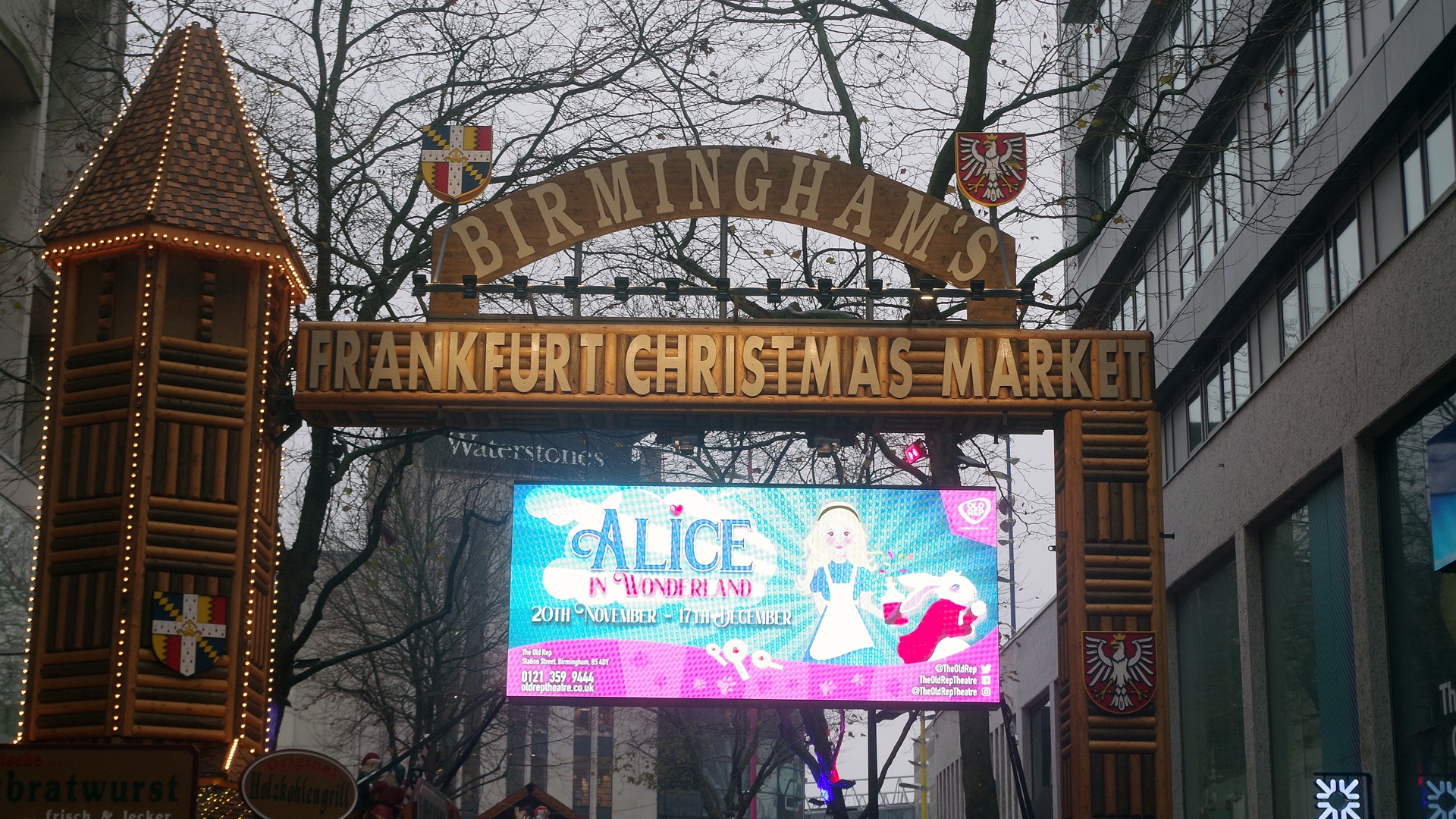
Britain has run this exact experiment before. In 1997 and 1998, Birmingham City Council branded its winter events season “Winterval”.
The name was a portmanteau of “winter” and “festival”, coined by the council’s head of events, Mike Chubb, as marketing for a crowded calendar.
Winterval was an umbrella brand. Under it sat Diwali celebrations, a German Christmas market, carol concerts, Christmas lights and a New Year’s Eve party.
The first season, in 1997, passed almost without complaint. Hundreds of thousands of people attended the events, and the name barely registered.
The explosion came with the second season in 1998, when the Bishop of Birmingham, Mark Santer, mocked the name in his Christmas message to clergy.
From there, the story escaped into the national press — and the facts never caught up with it again.
The programme that year ran for months and included Hallowe’en, Guy Fawkes Night, Diwali, Hanukkah, Ramadan and Eid, Advent, Christmas and Chinese New Year.
Christmas sat in the middle of that list, named in full. A 1998 council poster for “Christmas in Birmingham” carried the Winterval logo in smaller type than the word Christmas itself.
Christmas was not hidden inside that programme. The council stated that Christmas and its activities were “at the very heart of this celebration”.
Newspapers reported a renaming anyway. In December 1998, council leader Theresa Stewart publicly assured residents that Christmas had not been renamed or displaced.
It changed nothing. The story had already hardened into fact for much of the country.
It travelled so well that neighbouring Solihull council publicly invited Birmingham residents who wanted a “traditional Christmas” to come and celebrate it there instead.
One council was marketing a festival. The other was marketing refuge from it. Neither version of events required Christmas to have been renamed — it never was.
In November 2011, the Daily Mail published a formal correction, admitting Winterval “did not rename or replace Christmas”. The myth is still repeated every December.
Winterval was even cited in evidence to the Leveson Inquiry into press standards, as a case study in how a false story outruns every attempt to correct it.
Why it returns every year
The Tesco claim did not die with the 2025 fact-checks. Versions of it resurfaced again in late 2026, with fresh outrage aimed at the same “evergreen” wording.
Each new wave behaves as if the previous one never happened. The corrections exist, are easy to find, and make no difference at all.
That is because the story is not really about trees. It is an annual ritual of suspicion, and a supermarket label is simply the most convenient prop each November.
There is also a blunt asymmetry at work. The accusation is a photograph — instant, emotional, shareable in one tap. The correction is several paragraphs of context.
Photographs win that contest almost every time, which is why fact-checkers keep publishing the same correction, and the claim keeps its audience anyway.
The Verdict
Debunked. As a claim about Tesco policy, the Tesco Christmas tree rebrand never happened. One artificial tree carries a botanical style name; everything built on top of it was inference.
Tesco sold Christmas trees by the dozen, ran a Christmas advert, and told two fact-checking organisations, on the record, that it was proudly celebrating Christmas.
No rebrand was announced, leaked or discovered. There was no policy, no memo and no quiet corporate decision to erase anything.
What the episode genuinely documents is the machinery of viral misinterpretation: a real photograph, a missing context, and a ready-made narrative waiting to receive it.
Winterval has survived its own correction for nearly thirty years. On that record, expect the evergreen tree to be “exposed” again next Christmas, right on schedule.
Join the Conversation
Did the evergreen tree post land in your feed — and did you believe it at first glance? Tell us in the comments, and share the “war on Christmas” story you remember most.
Did Tesco rename its Christmas trees “evergreen trees”?
No. One artificial tree is named “6.5ft luxury evergreen tree” to describe its style. Tesco sells many products explicitly labelled Christmas trees.
Did Tesco stop celebrating Christmas?
No. Tesco ran a Christmas advert and Christmas ranges in 2025, and told fact-checkers it is “proudly celebrating Christmas”.
Where did the claim come from?
A November 2025 social media post showing the evergreen tree’s box. The X version passed 2.2 million views, according to Reuters.
What did fact-checkers conclude?
Full Fact and Reuters Fact Check both rated the claim misleading. A product name is not a company policy.
What was Winterval?
Birmingham’s 1997–98 winter festival brand. It never renamed Christmas, but became the UK’s most repeated “war on Christmas” myth.
Read Next
- 12 Days of Christmas: The Secret Catechism Hoax
- Magic Mushroom Christmas: Did Santa Start as a Cult?
- Why December Feels So Emotional: The Psychology of Year-End Reflection
