
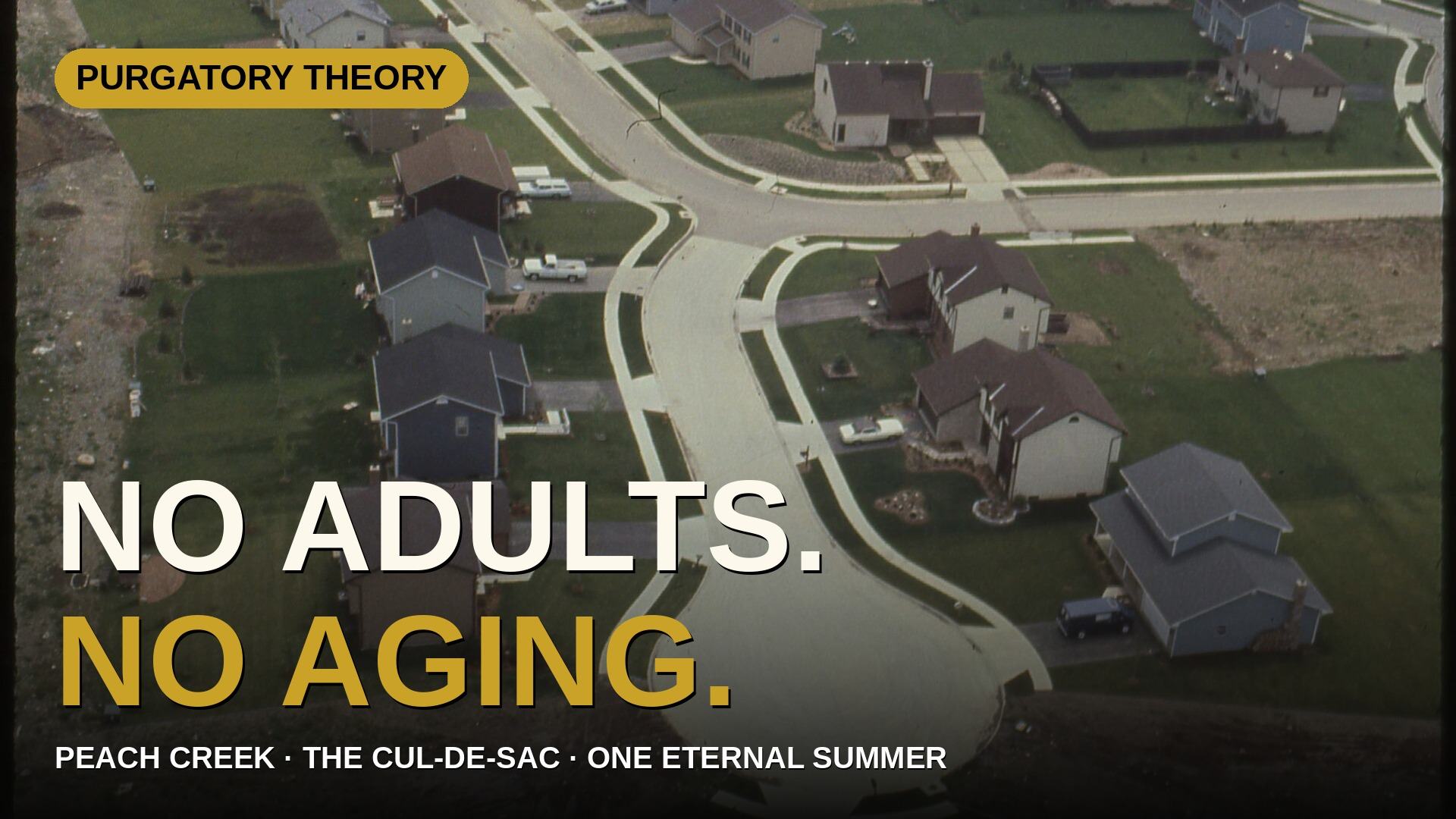
Picture a suburban street on a summer afternoon. Lawns, fences, a cul-de-sac curving nowhere. A dozen children are outside, scheming, fighting and building contraptions. Now notice who is missing. Everybody’s parents.
In ten years of Ed, Edd n Eddy, no mother or father ever walks into the frame and takes charge. The kids are grounded, fed and scolded by people the camera refuses to show.
The summer barely ends either. For most of the run there is no school, no autumn, no ageing. The same children run the same scams for the same jawbreakers, on what feels like one endless July.
Created by Danny Antonucci, the show ran on Cartoon Network from 4 January 1999 to 8 November 2009, set in the fictional town of Peach Creek.
Its Wikipedia entry calls it one of the network’s most successful original series. It reached 31 million households and was broadcast in 120 countries.
The street runs on a simple economy. Quarters are wealth, jawbreakers are the prize, and Eddy’s scams are the only industry in town. It is a complete world, sealed at both ends.
Fans looked at that empty, looping street and reached a grim conclusion. The cul-de-sac is not a neighbourhood, they say. It is a waiting room for dead children.
Key Facts
- Premiered 4 January 1999 on Cartoon Network; ended with a TV film on 8 November 2009.
- Created by Danny Antonucci at his Vancouver studio, a.k.a. Cartoon.
- 130 segments across six seasons, plus specials — Cartoon Network’s longest-running original series of its era.
- The purgatory write-up first circulated on forums in July 2009, before the show had even ended.
- No adult is shown in full until Eddy’s brother appears in the 2009 finale film.
The Evidence
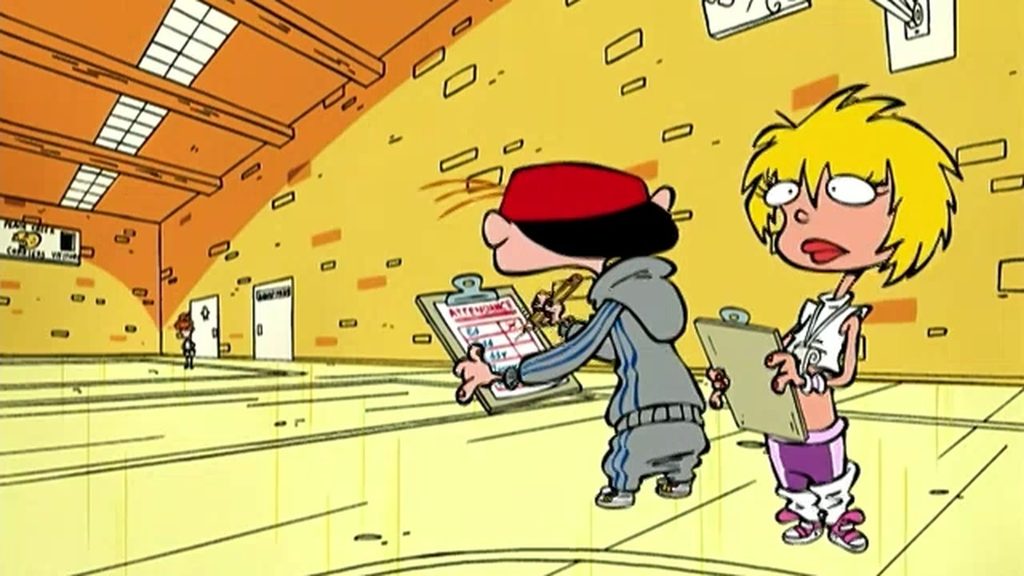
Where the theory started
The purgatory theory can be traced to a fan write-up posted on forums in July 2009, months before the show even ended. It spread through 4chan and creepypasta sites in the early 2010s and never really stopped.
Its central claim is blunt: every child in the cul-de-sac died young, in a different era, and woke up in the same street. The neighbourhood is purgatory, and eternal summer is the sentence.
That one idea does a lot of work. It explains the missing parents, the frozen ages, the odd tongues and the street that never changes, all in a single move.
A child for every era
The write-up does not stop at the claim. It assigns each child a decade, a backstory and a death, and reads every quirk as a fingerprint of the era that child supposedly came from:
- Rolf, died 1903: the immigrant farm boy, trampled by his family’s animals — which is why, fans say, his afterlife herd is so small.
- Jonny, died 1922: the friendless loner who died of tuberculosis, carrying Plank, the last friend he ever made, into the afterlife.
- Eddy, 1930s: a Great Depression child obsessed with money, who drowned fleeing the children he had scammed.
- Ed and Sarah, died 1953: their father lost in the war, their mother distant; both children killed in a car accident.
- Nazz, died 1979: a 1960s flower child, murdered with her family by an escaped killer in the summer of 1979.
- Kevin, died 1999: beaten by an abusive father, then rewriting him in death as a generous jawbreaker-factory dad.
- Jimmy, early 2000s: the last arrival, a frail child kept indoors who died of leukaemia.
Read that list slowly and you see the trick. Nothing on screen states any of it. Each death is built backwards, from a personality trait the show already gave the child.
Eddy’s hunger for quarters becomes a Depression childhood. Kevin’s bike becomes 1990s X-Games culture. Jimmy’s frailty becomes a hospital bed. The theory is join-the-dots, drawn after the picture.
The details fans point to
Beyond the era list, supporters lean on a handful of recurring details from the show itself:
- The children are drawn with green, blue and purple tongues — colours fans link to a decomposing body.
- No adult is ever fully seen in the regular series, and nobody ever explains where they are.
- Seasons 1 to 4 sit in one endless summer: no school, no seasons turning, no birthdays that stick.
- The Kanker sisters torment the Eds relentlessly — in some versions, they are not children at all, but demons.
- Peach Creek’s edges — junkyard, trailer park, woods — feel unfinished, like a stage set nobody completed.
Notice, though, that the details move between retellings. The death years shift, the order changes, and different versions assign different children to different decades.
Shared stories behave like that. Production bibles do not. It is, as fan theories go, unusually tidy — and that tidiness is exactly why it has survived for well over a decade.
A street outside of time
Fans also point to the technology. Peach Creek mixes eras on purpose: a VCR appears when a plot needs one, and in the very first episode Edd powers a lie-detector test through a toaster.
Antonucci designed the show to resemble the cartoons of the 1940s to 1970s, and said he wanted it to appeal to any generation. Read generously, that is a style brief. Read as a theorist, it is a confession.
The mix is deliberate either way. A street built from forty years of cartoon history was always going to look unstuck in time — because its creator built it that way, on the record.
The Counterevidence
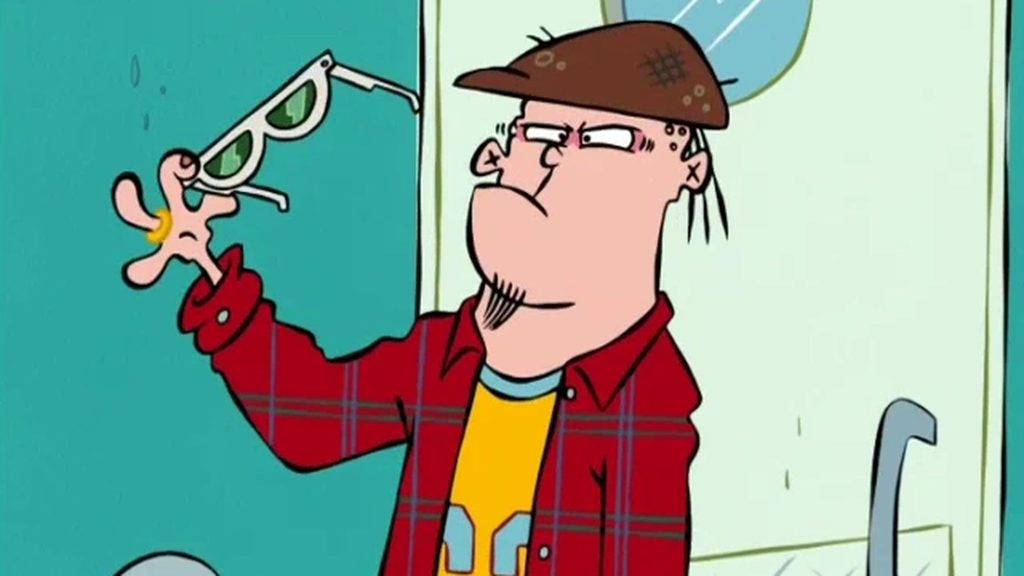
Parents who act, even off-screen
The adults are missing from the frame, not from the world. Parents act constantly: they leave instructions, set rules, hand out punishments and pull strings the children complain about by name.
- Sarah constantly threatens to tell their mother on Ed — and Ed genuinely fears the punishment.
- Kevin’s father works at the jawbreaker factory, which is why Kevin always seems to have a supply.
- Rolf talks endlessly about his Nana and his family’s old-country rules and punishments.
- Children get grounded, sent to their rooms and threatened with being sent to live with an aunt.
Antonucci explained the absence himself: in the long days of summer, you barely saw anyone’s parents, and sometimes not even your own. The empty street was a memory, not a mystery.
The sticky notes give it away
Edd’s parents communicate through sticky notes left around his house — on the phone, on the furniture, covering whole walls. It is a running gag built on absence with authority.
The gag gets its own episode. In “Momma’s Little Ed” (Season 3), Ed and Eddy forge fake notes, and Edd obeys every absurd instruction because he believes his parents wrote them.
Antonucci has said where that came from: his own parents worked long hours and left him written messages in much the same way. The show’s strangest parenting detail is autobiography.
Viewers even glimpse pieces of the adults. In “Mission Ed-Possible”, the arms of Eddy’s father and Ed’s mother appear on screen, dragging the boys off to face their report cards.
An arm of Eddy’s mother appears in “Smile for the Ed”, and Santa Claus speaks in the special “Jingle Jingle Jangle”. The show hides adults; it never claims they do not exist.
Season 5 breaks the loop
The eternal summer ends on screen. Season 5 began on 1 October 2005, and the children start attending Peach Creek Junior High.
With school comes everything purgatory should not have: autumn, then winter, school terms, holidays, photographs and report cards delivered to actual parents.
A waiting room for the dead does not issue report cards. The loop fans built the theory on was a feature of the first four seasons, not of the whole ten-year run.
The finale ends the argument
Then the finale removed all doubt. Ed, Edd n Eddy’s Big Picture Show, aired on 8 November 2009, introduces Eddy’s older brother: a full-grown adult, on screen, in the flesh.
He is voiced by Terry Klassen, works at an amusement park, and turns out to be the bully whose shadow Eddy has lived in for the entire series. He is cruel, ordinary and completely alive.
He is the only adult ever shown in full, and one is enough. A purgatory with a living, bullying grown-up working at an amusement park is hard to maintain.
What Antonucci actually did
The tongues have a mundane origin too. Antonucci explained that the multicoloured tongues came from watching his own son and his friends, whose tongues were stained different colours by different candy.
The characters have the same kind of origin. Antonucci, the son of Italian immigrants, based Rolf on himself and his cousins, growing up between two worlds and two sets of customs.
Jonny and Plank came from a childhood friend of his, a loner who carried a blanket everywhere. Jimmy was based on a cousin. The Eds are versions of Antonucci himself and his two sons.
He built the show at a.k.a. Cartoon after an adult-animation career that included the short Lupo the Butcher. He has said he made a children’s cartoon on a dare — and insisted on hand-drawn cel animation.
The show was one of the last major series made that way. Its wobbling “boiling” lines and lurid colours are a deliberate homage to the cartoons of the 1940s to 1970s, not a coded message about corpses.
The scale of the hit matters too. Only four seasons were originally planned, but Cartoon Network ordered more. By 2005 it was reported as the network’s number-one rated show.
A seven-hour marathon before the finale film posted double-digit ratings gains across every children’s age group. This was not an obscure oddity fans rescued. It was the network’s flagship, hiding in plain sight.
The Verdict
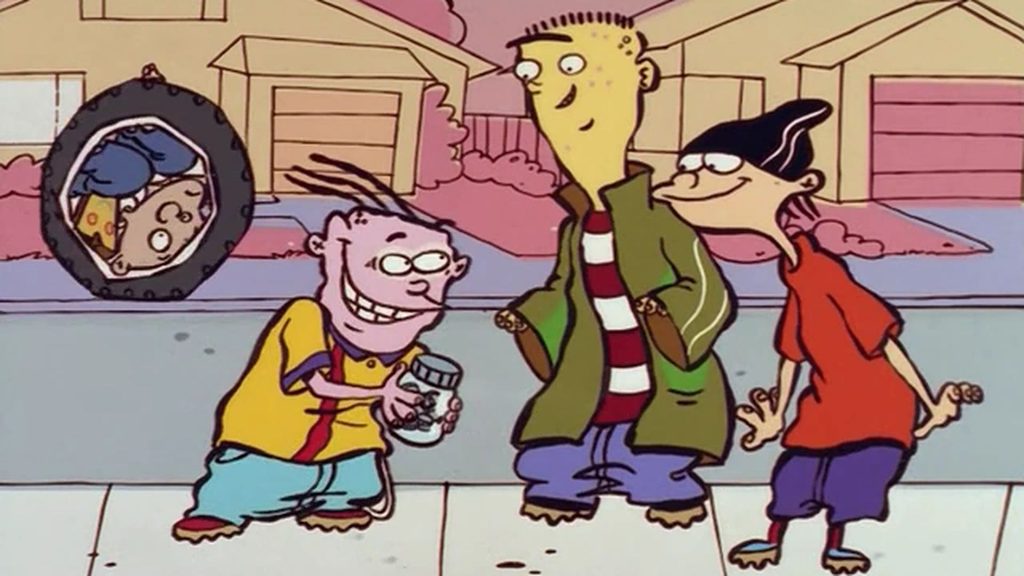
Strip the theory down and every pillar is a production choice. No adults, because Antonucci wanted a kids’-eye world with no safety net. Weird tongues, because candy stains tongues. Eternal summer, because that is how childhood feels in memory.
Yet the theory refuses to die, and it is worth asking why. Partly it is the same pull that powers the Scooby-Doo conspiracy theories: a bright cartoon with one cold spot in the middle of it.
The cold spot here is real. A street with no parents, no school and no future is an odd place, and the show never once explains it. The theory simply fills a silence the creator deliberately left.
It also flatters the viewer. Children who watched the Eds fail for a decade grew up, looked back, and preferred a ghost story to the truth: that the loop was the point, and they were inside it too.
Antonucci’s own framing leaves little room for ghosts. He has described the characters as versions of himself and the children he grew up with, and episodes as things that genuinely happened to him, stretched into slapstick.
Verdict: Unresolved as canon, and contradicted by the finale and the creator. But as a piece of fan engineering, it remains one of the most structurally coherent cartoon conspiracy theories ever built.
What is the Ed, Edd n Eddy purgatory theory?
It claims the cul-de-sac is purgatory and the children are dead, each killed in a different era and trapped in an eternal summer childhood, with no adults, no ageing and no way out of the street.
When did the theory first appear?
A fan write-up circulated on forums in July 2009, before the series had even finished. It spread widely through creepypasta sites in the early 2010s.
Do any adults ever appear in the show?
Only in pieces, such as arms and shadows, until the 2009 finale film. Ed, Edd n Eddy’s Big Picture Show shows Eddy’s adult brother in full.
Why are the characters’ tongues strange colours?
Creator Danny Antonucci copied what he saw on his son and his friends: tongues stained different colours by eating different candy. It is a design joke, not a clue.
Where is the show set?
In Peach Creek, a fictional suburb. The cul-de-sac where the Eds live is the centre of nearly every episode.
Join the Conversation
Were you a purgatory believer, or did Eddy’s brother end the argument for you in 2009? Tell us which detail convinced you either way, and which cartoon street still feels haunted, in the comments.
Read Next
- The Dark Truth Behind Viral Disney Conspiracy Theories
- 8 Creepy Photos That Look Normal Until You Look Closer
- The Rugrats Purgatory Theory: Angelica’s Imagination
