
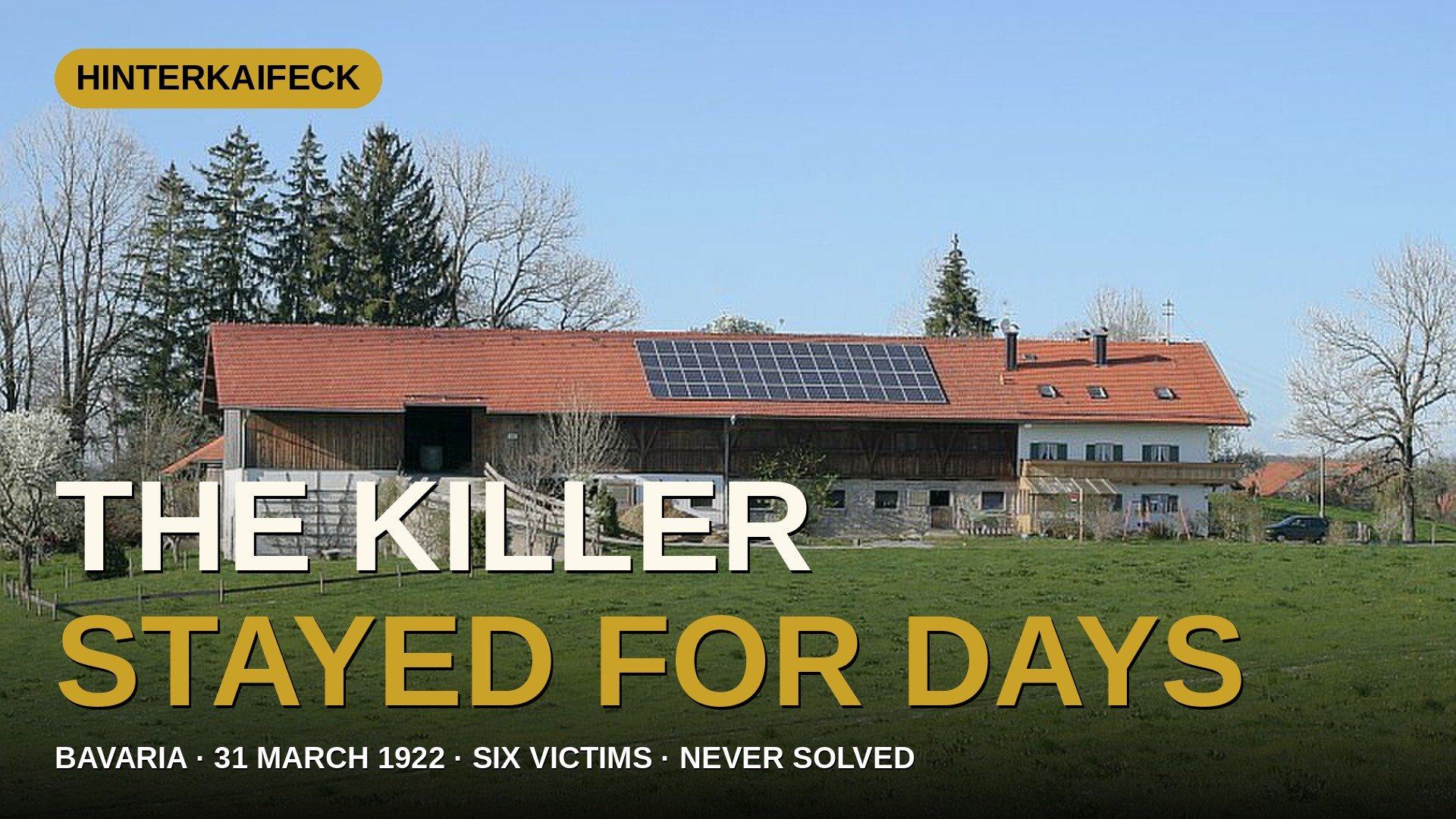
On 4 April 1922, three neighbours walked up to a quiet farm in Bavaria and found a silence that had already lasted four days.
The mail had piled up. The little girl had missed school. Yet smoke had risen from the chimney all weekend, and someone had clearly been feeding the cattle.
Inside the barn at Hinterkaifeck, the neighbours found four members of the family. Inside the house, they found two more. Six people were dead, and whoever killed them had stayed on.
The case was covered in detail by Mental Floss a century later, and it still reads the same way: a farm, a warning in the snow, and no answer.
The Murders
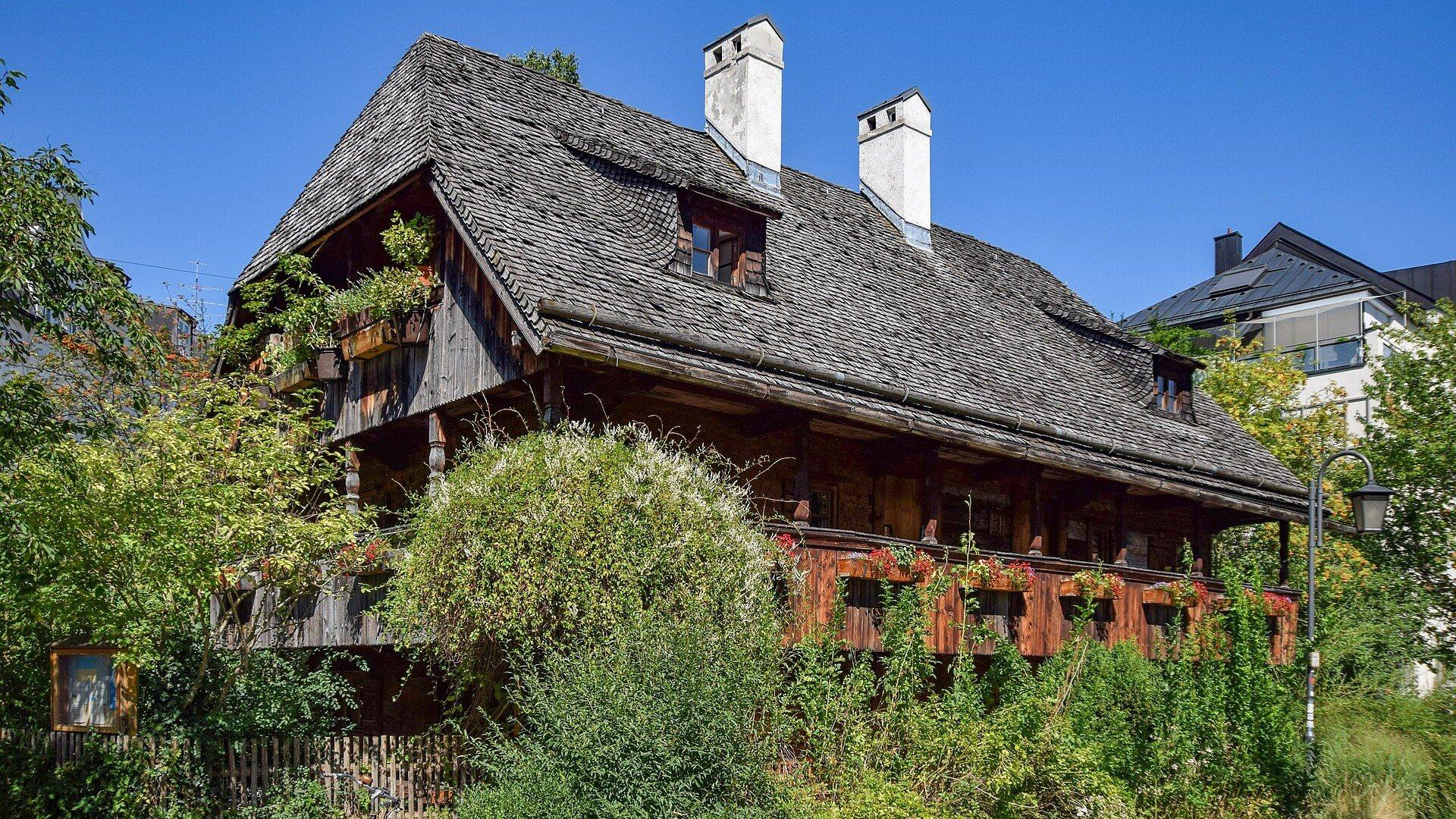
Hinterkaifeck stood alone in the woods near Gröbern, about 70 kilometres north of Munich. It was home to Andreas Gruber, aged 63, and his wife Cäzilia, aged 72.

Living with them was their widowed daughter, Viktoria Gabriel, aged 35. Her children were Cäzilia, aged seven, and Josef, aged two. It was a household that kept itself to itself.
The family had a hard local reputation. Andreas was known as strict and quick-tempered, and the Grubers rarely mixed with neighbours. That isolation is part of why four days passed before anyone looked inside.
Viktoria’s husband, Karl Gabriel, had been killed in the First World War. She had come back to her parents’ farm with her children and never really left it again.
On the afternoon of 31 March 1922, a new maid arrived. Maria Baumgartner, aged 44, had been escorted to the farm by her sister. She had taken the job that very day.
That evening, the six people at Hinterkaifeck were killed. Investigators believed four of them were drawn to the barn one by one. The maid and little Josef were killed inside the house.
The weapon was a mattock, a heavy farm tool like a pickaxe, of the kind the farm itself kept. The bodies in the barn had been covered with hay. No valuables were taken from the house.
Investigators reconstructed the barn killings from the positions of the bodies. The four people found there had been covered with hay, and a board had been placed over them.
There was no sign the house had been ransacked. Drawers and cupboards stood undisturbed. Whoever did this was not hunting for money, and that has puzzled investigators ever since.
Money found on the farm helped rule out a simple robbery. Munich police, led by Inspector Georg Reingruber, took on a case with many suspects over the years and no charge that ever stuck.
One name came up again and again: Lorenz Schlittenbauer, a neighbouring farmer who had known the family well. He was investigated and questioned, but he was never charged with the murders.
The Aftermath

The strangest part of Hinterkaifeck starts after the killings. For days, the farm carried on as if the family were still alive. Someone ate the family’s food and used the fireplace.
Neighbours saw smoke coming from the chimney over the weekend. The cattle had been fed and tended. The dog was found alive. Whoever stayed knew how a working farm runs.
The warnings had started months earlier. The previous maid, Kreszenz Rieger, had quit about six months before, saying she heard strange noises in the attic and believed the house was haunted.
In March 1922, Andreas found a newspaper from Munich on the property. Nobody at the farm had bought it, and nobody nearby subscribed to it. He never worked out how it got there.
Days before the murders, Andreas told neighbours about footprints in fresh snow. They led from the forest to the farm, to a door with a broken lock, and no tracks led back.

That same night, the family heard footsteps in the attic. Andreas searched it and found nobody. He told people what he had seen, refused offers of help, and never went to the police.
A neighbour later reported seeing a figure watching the farm from the edge of the forest in those days. Like much in this case, the sighting was noted at the time and never confirmed.
The postman noticed the family’s Saturday post still sitting where he had left it. Small, ordinary signs like that are what finally pushed the neighbours up the farm track on 4 April.
Put those pieces together and a grim picture forms. Someone may have been watching the farm, or even hiding in it, before the last night of March. It was never proven either way.
The Verdict
More than a hundred people were considered as suspects across the decades that followed. The farm was demolished in 1923, and a bloodied mattock was found hidden in the attic during the work.
The formal investigation was closed in 1955 without a charge. Many case files were later lost in the Second World War, and the physical evidence that survives is thin to the point of vanishing.
Schlittenbauer remains the name most often attached to the case, partly because he led the neighbours who found the bodies. Suspicion, even repeated suspicion, is not evidence. He died uncharged.
The case sits alongside the Sodder children disappearance in one respect: a family home, a single terrible night, and a century of people still asking who was really there.
Verdict: Unresolved. Six people were murdered at Hinterkaifeck on 31 March 1922 and the killer stayed on the farm for days, but no suspect has ever been conclusively identified or charged.
Frequently Asked Questions
Who was killed at Hinterkaifeck?
Six people: Andreas and Cäzilia Gruber, their daughter Viktoria Gabriel, her children Cäzilia, aged seven, and Josef, aged two, and the maid Maria Baumgartner, who had arrived that day.
When were the bodies found?
On 4 April 1922, four days after the murders. Neighbours led by Lorenz Schlittenbauer went to check after the family missed church and school and their mail went uncollected.
What weapon was used in the Hinterkaifeck murders?
A mattock, a heavy pickaxe-like farm tool. A bloodied mattock believed to be the weapon was found hidden in the farm’s attic when the buildings were demolished in 1923.
Did the killer really stay at the farm afterwards?
The evidence points that way. Neighbours saw chimney smoke, food had been eaten, and the cattle had been fed and tended in the days between the murders and the discovery of the bodies.
Has the Hinterkaifeck case ever been solved?
No. More than a hundred suspects were considered, the investigation was formally closed in 1955, and nobody has ever been charged or convicted. The case remains officially unsolved.
Join the Conversation
Footprints that only went one way, footsteps in an empty attic, and a killer who fed the cattle and lit the fire. Who do you think was at Hinterkaifeck in those last days of March 1922, and had they been inside the house all along?
Read Next
The Sodder Children: The Christmas Eve Disappearance
The Circleville Letters: The Anonymous Stalker
