
Somewhere in the flooded forests of the Congo Basin, local people have described Mokele-Mbembe for generations: a huge, long-necked animal that lives in the rivers and can stop a canoe dead. Explorers wrote the reports down in 1776 and again in 1913. Scientists went looking with cameras in the 1980s.
Nobody has ever brought back a bone, a body or a clear photograph. So is Mokele-Mbembe a surviving dinosaur, a misidentified animal, or one of the most durable legends on Earth?
Here is what two and a half centuries of evidence actually looks like when you lay it out in order.
“One Who Stops the Flow of Rivers”

The name comes from the Lingala language and is usually translated as “one who stops the flow of rivers.” It is a good name for the animal people describe: something so big that its body, surfacing in a river channel, would block the current.
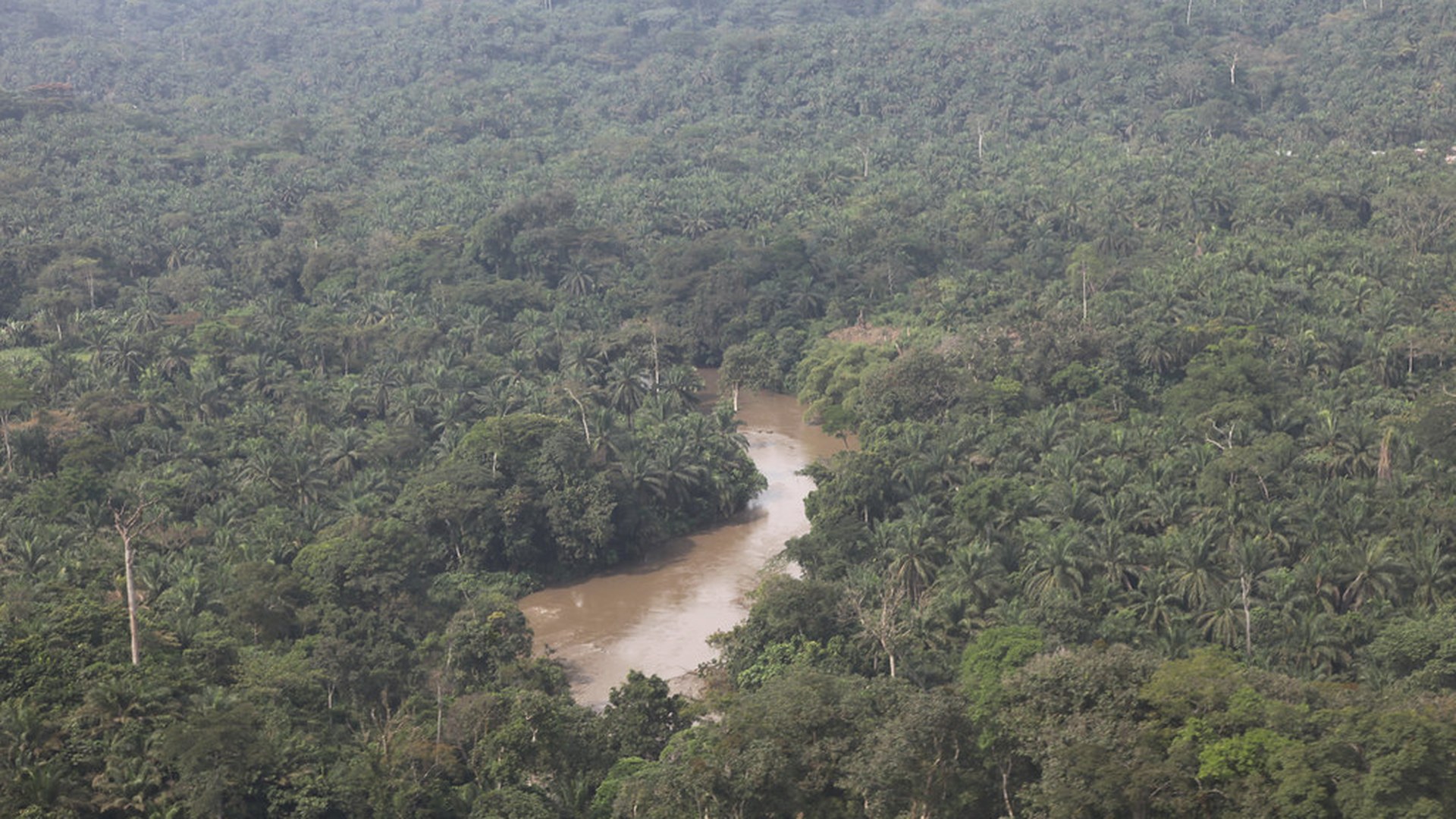
The creature belongs to the Likouala region of the Republic of Congo, a vast swamp forest in the northern part of the country.
At its heart sits Lake Tele, a shallow oval lake only a few metres deep, ringed by forest that floods for much of the year. Even today, reaching it means days of travel by dugout canoe and on foot.
The standard description, gathered from local witnesses over many decades, is remarkably consistent. An animal the size of an elephant or larger, with smooth brownish-grey skin, a long flexible neck, a small head, a long muscular tail, and a taste for plants rather than meat. It is said to be shy, mostly aquatic, and dangerous mainly when a canoe comes too close.
The First Written Clues: 1776 to 1913
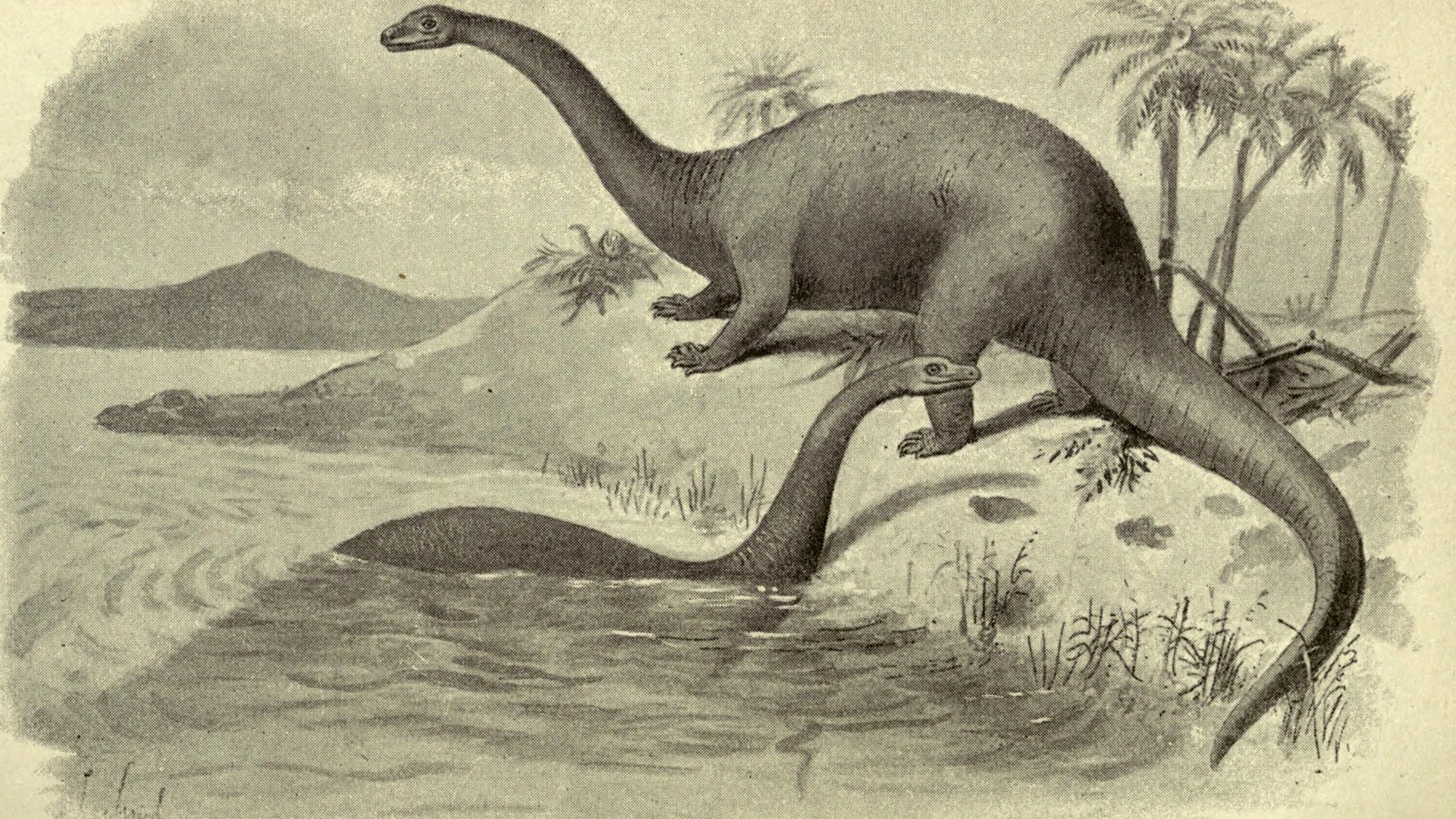
The earliest written account usually attached to this story comes from 1776, when the French priest Abbé Lievain Bonaventure Proyart published his Histoire de Loango.
Proyart relayed a report from missionaries who had found the trail of an animal they never saw. The claw marks, he wrote, formed a print about three feet in circumference, and the footprints were spaced seven to eight feet apart.
Read that carefully, because it sets the pattern for everything after. No animal was seen. No location near Lake Tele was named; the report came from the Loango coast region, hundreds of kilometres away.
It is a footprint story, attached to Mokele-Mbembe only much later, by writers looking for a pedigree.
The story resurfaced in 1909, when the German animal collector Carl Hagenbeck mentioned reports of a strange half-elephant, half-dragon creature in his memoir.
African “dinosaur” stories became a brief newspaper sensation in Europe and America around 1910 and 1911.
Then came the account the whole case rests on. In 1913, Captain Ludwig Freiherr von Stein zu Lausnitz led a German government survey into the Likouala region, then part of the colony of Kamerun.
His official report described the animal in detail: brownish-grey, smooth-skinned, elephant-sized, with a long flexible neck, a single very long tooth or horn, and a tail like an alligator’s.
Canoes that approached it, he wrote, were attacked and their crews killed, though the bodies were not eaten.
Von Stein never saw the animal himself. His report was never formally published, and it survives only as excerpts quoted by later authors. The foundation document of the Mokele-Mbembe legend is a second-hand account we cannot fully check.
That does not make it worthless. It does mean the legend began exactly as it continued: always one step removed from the animal itself.
The Lake Tele Expeditions
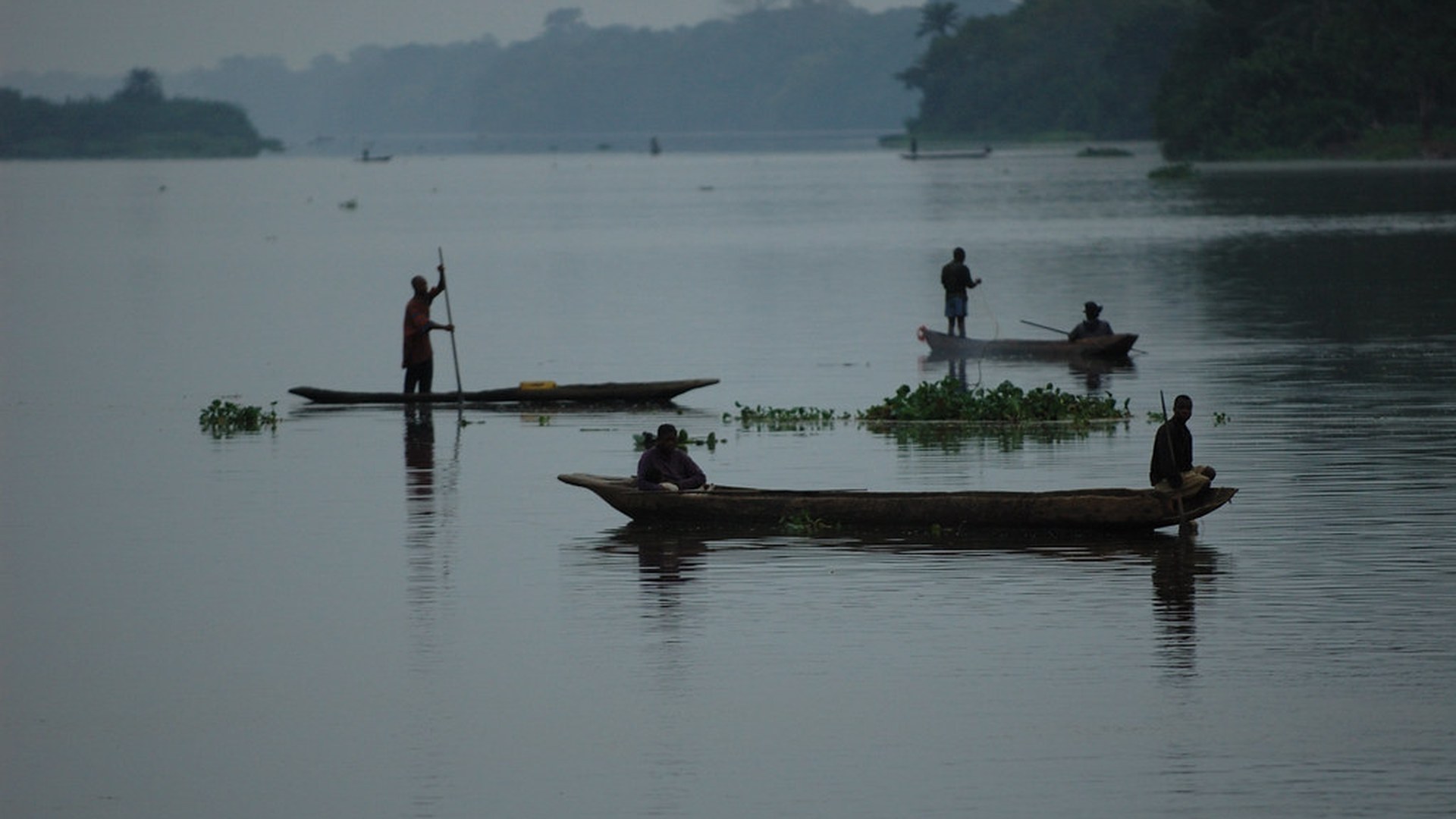
The modern hunt began in the 1970s, when American herpetologist James Powell, studying crocodiles in Gabon, collected local reports and found witnesses consistently picked out a sauropod-like shape from pictures of animals.
Powell teamed up with Roy Mackal, a biochemist at the University of Chicago who was already known for investigating the Loch Ness Monster.
Mackal and Powell made a reconnaissance trip in 1980, then returned with a larger expedition in 1981. They interviewed dozens of witnesses, including people who told a striking story about Lake Tele in 1959: that local fishermen had trapped and killed one of the animals, eaten it, and that some who ate the meat had died.
It is a memorable account. It is also unverifiable, collected more than twenty years after the fact, with no remains ever produced.
Mackal’s own closest call, described in his 1987 book A Living Dinosaur?, was a large, unexplained wake and splashing near the expedition’s boat on the Likouala River, which his team took to be a big animal moving away from them underwater.
He was honest about what it was: a disturbance, glimpsed briefly, that could not be identified. It remains the pattern of his whole search.
The witnesses he interviewed impressed him deeply, and their accounts were consistent across separate villages. The animal itself stayed out of reach.
The Regusters split
The 1981 season produced a rival. Engineer Herman Regusters quarrelled with Mackal, split off with his own team, and reached Lake Tele that autumn.
Regusters claimed repeated sightings over several weeks, recorded sounds he attributed to the animal, and took a photograph.
The photograph shows an indistinct shape and a wake. It could be almost anything, and Mackal himself was openly sceptical of his former partner’s claims.
The Agnagna sighting
The strongest single claim came in 1983, when Congolese zoologist Marcellin Agnagna led a government expedition to Lake Tele.
Agnagna reported watching a long-necked, reddish animal for about twenty minutes from a few hundred metres away. He said he filmed it. The film, he reported, was ruined and produced nothing usable.
A trained biologist’s twenty-minute sighting is the best eyewitness claim in the entire file. It is still, in the end, one man’s account with no photograph to back it, which is where nearly every thread in this story ends.
Expeditions kept coming: British, Japanese and American teams through the 1980s and 1990s, a Japanese television crew that filmed a distant long-necked shape crossing the lake in 1992, and a string of privately funded searches in the 2000s and 2010s.
Several of those later efforts were backed by creationist groups, who hoped a living dinosaur would challenge the standard account of evolution. That funding angle does not disprove anything by itself, but it does mean some expeditions were looking for a conclusion, not just an animal.
What Was Actually Found
Lay out the physical evidence gathered in more than forty years of searching, and the list is short:
- Footprints. Large three-toed or clawed tracks reported near rivers by several expeditions, photographed and cast in some cases, but never tied to an unknown animal by any test.
- Sounds. Regusters’ 1981 recordings and other reported bellows and splashes. Nothing in them rules out known animals, and none has been matched to a living species because there is nothing to match against.
- Images. One blurry 1981 photograph and one grainy 1992 video of a distant shape. Both are consistent with mundane explanations, including a standing fisherman in a canoe.
- Bones and bodies. None. Not one. The single “young dinosaur bone” claim, made by Regusters, involved a fossil vertebra from a known dinosaur found far away in Niger, and the claim was rejected.
Compare that with the 1959 killing story. If an elephant-sized animal was butchered at Lake Tele within living memory, its bones should have been the easiest evidence in cryptozoology to produce. Sixty years of visitors have asked. None have appeared.
The Biology Problem: Hiding for 66 Million Years
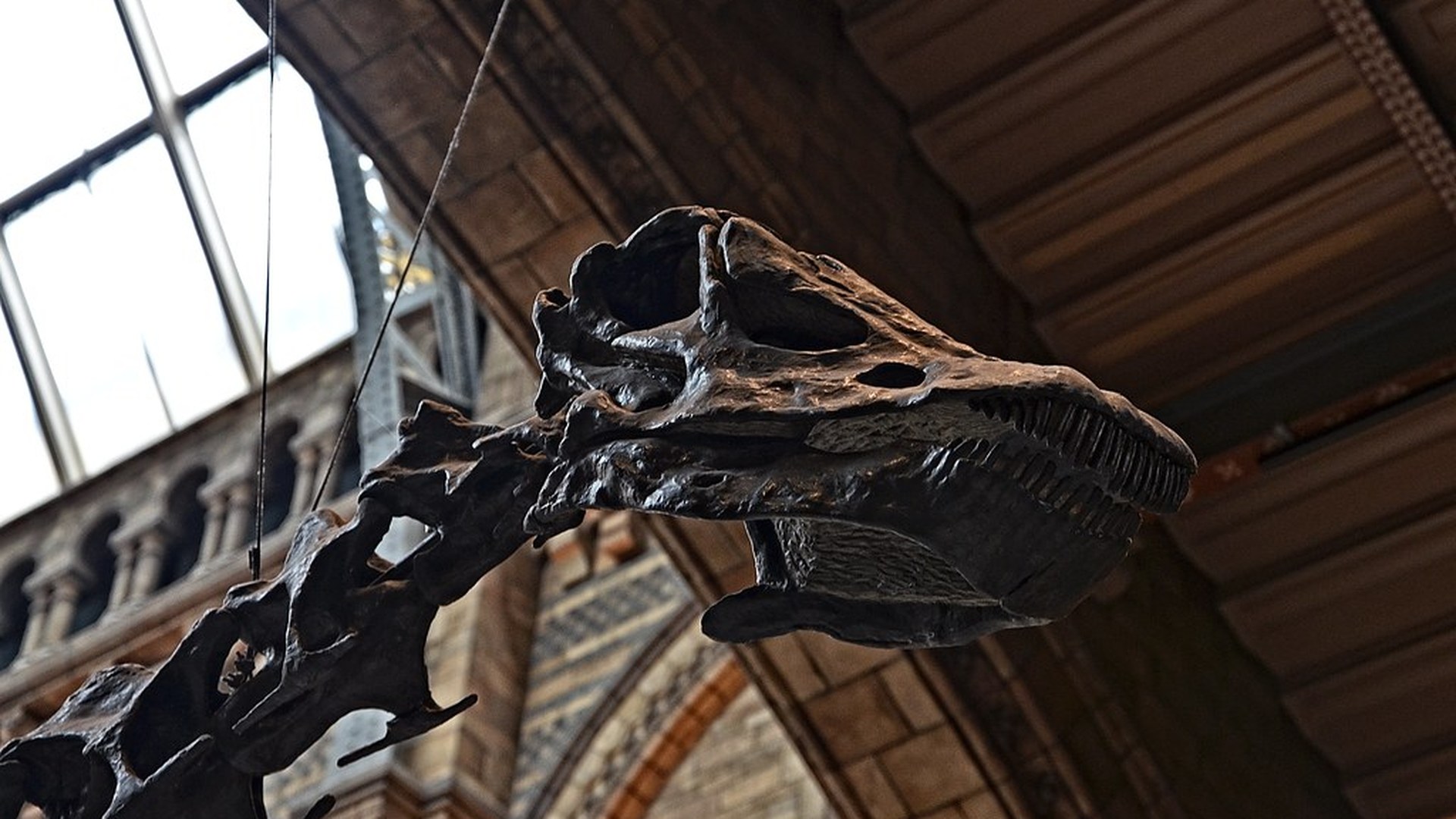
The popular version of the theory says Mokele-Mbembe is a sauropod, a survivor from the age of dinosaurs. That idea runs into a wall of arithmetic.
The last sauropods died in the mass extinction 66 million years ago. Between then and now, not one sauropod fossil has been found anywhere on Earth. A surviving line would have to pass through 66 million years without leaving a single bone in the fossil record.
Then there is the population problem. One animal cannot survive for centuries; a species needs a breeding population, at minimum dozens of individuals, generation after generation.
Dozens of elephant-sized plant-eaters eat enormous quantities of vegetation every day, trample riverbanks, leave dung, tracks and carcasses, and die in the open where scavengers and people find the remains.
The habitat makes it harder, not easier. Lake Tele is small and shallow, only a few metres deep in most places. An animal the size of an elephant cannot hide in water it would stand chest-deep in.
The surrounding swamp forest is huge and genuinely remote, but it is not empty: it is hunted, fished and travelled by the same communities who report the animal, and modern conservation surveys have run camera traps across the Congo Basin for years.
Those cameras have photographed elephants, gorillas, leopards and pangolins in enormous numbers. Never a sauropod.
Believers reply, fairly, that acidic swamp water destroys bone quickly, which is true, and that the region frustrated every expedition with weather, illness and logistics, which is also true.
Those points explain missing fossils. They do not explain a living, breeding population leaving no verifiable trace in the present day.
The Likely Explanations
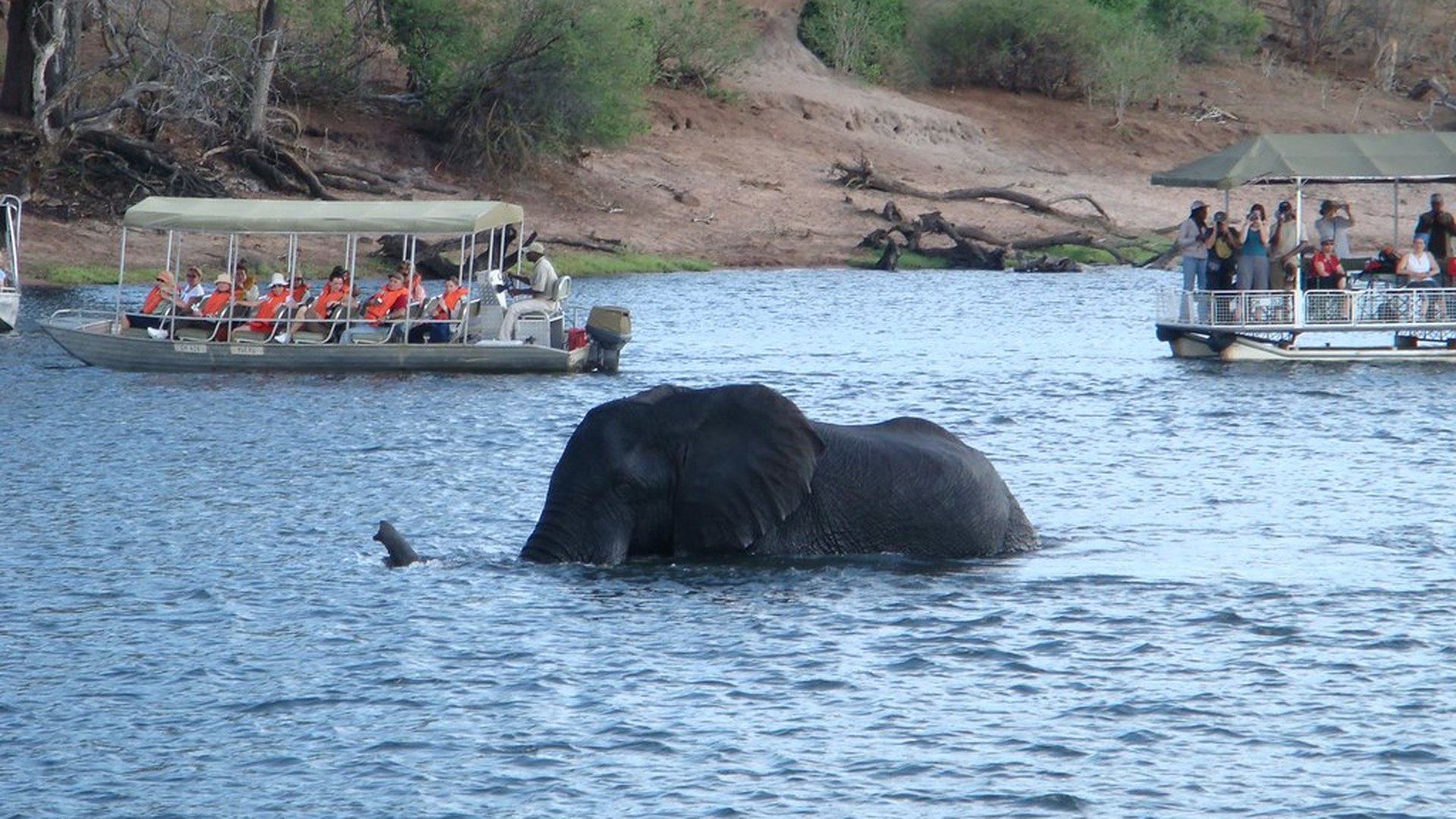
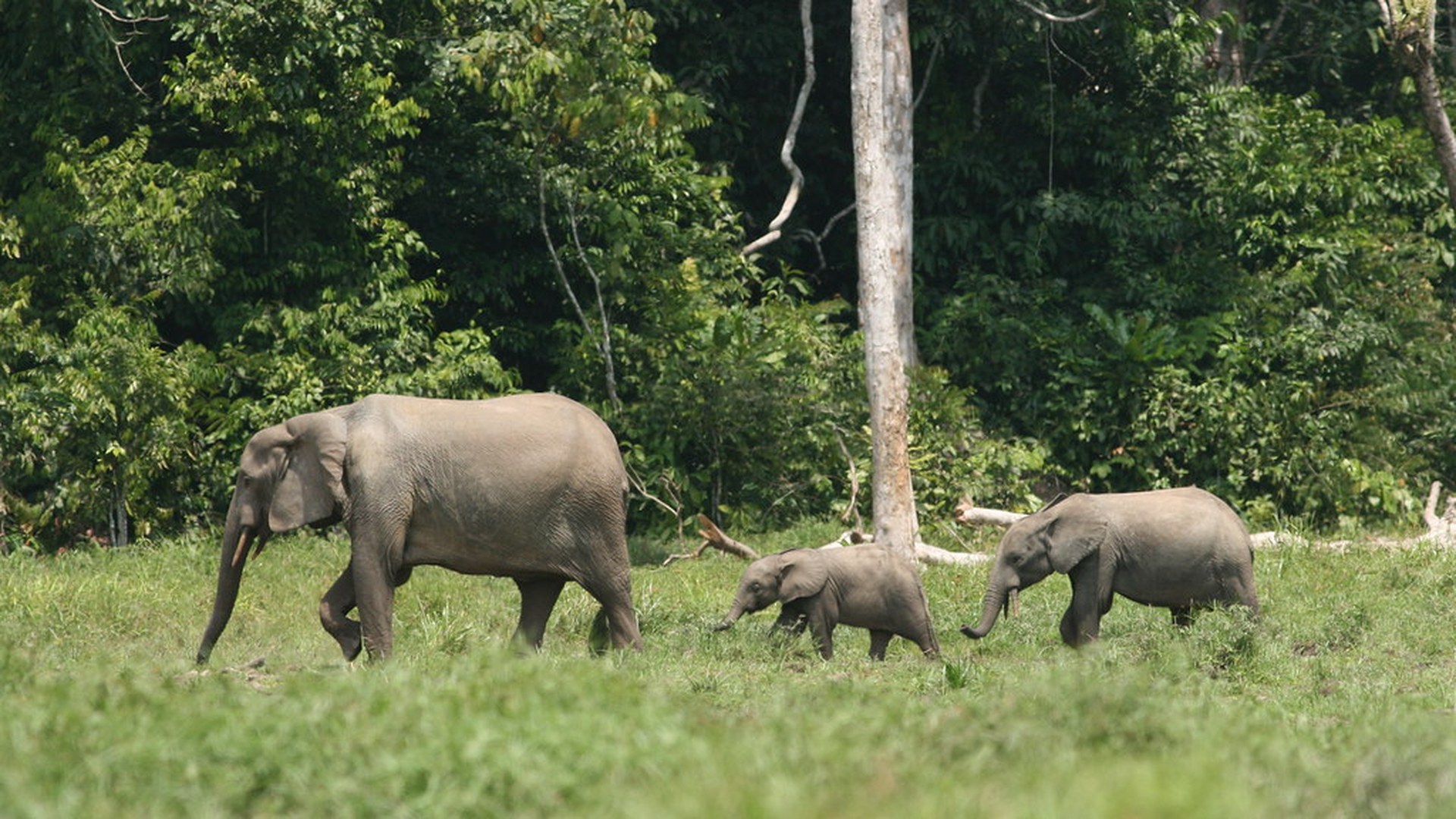
If the witnesses are describing real animals, and many of them surely are, the candidates are local. Forest elephants swim well and cross rivers with only the top of the back and the raised trunk above the surface; a trunk held high, seen briefly through mist at distance, is a neck-shaped thing. Giant softshell turtles in Congo rivers grow well over a metre across.
Nile monitor lizards swim with a long neck and tail profile. A hippo’s head and back, though hippos are scarce in the Likouala swamps themselves, matches some reports from the wider region.
None of those animals explains every report, and that is normal. Legends are not built from one animal. They are built from many sightings of several animals, plus older stories retold until they sharpen into a single creature.
We traced the same process in our look at the “vampire” burials, where real graves and real disease grew into a monster the record never contained.
The Congo also holds a genuine mystery of a different kind: it is one of the least-surveyed large ecosystems on Earth, and new species are still described there.
That is what keeps expeditions going, and it is a better reason than the dinosaur. The story belongs with the other great hunts for things that may never have existed at all, like the phantom islands that sat on maps for centuries because every mapmaker copied the last one’s mistake.
The Verdict on Mokele-Mbembe: Unresolved, Leaning Unlikely
Verdict: Unresolved, leaning unlikely. The reports are old, widespread and consistent enough that dismissing every witness would be lazy.
Something has been seen in those rivers for a long time, and the region is wild enough that certainty would be arrogant.
But the specific claim, a living sauropod, fails every test applied to it: a 66-million-year fossil gap, no bones from an allegedly butchered animal in 1959, no clear image in the age of the camera trap, and a foundation document from 1913 that its own author never saw fit to publish.
On the evidence as it stands, Mokele-Mbembe is best understood as a real legend wrapped around real animals, not a dinosaur that time forgot.
Read Next
For another case where folklore and the physical record pull in opposite directions, read our investigation of the “vampire” burials, where archaeology keeps finding graves and the monster keeps dissolving.
Then try the phantom islands, lands that appeared on maps for centuries and were hunted by real expeditions, yet never existed at all.
Also read Mysterious Tentacle Creature Found in Texas Backyard
Frequently Asked Questions
What does Mokele-Mbembe mean?
It is Lingala for “one who stops the flow of rivers,” a reference to the animal’s reported size.
Where does Mokele-Mbembe supposedly live?
In the Likouala swamp region of the Republic of Congo, especially around Lake Tele and the rivers feeding it.
Has Mokele-Mbembe ever been photographed?
Not clearly. A blurry 1981 photograph and a grainy 1992 video exist, but neither shows anything identifiable.
Could Mokele-Mbembe be a living dinosaur?
Almost certainly not. Sauropods died out 66 million years ago, and a breeding population would leave bones, tracks and camera-trap images. None exist.
Who led the most famous expeditions?
Roy Mackal of the University of Chicago searched in 1980 and 1981. Congolese zoologist Marcellin Agnagna claimed the clearest sighting in 1983.
What do locals say killed one in 1959?
Witnesses told Mackal that fishermen at Lake Tele killed and ate one of the animals in 1959. No remains were ever produced, so the story cannot be checked.
Join the Conversation
So what do you think is surfacing in those rivers? A misidentified elephant, a story too good to die, or something science has genuinely missed in one of the last unsurveyed places on Earth?
Have your say in the comments. And if Mokele-Mbembe were proven tomorrow to be a known animal, would the legend lose its power for you, or is the mystery the whole point?
