
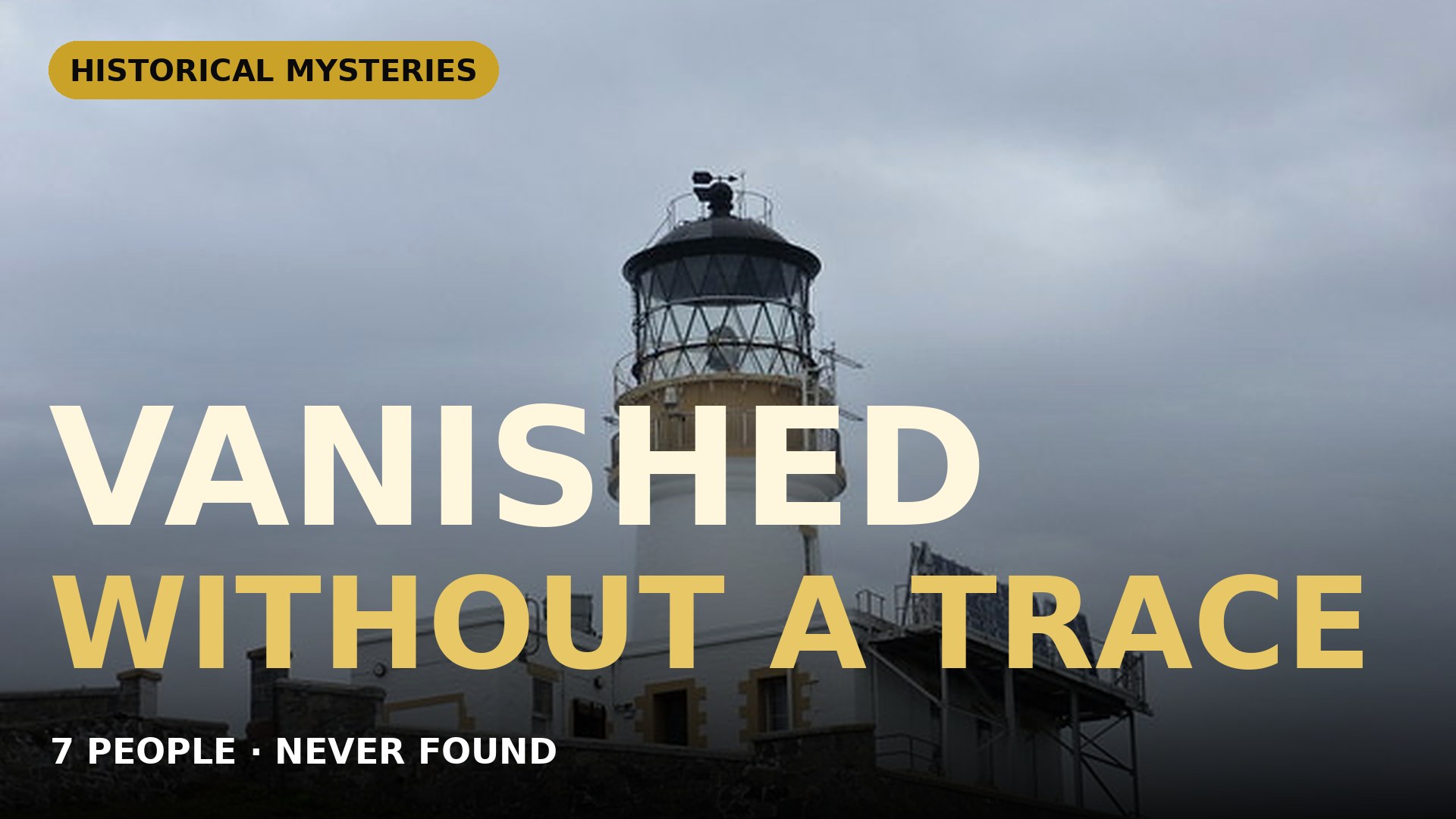
In December 1900, a relief ship reached a lighthouse off the coast of Scotland and found lamps trimmed and ready, and no one alive to light them. Three keepers had simply gone.
History is full of people who vanished without a trace — who walked out of a house, a plane, a colony or a car park and left nothing but questions.
Some have a likely answer that was never proved. Others have none at all. Here are seven.
1. The Flannan Isles Lighthouse Keepers: People Who Vanished Without a Trace in 1900
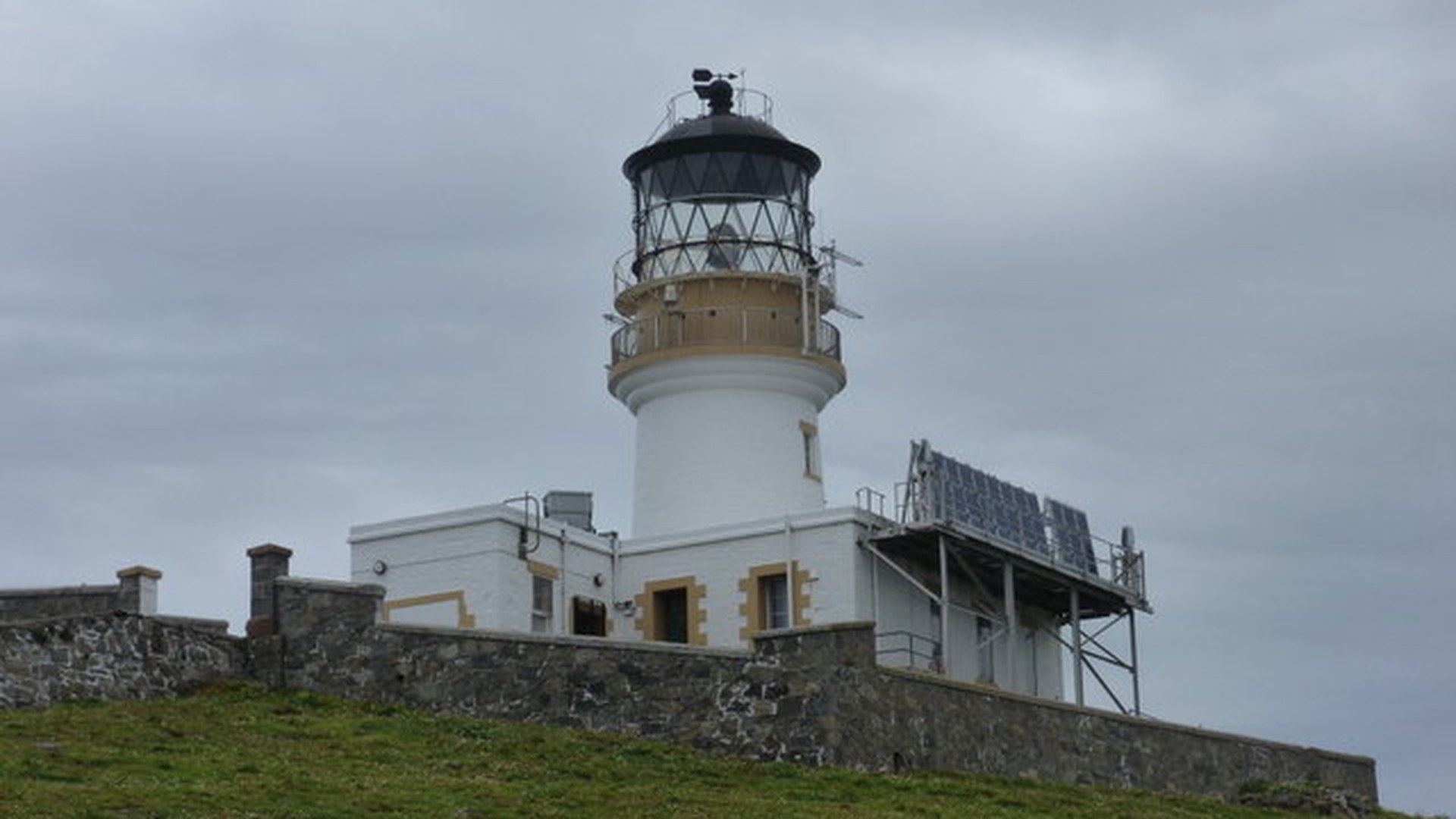
The lighthouse on Eilean Mòr, in Scotland’s Flannan Isles, had only been lit for a year when its three keepers disappeared: James Ducat, the principal keeper, Thomas Marshall, his assistant, and Donald McArthur, standing in for a man on sick leave.
A passing steamer noticed the light was out on 15 December 1900. Bad weather delayed the relief vessel, the Hesperus, until 26 December, when relief keeper Joseph Moore went ashore alone and found no one to greet the boat.
Inside, the lamps were cleaned and refilled, ready for the night, and the clocks had stopped. One set of oilskins still hung there, suggesting McArthur had rushed outside without his coat.
Outside, the west landing was badly damaged: railings bent, a life buoy torn away, and a rock weighing more than a ton moved.
What is known: the men were gone by the afternoon of 15 December, and storm damage was severe. Superintendent Robert Muirhead’s official investigation concluded that they had gone to the landing to secure equipment and were swept away by an unexpectedly large wave.
What is not known: why all three men were outside together, against normal practice. The dramatic log entries about a terrified keeper, often quoted online, were later inventions. The wave theory fits the damage best, but no bodies were ever found to confirm it.
Verdict: Unresolved — a rogue wave is the most likely explanation, but it has never been proved.
2. The Sodder Children: Five Children Gone on Christmas Eve, 1945

Late on Christmas Eve 1945, George and Jennie Sodder went to bed in their house outside Fayetteville, West Virginia, with nine of their ten children home. At about 1 a.m., fire broke out. George, Jennie and four children escaped. Five did not come out: Maurice, 14, Martha, 12, Louis, 9, Jennie, 8, and Betty, 5.
George tried everything. The ladder usually kept against the house was missing, his coal trucks would not start, and buckets of water were frozen. The fire department did not arrive until around 8 a.m., by which time the house had burned down to its basement.
Here is the detail that has kept this case alive for 80 years: no bodies were found. A brief search turned up only a few bone fragments the family was not told about at the time, and nothing like the remains of five children.
The official finding, blamed on faulty wiring, was that the children had died in the fire. George and Jennie never accepted it.
They pointed to strange details from that night: a call from an unknown woman, a thud on the roof, and earlier threats linked to George’s criticism of Mussolini’s Italy. In the 1960s they received a photograph they believed showed Louis as an adult.
What is known: the search of the ruins was rushed, and George soon bulldozed earth over the site, destroying whatever evidence remained. What is not known: whether the children died in the fire or were taken. No verified sighting of any of the five has ever been confirmed.
Verdict: Unresolved — the fire was real, but the fate of the five children was never properly established.
3. The Yuba County Five: A Wrong Turn in the Snow, 1978

On 24 February 1978, five young men from Yuba County, California — Jack Madruga, Bill Sterling, Jack Huett, Ted Weiher and Gary Mathias — drove to Chico to watch a college basketball game.
All five lived with their families and had mild intellectual disabilities or psychiatric conditions. Mathias had schizophrenia, controlled by medication he had not brought because he expected to be home that night.
The game ended around 10 p.m. The men stopped for snacks, set off for home, and never arrived.
Days later, Madruga’s 1969 Mercury Montego was found abandoned on a remote mountain road in Plumas National Forest, roughly 70 miles from Chico and nowhere near the flat highway home. It was stuck in snow but not badly: it had fuel, it started when hot-wired, and five men could likely have pushed it free.
They left it anyway, in street clothes and low shoes, and walked deeper into the mountains.
When the snow melted in June, searchers found four of the men. Madruga and Sterling were found about 11 miles from the car, Huett’s remains were found in the woods, and Weiher was found inside a Forest Service trailer about 19 to 20 miles from the car.
Weiher had survived for weeks, lost a huge amount of weight, and was wrapped in bedsheets with badly frostbitten feet. Yet food stored in and near the trailer was largely untouched. Mathias was never found, but his shoes were in the trailer, which suggests he was there and then left, possibly wearing Weiher’s missing shoes.
What is known: four men died, most likely from exposure and starvation, after leaving a working car. What is not known: why they drove up that mountain road, why they abandoned the car, or what happened to Gary Mathias.
Verdict: Unresolved — no evidence has ever explained the decisions the five men made that night.
4. Amelia Earhart: The Flight That Never Landed, 1937
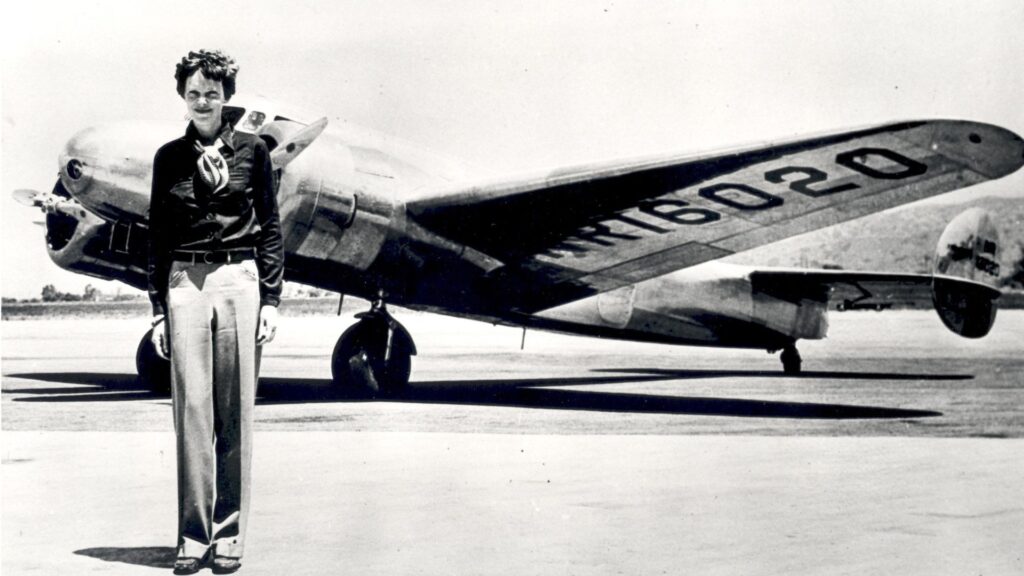
Amelia Earhart was one of the most famous people on Earth when she set out to fly around the world in 1937. With her navigator, Fred Noonan, she had one major stop left: tiny Howland Island in the Pacific.
On 2 July 1937, their Lockheed Electra took off from Lae, New Guinea, for the 2,556-mile flight to Howland. Earhart’s radio messages reached the waiting Coast Guard cutter Itasca, but she apparently could not hear theirs clearly. Her last understood message said they were flying along a line of position, running north and south, searching for the island.
Then silence. A huge air and sea search found no plane, no wreckage and no survivors. For more cases like this, read our investigation into aircraft disappearances that are still unsolved.
The US Navy’s view, the crash-and-sink theory, is straightforward: unable to find Howland, the Electra ran out of fuel, ditched in the ocean and sank.
The main rival is the Nikumaroro hypothesis. It argues that Earhart and Noonan turned south, reached the uninhabited island then called Gardner Island, and landed on its reef. Supporters point to bones found there in 1940, a woman’s shoe, a sextant box, and a 2018 reanalysis suggesting the bones’ measurements fit Earhart better than most people.
What is known: the bones were lost decades ago, and no wreckage has been conclusively identified as the Electra. What is not known: where the plane came down.
Verdict: Unresolved — crash-and-sink remains the most widely accepted explanation, with Nikumaroro plausible but unproved.
5. D.B. Cooper: The Hijacker Who Jumped Into the Dark, 1971
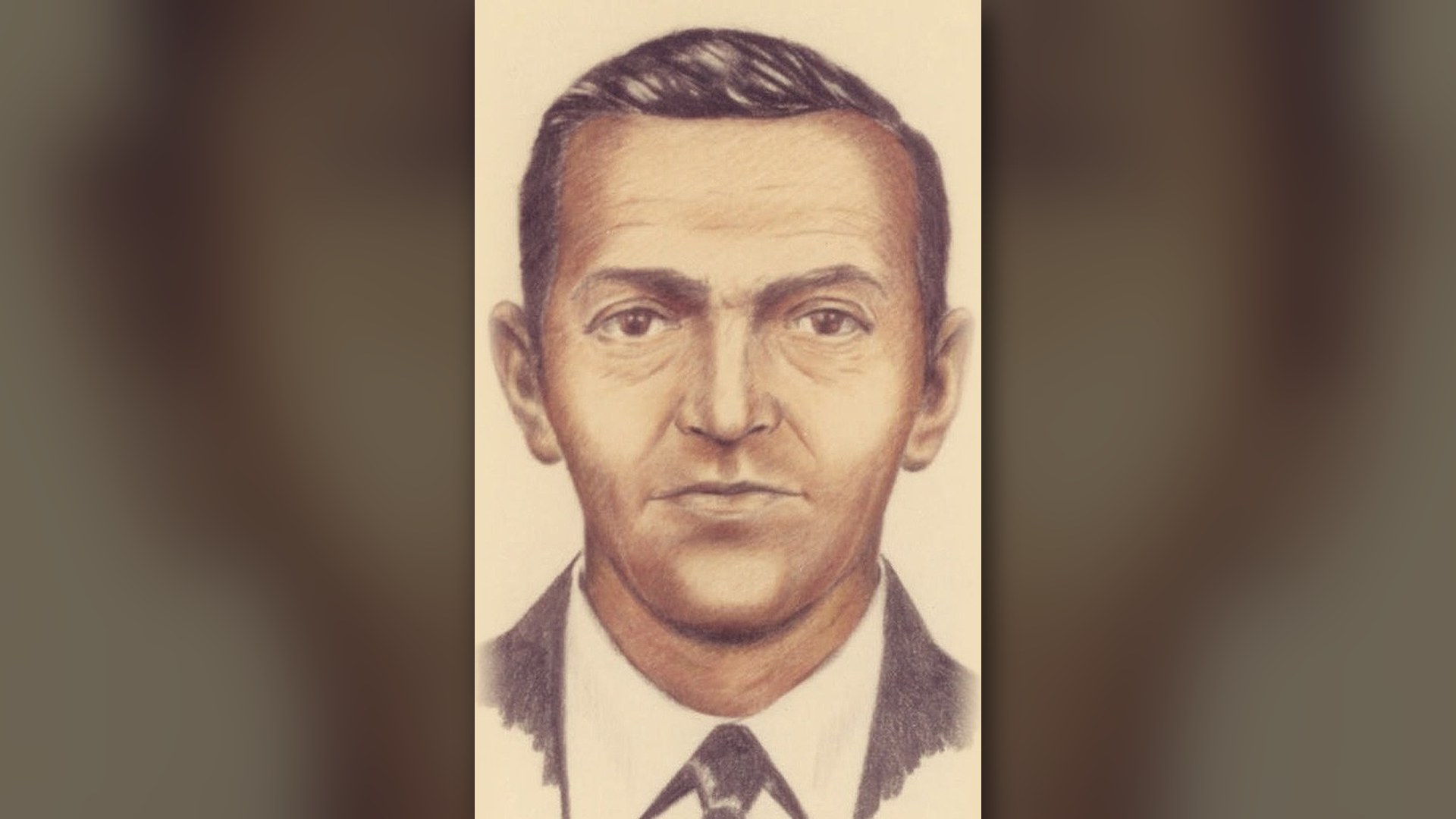
On 24 November 1971, a calm man in a suit bought a ticket in Portland, Oregon, under the name Dan Cooper. A reporting mix-up turned him into “D.B. Cooper,” and the wrong name stuck.
Aboard Northwest Orient Flight 305 to Seattle, he passed a note saying he had a bomb and showed the crew a briefcase of wires and red cylinders. His demands were precise: $200,000 in $20 bills and four parachutes.
The money and parachutes were delivered in Seattle and the passengers were released. Cooper ordered the jet flown towards Mexico, low and slow, with the rear stairs unlocked.
Somewhere over southwestern Washington, in rain and freezing wind at about 10,000 feet, he lowered the rear stairs and jumped into the night, wearing a suit and slip-on shoes.
Searches found nothing: no parachute, no briefcase, no body. The case is still the only unsolved act of air piracy in US commercial aviation history, and the FBI closed its active investigation in 2016 after checking hundreds of suspects.
One piece of evidence did surface. In February 1980, eight-year-old Brian Ingram, digging in the sand at Tena Bar on the Columbia River, found three rotting bundles of $20 bills whose serial numbers matched the ransom. About $5,800 had been found, and none of the rest has ever turned up in circulation.
What is known: the Tena Bar money was genuine ransom money. What is not known: Cooper’s identity, whether he survived the jump, or how the money travelled miles from the estimated jump zone.
Verdict: Unresolved — the FBI file is closed, but the case has never been solved.
6. The Roanoke Colony: 115 People and One Word, 1590
This is the oldest case on this list, and in some ways the strangest. In 1587, about 115 English settlers landed on Roanoke Island, off what is now North Carolina.
Their governor, John White, sailed back to England for supplies within weeks, leaving behind his daughter Eleanor Dare and his granddaughter Virginia Dare, the first English child born in the Americas. War with Spain trapped White in England — every available ship was held back to face the Spanish Armada — and he could not return for three years.
He landed back at Roanoke on 18 August 1590. The settlement was empty, its houses dismantled, which suggested an organised move rather than a sudden attack. There were no bodies, no graves, and no carved cross, the distress sign agreed on before he left.
What there was, carved into a post of the palisade, was one word: CROATOAN. The letters CRO were carved into a nearby tree.
Croatoan was the name of a nearby island, now Hatteras Island, and of the Native people there who had been friendly with the English. White believed the colonists had moved there, but a storm wrecked his attempt to sail after them and he was forced back to England. He never saw his family again.
What is known: the colonists left in an orderly way and pointed towards Croatoan, and English objects later found at Native sites on Hatteras support contact or relocation. What is not known: how many reached Hatteras, how long they survived, or whether some split into other groups on the mainland.
Verdict: Unresolved — joining the Croatoan people is the leading explanation, but no grave, record or DNA result has closed the case.
7. Jimmy Hoffa: The Man the Mafia Made Disappear, 1975

Jimmy Hoffa ran the Teamsters, the largest labour union in the United States, from 1957 to 1971. He had deep ties to organised crime, and went to prison for jury tampering, fraud and bribery before President Nixon pardoned him in 1971.
By 1975 he was fighting to win back the union, and the men who had taken power in his absence did not want him back.
On 30 July 1975, Hoffa drove to the Machus Red Fox restaurant in Bloomfield Hills, near Detroit, to meet Anthony Giacalone, a Detroit mob figure, and Anthony Provenzano, a New Jersey Teamsters official with Mafia ties. Both later denied the meeting took place.
At about 2:15 p.m., Hoffa called his wife from a pay phone and told her nobody had shown up. That was the last confirmed contact anyone had with him. His unlocked car was found in the car park, and he was declared legally dead in 1982. No one has ever been charged with his murder.
Tips have since led police to dig up farms, houses, fields and land under a New Jersey skyway, all in vain. The rumour that he was buried under Giants Stadium died when it was demolished in 2010 and nothing was found.
What is known: investigators believe Hoffa was murdered soon after 30 July 1975, because of his attempt to retake the union, and a hair matched to him by DNA in 2001 placed him in an associate’s car. What is not known: who killed him, or where his remains are.
Verdict: Unresolved — his murder is widely accepted, but after 50 years there is still no body and no conviction.
Why People Who Vanished Without a Trace Still Haunt Us
Look across these seven cases and a pattern appears. In almost every one, investigators have a strong idea of what probably happened: a wave took the keepers, the Electra went down at sea, Hoffa was killed within hours.
Probably is the problem. Without a body, a wreck or a grave, a case can never quite be closed. The Sodders kept a billboard of their children’s faces beside the road for decades, because nobody could prove to them that their children were dead.
That gap is where invention rushes in: fake lighthouse logs, hoax stones at Roanoke, and false Cooper confessions have all been layered onto real tragedies.
Separating record from legend is why we keep returning to cases like these, alongside other things science still can’t explain.
People who vanished without a trace leave the hardest kind of story: a beginning, a middle, and no end.
Frequently Asked Questions
What is the oldest disappearance on this list?
The Roanoke Colony, found empty in 1590. About 115 settlers were gone, leaving only the word CROATOAN carved into a post.
Were the Flannan Isles log entries real?
No. The famous entries about a terrified keeper were later inventions. The real last entries were routine, and the official inquiry blamed a large wave.
Has any of D.B. Cooper’s money been found?
Yes. About $5,800 in rotting $20 bills was found at Tena Bar on the Columbia River in 1980. Its serial numbers matched the ransom.
Did the Sodder children die in the fire?
Nobody knows. Officials said they did, but no confirmed remains were ever identified, and the family believed they were taken.
Read Next
- Aircraft Disappearances That Are Still Unsolved
- Creepy Photos and Strange Discoveries
- They Knew Too Much: 4 Chilling Conspiracy Deaths
Join the Conversation
Which of these cases do you think is closest to being solved, and which will stay open forever? Do you buy the rogue wave at Flannan, or the Nikumaroro landing? Tell us in the comments below.
