
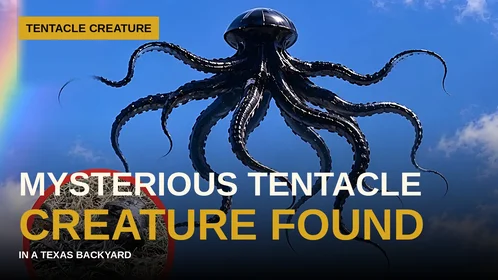
A mysterious tentacle-like creature was reportedly discovered in a backyard in Texas. The images are disturbing: a dark, leathery mass with long, tangled tendrils that look like something out of a science fiction movie.
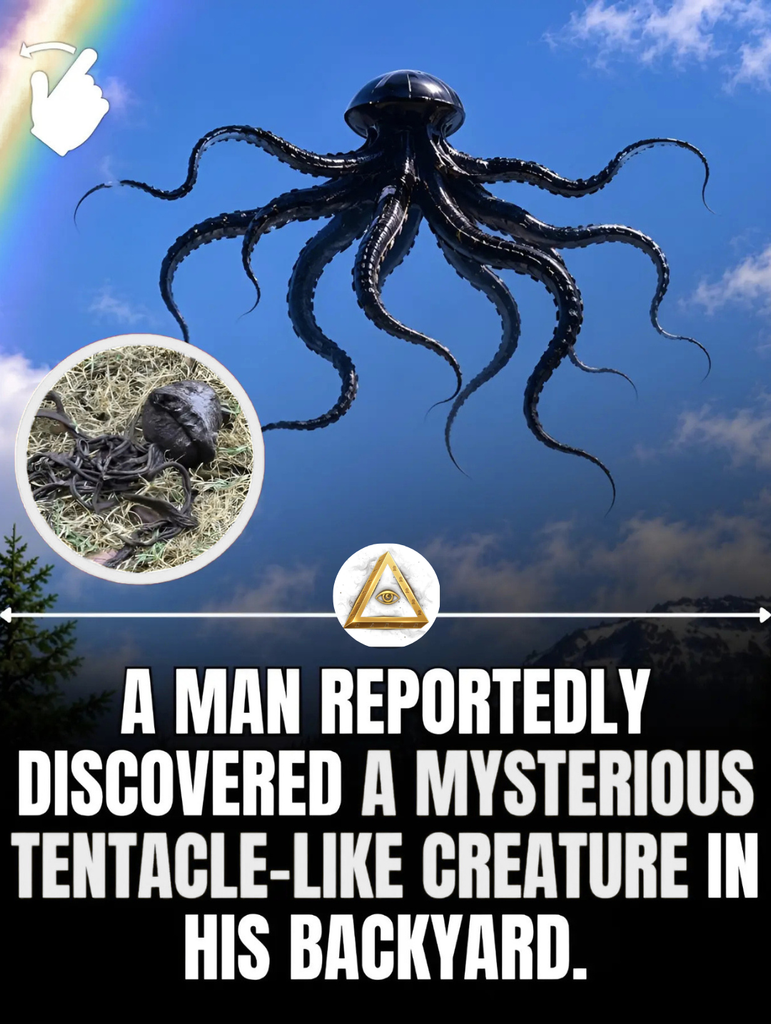
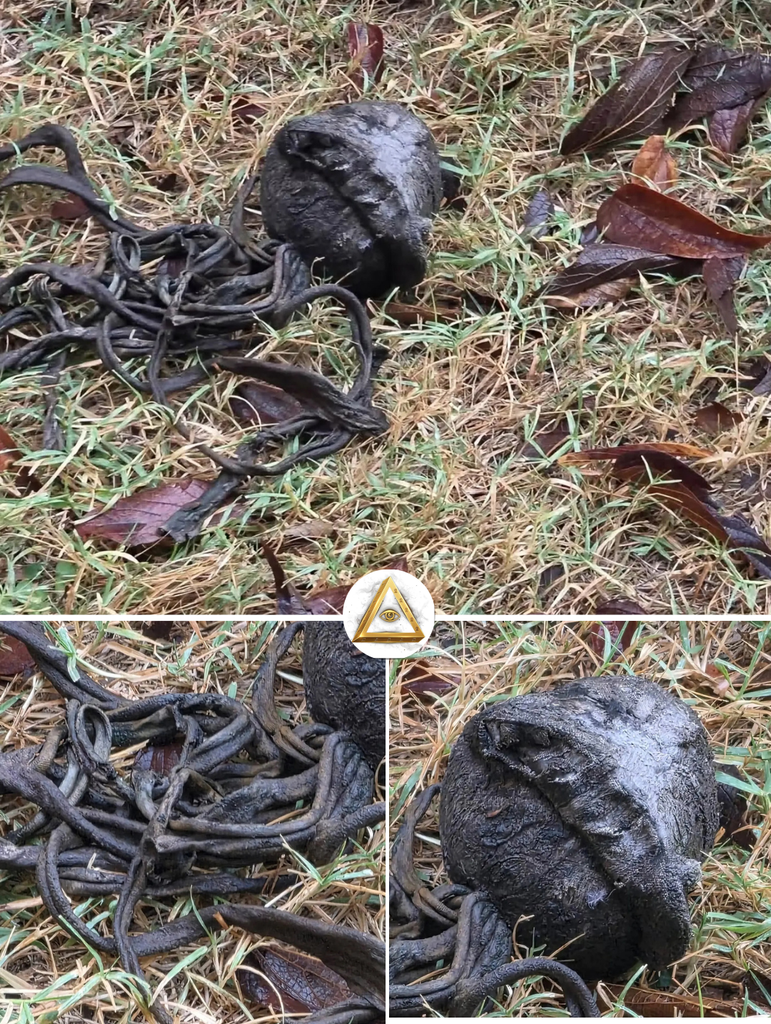
A man named Deon Morris in Denison, Texas, reportedly discovered something unusual in his backyard. Photos appear to show a strange object resembling a creature with long, tangled tentacles. According to the story, he even moved it using a rake, but so far, no one has been able to confirm what it actually is.
Interestingly, this discovery has reminded people of the viral footage from Alaska showing a mysterious jellyfish-like object floating through the sky.
Both have left viewers wondering what they are actually looking at. Could they have a simple natural explanation, or are they something we haven’t fully understood yet?
Part 1: The Texas Discovery—A Creature or a Cryptid?
The images shared by Deon Morris show a black, amorphous blob with dozens of long, thin, tentacle-like appendages radiating outward. It looks like a creature from the deep ocean, somehow transported to a suburban backyard in North Texas.
The Theories
1. The “Alien” Hypothesis: The internet, as it always does, immediately jumped to the extraterrestrial. Some commenters compared the object to the “Meat Tentacles” from creepypasta lore—a fictional, otherworldly entity that spreads through buildings and hunts animals.
2. The “Cryptid” Hypothesis: Others linked it to the “Rake,” a mythical creature from urban legends, described as a pale, hairless humanoid that moves on all fours. While the Rake is a purely fictional internet monster, the visual similarity—a central mass with long, spindly limbs—was enough to fuel the fire.
3. The “Root” Hypothesis: A more grounded explanation is that this is simply a complex root system from a nearby tree or plant. The dark, leathery texture and the way the tendrils tangle together are characteristic of certain root structures, especially in dry or exposed soil. The “central mass” could be a knot of roots or a piece of decaying wood.
4. The “Scat” Hypothesis: Perhaps the least glamorous, but most likely, explanation is that this is animal feces—specifically, the scat of a coyote or a large dog, which often contains undigested hair, plant matter, and intestinal lining that can create long, stringy shapes.
The Fact-Check
There is no confirmed scientific identification of the object. However, forensic analysis of similar “mystery blobs” found in yards often reveals them to be either fungal masses, decaying plant matter, or animal waste.
Without a physical sample, the true identity of Morris’s discovery remains unconfirmed. The lack of a clear head, eyes, or mouth makes the “creature” label highly unlikely.
Part 2: The Alaska Sky Jellyfish—A Kite or a UFO?
The Texas discovery isn’t the only time a tentacled mystery has gone viral.
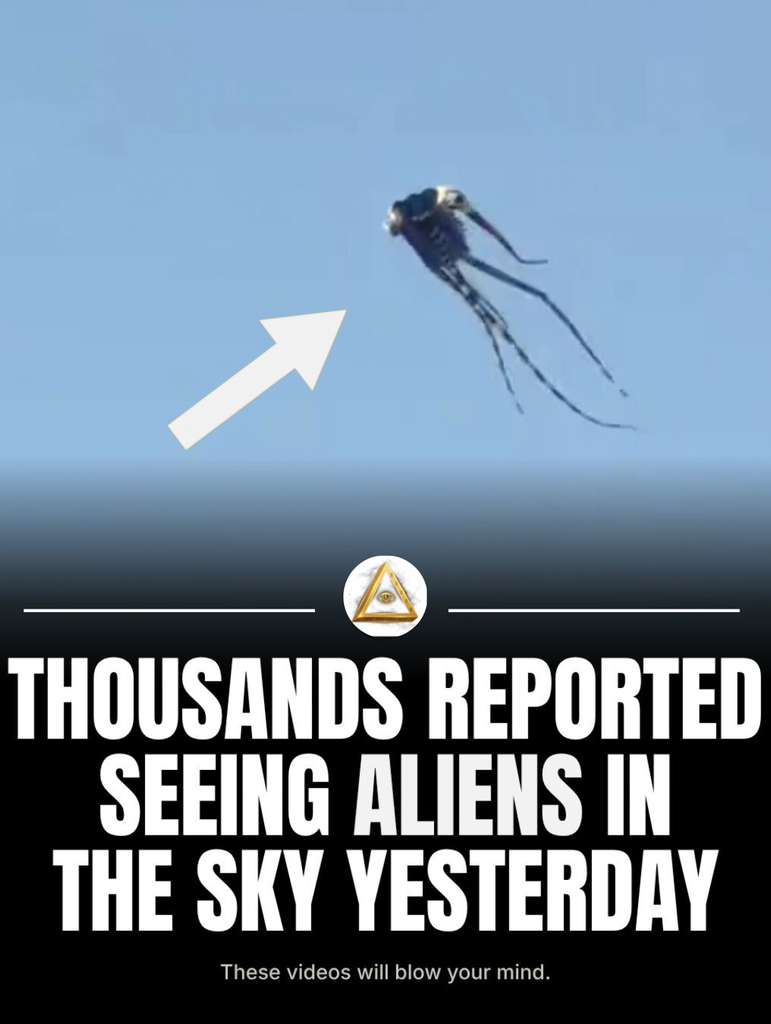
In 2026, a video filmed by Sara Jane Osborn in Anchorage, Alaska, showed a bizarre, jellyfish-like object floating through the sky near Joint Base Elmendorf-Richardson.
The object had a central body and long, trailing tentacles, and it seemed to hover in the air before vanishing.
The Theories
1. The UFO Hypothesis: The fact that the object was filmed near a military base led many to speculate that it was an unidentified aerial phenomenon (UAP). Some even suggested it could be a remnant of a high-altitude balloon or a secret military drone.
2. The “Kite” Hypothesis: Aviation and UAP experts were quick to offer a more prosaic explanation. Their conclusion? The object is most likely a tethered octopus-style show kite. These large, elaborate kites are designed to look like sea creatures and can remain stationary in the air, creating the illusion of a hovering entity.
The Fact-Check
Frame-by-frame analysis by UFOlogists ruled out CGI or AI at a 95% confidence level, meaning the video is likely real. However, the “kite” explanation remains the most scientifically sound.
The object’s behavior—hovering, moving slowly, and then vanishing—is consistent with a tethered kite that was either reeled in or caught by a change in wind. The “tentacles” were simply the kite’s trailing tails.
Part 3: Why Do We Love These Mysteries?
The Texas tentacle creature and the Alaska sky jellyfish share more than just a visual similarity. They reveal something fundamental about human psychology: we are pattern-seeking creatures who love a good mystery.
When we see something we can’t immediately identify, our brains go into overdrive, searching for familiar categories. If it looks like an animal but doesn’t fit any known species, we jump to “cryptid” or “alien.” If it floats in the sky but isn’t a bird or a plane, we jump to “UFO.”
Social media algorithms amplify this. Posts with mysterious, unresolved imagery get more shares, comments, and engagement, which pushes them to more people. The “mystery” becomes a viral loop.
The truth is often mundane—a root, a scat, a kite. But the fun is in the speculation. And as long as there are strange things to find in our backyards and skies, the internet will be there to investigate.
What do you think? Is the Texas creature a new species, a cryptid, or just a weird pile of roots? And was the Alaska jellyfish a kite or something else? Let us know in the comments below.
Frequently Asked Questions
What did Deon Morris find in his backyard in Denison, Texas?
No official identification has been made. The object appears to be a black, tentacled mass. Possible explanations include a complex root system, decaying plant matter, or animal scat.
Was the Alaska sky jellyfish a UFO?
Aviation and UAP experts concluded that the object was most likely a tethered octopus-style show kite, not an extraterrestrial craft. Frame analysis ruled out CGI, confirming the video itself is real.
Why do people believe these viral mysteries are supernatural?
Humans are pattern-seeking creatures. When we encounter something unfamiliar, we tend to fill the gaps with familiar narratives from science fiction, folklore, or conspiracy theories.
Is the “Rake” a real creature?
No. The Rake is a fictional monster from internet urban legends and creepypasta, not a real animal.
Read Next
- Mokele-Mbembe: The Hunt for a Living Dinosaur in the Congo
- The Beast of Gévaudan: The 18th-Century Monster That Killed Over 100 People
