
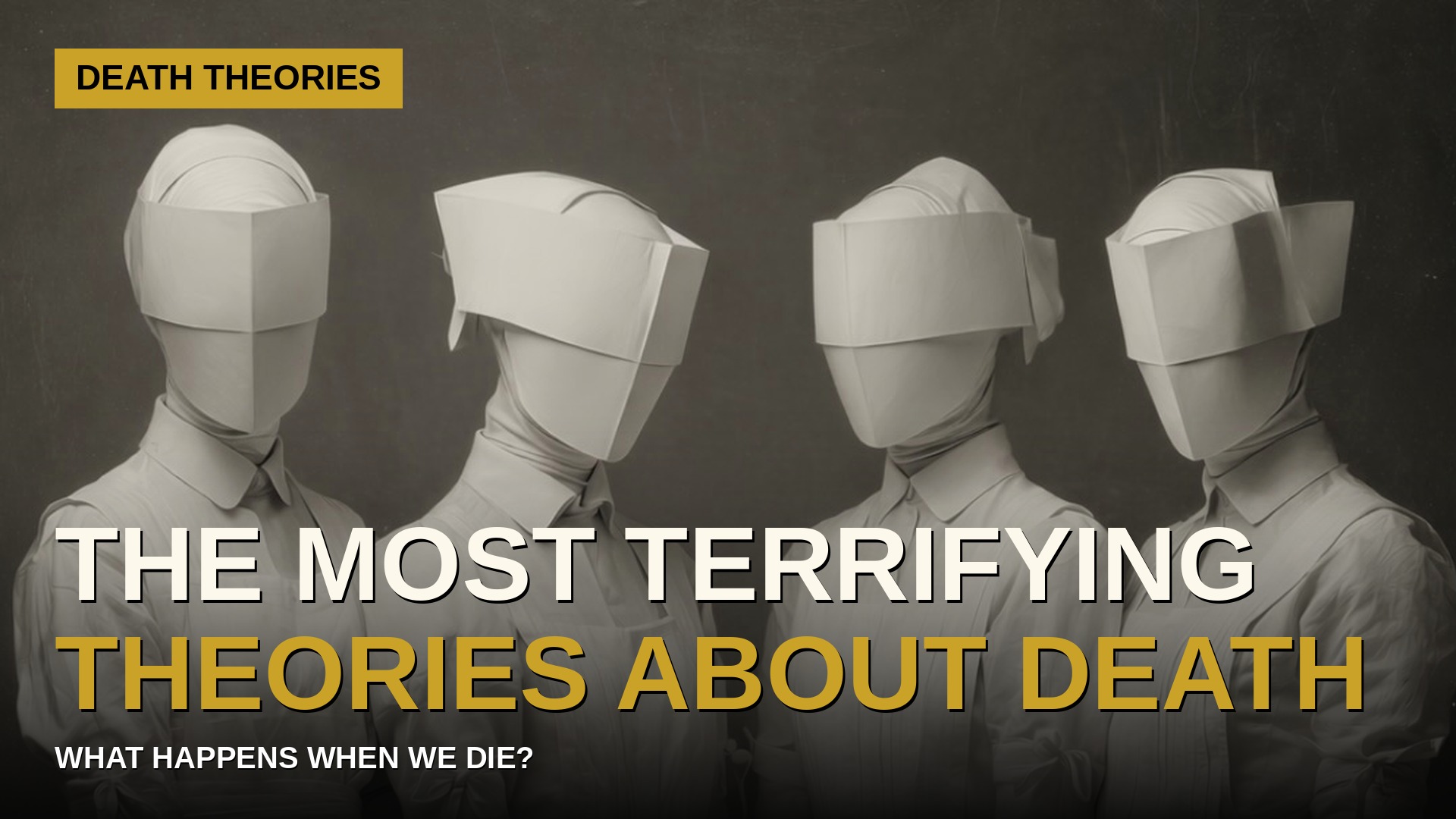
Death is the one appointment no one can cancel. We have mapped the human genome, split the atom, and sent probes beyond our solar system—yet we still have no verified answer to what happens when the heart stops.
That silence has bred some of the most disturbing ideas ever conceived. From the philosophical horror of Nietzsche’s eternal recurrence to the quantum paradox of the Observer Trap, these theories suggest death may not be a peaceful nothingness—it may be a trap.
And what if these modern nightmares are not new at all, but fragmented echoes of ancient scripture and biblical conspiracy theories that have haunted humanity for millennia?
Here are six of the most terrifying theories about death, paired with the biblical conspiracies that give them an unsettling historical weight.
1. The Eternal Loop: Nietzsche’s Infinite Return
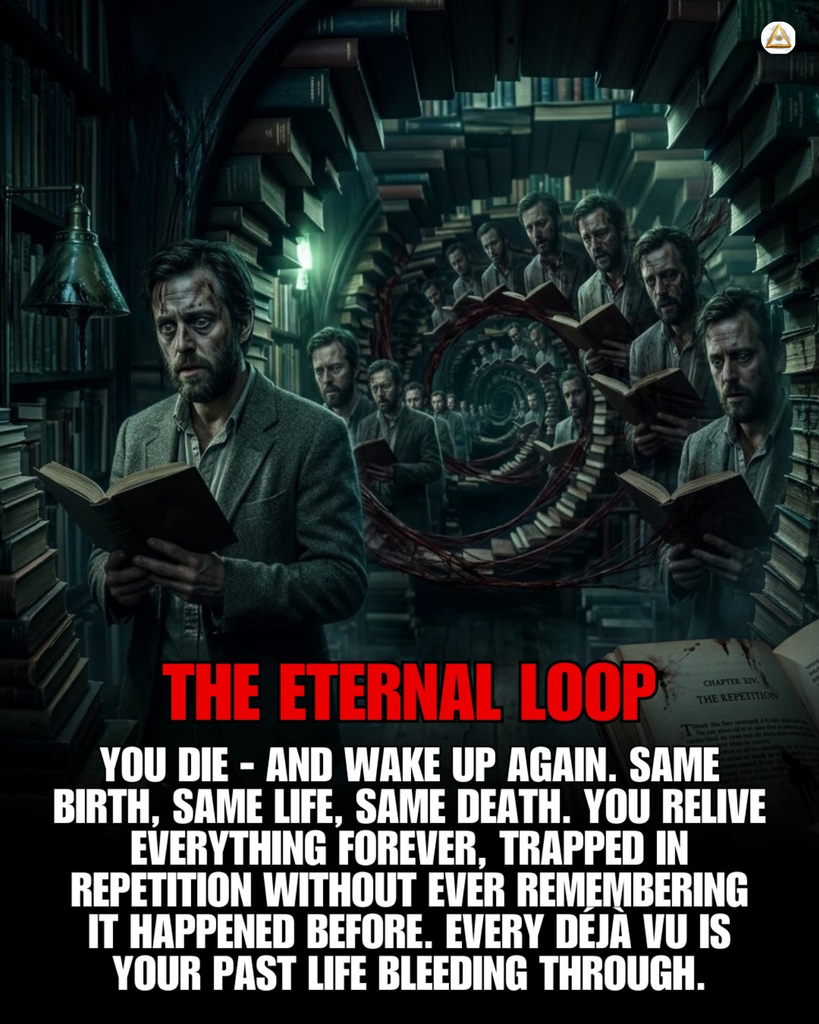
The Theory: You die—and wake up again. Same birth, same life, same death. You relive everything forever, trapped in repetition without ever remembering it happened before. Every déjà vu is your past life bleeding through.
This is Eternal Recurrence, most famously associated with Friedrich Nietzsche. In The Gay Science (1882), he presented it as a thought experiment: a demon tells you that you must live this exact life, in every detail, over and over for eternity.
But recent scholarship argues Nietzsche took it further—that he regarded eternal recurrence as a true cosmological hypothesis, not merely a metaphor, grounded in his naturalistic view of a finite universe with infinite time.
The Reality Check: Modern cosmology does not confirm eternal recurrence. The universe appears to be expanding at an accelerating rate, and thermodynamic entropy points toward a “heat death,” not an infinite loop of identical lives. The theory remains a philosophical challenge, not a scientific fact.
The Biblical Connection: Ecclesiastes 1:9 states, “What has been is what will be, and what has been done is what will be done; there is nothing new under the sun.” Some biblical conspiracy theorists read this as a hidden reference to cyclical time, suggesting human history is a loop rather than a line.
2. The Last Dream: The Brain’s Final Simulation
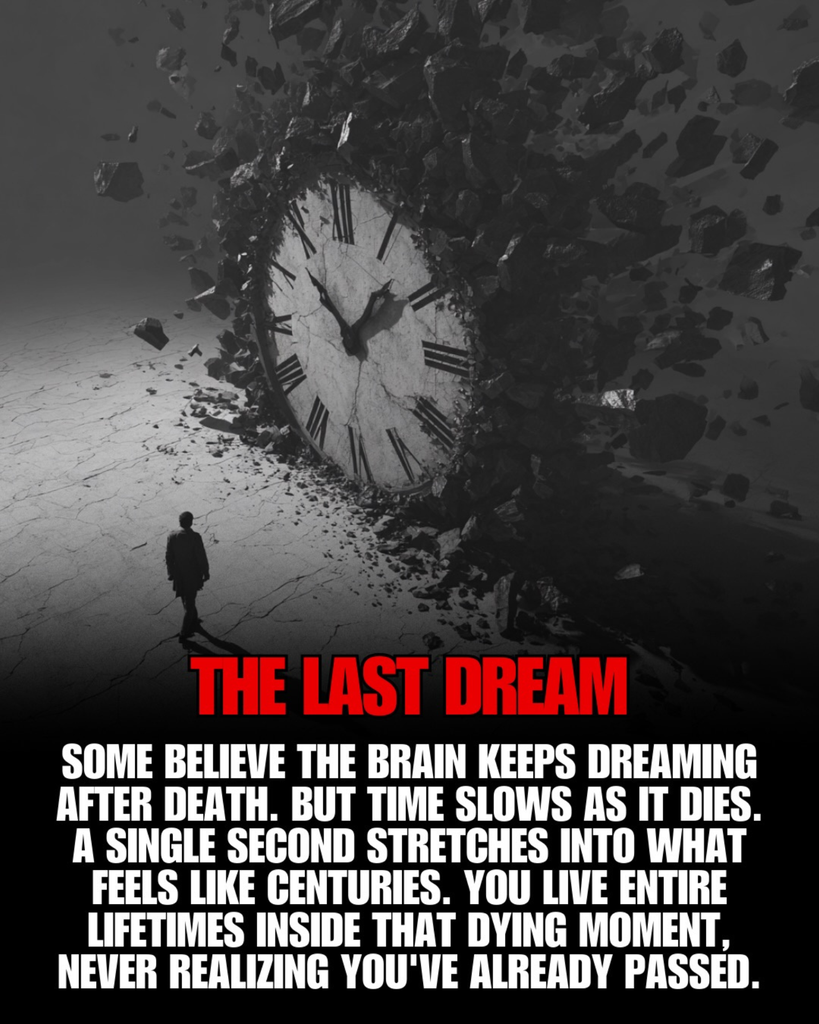
The Theory: Some believe the brain keeps dreaming after death. But time slows as it dies. A single second stretches into what feels like centuries. You live entire lifetimes inside that dying moment, never realizing you’ve already passed.
This is the Terminal Dream Hypothesis (TDH). A 2026 model proposes that when cerebral ischemia begins, the dying brain triggers a neurochemical cascade—spikes in acetylcholine, dopamine, and possibly DMT—creating a hyper-intense REM-like state.
As the neural networks that track time break down, a few real-world seconds can feel like an endless, vivid dream
The Reality Check: TDH is a materialist hypothesis, not a proven fact. It offers testable predictions (e.g., gamma oscillations on EEG in dying patients), but it has not been empirically confirmed. It is one possible explanation for the “life review” reported in some near-death experiences.
The Biblical Connection: This echoes the shadowy biblical realm of Sheol, where the dead exist in a diminished, dream-like state (Ecclesiastes 9:10). Some interpreters see Sheol as a holding place of unconsciousness or slumber—a biblical precursor to the idea that the dying mind may simulate eternity.
3. The Observer Trap: Quantum Immortality
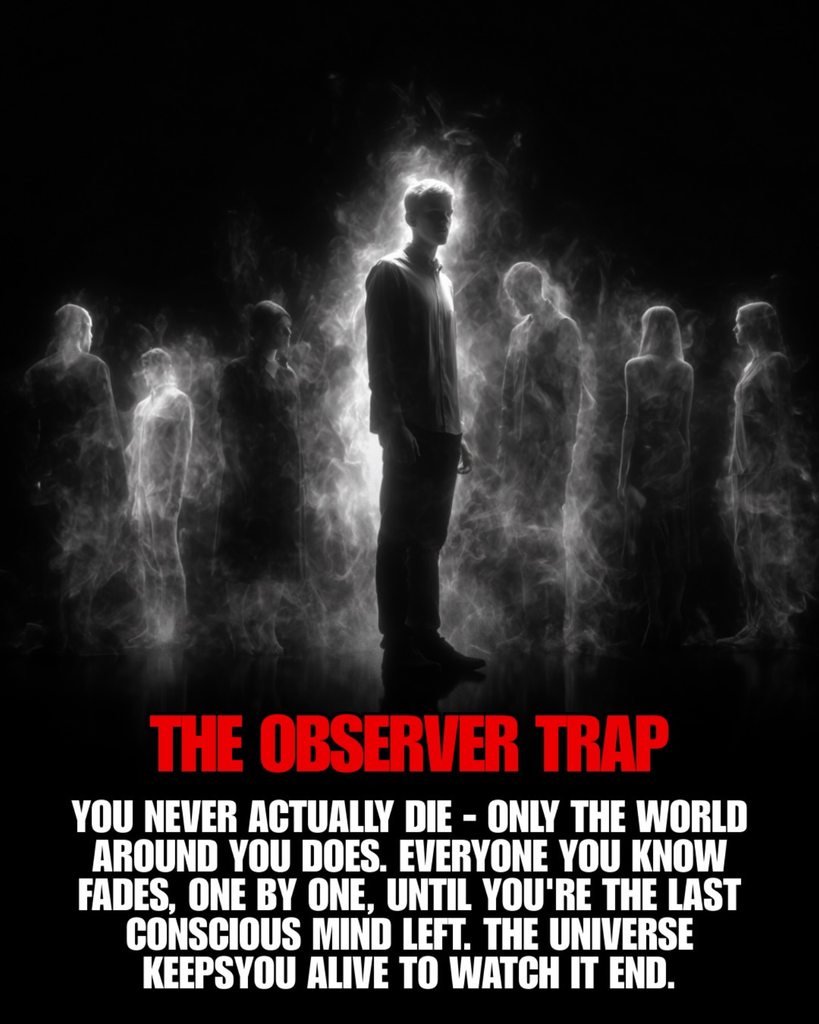
The Theory: You never actually die—only the world around you does. Everyone you know fades, one by one, until you’re the last conscious mind left. The universe keeps you alive to watch it end.
This is Quantum Immortality, a metaphysical speculation derived from the Many-Worlds Interpretation of quantum mechanics proposed by Hugh Everett III.
The idea is that every observation branches reality, and if there is any branch in which you survive a fatal event, your consciousness will subjectively continue in that branch.
From your own perspective, you can never observe yourself dying. Critics note that this would not be a pleasant eternity; it could leave you “crippled, lonely, deathly ill (although never dead), and mentally infirm,” an existence in eternal torment.
The Reality Check: Quantum immortality is widely regarded by physicists as an interesting philosophical speculation, not a demonstrated consequence of quantum mechanics. The Many-Worlds Interpretation itself remains one of several competing interpretations, and quantum immortality has no empirical support.
The Biblical Connection: The Observer Trap mirrors the curse of the Wandering Jew—a figure condemned to walk the earth until the end of days, witnessing the apocalypse without the release of death. It is the quantum age’s version of an ancient biblical horror.
4. The Replacement Theory: Something Else Wakes Up
The Theory: When you die, something else wakes up in your place and inside your body, with your memories, thinking it’s still you. And everyone around it never knows the difference.
This is a philosophical nightmare rooted in the Replacement Argument, associated with philosopher Alvin Plantinga and debates about personal identity.
If your brain’s parts were gradually replaced by functionally identical substitutes, would the resulting consciousness still be you?
According to the psychological continuity view, you survive as long as your psychology continues—but a perfect copy may, in fact, be a way of dying, not a way of continuing to live. Applied to death, the theory suggests that what wakes up is not a continuation but an impostor wearing your memories.
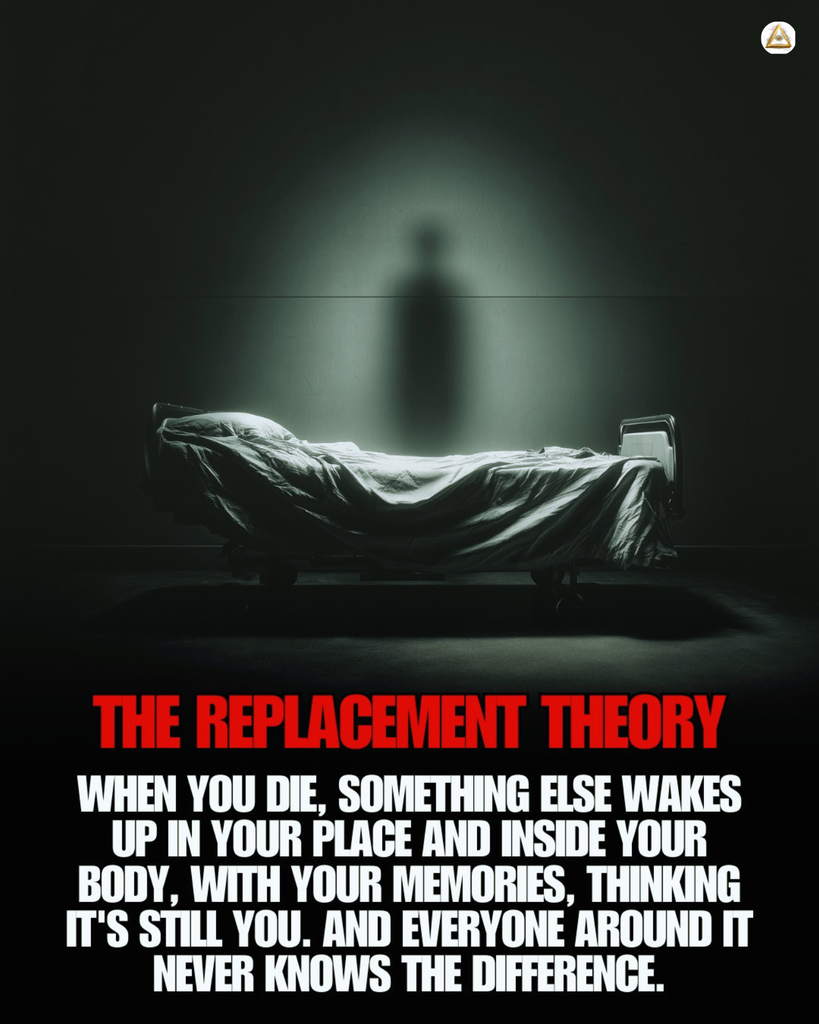
The Reality Check: This is a thought experiment in metaphysics, not a scientific claim. There is no evidence that consciousness can be transferred or replaced in the way the theory describes.
The Biblical Connection: Matthew 12:43-45 describes an unclean spirit that leaves a person, wanders, and returns with seven others to inhabit the empty vessel. The Replacement Theory is a secular gloss on this ancient fear: when the original occupant departs, something else may take its place.
5. The Awareness That Won’t End: Locked-In Eternity
The Theory: Death happens—but consciousness lingers. You can’t move. You can’t scream. You just exist, buried in an endless, lightless awareness, fully aware that there’s no escaping yourself.
This is a permanent, cosmic version of Locked-In Syndrome—a real condition in which patients are conscious but paralyzed. The horror is that death does not bring oblivion; it brings inescapable self-awareness.
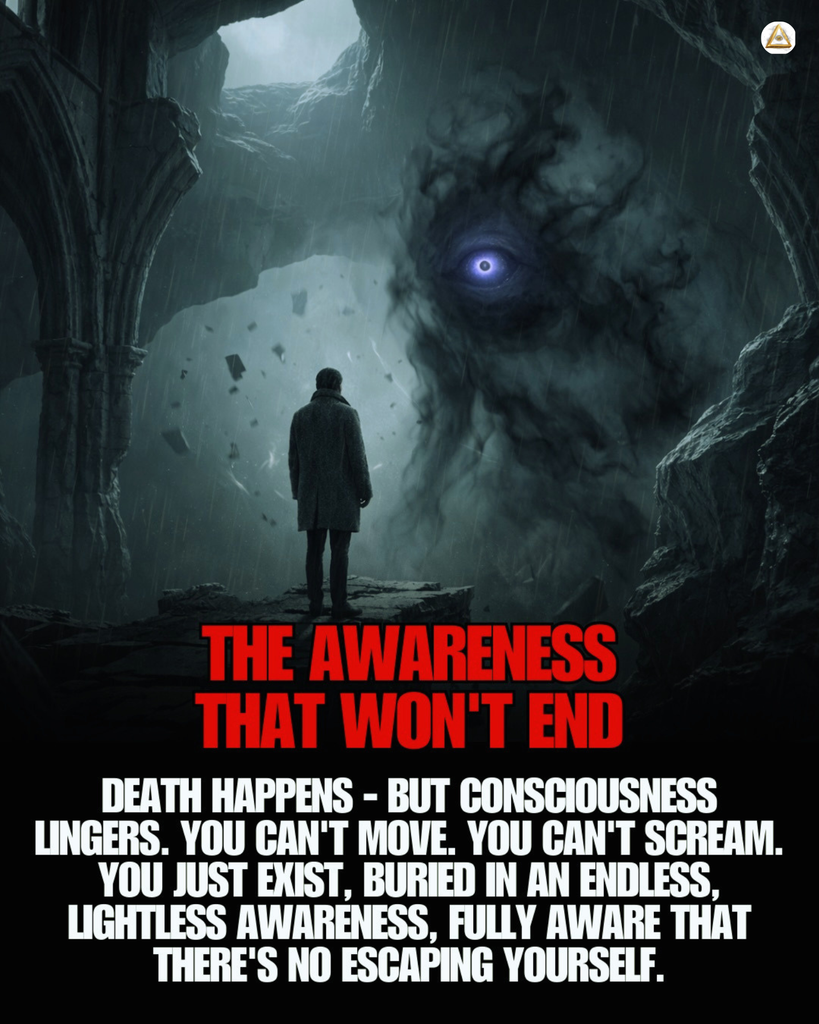
The Reality Check: The AWARE study (2014) found that 2% of cardiac arrest survivors reported explicit awareness of events during resuscitation, and 9% reported NDEs.
This shows that some form of consciousness can occur during cardiac arrest, but it does not prove that awareness persists permanently after death. The study’s authors noted that consciousness may be present despite clinically undetectable brain function—but the mechanism and duration remain unknown
The Biblical Connection: This echoes the biblical “outer darkness” (Matthew 8:12) and the “second death” (Revelation 21:8)—a state of eternal separation, often described as a place of weeping and gnashing of teeth. Whether literal or symbolic, the image of endless, inescapable awareness is a core biblical warning.
6. True Death: The Nothingness
The Theory: You don’t drift into light. You don’t see your life flash before your eyes. You simply stop. There’s no awareness of being gone—because there’s no you to notice. It’s not black. It’s not silence. It’s nothing.
This is the materialist view of death: consciousness is entirely a product of the brain, and when the brain dies, subjective experience ceases. There is no afterlife, no soul, no continuation.
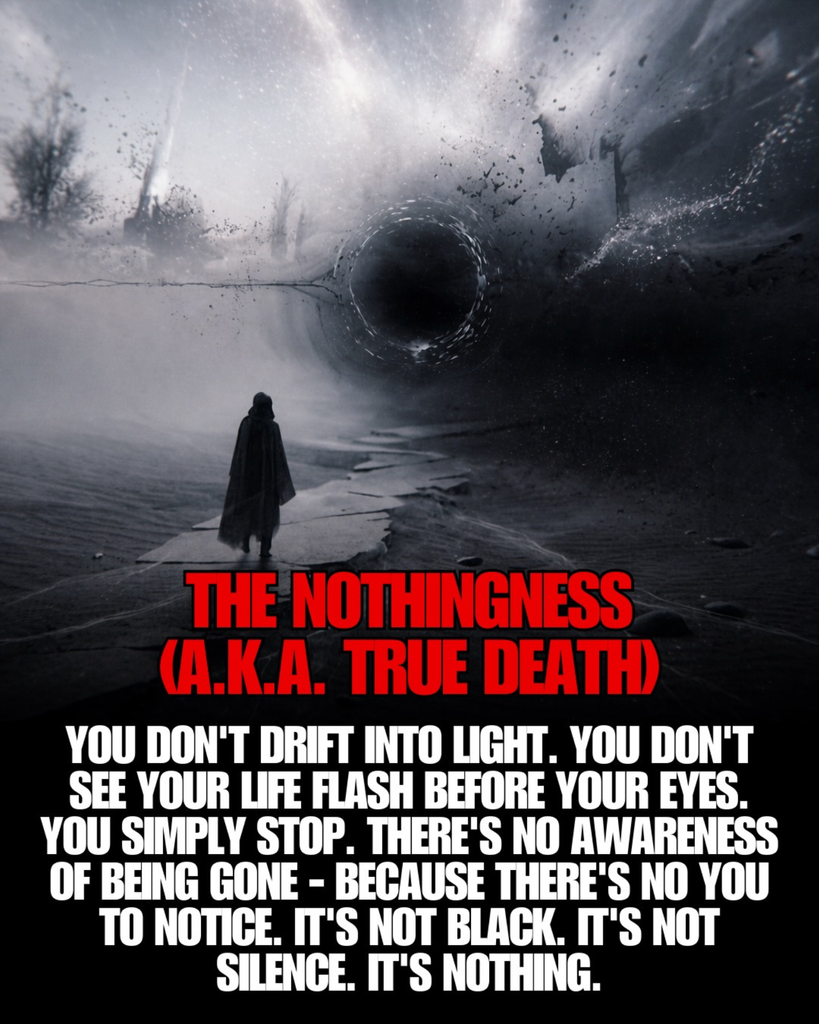
The Reality Check: Neuroscience supports the idea that consciousness is tied to brain activity. When the brain’s oxygen supply is cut off, the neural correlates of consciousness break down. But science cannot definitively prove that nothing follows—it can only say that no detectable consciousness remains.
The Biblical Connection: Ecclesiastes 9:5 states, “the dead know nothing.” Some biblical scholars interpret this as evidence that death is a state of dreamless sleep until the resurrection—a view known as soul sleep. The horror of True Death is its absoluteness: no experience, no awareness, no hope of return.
The Biblical Conspiracies That Haunt the Edge of Death
These terrifying theories do not exist in a vacuum. They are tangled with a web of biblical conspiracy theories that attempt to explain the unexplainable.
The Fall of Satan and the Dinosaurs
One theory suggests that Satan’s fall from heaven symbolically represents the asteroid that caused the extinction of the dinosaurs.
Proponents of the Gap Theory argue that the Earth was “formless and void” (Genesis 1:2) as a result of Satan’s rebellion, which occurred in a vast time gap before the six days of creation.
While mainstream theology and science reject this as a literal event, the idea of a cosmic catastrophe reshaping the Earth resonates with the death theories above—it suggests that destruction is woven into the fabric of the universe from the beginning.
The Nephilim, Bigfoot, and the Monsters Among Us
Another conspiracy claims that legendary creatures such as Bigfoot, the Yeti, and the Loch Ness Monster are actually the biblical Nephilim or Leviathan.
The Nephilim, mentioned in Genesis 6:4, were a race of giants born from the union of fallen angels and human women. The Book of Enoch expands on this, describing monstrous offspring.
If these beings exist, they are a living reminder that the boundary between the natural and the supernatural may be thinner than we think.
The Garden of Eden in Antarctica
A separate theory proposes that the Garden of Eden lies hidden beneath the ice of Antarctica. This gained traction online after users linked the Book of Enoch—which describes fallen angels imprisoned in a “fiery abyss”—to the frozen continent.
Subglacial lakes and mysterious signals are cited as evidence. While scholars overwhelmingly reject this as a misreading of apocalyptic literature, the image of a hidden paradise—or a hidden prison—beneath the ice is a powerful modern myth.
Aliens as Fallen Angels
Others argue that alleged alien encounters are really manifestations of fallen angels or demons described in the Bible.
In an age of UFO disclosures, this theory suggests that extraterrestrials are deceptive spiritual beings masquerading as advanced civilizations.
It connects directly to the Replacement Theory and the Observer Trap: if demons can masquerade as aliens, they may also be able to masquerade as you.
America as Babylon
Another widely discussed theory identifies the United States as the modern-day Babylon mentioned in the Book of Revelation, citing its global influence and economic power.
This is a matter of prophetic interpretation, not historical fact—many scholars believe the original Babylon was a coded reference to Rome.
But for those who believe it, the theory adds an apocalyptic urgency to the question of death: if we are living in the end times, what comes next?
Frequently Asked Questions
What is Nietzsche’s Eternal Recurrence?
Eternal Recurrence is the idea that you will live the exact same life, in every detail, over and over for eternity. Nietzsche presented it as a thought experiment and, according to recent scholarship, possibly as a cosmological hypothesis.
What is Quantum Immortality?
A theory derived from the Many-Worlds Interpretation of quantum mechanics, suggesting that your consciousness can never observe its own death. Instead, it shifts to a parallel universe where you survived, potentially leaving you trapped as the last conscious mind.
What is the Last Dream theory?
A neurocognitive model proposing that the dying brain may produce a dream-like, atemporal experience during the seconds after cardiac arrest, potentially stretching a few seconds into what feels like an eternity.
Did Satan’s fall cause the extinction of the dinosaurs?
This is a speculative interpretation called the “Gap Theory.” Most biblical scholars and scientists reject it, and there is no evidence linking the fall of Lucifer to the asteroid impact that killed the dinosaurs.
Are Bigfoot and the Loch Ness Monster the biblical Nephilim?
There is no scientific evidence that Bigfoot or the Loch Ness Monster exist. The connection to the Nephilim is a modern internet theory, not a historical or theological consensus.
Is the Garden of Eden hidden in Antarctica?
No. This theory is based on a misinterpretation of apocalyptic literature like the Book of Enoch. Biblical scholars state that these texts use symbolic language, not literal geography.
Is the United States the Babylon of the Book of Revelation?
This is a modern prophecy theory. Many biblical scholars believe the original Babylon in Revelation was a coded reference to ancient Rome, and identifying it with the US is a speculative interpretation, not a historical conclusion.
The Final Thought: The Fear Is the Point
Whether it is an eternal loop, a final dream, a quantum trap, or a replacement impostor, these terrifying death theories all suggest that death is not an end, but a transformation—and not always a welcome one.
The biblical conspiracies add another layer: they suggest the universe is not a random, mechanical place, but a battleground between forces of light and darkness, where death is not just a biological event but a spiritual one.
Science has given us valuable insights into the mechanisms of dying—the brain’s final surges, the neurochemistry of NDEs, the quantum possibilities of parallel universes. But it has not given us certainty.
Perhaps that is the point. Perhaps the fear of death is what drives us to live meaningfully, to seek answers, and to wonder. And perhaps, in the end, the only thing we can know for certain is that we do not know.
Which of these theories terrifies you the most? Do you believe in an afterlife, or do you think death is the final nothingness? Drop your thoughts in the comments below—and share this with someone who loves a good mystery.
Read Next
- Viral NDE Drawing: The Hidden Map of the Afterlife
- 5 Viral Biblical Conspiracies Science Can’t Explain
- Ed, Edd n Eddy: The Purgatory Theory Explained
