

An aircraft is a difficult thing to lose. It leaves behind a flight plan, radio communications, radar information and, in most accidents, a trail of wreckage. Search teams can examine the last known position, follow possible flight paths and use underwater equipment to locate what remains.
Yet sometimes, even years of searching cannot provide the answers families are waiting for.
Over the decades, several aircraft have disappeared under circumstances that left investigators with more questions than evidence. Some vanished over deep oceans. Others were lost in severe weather or remote mountain ranges. A few eventually gave up their secrets decades later, while others remain missing despite extensive search operations.
Among them are Northwest Orient Flight 2501, which disappeared over Lake Michigan in 1950; Flying Tiger Line Flight 739, which vanished over the Pacific in 1962; and Malaysia Airlines Flight MH370, which disappeared with 239 people aboard in 2014.
Then there is the story of Flight 19, five American Navy bombers that disappeared during a training mission in 1945, followed by a rescue aircraft that never returned.
These are six aviation disappearances that continue to attract attention, not because they prove anything supernatural, but because the evidence has never provided a complete account of what happened.
1. Flight 19 (1945): Five Navy Bombers Disappeared Over the Atlantic
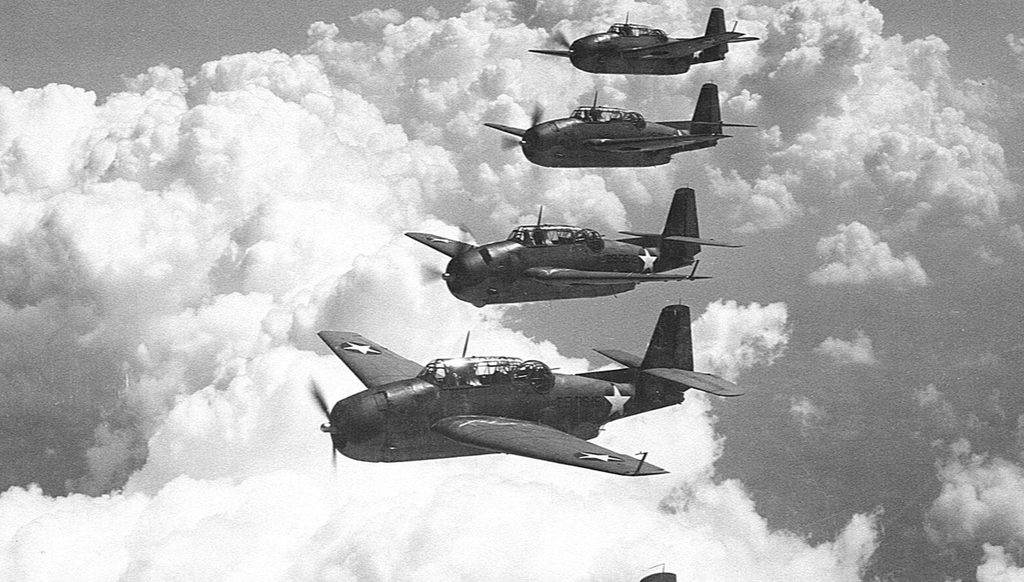
Date: December 5, 1945
Aircraft: Five U.S. Navy TBM Avenger torpedo bombers
Location: Atlantic Ocean, near the Bahamas
People lost: 14 aboard Flight 19, followed by 13 aboard a rescue aircraft
Flight 19 remains one of the most widely discussed aviation disappearances in American history.
On December 5, 1945, five U.S. Navy Avenger aircraft departed Naval Air Station Fort Lauderdale, Florida, for a routine navigation and bombing training mission over the Bahamas.
The mission began normally. The aircraft completed their training exercise, but problems developed as the formation prepared to return to base.
Radio communications indicated that the flight leader, Lieutenant Charles C. Taylor, was having difficulty determining the squadron’s position. The pilots reported compass and navigation problems, and their radio messages suggested increasing confusion about their location.
As the hours passed, the aircraft moved farther from their expected route. The pilots struggled to establish their position, and communication with the ground became increasingly concerning.
The aircraft were running low on fuel, while worsening weather made the situation even more dangerous.
Eventually, communication with the five bombers stopped. None of the 14 men aboard was ever recovered, and no confirmed wreckage of the aircraft has been located.
The Rescue Aircraft That Never Returned
The disappearance became even more tragic when the Navy dispatched a Martin PBM Mariner flying boat to search for the missing squadron.
The rescue aircraft carried 13 crew members. It departed to investigate the last estimated position of Flight 19 but also disappeared.
Unlike the Avengers, however, there were reports of a possible explosion involving the Mariner. A nearby vessel reported seeing what appeared to be an aircraft explosion, and Navy historians consider an in-flight fire a likely explanation.
The precise cause was never established.
Together, the two incidents resulted in the loss of 27 people and six aircraft.
What Investigators Believe Happened
The U.S. Navy’s historical research points toward navigation errors, compass problems, disorientation and fuel exhaustion as likely factors in the loss of Flight 19.
A storm front also complicated the search.
The disappearance helped establish the popular legend of the Bermuda Triangle, an area of the Atlantic associated with stories of missing ships and aircraft.
However, the historical evidence does not establish anything supernatural. The Navy’s explanation focuses on navigational difficulties and the dangerous conditions facing the pilots.
Despite decades of speculation, the five Avengers and their crews have never been conclusively located.
2. Northwest Orient Flight 2501 (1950): The Airliner Lost Beneath Lake Michigan
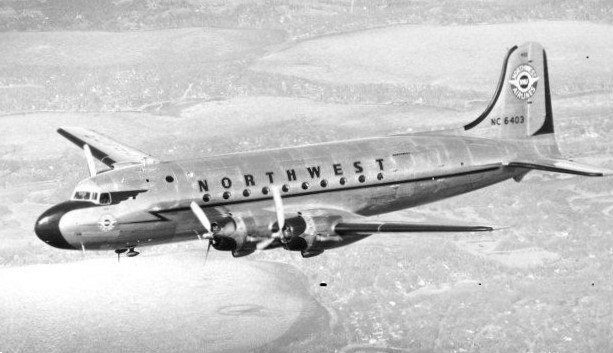
Date: June 23, 1950
Aircraft: Douglas DC-4
Location: Lake Michigan, United States
People aboard: 58
Not every missing aircraft disappears in the middle of an ocean. Sometimes, even a large freshwater lake can hide the remains of an aircraft for generations.
Northwest Orient Flight 2501 was a scheduled commercial flight travelling from New York to Seattle, with intermediate stops planned along the route.
On the night of June 23, 1950, the aircraft departed LaGuardia Airport carrying 55 passengers and three crew members.
As it travelled over Lake Michigan, the flight encountered severe thunderstorms and turbulence.
The crew requested permission to descend to a lower altitude to avoid the dangerous weather. Shortly afterward, communication with the aircraft was lost.
The DC-4 crashed into Lake Michigan, killing all 58 people aboard.
The Search Revealed Only Pieces of the Aircraft
Search operations began shortly after the disappearance.
The U.S. Coast Guard and Navy searched the lake, eventually recovering floating debris, personal belongings and human remains near the Michigan shoreline.
An aircraft logbook was also recovered.
However, the main wreckage remained underwater.
The original investigation could not establish the precise cause of the disaster. Without the aircraft’s main structure or modern flight-recording equipment, investigators had limited evidence to reconstruct its final moments.
Decades of Searching Failed to Locate the Wreckage
The disappearance did not end with the original investigation.
In 2004, the Michigan Shipwreck Research Association began a renewed effort to locate the aircraft.
Using sonar technology and underwater search equipment, researchers surveyed hundreds of square miles of Lake Michigan.
Despite years of work, the aircraft was never located.
In June 2025, after approximately two decades of searching, the organization announced that it was ending its search efforts.
One theory is that the aircraft broke apart upon impact and that its remains became buried in the lakebed’s soft sediment, making detection extremely difficult.
Flight 2501 is a reminder that even when investigators know where an aircraft went down, finding its main wreckage can remain an extraordinary challenge.
3. Flying Tiger Line Flight 739 (1962): 107 People Vanished Over the Pacific
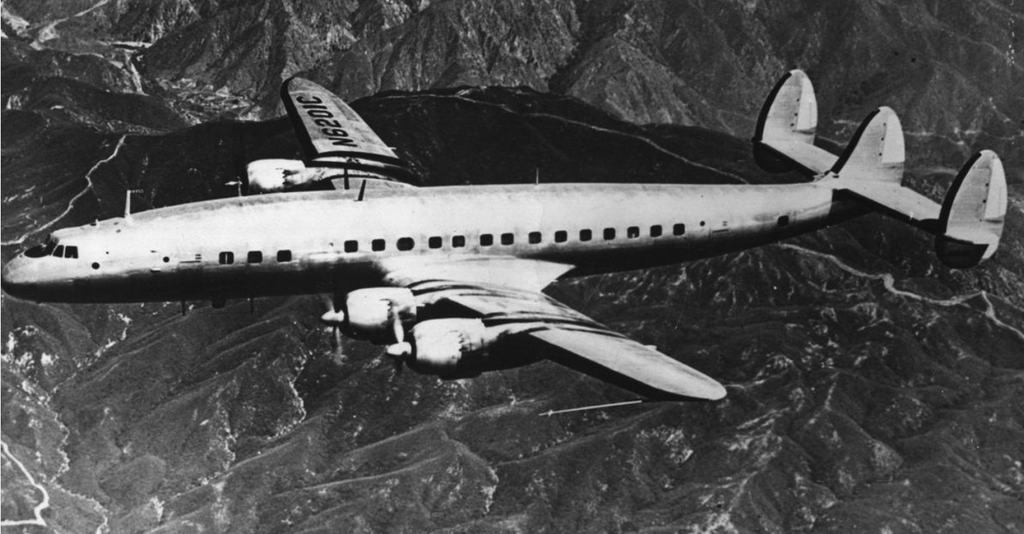
Date: March 15, 1962
Aircraft: Lockheed L-1049H Super Constellation
Location: Western Pacific Ocean, between Guam and the Philippines
People aboard: 107
Flying Tiger Line Flight 739 disappeared during a military transport operation over the Pacific Ocean.
The aircraft was operated by Flying Tiger Line under a U.S. Military Air Transport Service contract. It was carrying 96 military passengers and 11 crew members from Guam to Clark Air Base in the Philippines.
On March 15, 1962, the aircraft departed Agana Naval Air Station in Guam.
The flight initially proceeded normally, and the crew provided a position report at approximately 14:22 GMT.
However, the aircraft failed to arrive at its destination at the expected time.
When it could no longer be contacted, authorities declared it missing and launched a large-scale search operation.
A Witness Reported a Possible Explosion
One of the most unusual details came from the crew of a nearby surface vessel.
Witnesses reported seeing what appeared to be a midair explosion near the aircraft’s estimated position and around the time it was expected to make another position report.
This observation became an important part of the investigation.
However, search teams could not locate any confirmed wreckage or debris associated with the aircraft.
Despite an extensive search involving aircraft and ships, no confirmed trace of Flight 739 was recovered.
The Investigation Never Established a Cause
The Civil Aeronautics Board investigated the disappearance but could not determine what happened.
The witness report suggested the possibility of an explosion, but there was insufficient physical evidence to establish that explanation.
No confirmed wreckage was found, and the aircraft’s final moments remain unknown.
All 107 people aboard were presumed dead.
More than six decades later, Flying Tiger Line Flight 739 remains one of the most remarkable disappearances involving a large military transport aircraft.
4. Varig Flight 967 (1979): The Boeing 707 Carrying Missing Paintings

Date: January 30, 1979
Aircraft: Boeing 707-323C
Location: Pacific Ocean, east of Japan
People aboard: 6 crew members
Some aviation mysteries become especially memorable because of what the missing aircraft was carrying.
Varig Flight 967 was a Brazilian cargo aircraft travelling from Tokyo’s Narita Airport toward Los Angeles, before continuing its planned journey to Rio de Janeiro.
On January 30, 1979, the Boeing 707 departed Tokyo with six crew members aboard.
The aircraft made radio contact with air traffic control at approximately 20:45 local time.
After that communication, the aircraft disappeared.
It did not reach its next expected reporting point, and no distress call was received.
Authorities launched search operations, but neither the aircraft nor its crew was found.
The Missing Cargo of Manabu Mabe Paintings
What made the disappearance particularly unusual was the cargo.
The aircraft was reportedly carrying dozens of paintings by Japanese-born Brazilian artist Manabu Mabe. The works were returning from an exhibition in Japan.
Some historical accounts report 53 paintings, while the frequently repeated figure of 153 also appears in later coverage.
The paintings were valued at approximately $1.24 million at the time, according to aviation accident records.
Neither the artwork nor the aircraft was ever recovered.
What Happened to the Boeing 707?
The disappearance remains unexplained.
One proposed possibility was a sudden loss of cabin pressure, but this was never established as the cause.
The absence of wreckage, a distress message or other physical evidence meant investigators could not reconstruct the final moments of the aircraft.
There were only six people aboard, but the loss of the crew and the missing cargo left behind a mystery that has never been resolved.
Varig Flight 967 is particularly striking because an aircraft carrying valuable artwork disappeared without leaving a confirmed physical trace.
5. Star Dust (1947): The Airliner That Reappeared From a Glacier
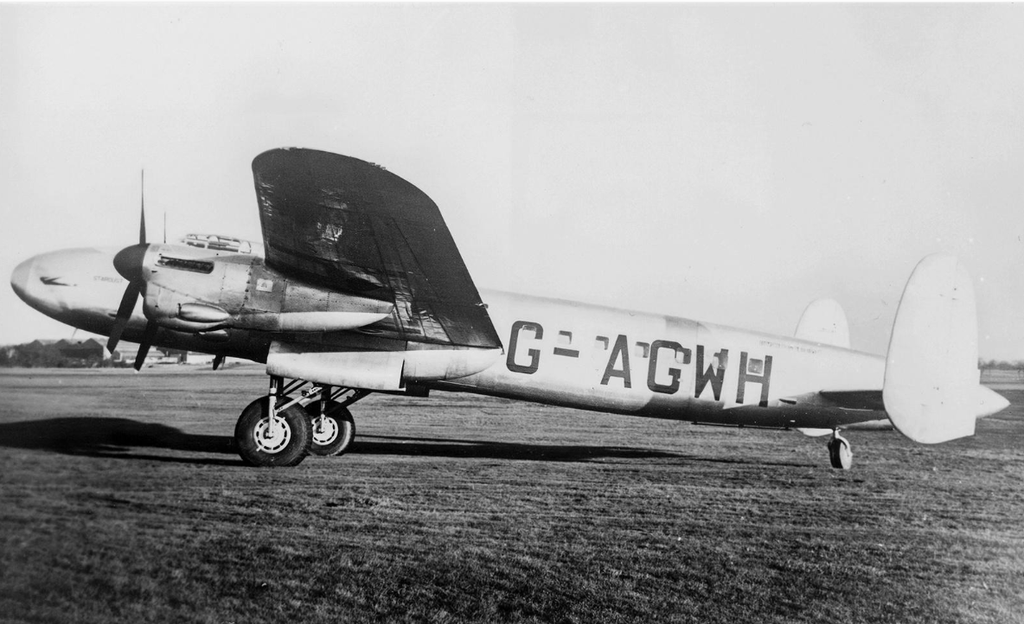
Date: August 2, 1947
Aircraft: Avro Lancastrian III
Location: Andes Mountains, Argentina and Chile
People aboard: 11
The disappearance of Star Dust is different from the other cases on this list.
For more than half a century, nobody knew exactly where the British South American Airways aircraft had crashed.
The Avro Lancastrian was flying from Buenos Aires, Argentina, toward Santiago, Chile, when it disappeared while crossing the Andes Mountains.
There were 11 people aboard, including passengers and crew.
The aircraft was expected to arrive in Santiago on August 2, 1947. It never reached its destination.
The Final Radio Message: STENDEC
Shortly before disappearing, Star Dust sent a radio message to the airport in Santiago.
The transmission ended with a mysterious word:
STENDEC
The receiving operator could not understand the message and asked the aircraft to repeat it. The same word was transmitted again.
Then a third time.
After that, communication stopped.
For decades, the meaning of STENDEC became one of aviation history’s most famous unanswered questions.
The 1947 investigation could not establish what the message meant or exactly where the aircraft had crashed.
The Glacier Kept the Secret for 50 Years
Search operations initially failed to locate the aircraft.
Then, in 1998, Argentine mountaineers discovered aircraft debris, including part of a Rolls-Royce engine, on the Tupungato Glacier.
The discovery reopened the investigation.
In 2000, an Argentine expedition located additional wreckage and human remains in the mountainous area.
The evidence helped investigators reconstruct what had happened.
The aircraft had crashed into the Andes, and its wreckage had been hidden beneath snow and moving glacial ice.
What Investigators Eventually Learned
Later investigations suggested that strong headwinds may have affected the aircraft’s progress across the mountains.
The crew may have believed they were farther along their route than they actually were. With poor visibility and difficult mountain weather, the aircraft descended into terrain.
The glacier had concealed the evidence for decades, and its movement eventually helped expose the remains.
The discovery did not answer every question, particularly the mystery of STENDEC, but it finally revealed the location of the aircraft.
Star Dust is an extraordinary example of how a disappearance can remain unexplained for generations before the landscape itself reveals new evidence.
6. Malaysia Airlines Flight MH370 (2014): The Modern Aviation Mystery
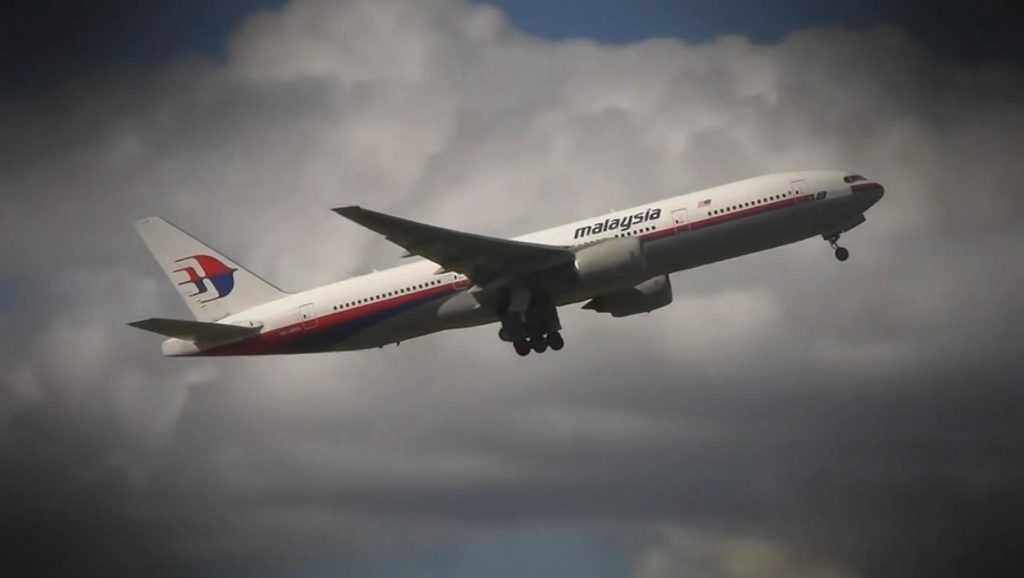
Date: March 8, 2014
Aircraft: Boeing 777-200ER
Location: Southern Indian Ocean, according to the principal search area
People aboard: 239
Few modern aviation disappearances have received as much international attention as Malaysia Airlines Flight MH370.
On March 8, 2014, the Boeing 777 departed Kuala Lumpur International Airport for Beijing, China.
There were 239 people aboard, including passengers and crew.
The flight initially appeared to be operating normally.
However, less than an hour after departure, the aircraft disappeared from civilian air traffic control radar.
Its final known communication with air traffic control was followed by a series of events that would become the subject of one of the largest aviation search operations in history.
The Aircraft Changed Direction
Subsequent military radar information and satellite communications indicated that MH370 had deviated from its planned route.
Investigators determined that the aircraft had turned back across the Malay Peninsula before continuing toward the southern Indian Ocean.
Satellite communication data became particularly important.
Although the aircraft’s location could not be established precisely, automated satellite connections helped investigators estimate its possible flight path.
The evidence pointed toward the remote southern Indian Ocean, far from the aircraft’s intended destination.
Debris Was Found, but the Main Wreckage Remains Missing
Unlike some earlier disappearances, MH370 eventually left physical evidence.
Aircraft debris believed to belong to MH370 was recovered from islands and coastlines around the western Indian Ocean, including Réunion Island.
These discoveries provided important confirmation that the aircraft had ended up in the ocean.
However, the main wreckage and flight recorders have not been located.
The exact circumstances surrounding the aircraft’s disappearance remain unresolved.
The Search Continues
The search for MH370 has involved several countries, advanced underwater equipment and extensive ocean-floor surveys.
In 2025 and early 2026, Ocean Infinity conducted renewed search operations under an agreement with the Malaysian government.
The operation surveyed approximately 7,571 square kilometres of seabed across 28 operational search days but did not confirm the aircraft’s location.
In June 2026, Malaysia agreed to extend its arrangement with Ocean Infinity for another 12 months, covering July 1, 2026, through June 30, 2027.
The search is being conducted under a no-find, no-fee arrangement.
More than 12 years after the aircraft disappeared, the families of those aboard are still waiting for answers.
MH370 demonstrates that even modern satellite technology and sophisticated underwater search equipment cannot guarantee that a missing aircraft will be found.
Why Are Some Missing Aircraft Never Found?
Aircraft disappearances are often described as impossible mysteries, but there are several practical reasons why locating a missing aircraft can be so difficult.
1. The Ocean Is Enormous
The world’s oceans cover more than 70% of Earth’s surface. Large areas remain difficult and expensive to survey, particularly at great depths.
An aircraft can sink thousands of metres below the surface, where locating and recovering wreckage becomes a major technical challenge.
2. Deep-Sea Conditions Hide Evidence
Underwater currents, sediment, depth and difficult terrain can make wreckage difficult to detect.
Even when investigators have an approximate crash location, the aircraft may be scattered across a large area or buried beneath the seabed.
3. Weather Can Complicate the Search
Severe storms, poor visibility, high winds and rough seas can make it difficult for aircraft and ships to conduct search operations.
In some cases, weather may also contribute to the accident itself.
4. Historical Technology Had Limitations
Many older aircraft disappeared before modern satellite tracking, underwater sonar systems and flight data recorders became standard.
Investigators often had to depend on radio communications, witness reports and small pieces of recovered debris.
Without the main wreckage, reconstructing what happened could be extremely difficult.
5. Mountains and Glaciers Can Conceal Wreckage
The Star Dust disappearance demonstrates that an aircraft does not have to crash into the ocean to remain missing for decades.
Snow, ice and moving glaciers can cover wreckage, making it difficult to identify the crash location until environmental conditions change.
Final Thoughts: The Disappearances That Time Has Not Solved
Every aircraft on this list represents a different kind of aviation mystery.
Flight 19 became part of the Bermuda Triangle legend. Northwest Orient Flight 2501 remains hidden beneath Lake Michigan despite decades of searching. Flying Tiger Line Flight 739 disappeared over the Pacific without confirmed wreckage. Varig Flight 967 left behind an unanswered question about six missing crew members and valuable artwork.
Star Dust eventually revealed its location through discoveries on a glacier, while MH370 continues to represent one of the most challenging searches in modern aviation.
But behind every missing aircraft is something more important than the mystery itself: the people who boarded expecting to reach their destination, and the families who never received a complete explanation of what happened.
Technology has changed dramatically since these disappearances. Aircraft can now communicate with satellites, transmit tracking information and carry sophisticated recording equipment.
Yet the search for answers is not always straightforward.
Sometimes the wreckage is hidden beneath thousands of metres of water. Sometimes it is buried beneath ice. And sometimes, despite every available search effort, the evidence remains out of reach.
The most haunting part of these stories is not that aircraft disappeared. It is that, for some of the people waiting on the ground, the journey home never received an ending.
Read Next
- MH370: The “Teleportation” Conspiracy That Refuses to Die
- Frederick Valentich: The Pilot Who Vanished After Saying “It’s Not an Aircraft”
