
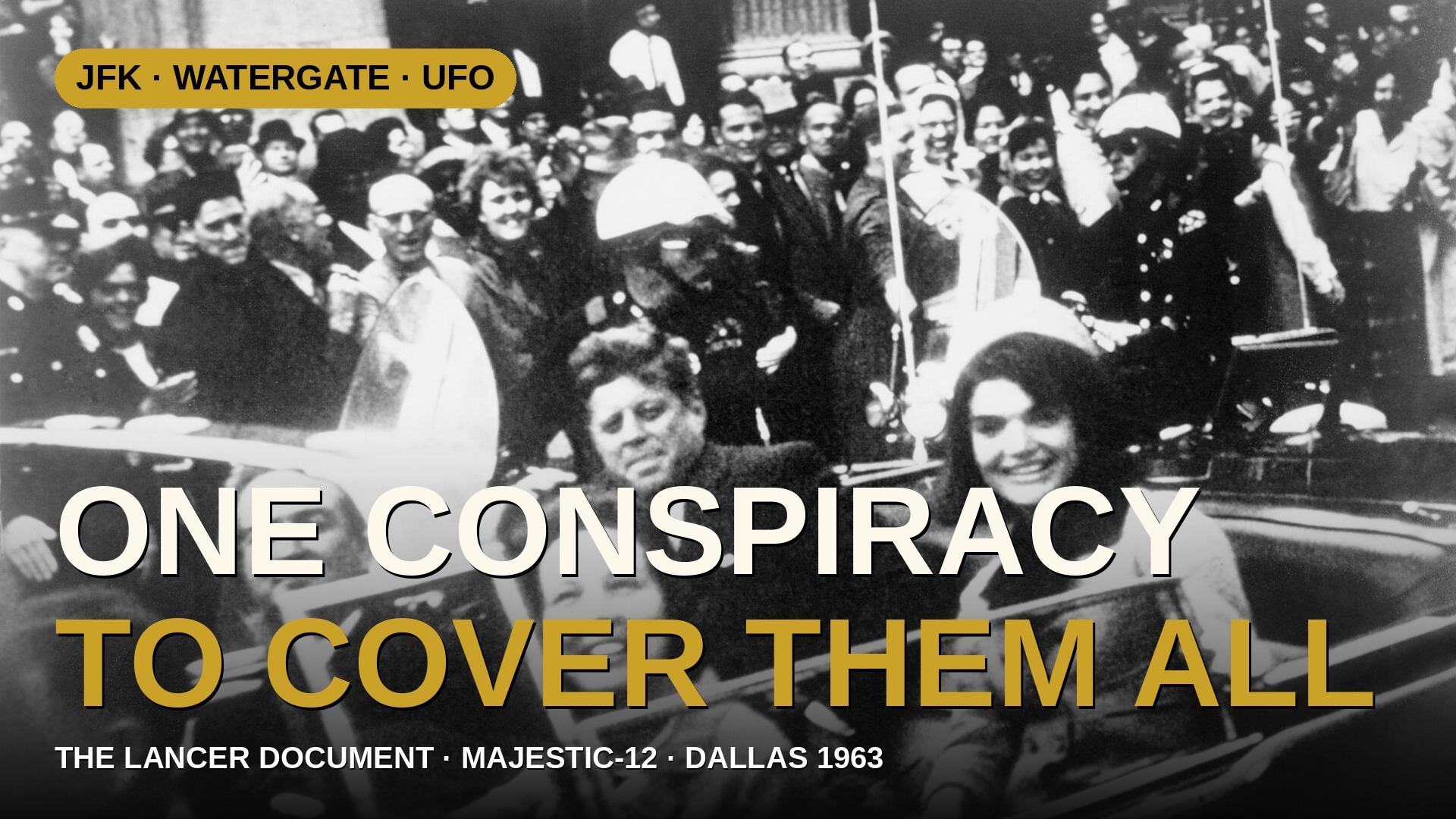
Three names anchor American conspiracy culture like no others: Kennedy, Watergate, and the UFO secret. For sixty years they have mostly lived separate lives — an assassination, a political scandal, a government cover-up about things in the sky. Now a senior British barrister argues they were never separate at all.
Jonathan Caplan KC is not a fringe pamphleteer. He was called to the Bar in 1973, took silk in 1991, and spent five decades quietly collecting testimony from scientists, intelligence officers and military insiders.
In June 2026 he published his case in a book, Not For Disclosure, which became a Sunday Times bestseller. His argument: the Majestic-12 documents are authentic, the UFO secret is real, and at the centre of the web sits one piece of paper.
It is a scorched memo from the Majestic-12 trove — known in the research literature as the Lanpher document — which refers to President Kennedy by his Secret Service codename: Lancer. According to Caplan’s reading, it records the keepers of the UFO secret discussing a president whose inquiries they “cannot allow.”
It sounds like a thriller. Caplan insists it is a legal argument. So let us treat it like one, and look at the evidence — starting with what the newest JFK files actually say.
The 2025 JFK Files: What Actually Came Out
On 23 January 2025, President Trump signed Executive Order 14176, directing the release of all remaining records on the assassinations of John F. Kennedy, Robert Kennedy and Martin Luther King Jr. The first and largest wave landed on 18 March 2025: more than 80,000 pages, followed by further tranches into early 2026.
What did historians find in them? Mostly, not what the headlines promised. Harvard historian Fredrik Logevall concluded the documents contain “little or nothing that’s new” about how Kennedy was killed.
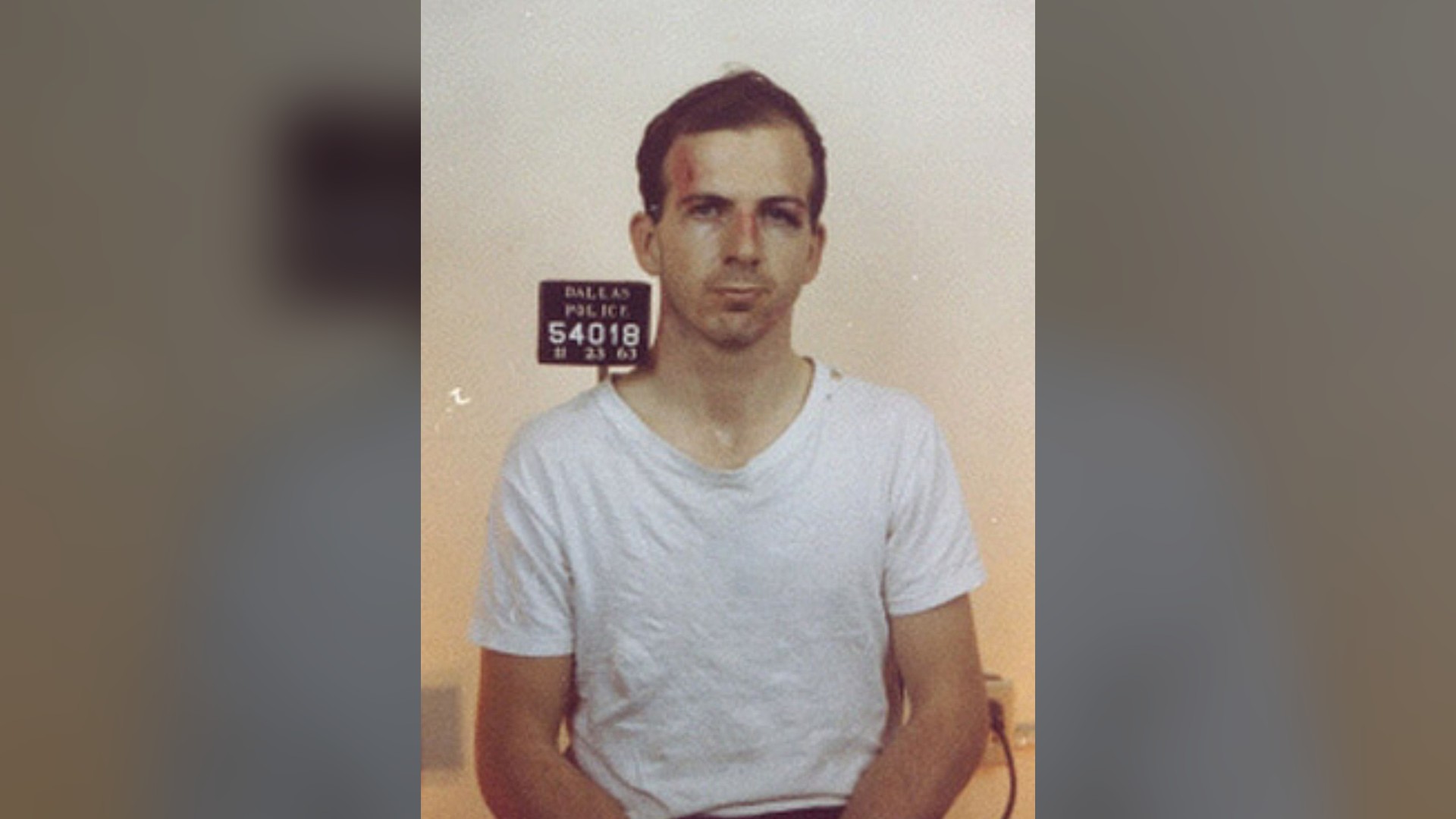
Journalist Philip Shenon, who has written two books on the assassination, put it bluntly: “Nothing points to a second gunman.” The files do not overturn the Warren Commission’s conclusion that Lee Harvey Oswald fired the shots in Dallas.

But the files did something subtler, and for conspiracy researchers, almost as valuable. They documented, in the government’s own hand, how much the intelligence agencies knew about Oswald before the assassination — and how little of it they shared afterwards.
The CIA held a dossier on Oswald running to some 185 pages, built up from 1959 under counterintelligence chief James Jesus Angleton. Newly unredacted records show the agency tracked Oswald’s 1963 trip to Mexico City, where he visited the Soviet and Cuban embassies, in considerable detail.
And a top-secret transcript in the release shows Angleton telling Congress in 1978 that he knew almost nothing about Oswald before Dallas — a statement the surrounding documents flatly contradict.
Other claims travel with the files wherever they are discussed.
Theorists argue the FBI had advance warning of danger to Oswald himself: it is a matter of record that the Bureau’s Dallas office received an anonymous telephone warning, hours before Oswald’s transfer, that a committee planned to kill him — and Oswald was shot by Jack Ruby on live television anyway.
For Caplan’s readers, that kind of documented institutional failure is not background noise. It is the pattern: agencies that knew more than they said, about a president who, in Caplan’s telling, was asking questions they could not afford to answer.
The files also filled in the machinery Kennedy himself had been fighting. Among the releases was a June 1961 memo from White House adviser Arthur Schlesinger Jr. warning the new president that 47 percent of the political officers in American embassies were, in fact, CIA personnel under diplomatic cover.
Kennedy had come into office promising to rein in an agency he privately distrusted, and the paper trail shows how deep the problem ran. None of this proves anything about UFOs.
But it establishes the world in which Caplan’s story is set: a president at war with his own intelligence establishment, two years before Dallas.
The Lancer Document: A Memo Pulled From a Fire
The document at the heart of Caplan’s case belongs to the most contested archive in UFO history: the Majestic-12 papers, the trove of alleged top-secret memoranda that surfaced in the 1980s and purports to describe a secret committee, set up under President Truman in 1947, to manage the UFO secret.
The FBI has stamped the papers “bogus.”
Caplan, after examining the corpus as a lawyer, argues that at least some of them are genuine — and that forging them to the level of detail they contain would have required access to the private diaries and daily movements of Truman, Eisenhower and their circles that no hoaxer of the era plausibly had.
Caplan’s case for the wider corpus is built like a cross-examination.
He points to the memo in which Truman, on 24 September 1947, allegedly directs the creation of Majestic-12 at the request of Secretary of Defense James Forrestal and scientist Vannevar Bush — and notes that within days, Forrestal met Sir Henry Tizard, the British Ministry of Defence’s chief scientific adviser.
It is, Caplan argues, close to inconceivable that Forrestal would have hidden the UFO file from Britain’s senior defence scientist at that meeting, which would make the secrecy an allied project from its first week.
Detail stacked on detail, each piece checkable against the public record — that is his method, and his challenge to sceptics is to explain how a forger assembled all of it.
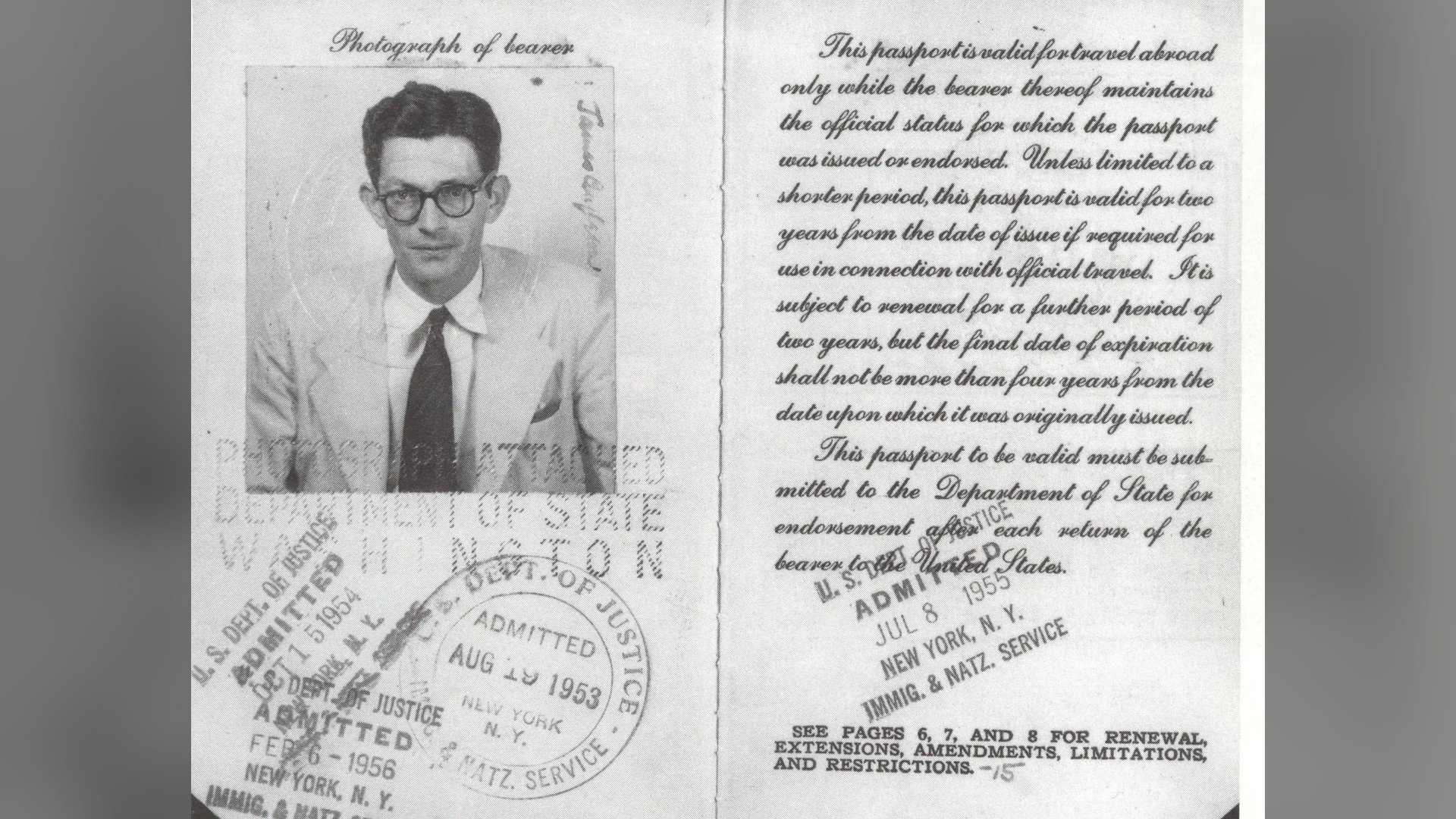
Within that trove sits the document Caplan calls the most important of all. In the research literature it is often known as the Lanpher document; it is also remembered as the “burned memo,” because of how it allegedly survived.
The story, as Caplan recounts it from the officer said to have preserved it, runs like this: the paper was kept among the private files of James Jesus Angleton, the CIA’s counterintelligence chief, who reportedly maintained dozens of personal safes outside the agency’s normal record systems.
After Angleton’s fall and death, a counterintelligence officer working through material slated for destruction found the memo — and, by his own account, pulled it from a burning fireplace rather than let it be destroyed, believing it was the last piece of evidence tying the CIA to Kennedy’s assassination.
What does it say? It is written as a directive from the Director of Central Intelligence — designated MJ-1, the head of the Majestic group — to fellow members, reviewing a set of classified projects and the rules for protecting them.
And it contains a sentence that has echoed through UFO research for decades: “As you must know, LANCER has made some inquiries regarding our activities, which we cannot allow.” Lancer was John F. Kennedy’s Secret Service codename.
In Caplan’s reading, the passage goes further, framing action against the president’s interference as critical to the group’s survival. He describes it, in interviews, as an overt expression of intent by MJ-12-linked figures against a sitting president.
Caplan says he has examined the original document, and he points to physical forensics: a government-style watermark, period inks and paper.
He cites laboratory testing arranged by researchers Robert and Ryan Wood at the Specken Laboratory, which he says found the materials consistent with early-1960s government issue. On that basis, he argues there is at least a prima facie case the document is what it claims to be.
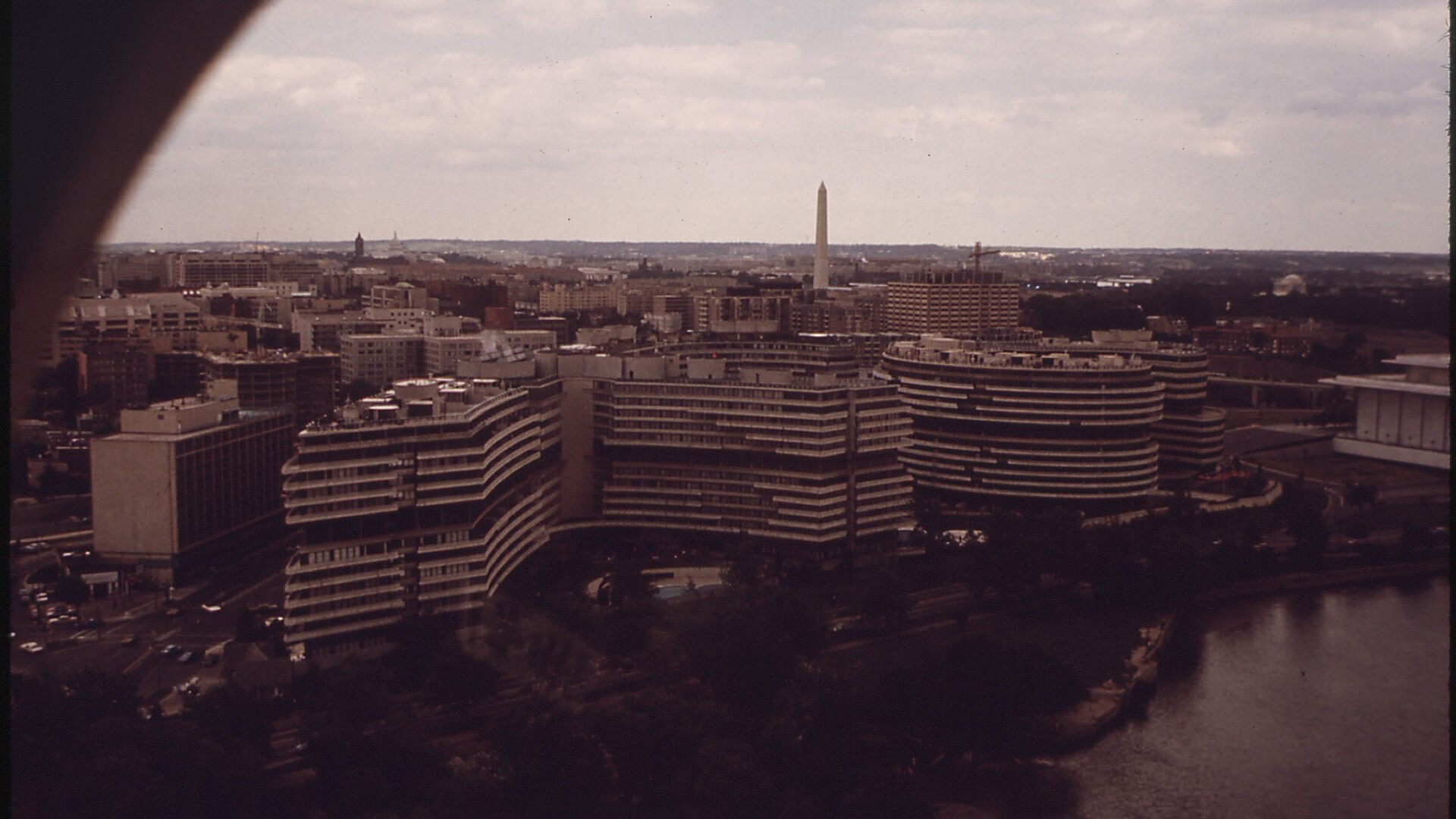
And Watergate? The bridge is a man who stands in both stories: E. Howard Hunt — CIA officer, and later one of the Nixon White House “plumbers” whose burglary team triggered the Watergate scandal.
Hunt’s lawyer and friend Douglas Caddy has stated publicly, and Caplan repeats the account, that Hunt told him Kennedy was killed because he intended to give away America’s greatest secret to the Soviet Union. Asked what that secret was, Hunt allegedly replied: “the alien presence.”
It is hearsay, decades old, from a convicted Watergate burglar. It is also, for Caplan’s readers, the moment the three conspiracies touch.

The Skeptical Case: Real Paper, Invented Story?
None of this survives contact with mainstream scholarship intact, and an honest account has to say why.
Start with Majestic-12 itself. The documents emerged in the 1980s under circumstances no court would love: anonymous packages, film rolls mailed to researchers, a memo “found” in the National Archives. The FBI investigated and concluded the papers were bogus.
Researchers such as Philip Klass demonstrated that the signature on the key Truman memorandum appears to have been lifted, by photocopy, from a genuine Truman letter — a devastating detail if you are claiming forensic authenticity.
The Pentagon’s own historical review of the UFO file, published by its anomaly office in 2024, found no evidence that any MJ-12-style programme ever existed.
The Lancer document carries every one of those problems, plus its own. Its chain of custody runs through anonymous leakers and a rescue-from-the-fire story that cannot be independently checked. Period-correct paper and ink prove a document is old, or was made to look old; they do not prove its contents are true.
And the famous sentence cuts both ways: “inquiries which we cannot allow” is sinister, but it is also exactly the sentence a forger, building a relic for the UFO community of the 1980s, would know to write.
There is a deeper methodological problem, and it applies to Caplan’s whole architecture. The 2025 JFK files are real. Hunt really was a Watergate burglar. Angleton really did keep secrets from Congress.
But connecting real documents into a single narrative — assassination, scandal, saucers — requires the connective tissue to be evidence too, and that is precisely what is missing. A barrister knows that a chain is only as strong as its weakest link.
Critics would say Caplan’s chain has a memo pulled from a fireplace where its keystone should be.
One more asymmetry is worth noting. Every Majestic-12 document in existence arrived the same way: anonymously, through UFO researchers, never through an official archive.
The United States has now declassified millions of pages on the Kennedy assassination, on Cold War covert action, even on its real UFO investigations — files embarrassing enough that agencies fought their release for decades.
Through all of it, no MJ-12 paper has ever surfaced from the government’s own shelves with a verifiable archival trail. Caplan’s answer is that the programme was compartmented beyond the reach of ordinary records law.
His critics’ answer is simpler: the documents are not in the archives because they were never in the government.
The Verdict

Strip the story down to what can be shown. The 2025 files genuinely document an intelligence establishment that tracked Oswald closely, misled investigators afterwards, and hid its own embarrassment for sixty years.
Caplan’s book genuinely exists, written by a genuinely senior lawyer, and it has put the Majestic-12 question back in front of a mainstream audience. The Lancer document genuinely circulates, with physical characteristics its defenders say match its claimed era.
What cannot be shown is the join. No verified evidence establishes that Majestic-12 existed, that the Lancer memo is an authentic government document, or that the UFO secret had anything to do with Dallas or Watergate.
The theory’s power comes from placing three real mysteries side by side and letting the reader’s eye draw the line between them.
Verdict: Unresolved. The individual documents are real, the questions about what the agencies hid are legitimate, and Caplan’s case is the most credentialed version of the argument ever put to the public. But the grand unified narrative — one secret behind the assassination, the scandal and the saucers — remains unproven, resting on a document whose authenticity the FBI, most historians and the Pentagon’s own review all reject. The space between “these things happened” and “they happened together” is exactly where this story lives, and nothing released so far has closed it.
Frequently Asked Questions
What is the Lancer document?
It is a scorched memorandum from the Majestic-12 trove — often called the Lanpher document, or the “burned memo” — allegedly rescued from a fireplace among James Angleton’s private CIA files. It refers to President Kennedy by his Secret Service codename, “Lancer,” and says his inquiries into the group’s activities “cannot allow” to continue.
Is the Lancer document authentic?
It is disputed. Jonathan Caplan KC argues laboratory testing found its paper, ink and watermark consistent with early-1960s government materials. The FBI has classified the Majestic-12 papers as bogus, investigators have shown the signature on the key Truman memo was apparently photocopied from a genuine letter, and the Pentagon’s 2024 historical review found no evidence Majestic-12 ever existed.
Why does this theory matter?
Because it reframes three separate conspiracies — the JFK assassination, Watergate and the UFO cover-up — as a single story about one secret, and because its most prominent advocate is a senior British barrister whose 2026 book became a bestseller. It is the most credentialed version of the argument ever presented to the public.
Who is Jonathan Caplan?
Jonathan Caplan KC is one of Britain’s senior barristers — called to the Bar in 1973, a King’s Counsel since 1991 — who has researched the UFO subject for fifty years. His book Not For Disclosure, published in June 2026, argues that the Majestic-12 documents are authentic and that the UFO cover-up reaches into the Kennedy assassination.
Did the 2025 JFK files prove a conspiracy?
No. Historians who reviewed the more than 80,000 pages released from March 2025 found nothing that overturns the conclusion that Oswald acted alone. What the files did document, in detail, is how much the CIA knew about Oswald beforehand and how misleading its later testimony to Congress was.
Join the Conversation
Three real mysteries, one scorched memo — do you think Caplan has connected the dots, or drawn lines that were never there? Tell us where you land in the comments.
Read Next
The Majestic-12 Documents: The FBI Says They Are Fake. The Filing Numbers Say Otherwise.
