
On 4 January 2012, a plain black image appeared on 4chan, the anonymous message board where threads vanish within hours. No picture, no logo. Just white text and a signature: “Hello. We are looking for highly intelligent individuals. To find them, we have devised a test.”
That image launched Cicada 3301, the most elaborate recruitment puzzle the internet has ever produced. It would run for three winters, jump from computer screens onto lampposts on four continents, and end with a book written in runes that nobody has finished reading.
More than a decade later, the central question is untouched. Who posted that image, and what were they recruiting for?
The Image That Started the Cicada 3301 Hunt
The first post was almost aggressively plain. It told readers there was a message hidden inside the image itself, and that finding it “will lead you on the road to finding us.” It closed with a promise: “We look forward to meeting the few that will make it all the way through.”
It was signed simply “3301.” No organisation, no name, no explanation.
Within hours, thousands of people were pulling the file apart. The Washington Post would later rank Cicada 3301 among the five eeriest unsolved mysteries of the internet, and the Daily Telegraph called it “the most elaborate and mysterious puzzle of the Internet age.”
The strange part is that both descriptions undersell it, because the puzzle was only the front door. What sat behind it is still unknown.
Inside Round One: Ducks, Dead Drops and a Texas Phone Number
The 2012 puzzle rewarded a very specific kind of mind. Opening the image in a text editor exposed a line of gibberish credited to “TIBERIVS CLAVDIVS CAESAR” — a Caesar cipher, shifted by four, the number of Rome’s fourth emperor. Decoded, it pointed to a second image: a wooden decoy duck.
The duck was a joke and a signpost. Hidden in the original image, using a steganography tool called OutGuess, sat the real trail: a book code and a link to an obscure Reddit page filled with Mayan numerals and encrypted text.
Those numerals became the key to a Vigenère cipher, and the cipher unlocked a passage from the Mabinogion, the medieval Welsh tales.
A book code run against that text spelled out an instruction: call a telephone number, in the 214 area code — Dallas, Texas.
Solvers who rang it heard a recorded voice. It told them the original image carried three prime numbers: its width, 509, its height, 503, and 3301 itself. Multiply the three together, add “.com”, and you had the next address: 845145127.com.
When the Puzzle Jumped Off the Screen
The website showed a countdown. When it hit zero, it revealed GPS coordinates — fourteen locations in five countries, including Warsaw, Paris, Seoul, Sydney, Miami, Moscow and Hawaii.
People who travelled to those coordinates found paper posters taped to poles and walls. Each carried a cicada image and a QR code.
This was no longer an internet puzzle. Somebody had physically crossed the world to plant clues in it.
The QR codes led to a clue built from “Agrippa (A Book of the Dead),” a poem by William Gibson released on a floppy disk in 1992.
That, in turn, pointed to an address on Tor, the anonymous network. The trail had moved to the dark web, and it was about to close.
Only the fastest solvers saw the final page before it was replaced. A month after the first post, a signed message announced the search was over: “We have now found the individuals we sought. Thus, our month-long journey ends.”
There was a lesson buried in that ending. Thousands of solvers had worked together in open chatrooms, sharing every breakthrough, and the door at the end still only opened for the few who arrived first and alone. Cicada had built a test for individuals, and it graded like one.
Rounds Two and Three: Cicada 3301 Gets Stranger
Exactly one year later, on 4 January 2013, a Cicada account on Twitter posted a new image. Round two was harder and weirder. It ran through an original piece of music called “The Instar Emergence,” Aleister Crowley’s The Book of the Law, and a bootable computer system the community nicknamed Cicada OS.
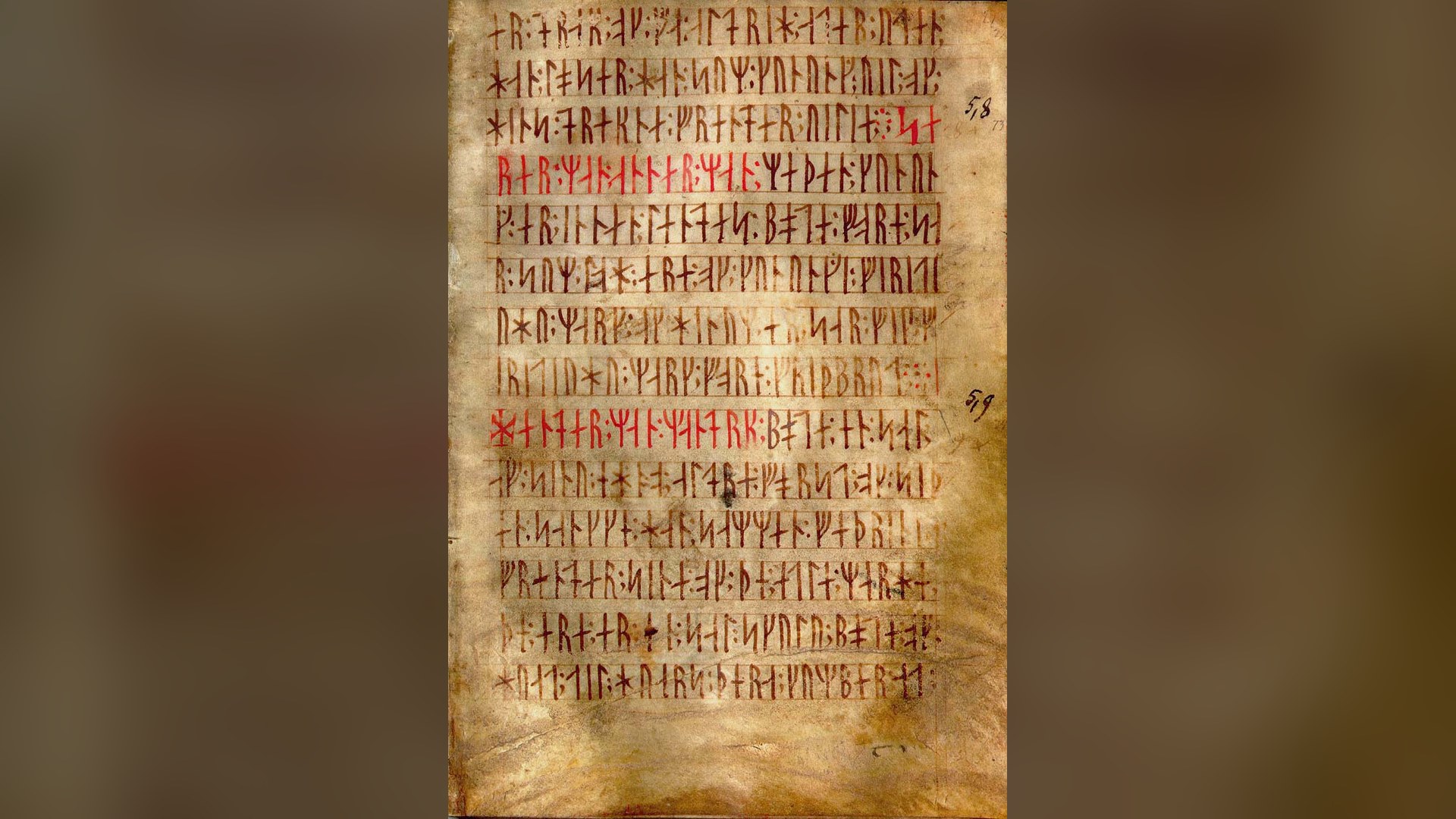
It also unveiled the tool that would define the whole mystery: an alphabet of 29 Anglo-Saxon runes called the Gematria Primus, where every rune stands for a letter and a prime number.
Only a handful of people are known to have finished the 2013 round. The first to do it was Marcus Wanner, a 15-year-old from Virginia who had also cracked the 2012 puzzle.
Round three arrived on 4 January 2014, again via Twitter. This time the trail included magic squares and a test in which solvers had to build their own hidden Tor service to receive the next stage. And at the end of the path sat something nobody expected: a book.
The Liber Primus: A Book Nobody Can Finish
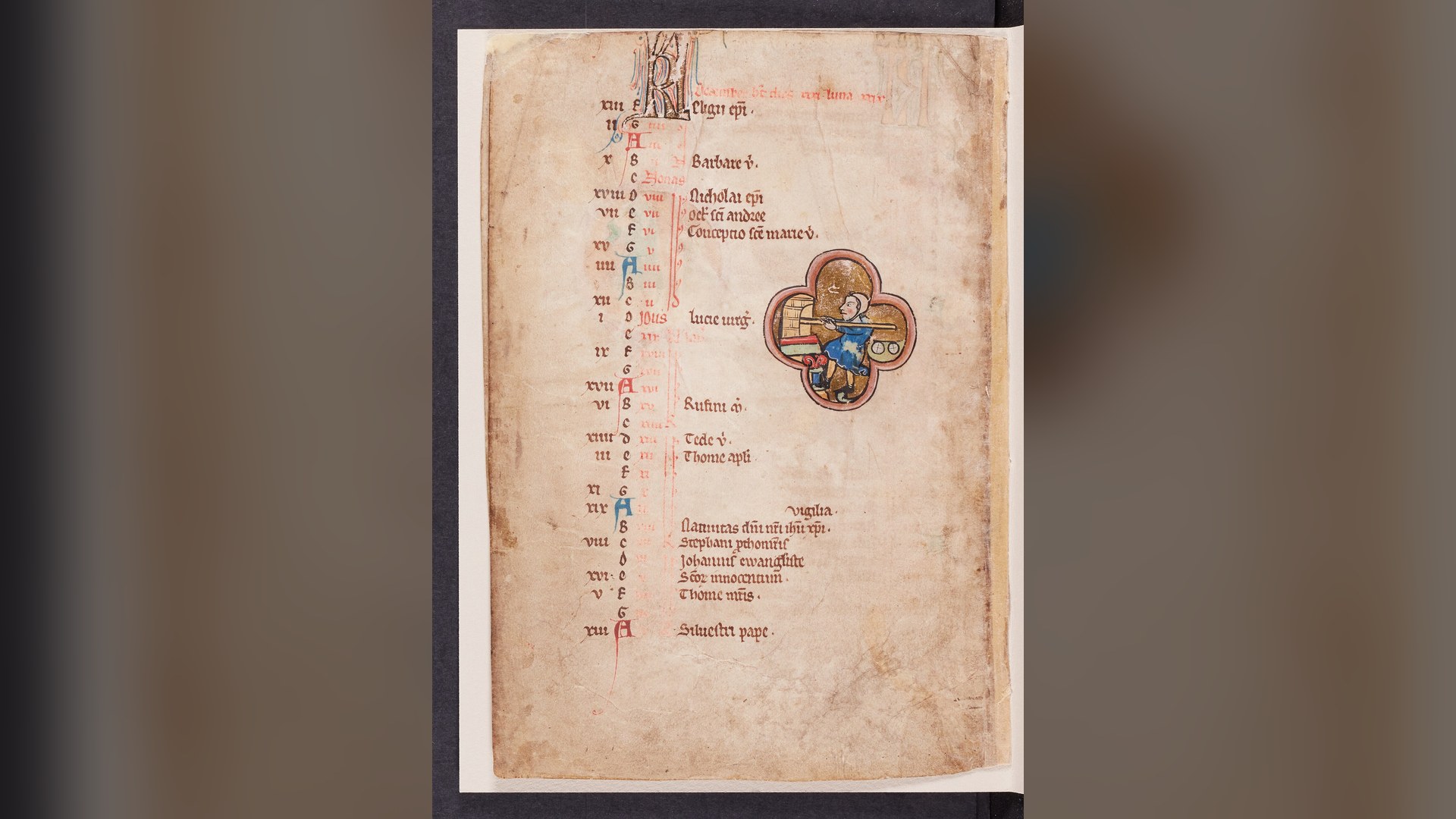
The book is called the Liber Primus — Latin for “First Book.” It was released in two batches across 2014, written almost entirely in Gematria Primus runes, and it is where the Cicada 3301 trail goes cold.
Here is the honest scoreboard, because the numbers get garbled in most retellings. The first batch of 17 pages has been fully translated. The second batch has 58 pages, and only two of those have ever been read. In total, 19 pages out of 75 are open. Fifty-six pages have resisted everyone for over a decade.
What the translated pages say is stranger than any recruitment test. They open with a warning: “Believe nothing from this book.” They address the reader as a pilgrim. They declare that “the primes are sacred,” and they sketch a philosophy of radical self-reliance — trust no authority, impose nothing on others, find truth inside yourself.
One of the last readable pages points back into the dark: “Within the deep web, there exists a page that hashes to…” followed by a long cryptographic fingerprint. “It is the duty of every pilgrim to seek out this page.” That page has never been found.
The untranslated pages carry odd illustrations, including a mayfly — an insect that lives for a day — and statistical analysis offers little hope. The solved pages used keys hidden in the puzzle’s own vocabulary, words like DIVINITY and CIRCUMFERENCE.
The remaining pages show no such handholds, and some researchers suspect they were encrypted with a key that was simply never published.
What the Winners Actually Found
So what happened to the people who won? A few accounts exist, and they agree on the shape of it.
Finishers were asked questions first — about whether information should be free, whether censorship is wrong, whether privacy is a right.
Those who answered the “right” way were invited into a private forum and set a task: build something that advanced those ideals.
A leaked email, attributed to the group and published by winners, describes 3301 in its own words: “We are an international group. We have no name.
We have no symbol. We have no membership rosters.” The closing message of 2012 struck the same note, calling the group “much like a think tank” focused on “liberty, privacy, security.”
According to Marcus Wanner’s later accounts, the 2012 winners’ project was called CAKES — the Cicada Anonymous Key Escrow System, a dead man’s switch designed to publish a whistleblower’s documents if that person was arrested or silenced.
It fell apart within months. Nobody was paid. People drifted away, and 3301 never explained itself.
Swedish solver Joel Eriksson, who cracked almost the entire 2012 chain alone, reached the final page just after the door had closed.
A 2013 winner, who documents her experience on YouTube as Nox Populi, describes the same pattern: brilliance at the front, silence at the back.
Who Was Behind Cicada 3301? The Main Theories
An intelligence agency. The CIA, MI6 and the NSA top every list, and the logic is obvious: the puzzle tests exactly the skills a signals agency hires for.
The US Navy even launched its own Cicada-style recruitment puzzle, Project Architeuthis, in 2014. But no agency has ever been linked by evidence, and agencies usually want their recruits identifiable, not anonymous.
A private security firm or cyber-mercenary group. Plausible for the same reasons, and just as unproven. No company has ever surfaced.
A secret society or cult. The Liber Primus reads like scripture, and the group talks like a brotherhood. Yet the winners’ accounts describe a working group with a project, not rituals or worship.
A bank or financial firm. This one circulates on forums, built on nothing more than the puzzle’s love of numbers. There is no evidence behind it at all.
An art project or alternate reality game. The craftsmanship fits. But games are usually selling something, and in over a decade nobody has monetised Cicada 3301, claimed credit, or stepped forward to take a bow.
The Last Messages, the Impostors, and the Silence

From the start, every genuine Cicada message carried the same OpenPGP signature, key ID 7A35090F. That signature became the only reliable test of authenticity, and 3301 needed it.
In 2012, Chilean police publicly labelled Cicada a criminal hacker group; a signed statement denied any illegal activity. In July 2015, hackers who attacked Planned Parenthood called themselves “3301” — a signed Cicada statement disowned them completely.
In January 2016, after two quiet years, a new signed message appeared: “Hello. The path lies empty; epiphany seeks the devoted. Liber Primus is the way.
Its words are the map, their meaning is the road, and their numbers are the direction. Seek and you will be found.”
The last verified word came in April 2017: a short signed warning to beware false paths and to trust nothing that did not carry the signature. Then, nothing. No new round has ever been authenticated.
The solvers never left. A community of more than ten thousand people still works on the untranslated pages, testing keys, publishing statistics, arguing over single runes. They are, in a sense, still answering the advert from 2012.
The Verdict on Cicada 3301: Unresolved
Here is what actually holds up. The puzzles were real, brilliantly built, and signed with one consistent key across five years. Real people finished them, were screened for their beliefs, and were set to work on a privacy project. None of that is in dispute.
What does not hold up is every confident answer about who was responsible. There is no document, no leak and no defector tying Cicada 3301 to the CIA, MI6, a bank, a cult or anyone else.
The strongest evidence about the group’s nature comes from the group itself and its winners: an international circle of privacy obsessives who recruited the way they believed — anonymously, and by merit alone.
And the book is still sitting there. Fifty-six pages of runes, unread, while the people who wrote them stay silent. Until those pages open or the key’s owner speaks, the verdict has to stay where the evidence leaves it.
Verdict: Unresolved.
Frequently Asked Questions
What is Cicada 3301?
An anonymous group that posted three rounds of cryptographic puzzles online between 2012 and 2014, saying it was recruiting “highly intelligent individuals.” Nobody has ever identified who ran it.
Did anyone solve Cicada 3301?
Yes. A small number of people finished the 2012 and 2013 rounds, including Virginia teenager Marcus Wanner. They were screened, invited to a private forum, and asked to build a privacy tool. The 2014 round’s book remains unsolved.
Has the Liber Primus been translated?
Only partly. Of its 75 pages, 19 have been translated. The other 56 pages have resisted all attempts since 2014.
When did Cicada 3301 last post?
The last verified signed message appeared in April 2017, warning solvers to ignore anything without the group’s PGP signature. Nothing authenticated has appeared since.
Was Cicada 3301 run by the CIA?
There is no evidence for it. The theory is popular because the puzzles test intelligence-agency skills, but winners described an independent, international privacy group, and no agency link has ever been documented.
Read Next
If Cicada’s anonymous internet rabbit hole hooked you, try the theory that most of the web is already fake: our investigation of the Dead Internet Theory asks whether bots really have taken over the internet.
And for the newest digital puzzle pulling in millions of viewers, read about the 140-year YouTube video whose description invites viewers to “come, meet me in hell.”
Join the Conversation
What do you think Cicada 3301 really was — an agency fishing for codebreakers, a band of privacy true believers, or the greatest art project the internet ever produced? And will those last 56 pages ever be read?
Tell us your theory in the comments below. If you have been working on the Liber Primus yourself, we especially want to hear from you.
