
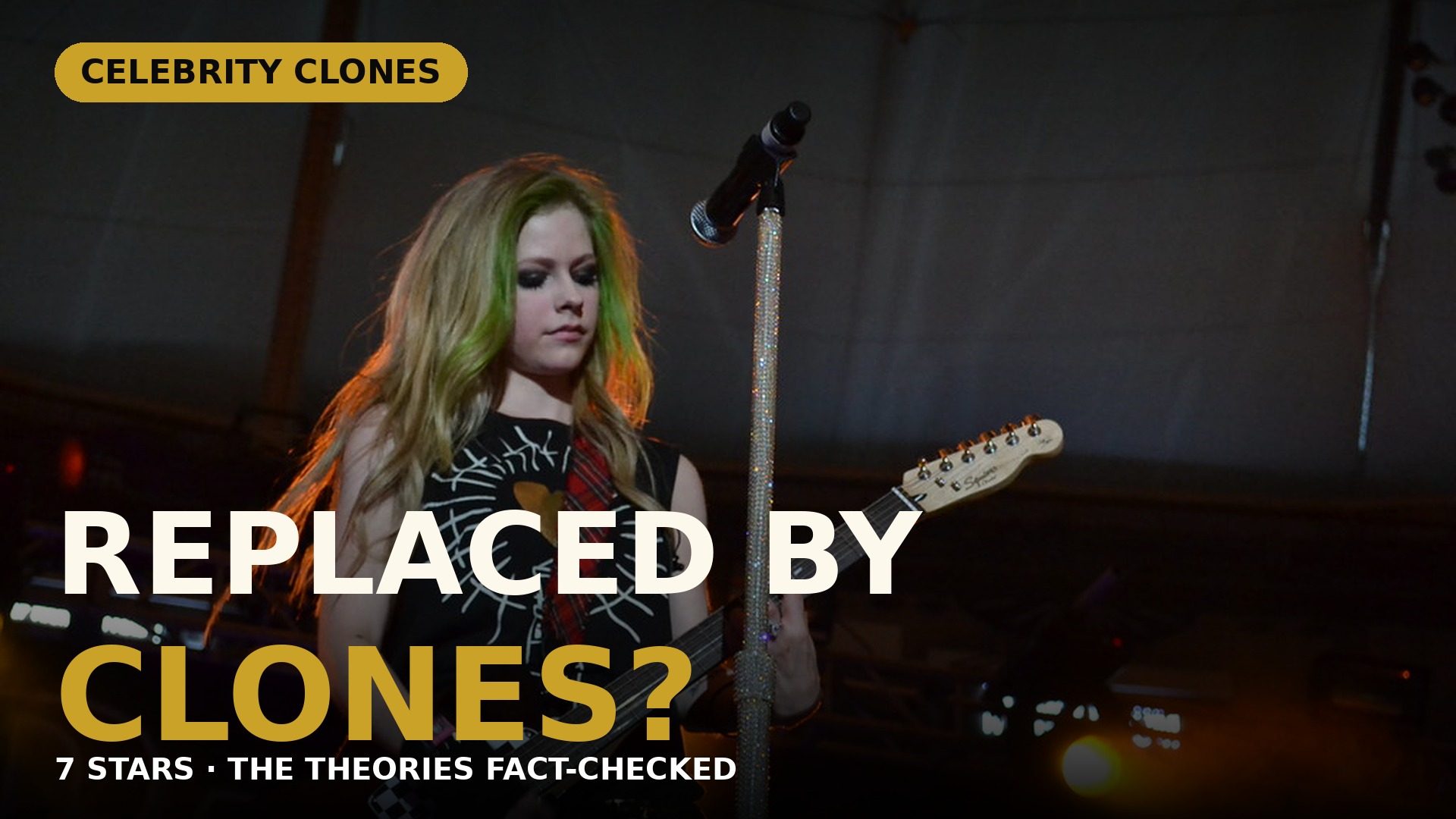
Have you ever looked at a famous face and thought, wait, that is not the same person I grew up watching?
You are not alone. The celebrity clone conspiracy has become one of the internet’s favourite games, and it follows a simple pattern every time.
A star changes their hair, their style, or their sound. A few old photos get placed next to new ones. Within hours, thousands of people are convinced the original died years ago and a double quietly took their place.
None of these stories has ever held up. But each one tells us something real about fame, ageing, and how fast a joke can turn into a belief.
Here are the seven cases that keep coming back, what fans actually claim, and what the record shows. If you enjoy this kind of fact-check, our look at viral Disney conspiracy theories follows the same pattern of big claims and thin proof.
1. Avril Lavigne and the Celebrity Clone Conspiracy That Started With a Hoax

The claim is stark. The original Avril Lavigne, fans say, died in 2003, soon after her debut album Let Go made her famous at 17.
In her place, the story goes, stepped a lookalike named Melissa Vandella. Melissa had supposedly been hired to dodge paparazzi, then kept the job for good.
The evidence offered is mostly visual. Her style shifted from baggy skater clothes and ties to dresses and heavier pop production around 2004.
Fans also point to small changes in moles, handwriting, and voice. One photo shoot where she wrote “Melissa” on her hand is treated as a confession.
Here is what the record shows. The theory traces to a 2011 Brazilian blog called Avril Está Morta, which means “Avril Is Dead.”
That blog admitted its own trick at the start. It said it was created to show how conspiracy theories can be made to look true.
The disclaimer was stripped away as the story spread. A viral Twitter thread in May 2017 carried it around the world without the warning label.
Lavigne has answered it directly, more than once. In 2017 she told a fan, “No, I’m not dead. I’m here.”
In 2019 she called it “just a dumb internet rumour” and said she was flabbergasted that people bought into it. She made the same point again in 2022, noting that everyone also tells her she looks exactly the same.
A teenager growing up, changing labels, and surviving Lyme disease explains the changes far better than a secret replacement does. No death record, no Melissa, and no witness has ever been produced.
Verdict: Debunked. The source blog said it was a demonstration, and Lavigne herself has denied it repeatedly.
2. Paul McCartney and the “Paul Is Dead” Clone Story

This is the grandfather of every celebrity clone conspiracy. The claim says Paul McCartney died in a car crash on 9 November 1966.
To protect the band, the story goes, the Beatles and British intelligence replaced him with a lookalike. Fans call the replacement William Campbell, or “Faul,” short for fake Paul.
The supposed clues fill books. On the Abbey Road cover, McCartney walks barefoot and out of step, which fans read as a funeral procession.
John in white becomes the priest. Ringo in black becomes the undertaker. George in denim becomes the gravedigger.
Other clues include a patch misread as “OPD,” for “officially pronounced dead,” and a line at the end of “Strawberry Fields Forever” heard as “I buried Paul.”
The record dismantles each one. McCartney was on holiday in France and Kenya with Jane Asher during the period of the alleged crash in November 1966.
The patch actually read “OPP,” for Ontario Provincial Police. John Lennon said the muffled line was “cranberry sauce,” not a burial confession.
McCartney was barefoot on Abbey Road for a simple reason. It was a hot day, and he had kicked off his sandals during a shoot that lasted only a few minutes.
Life magazine found him alive at his Scottish farm in 1969 and published the interview. He later mocked the whole saga with his 1993 live album title, Paul Is Live.
No lookalike contest winner named William Campbell has ever been traced. The man who supposedly replaced McCartney then wrote decades of songs, raised a family in public, and aged in front of cameras.
Verdict: Debunked. The clues collapse on inspection, and McCartney’s life after 1966 is one of the most documented on earth.
3. Andrew Garfield and the TikTok Lookalike

The Garfield case is the lightest on this list. Nobody serious claims the actor died.
Instead, viral TikTok clips of a young man who looks strikingly like him sparked a running joke. The double, viewers said, must be the clone who gets to live a normal life while the real Garfield plays Spider-Man.
The resemblance in some clips is genuinely strong. Same hair, same grin, same eyebrows.
But that is the whole story. Lookalikes are common, and Garfield himself has joked for years about being told he resembles everyone from Andy Murray to a mix of Federer and Nadal.
There is no replacement claim with dates, documents, or even a consistent story behind it. There is just a face that looks familiar, shared millions of times because it is fun to share.
This one shows the modern version of the pattern. A lookalike does not need a death, a cover-up, or a record label plot. He just needs a phone and an algorithm.
Verdict: Debunked as a clone claim. It is a lookalike video, not evidence that anyone was replaced.
4. Britney Spears and the Clone Claims of the #FreeBritney Years
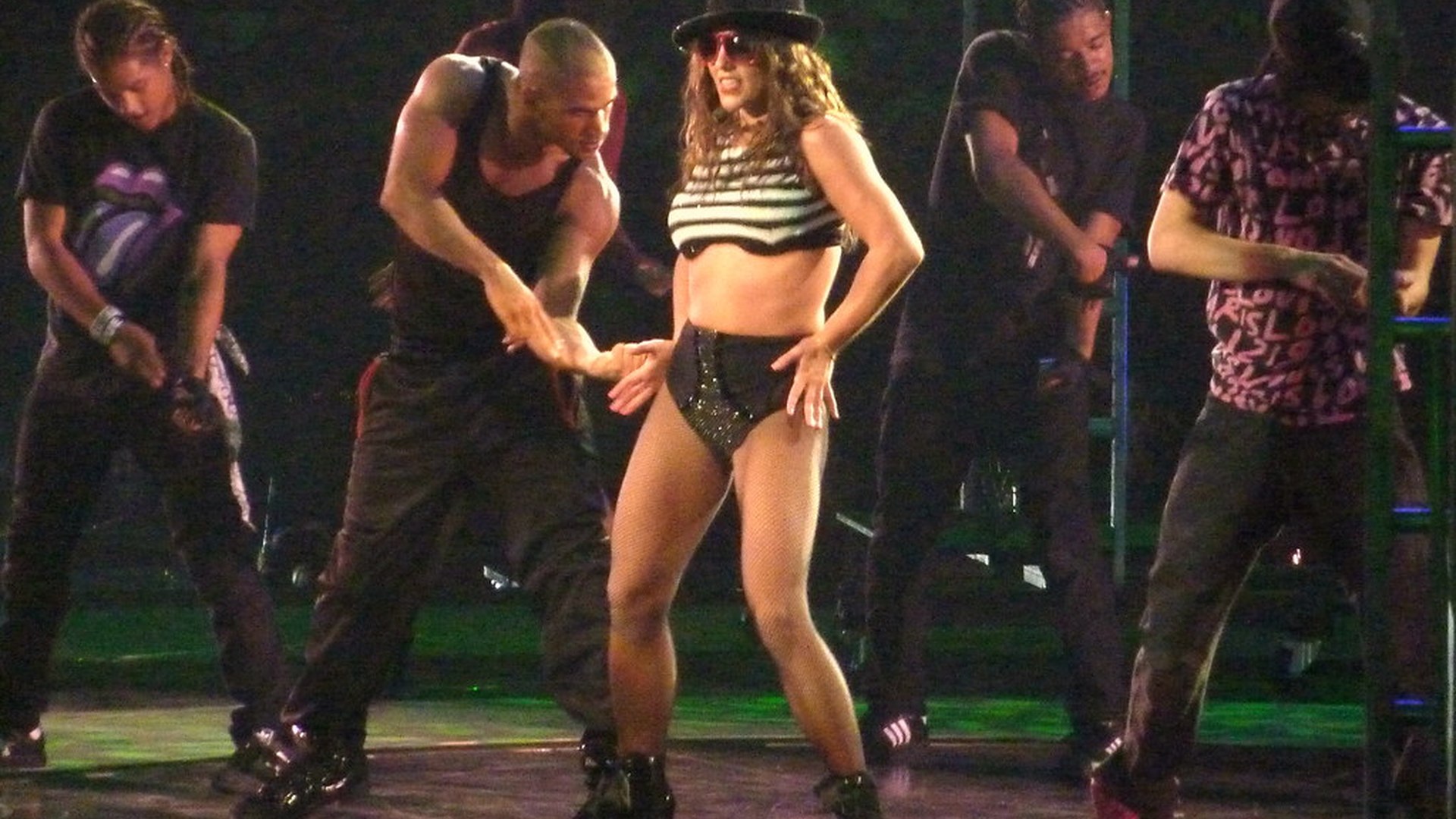
The Britney Spears version is darker, because it grew out of something real. Spears spent 13 years under a court conservatorship that controlled her money and her personal life.
Fans who campaigned to end it were right about the core fact. A judge terminated the conservatorship on 12 November 2021, after Spears testified about abuse and coercion.
After her release, a fringe of that movement kept going. Some claimed the woman posting on Instagram was a clone, a body double, or even an AI creation.
Their evidence was screenshots. A tooth looked different, a dance looked stiff, a voice sounded off in a short video.
None of it holds up. Spears published a bestselling memoir, The Woman in Me, in 2023, in her own voice and with painful personal detail.
Her family members have publicly dismissed the replacement rumours. Her son Jayden called claims that she had died or been replaced “ridiculous.”
Short, compressed phone videos are a poor way to judge anyone’s face or voice. Lighting, filters, and years of hard living change how a person looks on a small screen.
The real scandal here was always the legal arrangement, and that ended in open court. Inventing a clone adds a fiction on top of a documented story that needs no embellishment.
Verdict: Debunked. The conservatorship was real and it ended in 2021. The clone and AI claims have no credible evidence behind them.
5. Eminem and the 2006 Car Crash That Never Happened
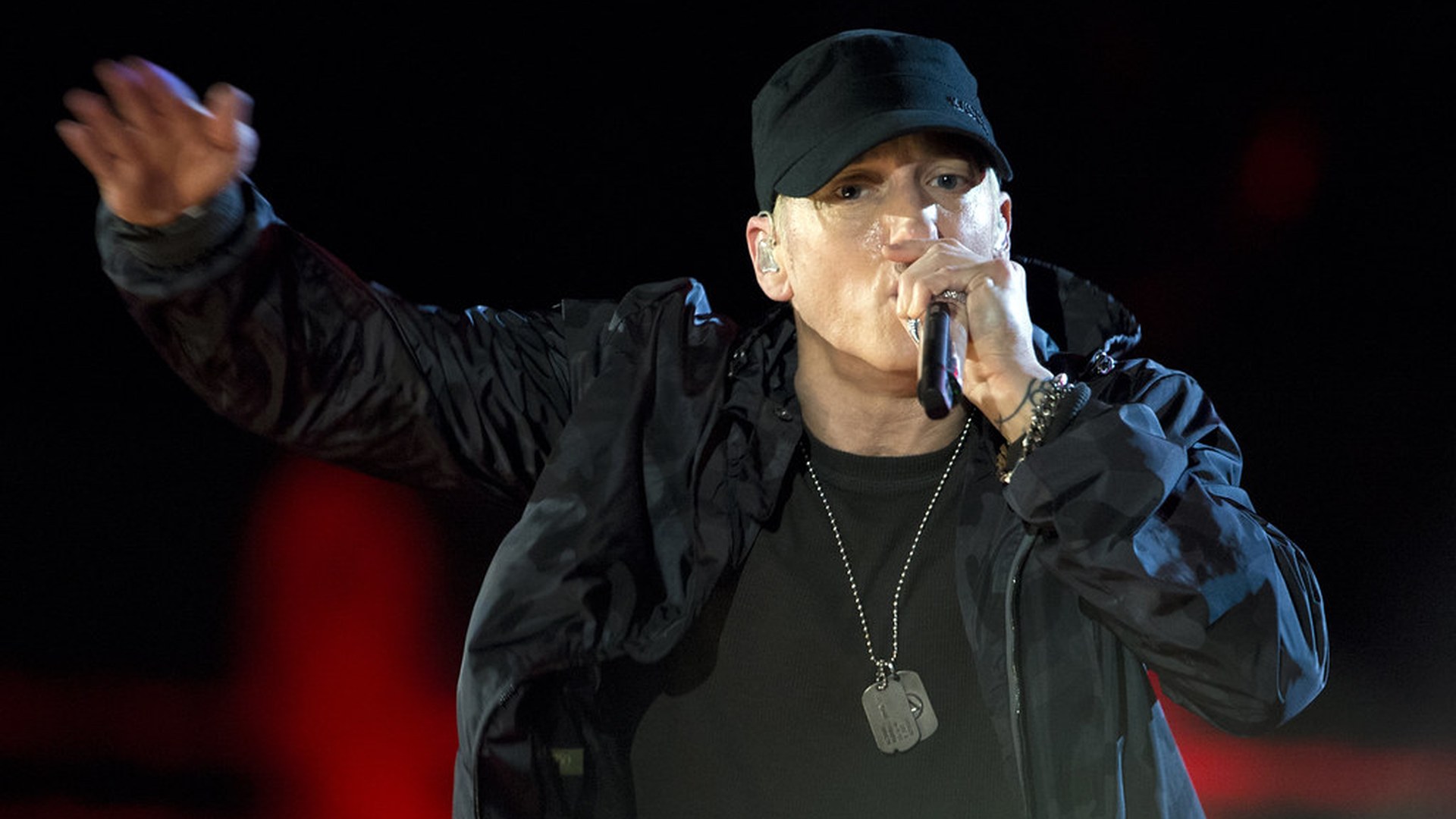
The Eminem theory claims Marshall Mathers died in a car crash in 2006. A clone, a lookalike, or in some versions an android then took over his career.
Fans point to a break in his output, changes in his face and voice, and a supposedly robotic pause during a 2013 television appearance. Rapper B.o.B’s 2016 tweets about human cloning, and Tom MacDonald’s 2019 song “Cloned Rappers,” kept the story circulating.
The timeline has a far plainer explanation. Eminem has spoken openly about a near-fatal prescription drug addiction during those years, and he has been sober since 2008.
Addiction, recovery, weight change, and ageing change a face. They also change a voice and the subjects a writer wants to rap about at 35 instead of 25.
There is no crash report, no death record, and no gap in his public life that needs a replacement to explain it. He kept working with the same producers, family, and collaborators throughout.
The 2013 “glitch” is a man pausing awkwardly on live television. It is strange only if you go in determined to find a robot.
Verdict: Debunked. A documented addiction and recovery explain the changed years. No evidence supports a death or a clone.
6. Taylor Swift, Body Doubles, and the Zeena LaVey Lookalike
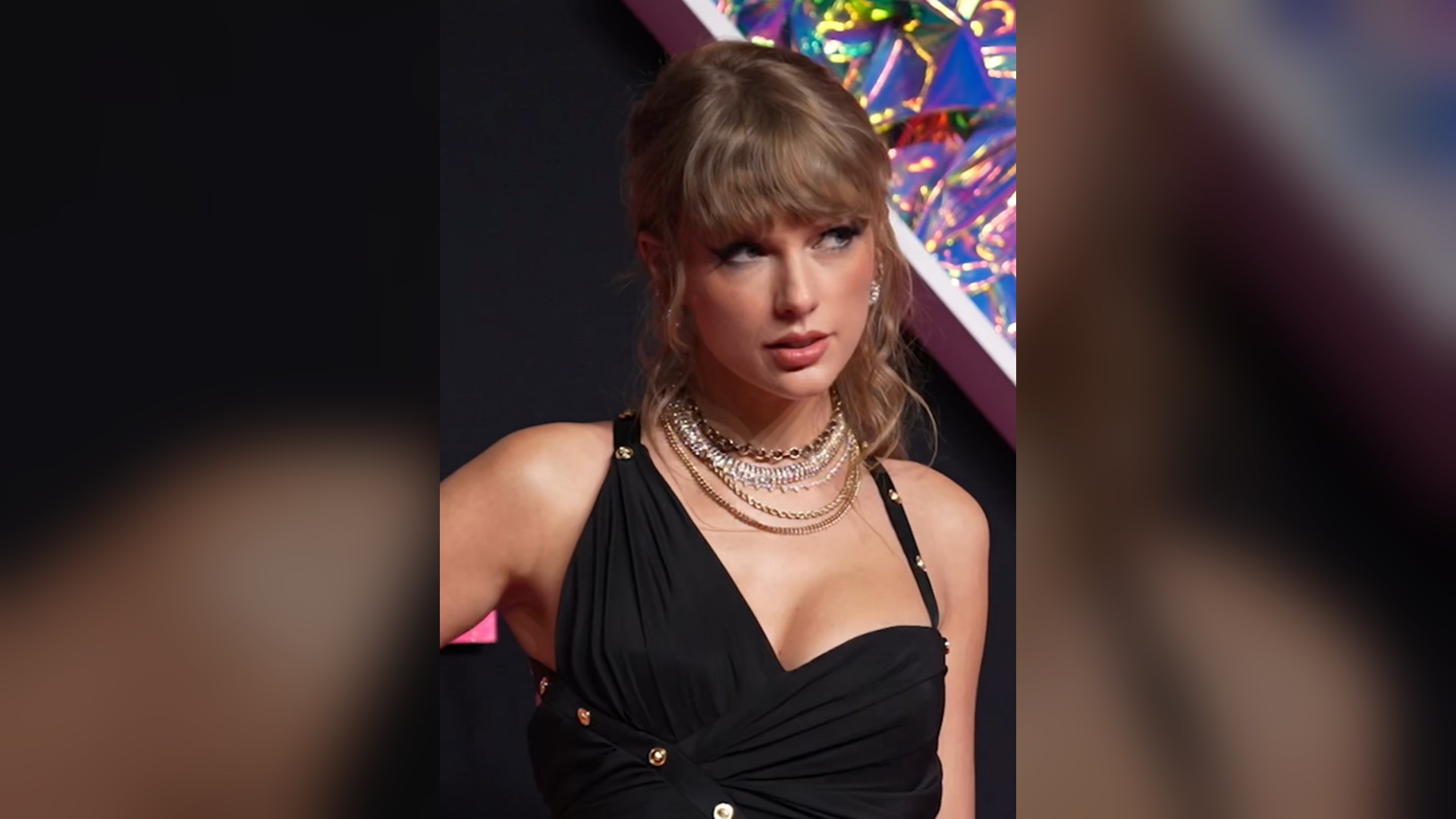
Taylor Swift attracts two separate stories. One says she uses body doubles to move through crowds and handle the scale of the Eras Tour.
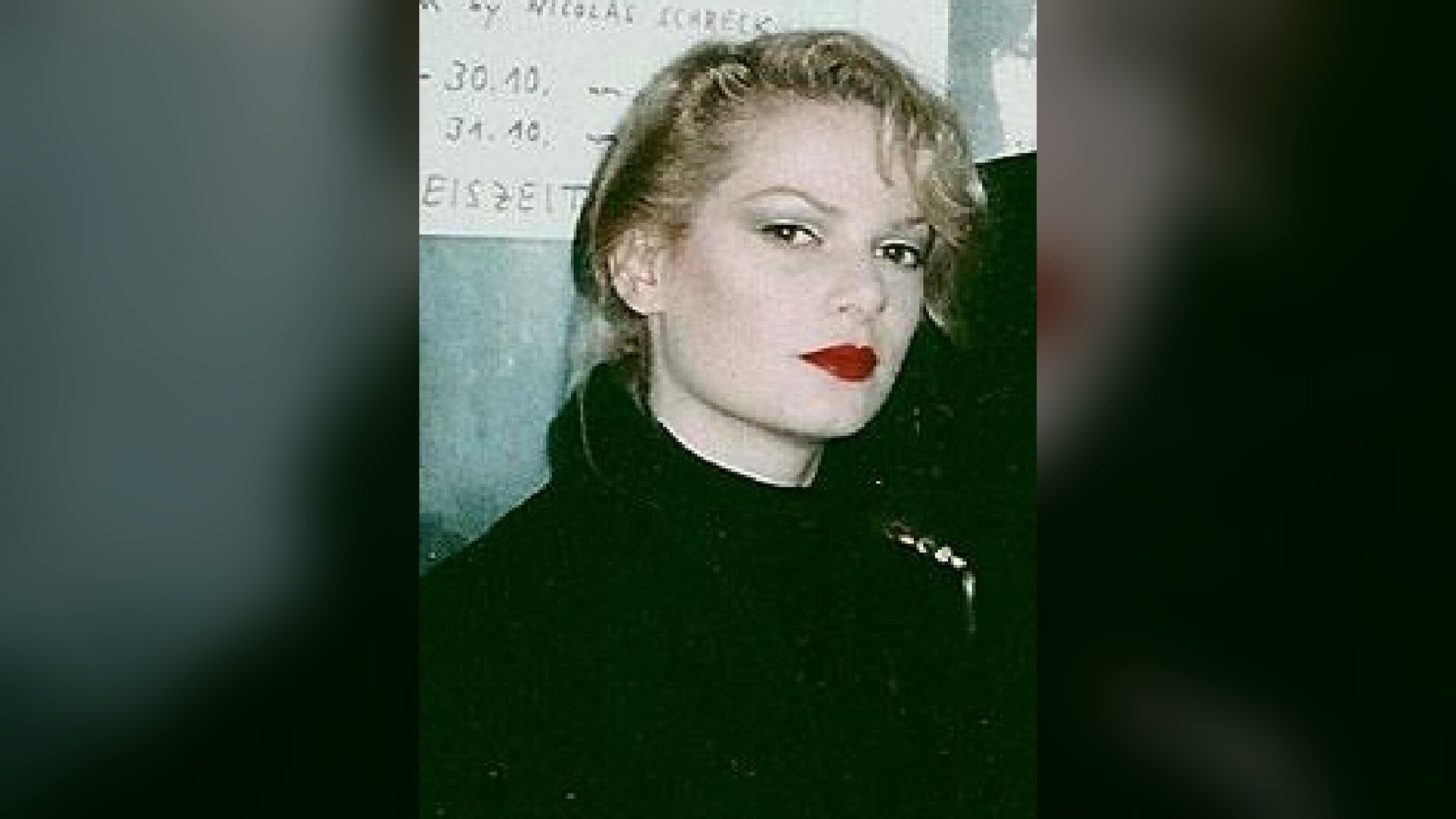
The other, older story is stranger. It claims Swift is a clone of Zeena LaVey, now known as Zeena Schreck, who was a spokesperson and high priestess of the Church of Satan in the late 1980s.
The whole second theory rests on side-by-side images. A young, blonde Zeena in 1988 television interviews does look similar to Swift at first glance.
That resemblance was noted online from around 2011 and turned into a meme by a tongue-in-cheek BuzzFeed post in 2013. The clone version came later, with no documents attached.
Zeena Schreck is a real, living artist and musician based in Berlin. She left the Church of Satan in 1990 and has her own long, public biography that has nothing to do with Swift.
Swift’s own life is documented from childhood in Pennsylvania onward. Two separate paper trails for two separate women is the opposite of proof that one was cloned from the other.
As for tour doubles, large tours do use decoys and security tactics at times, as many public figures do. A security stand-in at a venue is not a clone, and no evidence shows a double performing her shows or recording her albums.
If anything, this case is a lesson in how a striking photo pair can carry a story for a decade. We explored a similar effect with the lookalike logic in cartoon theories that rewrite childhood favourites.
Verdict: Debunked. A visual resemblance to Zeena Schreck is real. A genetic or personal link is not supported by any evidence.
7. Keanu Reeves, the “Immortal” Clone Who Never Ages
Keanu Reeves flips the formula. Fans do not say he was replaced. They say he never needed replacing, because he is immortal or travelling through time.
The evidence is a gallery of old faces. A portrait of French actor Paul Mounet, who died in 1922, looks uncannily like him.
Older images join the set, including depictions of Charlemagne, who died in 814, and a 1530 portrait by Parmigianino. A website devoted to the idea has collected these matches since 2010.
Reeves was shown the Mounet portrait on The Tonight Show in 2017. He laughed, admitted a likeness in the eyes, nose, and cheekbones, and left it there.
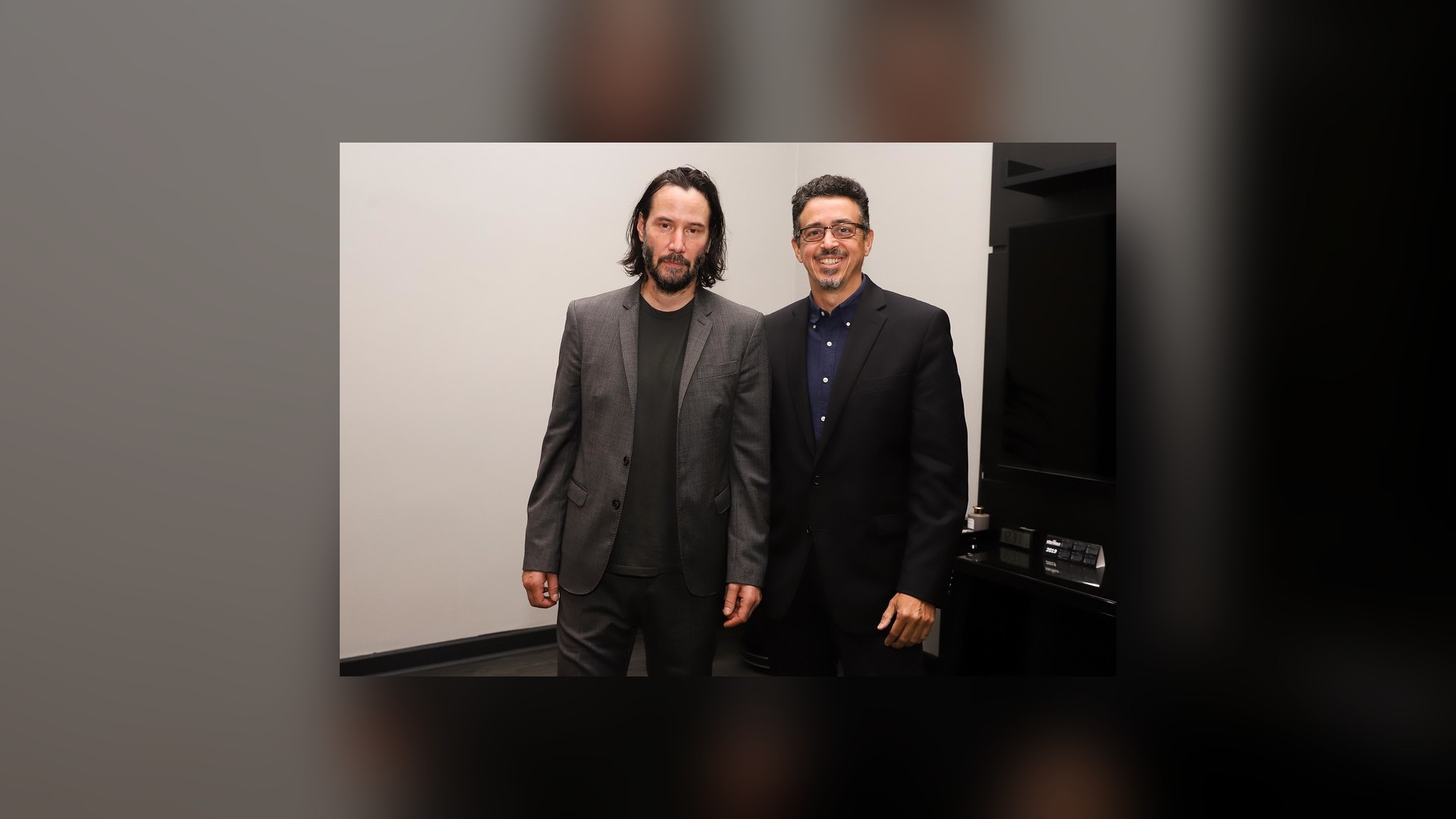
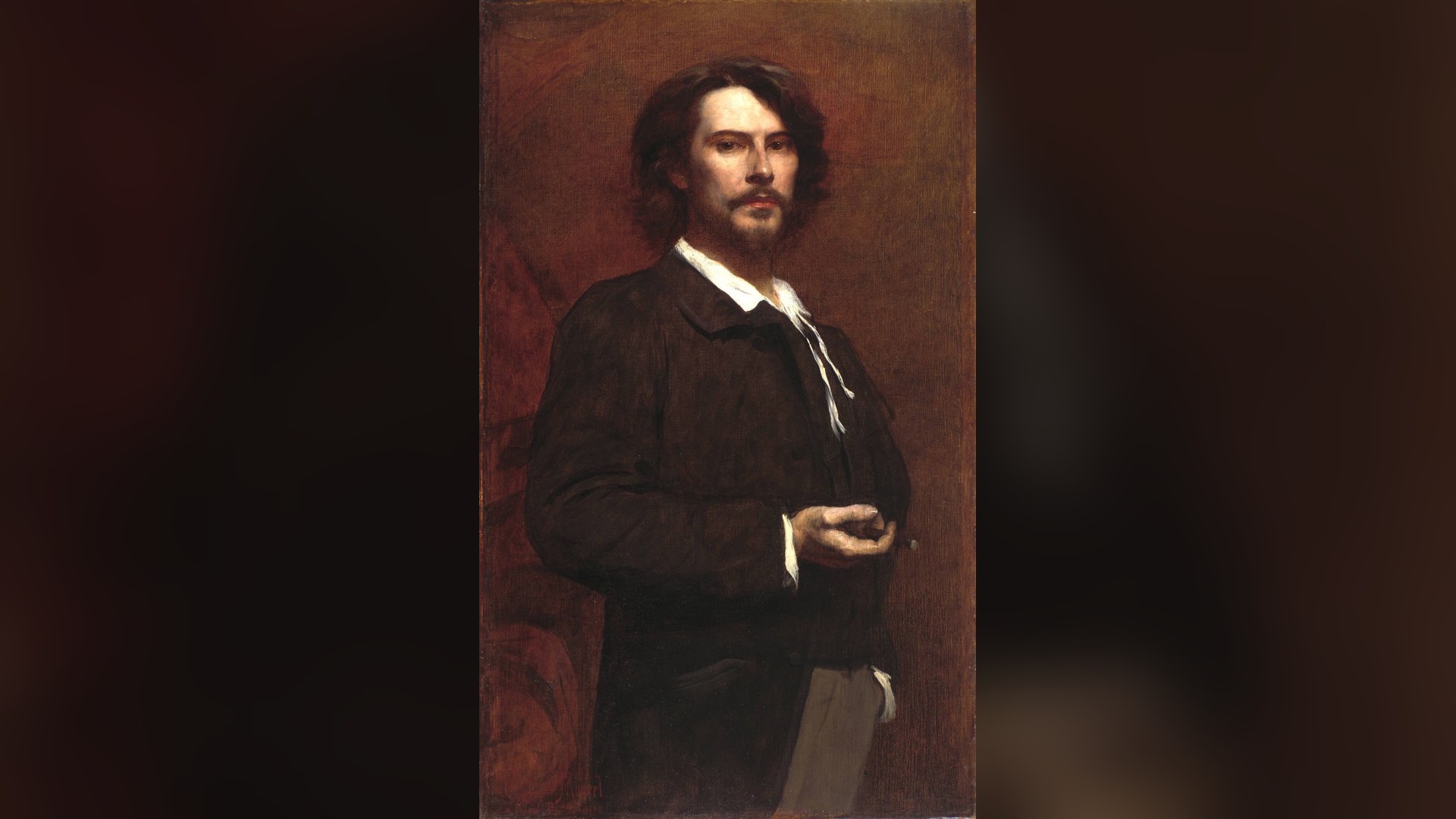
That is the honest answer. Some faces repeat across centuries, especially in paintings that were never meant to be photographs.
Reeves was born in Beirut in 1964 and raised in Toronto, with a normal, traceable childhood. He has also visibly aged across forty years of film, just more gracefully than most of us.
Time-travel tales make for great reading, and we fact-checked another one in the Elon Huck tomb photo story. The pattern is the same: a striking image, then a leap far beyond what it shows.
Verdict: Debunked, and happily so. Lookalike portraits are fun. They are not evidence of immortality, time travel, or cloning.
Why the Celebrity Clone Conspiracy Never Dies
Every case on this list runs on the same fuel. A famous person changes, and change feels suspicious when you have watched that face since you were young.
Makeup, lighting, weight, illness, addiction, surgery, and simple ageing do most of the work. Side-by-side photos do the rest, because two pictures taken years apart, in different light, will always look like two different people.
Social media rewards the wildest reading. “She grew up” gets no shares. “She was replaced” gets millions.
There is also a comfort in these stories. If a star changed in ways you dislike, a clone lets you keep the original untouched in your memory.
The celebrity clone conspiracy survives because it asks for no proof and offers endless content. One new photo is all it takes to restart any of these seven stories.
Checked against records, denials, timelines, and the people still living these lives, not one of them stands up. That is worth remembering the next time a side-by-side photo tries to convince you otherwise.
Frequently Asked Questions
Is Avril Lavigne really replaced by a clone named Melissa?
No. The idea came from a 2011 Brazilian blog that admitted it was showing how theories are made. Lavigne has denied it many times.
Did Paul McCartney die in 1966?
No. He was on holiday when the crash supposedly happened, gave interviews in 1969, and is still alive and working.
Is Taylor Swift a clone of Zeena LaVey?
No. The claim rests only on a resemblance in old TV footage. Both women have separate, fully documented lives.
Was Eminem replaced after 2006?
No. There is no record of a fatal crash. His changed appearance matches his documented addiction, recovery, and ageing.
Has any celebrity clone conspiracy ever been proved?
No. Not one case has produced a death record, a replacement, or any credible document.
Join the Conversation
Which of these seven theories did you believe, even for a day? And which side-by-side photo fooled you first?
Tell us in the comments below. The best arguments, for and against, tend to start there.
Read Next
- The Dark Truth Behind Viral Disney Conspiracy Theories
- Elon Huck: Time-Travel Photo Found in a Tomb Opened in 1923
- 10 Crazy Scooby-Doo Conspiracy Theories That Will Ruin Your Childhood
