

At 5:41 pm on 2 August 1947, a radio operator in Santiago, Chile, picked up a routine Morse message from an incoming British airliner. It gave an arrival time, and then it ended with a word that meant nothing: STENDEC.
The operator asked for the word again. It came back twice more, clear as a bell. Then the aircraft fell silent, four minutes short of its destination, with 11 people on board.
The plane’s fate was eventually solved, in full, half a century later. The word never has been. This is the story of both.
The Last Flight of Star Dust
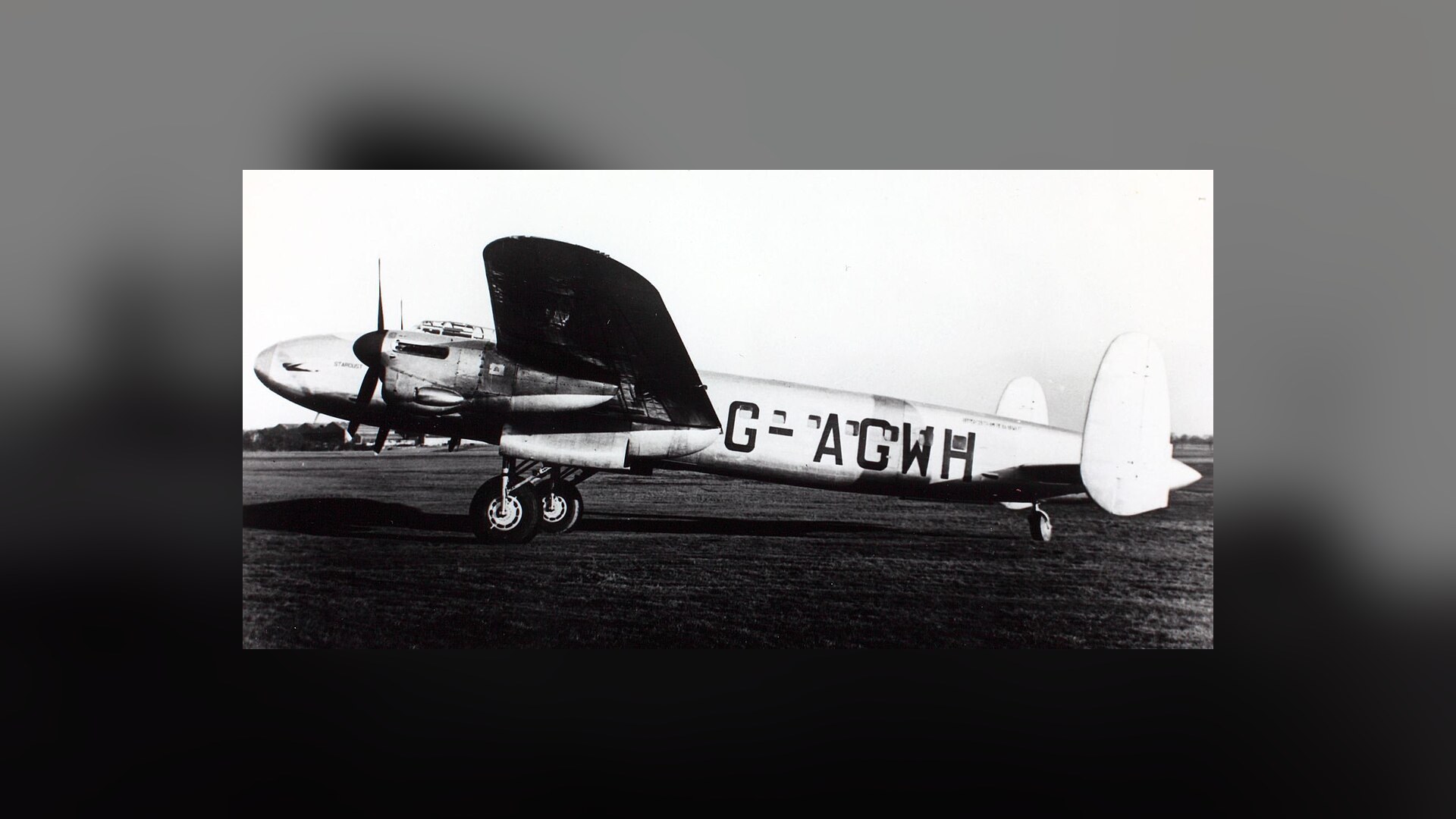
The aircraft was Star Dust, an Avro Lancastrian airliner operated by British South American Airways, registration G-AGWH.
The Lancastrian was a civilian conversion of the Lancaster bomber, and BSAA’s crews were mostly ex-RAF men who had flown the real thing in the war.
Captain Reginald Cook was about as experienced as they came: a former Pathfinder pilot decorated with the DSO, DFC and DFM.
His first officer was Norman Hilton Cook, his second officer Donald Checklin, another DFC holder. The radio operator was Dennis Harmer, a wartime operator with a solid civilian record. The flight attendant, Iris Evans, had been a chief petty officer in the Wrens.
There were six passengers: five men and one woman, of Palestinian, Swiss, German and British nationality.
Among them was a King’s Messenger, a British diplomatic courier carrying official documents, and Marta Limpert, a German émigré who had flown out from London days earlier.
Star Dust left Buenos Aires at 1:46 pm on the final leg of flight CS59, bound for Los Cerrillos airport in Santiago. The route crossed the Andes at 24,000 feet. The flight, by every account, was uneventful until the very end.
“ETA Santiago 17.45 Hrs STENDEC”
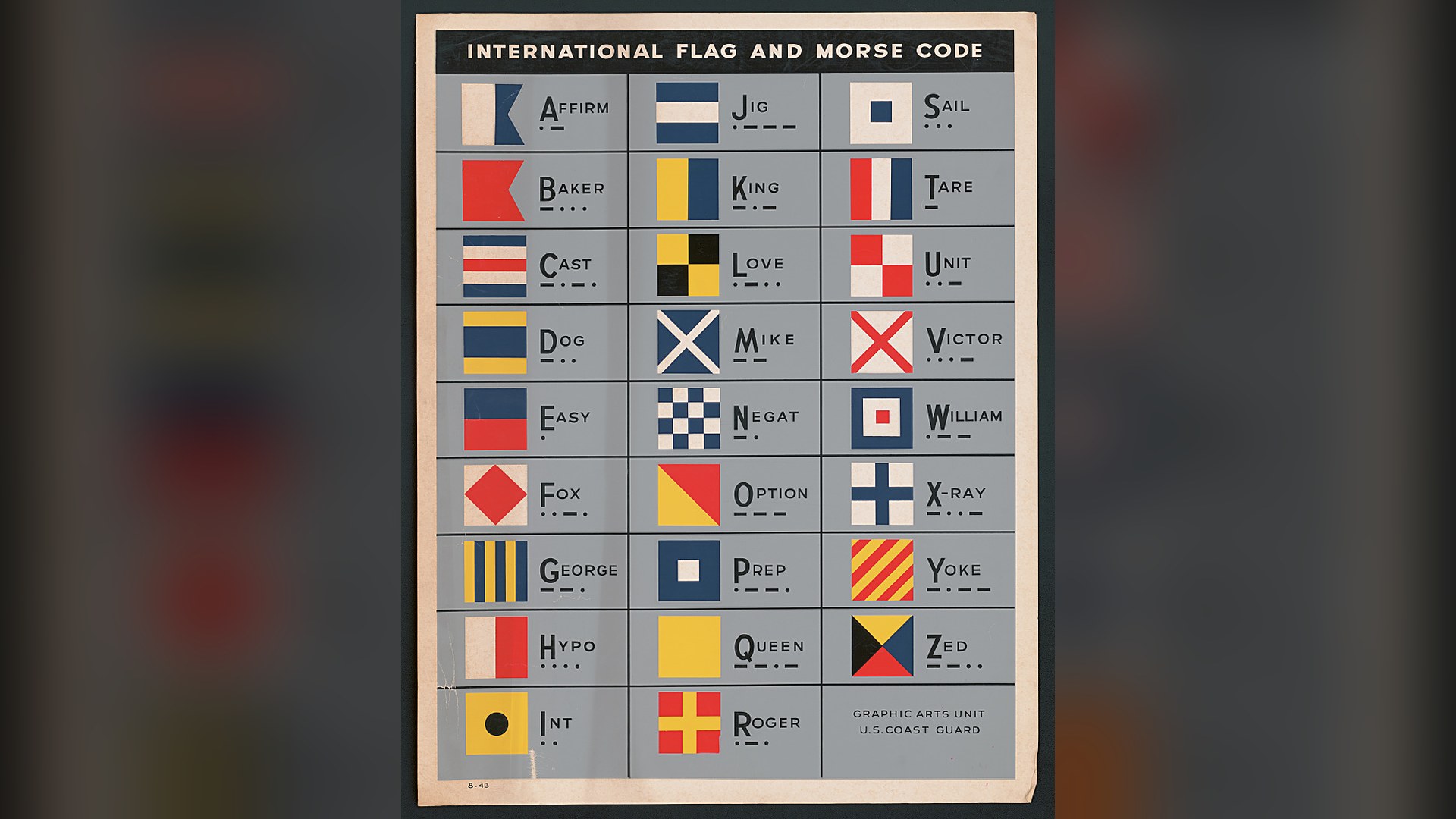
At 5:41 pm, Harmer tapped out his arrival message: “ETA SANTIAGO 17.45 HRS STENDEC”. Everything in it was standard except the last word, which was not a recognised code, abbreviation or procedure word in 1947 aviation.
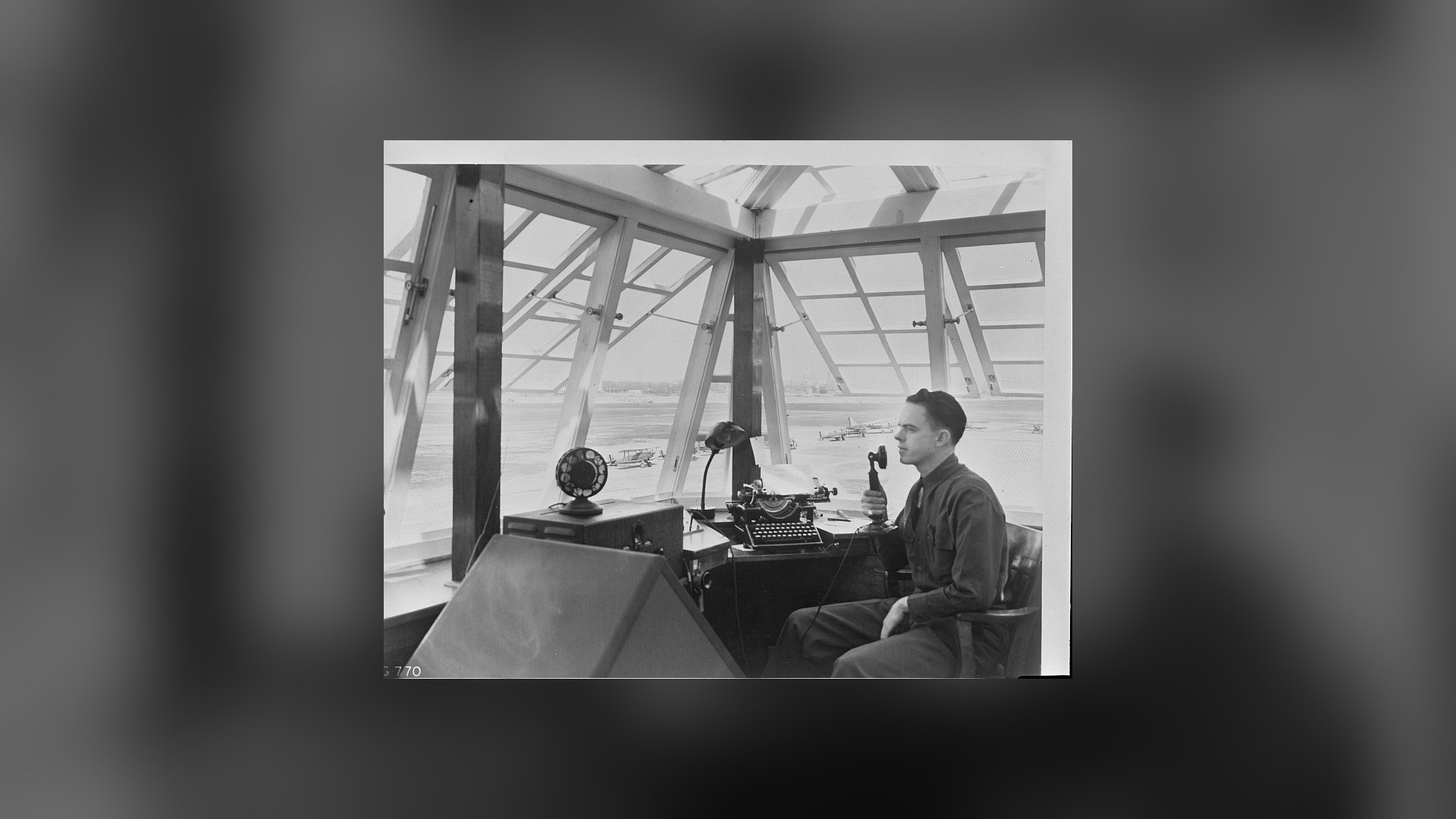
The Chilean Air Force operator who received it later described the transmission as loud and clear, but sent very fast. He did not recognise the final word, so he did the obvious thing: he asked for it again.
Harmer sent it again. STENDEC. And again. STENDEC. Three times in total, the same seven letters, in a strong, clear signal.
Then nothing. No distress call. No SOS. Star Dust never landed, never answered another call, and vanished from the record. Whatever happened to the aircraft happened in the four minutes between that message and its expected arrival, or so everyone assumed at the time.
That assumption, it turned out, was wrong in an interesting way. But nobody would know that for 51 years.
The word was not a reporter’s invention or a later embellishment, either. It sits in the official record: the Ministry of Civil Aviation’s accident report, published in 1948, records the final message with STENDEC in it, and offers no explanation for the word. From the very first official telling of this story, the last word was already a mystery.
Fifty Years of Theories

The search was serious and it found nothing. BSAA’s chief, Air Vice Marshal Don Bennett, personally directed a five-day search.
Chilean and Argentine teams combed the mountains. Other BSAA pilots flew the route looking for their colleagues. An amateur radio operator claimed to have picked up a faint SOS, which raised hopes and then quietly led nowhere.
A modern airliner with 11 people on board had flown into the Andes and left no trace at all. In a gap like that, theories breed.
Sabotage was the respectable one. A King’s Messenger was on board with a diplomatic bag, and in the tense politics of postwar South America, the idea that the aircraft was blown up to destroy documents had a certain logic.
The theory gained fuel when BSAA lost two more airliners without trace in the following eighteen months: Star Tiger in January 1948 and Star Ariel in January 1949, both over the Atlantic, both swallowed by the Bermuda Triangle legend.
At the wilder end, the UFO explanation arrived. An aircraft vanishing mid-message, after sending a nonsense word, was irresistible material, and in the 1970s a Spanish UFO magazine was even named Stendek, a misspelled tribute to the theory that something not human had taken the plane.
All of these theories shared one foundation: the aircraft was never found, so anything was possible. In 1998, that foundation cracked.
The Glacier Gives Up Its Secret

First, the correction this story always needs. You will often read, including in summaries of this case, that Star Dust was never found. That was true for five decades. It is not true any more.
In 1998, two Argentine mountaineers climbing Mount Tupungato, about 50 miles east of Santiago, spotted something wrong on the glacier at 15,000 feet: the wreckage of a Rolls-Royce Merlin engine, twisted metal, and shreds of clothing emerging from the ice.
In 2000, an Argentine Army expedition reached the site and found more: a propeller, wheels, one tyre still inflated, and human remains. The wreckage was tightly localised, which told investigators the aircraft had hit the ground head-on at speed rather than breaking up or exploding in the air. The propeller showed the engine had been turning at near-cruising power at impact.
The wheels were retracted. This was not a plane trying to make an emergency landing. It was a plane flying, under control, straight into a mountain it could not see.
By 2002, the remains of eight of those on board had been recovered from the ice, and five of the British victims had been identified by DNA. Families who had waited 55 years finally had an answer.
What actually happened
The reconstruction is now well supported. Star Dust had to cross the Andes in heavy cloud, in a snowstorm, and it ran into the jet stream, a river of very fast high-altitude wind that in 1947 was still poorly understood.
Flying into that headwind, the aircraft’s speed over the ground dropped far below what the crew calculated.
Believing they had already crossed the peaks, Cook began his descent toward Santiago. In reality, the aircraft was still east of the main ridge, and it descended into the cloud-covered face of Tupungato’s glacier.
The impact triggered an avalanche that buried the wreckage in seconds. The snow compressed into glacier ice and carried the remains down the mountain for fifty years, which is why one of the most intensive searches of the era, over the very area of the crash site, found absolutely nothing.
An Argentine Air Force investigation in 2000 formally cleared Cook of blame, concluding that the crew, in a heavy snowstorm and very cloudy weather, had been unable to fix their position.
Some BSAA pilots remained sceptical that Cook would descend without a positive fix, but no evidence has ever contradicted the jet stream reconstruction.
The same trap, a crew misjudging its position over the Andes in cloud, nearly killed the survivors of Uruguayan Air Force Flight 571 in 1972, and for the same basic reasons.
So the crash is explained. The sabotage theory died with the localised wreckage. The UFO theory died with it. One thing survived the glacier intact: the word.
What Does STENDEC Mean?
Seventy-plus years of attempts have produced a shelf of explanations. None has been proved. Here are the main ones, and how they hold up.
The scrambled “DESCENT”
STENDEC is an exact anagram of DESCENT, and the aircraft was, in fact, beginning its descent. The popular version of this theory adds hypoxia: at 24,000 feet in an unpressurised aircraft, oxygen starvation can scramble a man’s thinking, and a confused Harmer may have garbled the word.
It is neat, and it may even be right in spirit. But it has problems. Harmer sent the word three times, identically, in a transmission the receiving operator described as loud and clear.
A man scrambled enough to garble a word the same way three times was still operating his key with professional precision. And “descent” was not a word operators normally tacked onto an ETA message in the first place.
An acronym or code
When the BBC’s Horizon covered the case in 2000, hundreds of viewers wrote in with expansions: STENDEC as the initials of a longer phrase, a wartime code, a private signal between operators.
None of them matched any documented 1947 procedure, and experienced operators are blunt about this one: a crew in trouble had a perfectly good distress system and a perfectly good SOS. Nobody invents a riddle in an emergency.
The Morse spacing answer
The explanation most Morse experts take seriously is also the least romantic. Morse is not just dots and dashes; the gaps between letters carry meaning, and in a very fast transmission, gaps are the first thing to blur.
Written out in dots and dashes, STENDEC is character-for-character identical to the sequence “SCTI AR”. SCTI was the four-letter location code for Los Cerrillos airport, the aircraft’s destination, and AR was a standard Morse sign-off meaning end of message.
In other words, Harmer may have sent a completely routine sign-off, “SCTI AR”, and the receiving operator, hearing it at high speed, grouped the elements differently and wrote down a word that was never sent.
A related suggestion notes that the dot-dash pattern sits one character away from “VALP”, the call sign of the airport at Valparaíso. Either way, the mystery word may be a copying artefact, born in the ear of a man listening to very fast Morse in 1947.
Why has this not closed the case? Because it cannot be proved either. The receiving operator insisted the signal was clear, and he heard the same word three times.
If the spacing theory is right, the same mis-grouping had to happen three times in a row, which is possible with a consistent sending rhythm, but it is an assumption, not a demonstration. The original log records what the operator wrote, not what Harmer’s key actually did, and Harmer cannot be asked.
The Verdict

Our verdict: the crash of Star Dust is explained; the word STENDEC remains Unresolved.
What holds up: the disappearance is solved. The aircraft hit Tupungato because its crew, fighting an unforecast jet stream in cloud, believed they were somewhere they were not.
The wreckage, the remains and the DNA identifications are facts, and any version of this story that still says the plane was never found is fifty years out of date.
What does not hold up: sabotage, bombs and UFOs all needed a missing aircraft, and the aircraft is not missing any more. What is left is a genuinely open question about seven letters.
The Morse spacing explanation is the strongest candidate we have, and it fits how the message was actually sent and heard. But “strongest candidate” is not the same as proved, and with both operators long dead, it may never be.
STENDEC endures for the same reason the Wow! Signal’s 6EQUJ5 endures: it is a short, hard piece of recorded evidence, sitting in an official log, that refuses to resolve into sense.
The difference is that we now know exactly what happened to the men who sent it. We just do not know what the last word meant.
Frequently Asked Questions
What does STENDEC mean?
Nobody knows. The leading explanation is a Morse spacing error: its dot-dash pattern is identical to “SCTI AR”, a routine airport code plus a standard sign-off, misheard at high speed.
Was the Star Dust plane ever found?
Yes. Wreckage emerged from the Tupungato glacier in 1998, an Argentine Army expedition recovered more in 2000, and by 2002 five of the British victims had been identified by DNA.
How many people died in the Star Dust crash?
All 11 on board: five crew and six passengers.
What caused the Star Dust crash?
The crew, slowed by an unforecast jet stream headwind in cloud and snow, believed they had crossed the Andes and descended into Mount Tupungato. The captain was formally cleared of blame in 2000.
Who sent the STENDEC message?
Radio operator Dennis Harmer, in a routine arrival message to Santiago at 5:41 pm on 2 August 1947. Asked to repeat the last word, he sent it twice more before contact was lost.
Read Next
- They Vanished Into Thin Air: 7 People Who Disappeared Without a Trace — more disappearances where the evidence runs out long before the questions do.
- The “Wow! Signal” and Other Sounds from Space We Still Can’t Explain — the other great unsolved code: 6EQUJ5, received once in 1977 and never explained.
Join the Conversation
So what do you think Harmer sent? A routine sign-off misheard at speed, a scrambled “descent”, or something nobody has thought of in 78 years?
And does the spacing explanation satisfy you, or does hearing the same word three times kill it? Make your case in the comments.
